Loading Admission Guardian content
Loading Admission Guardian content

Provisional score based on available data. It may change as more information is verified.
Find a program, read its fee details and explore the admission requirements.
Summary of the programs shown below. Fee amounts are not listed. Contact the college for its current fee schedule.
| Course | Stream | Fees |
|---|---|---|
| Bachelor of Science [B.Sc] (Nursing) | Paramedical | |
| P.B.Bachelor of Science [B.Sc] (Nursing) | Paramedical |
Specializations
Eligibility: 10+2
Specializations
Eligibility: 10+2
If you're looking for a no-frills, practical nursing education in Haryana that gets you to the bedside and, eventually, a government job, Haryana College of Nursing in Sirsa is a name that comes up consistently. Established in 2006 and affiliated with the authoritative Pt. B.D. Sharma University of Health Sciences (UHSR), Rohtak, its primary draw is its INC recognition—the non-negotiable stamp for any nursing career in India or abroad. This isn't a glamorous metro campus. It's a disciplined, workmanlike institution where the focus is squarely on clinical training and exam preparation, a fact echoed repeatedly by students who've been through its gates. For many from the region, it represents a clear, affordable pathway into a stable profession.
The college sticks to its core competency: nursing and paramedical diplomas. Its programs are the standard, INC-mandated ladder. The 4-year B.Sc. Nursing is the main undergraduate degree, with an intake of 40-60. For those already working as GNMs, the 2-year Post Basic B.Sc. Nursing offers an upgrade. At the diploma level, there's the 3-year General Nursing & Midwifery (GNM) and the 2-year Auxiliary Nurse & Midwife (ANM) course. Total intake across all programs sits around 170-190 per year.
Academically, you're following the UHSR Rohtak calendar. The faculty, about 23-25 strong, is a mix of M.Sc. Nursing holders and a few PhDs. Reviews often highlight that teachers are supportive, particularly for students from Hindi-medium or rural backgrounds, often providing notes in both languages. But the real academic engine here is the clinical posting. Theory is one thing; hands-on practice is another. Students get that at the attached Civil Hospital, Sirsa, and other private facilities like Jindal Hospital. That exposure is critical—it's where textbook procedures become real skills.
Let's be clear: nursing placements don't work like engineering campus drives. The college's official 100% placement claim needs context. What they provide is eligibility and opportunity, not a guaranteed offer letter on graduation day. The working number from student reviews is a still-respectable 80-90% for those actively seeking jobs right after college.
Most fresh graduates land in the ₹3.5 to 5.5 LPA range at private hospital chains. Recruiters include big names like Apollo, Fortis, Medanta, and Max Healthcare, plus local players like Jindal Hospital. The highest package touted—12 LPA—is almost certainly for an international role or a specialized position requiring additional experience and exams like IELTS/OET. The real placement story for many HCN alumni, however, is government service. A significant number clear exams like NORCET for AIIMS or the HSSC for Haryana government hospitals. These jobs offer stability, benefits, and a different career trajectory. The college's disciplined environment and clinical focus are geared towards making you exam-ready.
Fees here are regulated by the state's Department of Medical Education and Research, which keeps them relatively predictable. For the 2024-25 session, B.Sc. Nursing tuition is about ₹66,000 per year. The Post Basic B.Sc. is slightly higher at ~₹75,000 annually. Hostel and mess charges for the girls' hostel add another ₹60,000 per year for a non-AC setup. You'll need to budget extra for one-time costs like uniforms, kits, and university exam fees—roughly ₹10,000-15,000.
All in, the total 4-year cost for a B.Sc. Nursing student staying in the hostel lands between ₹5.5 and 6.5 lakhs. That's a straightforward, manageable investment for a professional degree. Financial aid primarily comes through state government schemes, notably the Haryana Post-Matric Scholarship for SC/ST/OBC students. It's worth checking the official college website for the latest fee circulars and scholarship application details.
Admission is centralized and merit-based. The key is the Haryana Common Entrance Test (CET) conducted by the affiliating university, Pt. B.D. Sharma UHSR, Rohtak. NEET is not required. You need to have passed your 10+2 with Physics, Chemistry, Biology, and English, with at least 45% aggregate (40% for reserved categories). You also must be at least 17 years old by December 31st of the admission year.
The application window typically opens in June-July. After the CET results are out, the university conducts centralized counseling where you choose colleges based on your state-level merit rank. There is a management quota for a portion of seats, but even those candidates usually need to appear for the CET and meet the basic eligibility bar. It's a transparent, if competitive, process.
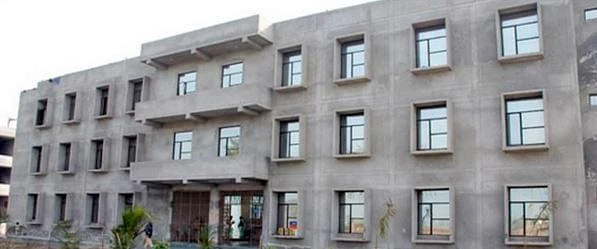
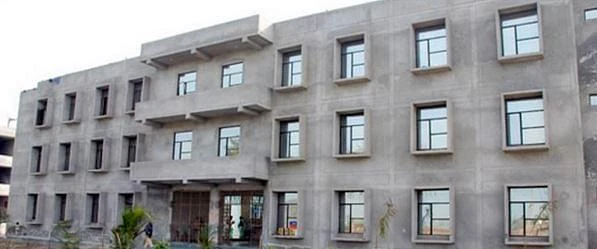
This is where the college's "practical, not luxurious" identity is most apparent. The campus is part of a larger 4-acre multi-college setup under the Haryana Group of Institutions. The academic infrastructure is functional: you've got the necessary labs for nursing foundation, community health, nutrition, anatomy, and maternal health. The library holds around 3,500 books and some journals.
The hostel is a defining experience—and a point of contention. It's primarily for girls, with a capacity of about 540 beds shared across institutions. Rooms are basic, with 2-3 sharing, and non-AC is the standard. Reviews consistently point to two pain points: summer power cuts and repetitive mess food. The college provides bus transport for clinical postings. Social life is quiet and regulated; the administration is known for being strict about attendance, leave, and hostel gate timings. If you're looking for a vibrant, liberal campus culture, you won't find it here. It's more of a disciplined training academy.
Scouring platforms like CollegeDunia and Shiksha paints a consistent picture. The consensus? HCN is a solid, middle-tier choice that does the job it promises, albeit with some notable trade-offs.
Students repeatedly praise the clinical exposure at Civil Hospital, Sirsa, calling it invaluable for building practical confidence. The faculty gets good marks for being approachable and tailoring support for students from diverse educational backgrounds. Parents and students who value structure appreciate the enforced discipline, seeing it as preparation for the rigorous nursing profession.
But the negatives are just as consistent. Infrastructure grievances top the list, especially unreliable hostel electricity. The mess food quality is described as average at best, monotonous at worst. The strict rules—around leave, outings, and attendance—are a frequent source of frustration for students feeling the constraints. And there's a clear understanding that "placement support" means notification of vacancies, not hand-holding through the process. You're expected to be proactive.
Haryana College of Nursing is a specific solution for a specific student. It's worth it if you are cost-conscious, seeking a recognized INC degree, and your primary goal is to build a strong clinical foundation to clear government nursing exams or secure a job in a private hospital. Its value lies in its practicality, its crucial clinical tie-ups, and its disciplined environment that keeps you focused. However, look elsewhere if campus lifestyle, modern hostel amenities, or a more autonomous student life are high priorities for you. The trade-offs in comfort and freedom are real. Think of it as a launchpad, not a destination. For many in the region, that's exactly what they need—a reliable, affordable launchpad into a nursing career. Its official recognition by the Indian Nursing Council is the bedrock of that reliability.
In this preview: 1 photo · 0 videos
Haryana College of Nursing is a private institution. However, it is officially affiliated with a government university, the University of Health Sciences, Rohtak (UHSR).
Admission to the B.Sc. Nursing program is not based on NEET. Instead, it is based on the Haryana Common Entrance Test (CET) conducted by its affiliating university, UHSR Rohtak.
The college campus has hostel facilities, but the nursing hostel is predominantly for female students. Male students typically arrange for private paying guest (PG) accommodations nearby.
The total approximate expenditure for the complete 4-year B.Sc. Nursing program is around ₹6 Lakhs. This estimated cost includes hostel and mess charges.
Yes, the degree is valid for pursuing nursing careers abroad. As the college is recognized by the Indian Nursing Council (INC), graduates are eligible to sit for international licensing exams like the NCLEX (for the USA and Canada) and the OSCE (for the UK).
Share what future students should know about Haryana College of Nursing.
Student voices are not rewritten by colleges. We remove spam and abuse.
Wider admission question? Community PulseWhat should future students know?
Tell us which course you're considering. We'll help you work out the next step.
Get instant Partner access after mobile verification. Your public edits are reviewed before they go live.
Claim this college