Loading Admission Guardian content
Loading Admission Guardian content
Find a program, read its fee details and explore the admission requirements.
Summary of the programs shown below. Fee periods can differ by program. Check the note beside each amount before comparing costs.
| Course | Stream | Fees |
|---|---|---|
| Master of Business Administration [MBA] | Management | 38000 |
| Bachelor of Technology [B.Tech] | Engineering | 78000 |
Specializations
Eligibility: Graduation
Specializations
Eligibility: 10+2 with 75% + JEE Main
Haryana Institute of Engineering and Technology (HIET) in Kaithal is a study in practical compromises. For students from the surrounding districts of Haryana, it represents a low-cost, accessible path to a B.Tech or MBA degree from Kurukshetra University. You won't find cutting-edge labs or a bustling corporate recruitment scene here. What you will find is a functional, no-frills institution where the annual tuition for engineering hovers around ₹80,000—a figure that defines its core appeal and its limitations. The college's reality is best understood through the lens of its students: a place for self-starters who need an accredited degree as a stepping stone, not a destination in itself.
HIET’s academic portfolio is straightforward, centered on undergraduate engineering. All B.Tech programs are four years long, following the curriculum mandated by Kurukshetra University. The total intake across five branches—Computer Science & Engineering (CSE), Electronics & Communication (ECE), Mechanical (ME), Civil (CE), and Information Technology (IT)—is estimated at around 300 seats, with 60 seats allocated to each specialization.
The academic rhythm is predictable: internal sessional exams and end-semester university papers. For postgraduate studies, the college offers an MBA program with typical specializations like Finance and Marketing. An M.Tech in select branches is occasionally offered, but availability seems to hinge on demand and faculty.
Faculty strength sits around 45-50 members. It’s a mixed bag. While the official website lists a handful of assistant professors and notes that about 15% hold PhDs, student sentiment often highlights accessibility over prestige. The teachers are generally described as approachable and willing to help, which counts for something in a tier-3 setting. You’re not getting IIT-level mentorship, but you can get your doubts cleared.
This is where expectations need the most calibration. The college’s official placement claims and the ground reality reported by students often tell two different stories.
Officially, you might hear figures like a 70-80% placement rate and a highest package of 13 LPA. That top number, however, is widely understood to be an off-campus outlier—a student who cracked a coding contest or leveraged family connections. The working average package that alumni consistently cite is in the ₹3.2 to 4.0 LPA range, with a median closer to ₹3 LPA.
The more telling metric is the on-campus placement rate. While the brochure suggests 70-80%, multiple student reviews on platforms like Shiksha and CollegeDunia peg the actual rate for on-campus offers much lower, around 30-40% for core branches. Placement drives are modest. Recruiters are largely the mass IT hirers—Wipro, TCS, Infosys, Tech Mahindra, HCL—and a few core companies like Ashok Leyland or Escorts. For MBA students, banks like ICICI are occasional visitors.
The gap between claim and consensus is notable. Most students aiming for decent jobs end up relying on off-campus efforts, university pool placements, or government job exams. The required 6-week industrial trainings after the 4th and 6th semesters are also typically secured by students themselves.
Affordability is HIET’s strongest card. For the 2025-2027 cycle, the annual tuition fee for B.Tech is estimated between ₹78,000 and ₹88,550. Over four years, you’re looking at a total tuition cost of approximately ₹3.12 to ₹3.55 lakhs. The MBA program is even more affordable, with annual fees around ₹38,000-₹42,000.
But tuition is just part of the picture. Add in hostel and mess charges (₹47,000 – ₹55,000 per year), university fees (₹5,000/year), semester exam fees, and a one-time refundable security deposit, and the annual cost for a hostelite can approach ₹1.5 lakhs. It’s still low compared to NCR colleges, but it’s not just the advertised tuition.
Financial aid primarily comes through state government schemes. Scholarships for SC/ST/OBC students under the Haryana State Post-Matric Scholarship scheme are available. The college also mentions merit-based waivers for JEE toppers, though the specifics and thresholds aren’t widely advertised.
Admission to the B.Tech programs is primarily through the Haryana State Technical Education Society (HSTES) counseling, which uses JEE Main scores. You can find the official counseling portal and details via the HSTES website.
The cutoffs aren’t fiercely competitive. For the most sought-after branch, Computer Science, JEE Main ranks up to 8,00,000 - 1,00,000 have been accepted in recent years. For Mechanical, Civil, and ECE, seats often remain vacant after counseling rounds, leading to a "Direct Admission" or management quota process. This involves approaching the college directly with your 10+2 and JEE scores.
The process is standard for state counseling: online registration, choice filling based on your rank, seat allotment, and then physical reporting to the college for document verification. The application fee is nominal, usually between ₹500 and ₹1,000.
For the MBA program, admissions are based on scores from national tests like CMAT or MAT, or sometimes on graduation merit.
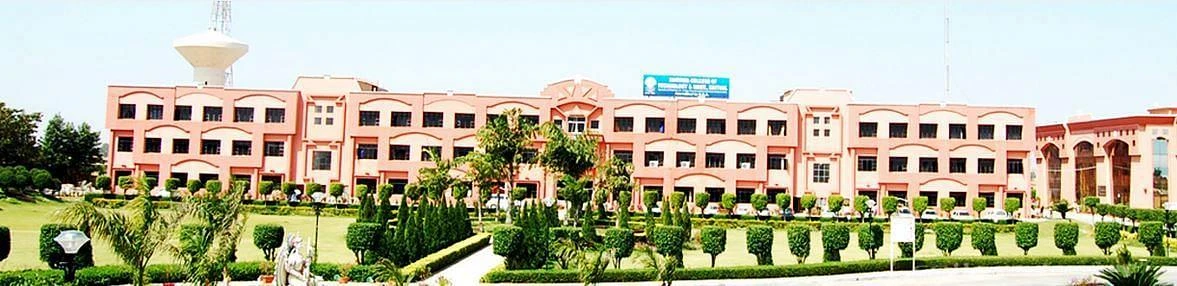
The campus, located directly on the Ambala Highway, spans an estimated 11-15 acres. It’s functional. The library is AC-equipped with around 8,000 books and a digital section. Labs for CSE, ME, and other branches exist and are operational, but student reviews frequently label the equipment as "dated" or "from the 90s," particularly in mechanical workshops.
Hostels are basic. There are separate facilities for boys and girls, with power backup that’s known to struggle during peak summer months. The food is described as edible but monotonous. The on-campus cafeteria, "Wheels and Wings," serves as the usual social hub for snacks and basic North Indian meals.
Social life is quiet. Don’t expect a vibrant fest calendar. The atmosphere is often compared more to a strict school than a college, with a mandatory 75% attendance rule enforced. For connectivity, the college provides a bus service covering Kaithal, Kurukshetra, and nearby villages, which is a major plus for day scholars. The campus Wi-Fi has been a historical pain point, with speeds once officially listed at a glacial 2 Mbps; it may have improved, but it’s still a common grievance.
Scouring forums like Quora and Reddit (r/Btechtards) paints a consistent picture. The median consensus is that HIET Kaithal is a "budget-friendly" or "backup" option. It’s for local students who need a degree close to home without the financial burden of moving to a bigger city.
The positives are practical: Affordability tops the list. Faculty accessibility is another—teachers are seen as helpful and approachable. For students from Kaithal, Jind, or Pundri, the local convenience and bus transport are significant benefits.
The negatives are equally practical. Placement quality is the biggest caveat. Reviews are filled with warnings: "Don't expect Google or Microsoft." Infrastructure, especially in core engineering labs, is considered sub-par and in need of upgrade. The administrative management is often described as slow, particularly regarding paperwork and refunding security deposits. The social and cultural scene is nearly non-existent.
A paraphrased quote from a senior sums up the student verdict: "If you are a self-learner and just need a degree to apply for government jobs or GATE, this college is fine. If you want a high-paying corporate job from campus, look elsewhere."
HIET Kaithal serves a specific niche, and judging it outside that context isn't fair. It is not a college for someone with national-level ranks or aspirations for a high-flying, campus-driven tech career. Its NIRF ranking—or lack thereof—tells you where it stands on the national stage.
It is, however, a viable and economically sensible choice for a particular student: one from the northern Haryana region, with a moderate JEE rank and a limited budget, who views the B.Tech degree as a foundational credential. It’s suitable for students targeting government service exams (like ESE or state PSUs), GATE for M.Tech, or who are confident enough to skill up independently via online platforms and crack the off-campus job market. For that student, the low fee and local convenience make it a rational, if unglamorous, option. For anyone else, especially those who can afford to relocate or are seeking a vibrant collegiate experience, the many compromises will likely feel too significant.
In this preview: 1 photo · 0 videos
The institute is considered decent for obtaining the CSE degree. However, students report that to secure placements, it is essential to supplement the curriculum by learning in-demand coding skills like MERN stack or Java through external online platforms such as YouTube or Udemy.
Candidates seeking direct admission can visit the campus with their 10+2 mark sheets and JEE scores. Admission under the Management Quota is possible if seats are vacant, subject to the institute's prevailing criteria.
Yes, the college provides a dedicated bus route for students traveling from Kurukshetra. The service also includes connectivity to Pehowa.
While the core tuition fee is reported to be stable, students have noted occasional additional charges, such as "development fees" or fines for low attendance. It is advisable to clarify all components of the fee structure during admission.
Yes, the degree is valid for government jobs as HIET is affiliated with Kurukshetra University, a recognized state university, and its programs are approved by the All India Council for Technical Education (AICTE).
Share what future students should know about HIET.
Student voices are not rewritten by colleges. We remove spam and abuse.
Wider admission question? Community PulseWhat should future students know?
Tell us which course you're considering. We'll help you work out the next step.
Get instant Partner access after mobile verification. Your public edits are reviewed before they go live.
Claim this college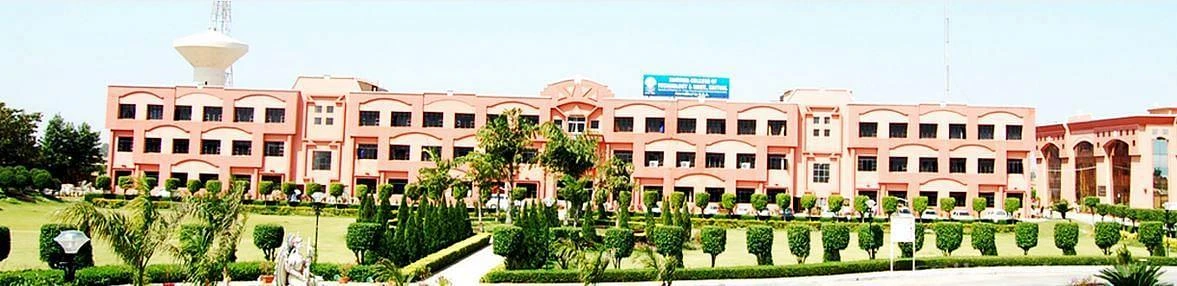
 Auditorium
 Cafeteria
 Campus Shuttle
 Computer Labs
 Gym
Gym Hostel
 Medical
 Science Labs
 Study Library