Loading Admission Guardian content
Loading Admission Guardian content

Provisional score based on available data. It may change as more information is verified.
Find a program, read its fee details and explore the admission requirements.
Summary of the programs shown below. First-year fee. Check the note beside each amount for inclusions and exclusions.
| Course | Stream | Fees |
|---|---|---|
| Bachelor of Technology [B.Tech] | Engineering | 45000 |
Specializations
All accepted exams
Eligibility: 10+2 with 50% + KEAM
1 exam with cutoff data available
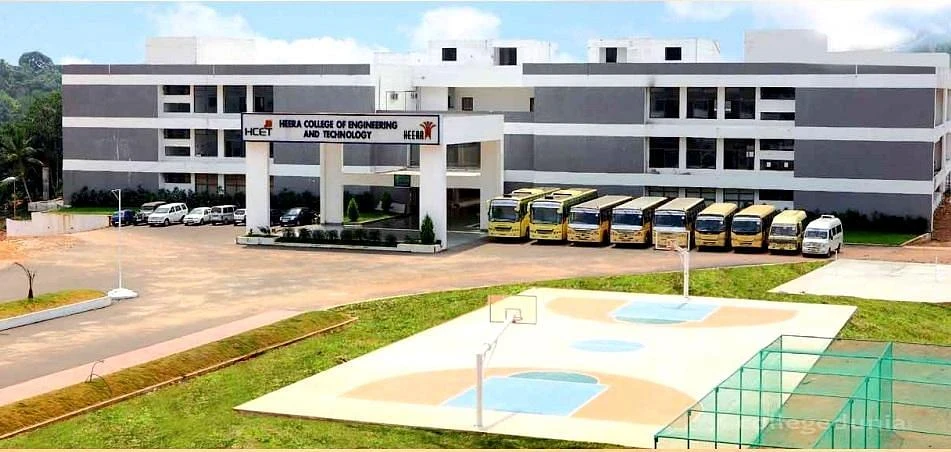
Heera College of Engineering and Technology sits on a sprawling 30-acre campus in the quiet outskirts of Nedumangad, offering a specific kind of engineering education. Established in 2010 and affiliated with APJ Abdul Kalam Technological University (KTU), it’s a private institution that has carved out a reputation as a solid, if unspectacular, mid-tier option in Kerala’s crowded engineering landscape. The college’s modern infrastructure and peaceful, green environment are its strongest selling points, creating a setting that’s genuinely conducive to study. But prospective students need to read the fine print, especially around placements. The official narrative of high packages and universal job offers doesn’t quite match the reality described by alumni on forums and review sites. For a student with a moderate KEAM rank looking for a structured, campus-focused education away from city distractions—and who is prepared to hustle for their own job opportunities—HCET can be a pragmatic choice. For those dreaming of guaranteed, high-paying campus placements, the picture is more complicated.
HCET runs a standard set of six B.Tech programs under the KTU curriculum, with a total intake of about 360 students. Computer Science & Engineering is the largest and most sought-after branch with 120 seats, followed by the newer AI & ML program with 60. The other offerings—Electronics & Communication, Electrical & Electronics, Mechanical, and Civil Engineering—have smaller intakes ranging from 30 to 60 seats.
The academic approach leans into a "Learn By Doing" philosophy. That’s not just brochure talk. They’ve invested in a Fab Lab for prototyping and provide access to NPTEL virtual labs, which is a decent resource for a college at this level. The faculty is led by Dr. Binu B. Pillai and includes several M.Tech and PhD holders. Student reviews consistently mention that teachers are accessible and supportive with academic projects, which is a significant plus. The grading follows KTU’s 10-point CGPA system, and the semester schedule is tightly aligned with the university’s calendar. It’s a structured, no-surprises academic environment. You’ll know what to expect, and the support system is there if you seek it out.
This is where you need to separate marketing from lived experience. Third-party sites sometimes list an eye-popping highest package of INR 48 LPA. Let’s be clear: that figure is almost certainly an error or refers to an extraordinary off-campus achievement. Treat it as an outlier, not a benchmark. The highest packages students actually report from on-campus drives are in the INR 7–10 LPA range.
The more telling numbers are the average and median. For the 2024-25 cycle, the average package is estimated at INR 3.5 – 4.0 LPA, with a median around INR 3.2 LPA. That’s a realistic starting point for a mid-tier private college in the region.
The biggest gap, however, is in placement percentage. While the college aims for high figures, the consensus from student reviews on platforms like Shiksha and CollegeDunia is starkly different. For core branches like Mechanical and Civil, placement rates can be as low as 20-40%. Computer Science does better, but even there, the idea of 100% placement is more aspirational than actual. Most students who land jobs do so with IT/Software recruiters like TCS, Infosys, UST Global, and IBS Software. Core engineering recruiters like Menkol Industries or Bmarc Engineering visit, but in far smaller numbers.
The verdict? The placement cell provides a platform and brings companies to campus, but securing an offer often requires significant individual effort, off-campus applications, and skill-building outside the syllabus. Don’t enroll expecting a guaranteed ticket to a high-paying job.
The fee structure is relatively transparent and affordable compared to many private engineering colleges. For students admitted through the KEAM merit quota, the annual tuition is around INR 50,000. Management quota fees are higher, ranging from INR 75,000 to 1,00,000 per year. Add to that hostel and mess fees, which run between INR 45,000 and 60,000 annually. When you factor in the one-time admission fee (INR 500), KTU registration, and exam fees, the total four-year cost for a merit student is estimated at about INR 5.02 lakhs.
That’s a manageable investment, especially for a local student. The college also offers fee waivers and scholarships for students with high KEAM ranks or excellent marks in their 12th standard exams. It’s worth inquiring directly with the administration about these options during the admission process.
Admission is primarily governed by the Kerala Engineering Architecture Medical (KEAM) entrance exam. For the general merit seats, your KEAM rank is everything. The cutoffs aren’t fiercely high, which aligns with the college’s mid-tier positioning. In the 2024 KEAM Round 2, the closing ranks were around 49,241 for Civil Engineering, 49,684 for Computer Science, and 51,149 for Mechanical Engineering.
Selections for these seats happen through the Centralized Admission Process (CAP) run by the Commissioner for Entrance Examinations (CEE), Kerala. If you’re targeting a management or NRI quota seat, the process is different. The college accepts JEE Main scores for some of these seats, and you’ll need to apply directly to the college with an application fee of INR 500. Roughly half the seats are under management/NRI quotas, so there’s a pathway even if your KEAM rank isn’t ideal.
The 30-acre campus is consistently praised as HCET’s crown jewel. It’s lush, green, and quiet—a genuine escape from the noise of Thiruvananthapuram city, which is about a 45-minute drive away. The infrastructure is modern and well-maintained, with spacious labs for CSE, ECE, and Mechanical engineering. The library has a solid collection of over 15,000 books and digital journal access.
Hostel life is a mixed bag. The boys' hostel is on-campus and described as well-furnished with attached bathrooms. The girls' hostel is in a managed private building nearby. The quality gets a 3.5/5 from students, while the canteen food rates about a 3/5. The college runs a bus fleet that covers most city suburbs, which is essential given the remote location.
Social life is defined by the college’s own events. The annual cultural fest, DEJAVU, and the mechanical fest, Autostrada, are well-organized and draw crowds from other colleges. But if you’re looking for a vibrant, integrated city-college social scene, you’ll be disappointed. The isolation is real. So is the strictness: a 75% attendance mandate is enforced, along with rules on uniforms and grooming. This is a disciplined, campus-centric environment.
Scouring reviews on Shiksha, CollegeDunia, and Quora reveals a clear, median consensus. Students see HCET as a "middle-ground" college. It’s generally considered a step above many newer, smaller private institutes but doesn’t have the brand recognition or placement clout of top government colleges like College of Engineering Trivandrum (CET).
The positives are repetitive and heartfelt: the beautiful campus, the good infrastructure, and the helpful faculty. Many students say it’s an ideal place to focus on studies and academic projects without distraction.
The criticisms are just as consistent. The disparity between placement claims and reality is the biggest sore point. Administrative processes are called slow, and the focus on fee collection is noted. The strict rules and remote location are frequently mentioned as downsides. A paraphrased quote from a Quora user sums it up: “If you want a calm place to study and are okay with strict rules, HCET is good. But for a 'happening' social life, look elsewhere.” Another review on Shiksha bluntly states, “The infrastructure is excellent, but placements for core branches... are almost non-existent.”
HCET is a college of clear trade-offs. It offers a peaceful, green campus with good infrastructure and supportive faculty at a relatively affordable cost. If you’re a student with a KEAM rank in the 45,000-55,000 range, prioritize a disciplined study environment, and are pursuing CSE or a related IT field, it can be a sensible choice. You’ll get a decent education and a degree from a recognized university (KTU), but you must be proactive about internships and skill development to compete in the job market.
However, if your primary goal is strong, assured campus placements in core engineering fields like Mechanical or Civil, you should temper your expectations significantly. The data and student testimonials simply don’t support that outcome here. Similarly, if you crave an autonomous, socially vibrant college life, the strict rules and isolated location will likely feel restrictive. HCET is best for the pragmatic, self-motivated student who views college as a launchpad they themselves must fuel, not a guaranteed elevator to success.
In this preview: 1 photo · 0 videos
Yes, Computer Science is the most popular branch at HCET Nedumangad and has the best placement record in the college.
The hostel fee at Heera College is approximately INR 45,000 to 55,000 per year, which includes mess charges.
Yes, Heera College does have a management quota. Roughly 50% of seats are available under management and NRI quotas.
Placements in core mechanical companies at HCET are low. Most students from the Mechanical Engineering branch opt for IT sector jobs or pursue higher studies.
This high package is most likely an error in third-party reporting. The realistic highest placement packages at HCET are in the range of 7 to 10 LPA.
Share what future students should know about HCET.
Student voices are not rewritten by colleges. We remove spam and abuse.
Wider admission question? Community PulseWhat should future students know?
Tell us which course you're considering. We'll help you work out the next step.
Get instant Partner access after mobile verification. Your public edits are reviewed before they go live.
Claim this college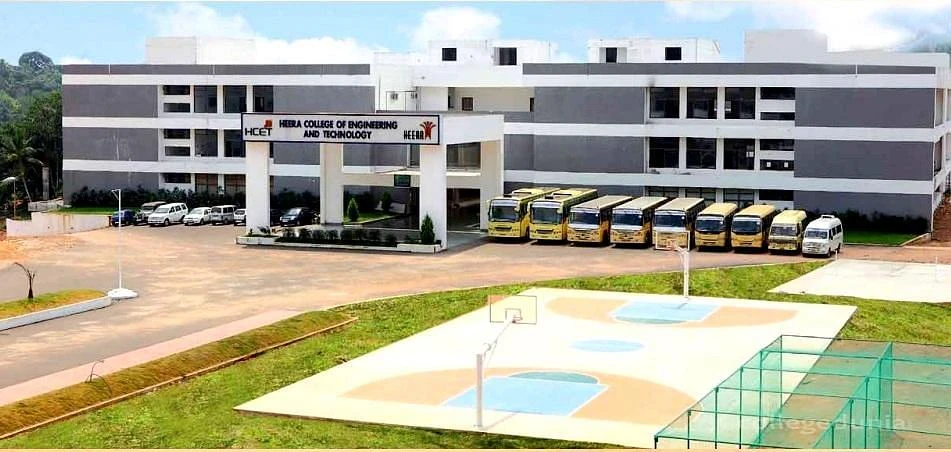
 Auditorium
 Cafeteria
 Computer Labs
 Hostel
 Medical
 Science Labs
 Sports Complex
 Study Library