Loading Admission Guardian content
Loading Admission Guardian content

Provisional score based on available data. It may change as more information is verified.
Find a program, read its fee details and explore the admission requirements.
Summary of the programs shown below. First-year fee. Check the note beside each amount for inclusions and exclusions.
| Course | Stream | Fees |
|---|---|---|
| Post Basic Bachelor of Science [P.B.B.Sc] (Nursing) | Paramedical | 121000 |
| General Nursing and Midwifery [GNM] | Paramedical | 124000 |
| Bachelor of Science [B.Sc] (Nursing) | Paramedical | 207500 |
| Master of Science [M.Sc] | Paramedical | 238500 |
Specializations
All accepted exams
Eligibility: 10+2
Eligibility: 10+2
Specializations
All accepted exams
Eligibility: 10+2
Specializations
Eligibility: Graduation
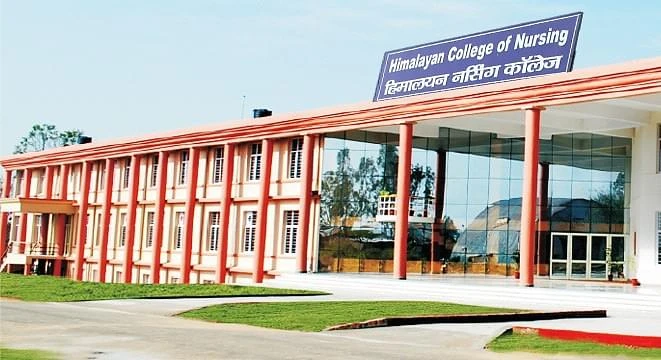
If you're looking for a nursing college where clinical training isn't just a chapter in a textbook but a daily reality, Himalayan College of Nursing (HCN) in Dehradun is a serious contender. It's not a typical campus—it's a massive, 200-acre health sciences university anchored by a 1200-bed teaching hospital. That's the entire pitch. Students here don't just visit a hospital; they are part of its daily rhythm from their first year. The trade-off? A highly disciplined, work-focused environment where job security is almost guaranteed, but the typical "college life" takes a backseat. For the right student—one who wants to graduate as a competent, unflappable nurse—that's a compelling deal.
HCN runs the standard ladder of nursing programs, but the scale and integration are what set it apart. The B.Sc. Nursing program is the big draw, with an intake that can go up to 190 students. They also offer Post Basic B.Sc., M.Sc. with five specializations (like Medical-Surgical and Pediatric Nursing), a Nurse Practitioner in Critical Care (NPCC) course, and a Ph.D.
The academic calendar kicks off in August or September, and they use a 10-point CGPA system. But let's be clear—the real curriculum happens in the wards. Faculty, led by Principal Dr. Sanchita Pugazhendi and other PhD-holding professors, are consistently described in reviews as experienced and approachable. The teaching style, however, leans traditional. You'll see a lot of PowerPoints in lecture halls that can feel cramped with a full batch.
Where the college shines academically is in its partnerships. The MoU with the University of Tsukuba, Japan for student exchange is a genuine differentiator for those looking at international exposure. There's also a tie-up with the University of Wisconsin Oshkosh, USA. An interesting MoU with EY (Ernst & Young) at the university level aims to polish soft skills and professional standards—a nod to the broader career landscape beyond the bedside.
This is the simplest, most straightforward part of the HCN proposition. The placement story is dominated by one name: Himalayan Hospital. The college claims nearly 100% placement for B.Sc. and M.Sc. graduates, and student reviews largely back that up. You don't hear much anxiety about job hunts here.
The packages, however, are modest. The highest package reported for 2024 was around 6 LPA, likely for an M.Sc. graduate in a specialized role. The average clusters between 3.5 to 4.5 LPA, with a median around 3.8 LPA. It's not a high-flying corporate salary, but it's a stable, immediate income in your field right out of college. External recruiters like AIIMS (Rishikesh), Max, Fortis, and Apollo do visit, but the primary pipeline is internal.
There's a catch, though. If you take a job at Himalayan Hospital right after graduation, there's typically a 1-year service bond. And that mandatory 6-month internship? It's usually at the same hospital and is often unpaid or comes with just a nominal stipend. So you're trading early earnings for that unparalleled clinical experience and a near-guaranteed job ticket.
Fees at HCN follow a two-tier system: one for All India Category (AIC) students and a lower rate for Permanent Residents of Uttarakhand (PRU). For the 2024-2024 session, the annual tuition for B.Sc. Nursing is about ₹1.5-1.8 lakhs (AIC) or ₹1.1-1.3 lakhs (PRU). M.Sc. fees are slightly higher.
On top of tuition, you have a one-time admission fee (₹20,000), a refundable security deposit (₹20,000), and other annual charges for exams and the library (₹25,000-35,000). Hostel and mess costs are significant, ranging from ₹80,000 to ₹1.2 lakhs per year. For outstation B.Sc. students, hostel is generally mandatory due to early clinical shifts.
A rough total for a 4-year B.Sc. degree, excluding personal expenses, lands between ₹6.5 to ₹7.5 lakhs. The college does offer merit-based scholarships that can cover 25-50% of tuition, and there are specific rebates for Uttarakhand domicile students, which helps soften the blow.
Admission is entrance-exam driven. The primary gate is the CEENP (Common Entrance Examination in Nursing and Paramedical), though SRHU also conducts its own NEE (Nursing Entrance Examination). The syllabus is Class 11 and 12 level Biology, Physics, and Chemistry. Students describe the difficulty as moderate.
The process is standard: take the exam, check the merit list, attend counseling, and clear a medical examination. The application window runs from March to June, with an application fee of ₹1,500 (₹1,000 for Uttarakhand domicile candidates).
Officially, SRHU states admissions are purely merit-based. It's worth noting that some fee brochures reference a "Management Category," but the transparency and scale of this are not officially detailed. Your safest bet is to focus on scoring well in the CEENP.
The campus is HCN's biggest asset and its defining environment. It's a 200-acre, pollution-free zone in the foothills—beautiful and sprawling. The infrastructure for learning is top-notch: advanced simulation labs for OBG, nutrition, and anatomy that students rave about, and a central library with over 38,000 books.
But the heart of it all is the 1200-bed Himalayan Hospital. It's not just a facility; it's the backdrop to your entire student life. This integration is a double-edged sword for campus life. On one hand, you have incredible sports facilities—large grounds, basketball courts, a gym. On the other, the overall vibe is consistently described as more "hospital environment" than "fun college." Social life is limited. The discipline is real, with strict 75-80% attendance rules.
Hostels are separate for genders and can house 800+ students. Quality is generally rated 4 out of 5 by students, but triple-sharing is common for juniors. The most common complaint? The hostel food. Reviews call it repetitive and just "okay." Wi-Fi is available campus-wide, reported as average in hostels but reliable in academic blocks.
Synthesizing feedback from platforms like CollegeDunia and Shiksha, a clear consensus emerges. The overwhelming positive is the clinical exposure. Phrases like "clinical goldmine" and "best in North India" are repeated. Students feel exceptionally competent upon graduation because they've seen and done so much.
The job security is the next biggest plus. "You don't need to worry about a job" is a common refrain. The faculty's experience and approachability are also praised, as are the simulation labs and the serene, green campus.
Now, the negatives. The strict, disciplined atmosphere isn't for everyone. If you're looking for a vibrant, liberal campus life, you'll be disappointed. The hostel food gets consistent poor marks. Some also feel the lecture-based teaching could be more interactive, and large batch sizes can make some sessions feel impersonal.
Himalayan College of Nursing is a specialist's choice. It's not the most well-rounded "college experience," but it might be one of the most effective nursing training experiences in the private sector. If your primary goal is to emerge as a highly skilled, confident, and immediately employable nurse, HCN delivers that in spades. The near-100% placement into a major hospital is a huge weight off your mind in today's job market. It's ideal for students who are serious, disciplined, and want to immerse themselves completely in the medical world. However, if you prioritize a lively social scene, a less rigid atmosphere, or have ambitions for immediately high-paying corporate roles, you might find the environment too restrictive and the financial return too modest. For the right candidate—one who views nursing as a rigorous vocation—the investment in time and fees at HCN pays off in solid skill and surefire job placement.

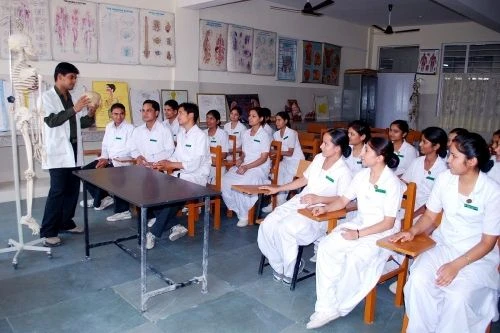

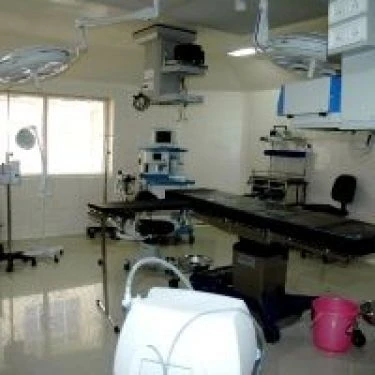
In this preview: 5 photos · 0 videos
While AIIMS Rishikesh is a government Institute of National Importance with lower fees, HCN Dehradun is widely considered the best private alternative, offering comparable clinical exposure to its students.
The CEENP entrance exam is considered to be of moderate difficulty. Prospective students should focus their preparation on the Biology, Physics, and Chemistry syllabus from Classes 11 and 12.
Yes, graduates can pursue jobs abroad. The college's recognition by the Indian Nursing Council (INC) and its Memoranda of Understanding (MoUs) with universities in Japan and the USA help students prepare for and clear exams like the NCLEX and IELTS.
Typically, yes. There is usually a one-year service bond for graduates who accept a placement at the associated Himalayan Hospital immediately after completing their B.Sc. Nursing degree.
For the B.Sc. Nursing program, hostel stay is generally mandatory for outstation students. This policy is in place due to the requirement of attending early morning clinical shifts.
Share what future students should know about HCN.
Student voices are not rewritten by colleges. We remove spam and abuse.
Wider admission question? Community PulseWhat should future students know?
Tell us which course you're considering. We'll help you work out the next step.
Get instant Partner access after mobile verification. Your public edits are reviewed before they go live.
Claim this college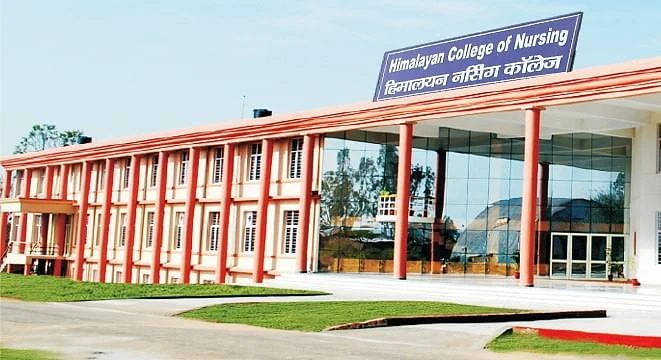
 Auditorium
 Bank & ATM
 Cafeteria
 Campus Shuttle
 Campus Wi-Fi
 Computer Labs
 Medical
 Science Labs
 Sports Complex
 Study Library