Loading Admission Guardian content
Loading Admission Guardian content

Provisional score based on available data. It may change as more information is verified.
Selected ranking categories, with the recorded year beside each result. Open all records for the complete history.
1 published record · Lower numeric ranks are stronger
Find a program, read its fee details and explore the admission requirements.
Summary of the programs shown below. Total course fee. Check the note beside each amount for inclusions and exclusions.
| Course | Stream | Fees |
|---|---|---|
| Master of Engineering [ME] | Engineering | 60000 |
| Bachelor of Engineering [BE] | Engineering | 220000 |
| Bachelor of Engineering [BE] {Lateral} | Engineering | 348000 |
Specializations
Eligibility: Graduation with 50% + TANCET
Specializations
All accepted exams
Eligibility: 10+2 with 50% + TNEA
Specializations
All accepted exams
Eligibility: 10+3 with 50% + TNEA
1 exam with cutoff data available - showing recent entries
Holy Cross Engineering College (JEC) in Thoothukudi is a study in contrasts. It's a private institution that's been around since 2008, affiliated with Anna University, and it's built a reputation for disciplined academics and supportive faculty. But talk to the students, and you'll hear a different story about the infrastructure and the real placement numbers. The college claims a 95% placement rate and even boasts an international accreditation from JAS-ANZ. The reality on the ground, pieced together from student reviews, is more nuanced. If you're a student from a rural background in Tamil Nadu looking for a structured, affordable engineering education with decent teaching, this might be a viable option. If you're banking on top-tier campus placements or a vibrant, modern campus life, you might want to look elsewhere.
The academic portfolio here is standard for a Tamil Nadu engineering college under Anna University. You've got the usual suspects: Computer Science, ECE, Mechanical, and EEE. They've also added newer programs like B.Tech in Artificial Intelligence & Data Science and Information Technology to keep pace with trends. The B.E. in Biomedical Engineering is a less common offering. Intakes are modest—60 seats for CSE and ECE, 30 for Mechanical and EEE. The M.E. in Computer Science and Engineering has an intake of 18.
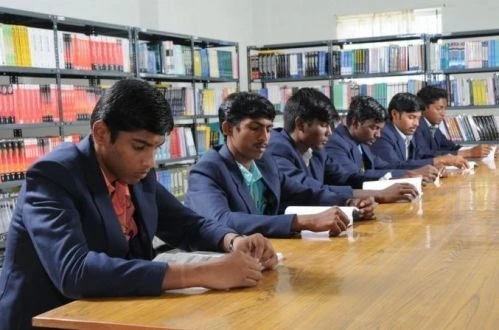
The teaching quality, according to most student accounts, is a genuine positive. Faculty are described as knowledgeable, helpful, and good at coaching for exams. The college emphasizes discipline and punctuality, which can be a plus for some and a constraint for others. Academically, it's considered a solid choice, especially for students from surrounding rural areas. They have a system of electives for some customization, and the library is a decent resource, offering online access to over 6,000 journals and 1,99,500 e-books through the N-List program. That's a practical benefit for project work.
Where the academics hit a snag is in practical application. Student reviews consistently point to outdated lab equipment. One review about the mechanical labs is blunt: "Not more than 3 or 4 lab machines are working." For a hands-on field like engineering, that's a significant shortfall. The college mentions annual industry visits, but the depth of industry tie-ups or MoUs isn't detailed.
This is where the official narrative and student experience diverge most sharply. The college's official stance, as seen on its portal, mentions a placement rate "above 95%" and even 100% for the postgraduate M.E. program in recent years. The median package for that M.E. program is listed as 4.5 LPA for 2022-23 and 2023-24.
But you have to read between the lines. Student reviews on platforms like CollegeDunia and Shiksha tell a different story. Phrases like "lack of job opportunities" and "low placements" come up. One review flatly states, "About 50% of students got placed." Another mentions a highest package of 9.4 LPA (unverified), while data for a 2018 batch shows a high of 3.5 LPA. The recruiter list includes names like TCS, Infosys, Wipro, Cognizant, and IBM—standard mass recruiters for Tamil Nadu colleges. But you also see names like Kushwaha Mechanical Erector or Banshree Enterprise, which suggests the scope for core engineering placements is limited.
The truth likely sits in the middle. A small number of students, probably from CSE/IT, land roles with the big IT services firms. Placement for core branches (Mechanical, EEE, Biomedical) seems much tougher. The 100% PG placement claim might be true given the tiny batch size of 18. You'll need to hustle on your own for internships and off-campus opportunities. The college's own data is contradictory on internships, with one source saying they arrange them and another saying they don't.
On paper, the fees are relatively affordable for a private engineering college. The clearest number is for B.E. Computer Science and Engineering: ₹50,000 per year, totaling ₹2,00,000 for four years. For other B.E. courses, a total program fee of ₹3,48,000 is mentioned, which works out to roughly ₹87,000 per year if spread evenly.
The bigger cost for out-of-town students is the hostel. For the 2025 academic year, the total annual cost for hostel and mess ranges from ₹60,000 (triple sharing) to ₹90,000 (single sharing). The mess fee is a fixed ₹30,000 across all room types.
So, a rough total 4-year cost for a B.E. CSE student in triple-sharing accommodation would be: Tuition (₹2,00,000) + Hostel/Mess (₹2,40,000) = ₹4,40,000. That's not including other potential charges like exam fees, lab fees, or personal expenses.
The college states that "all types of Trust and Government Scholarships Assistance are available" and that they offer merit-based and need-based scholarships. Their aim is to ensure no student drops out due to finances. Eligible students should apply for state government scholarships, which can substantially reduce the burden.
Admission is straightforward and follows the Tamil Nadu state system. For B.E./B.Tech programs, it's all through Tamil Nadu Engineering Admissions (TNEA) counseling. Your 12th-standard marks (physics, chemistry, mathematics) are used to calculate a cutoff score, and you're allotted a college based on that score, your choices, and the reservation matrix.
The TNEA 2024 closing ranks give a clear picture of the college's demand. The overall cutoff rank range was wide: from 21,231 to 197,226. The closing rank for the General Category (OC) was 196,151. For specific courses, B.Tech in Artificial Intelligence and Data Science had a closing rank of 96,897, indicating higher demand. Electrical and Electronics Engineering closed at 196,151. Cutoffs for other popular courses like CSE and ECE aren't specified in the available data, but they would logically be higher than the EEE rank.
What does this mean? With a cutoff in the 190,000s for many categories, admission is accessible for a large segment of the state rank list. It's not a college that requires a top-tier rank. For lateral entry into the second year (for diploma holders), admission is based on merit and reservation. For the M.E. program, you need a valid TANCET score or other recognized entrance exam score, along with your B.E. percentage.
The application window for TNEA 2026 is expected to open in the second week of May 2026. There's no mention of an NRI or management quota, so it appears to be a purely merit-and-reservation-based process through the state counseling.
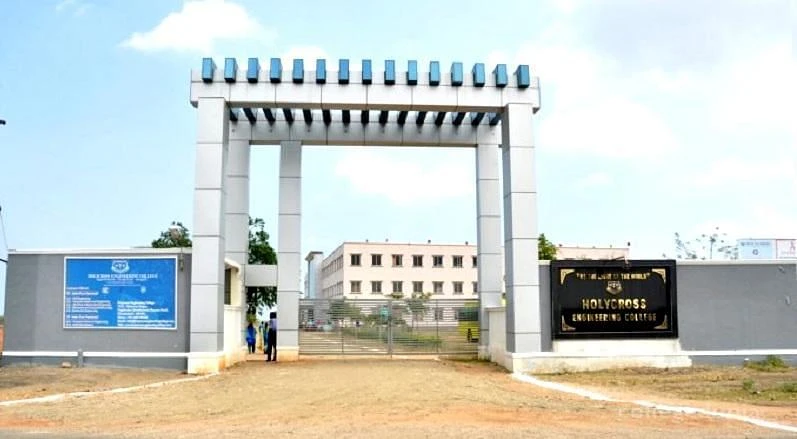
The 15-acre campus provides the basics, but don't expect luxury. The infrastructure is a recurring pain point in reviews. Academically, there are separate labs for each department, but their condition is frequently criticized. The computer labs are reportedly okay, but labs for mechanical and other engineering fields suffer from outdated and non-functional equipment.
The hostels are separate for boys and girls. Rooms are described as "normal"—functional but not fancy. The most consistent complaint across reviews is about the food quality in the mess, which is broadly labeled as "not good." The canteen is available and clean, but some find the snack prices high.
On amenities: There's a sports ground for volleyball, cricket, and kho-kho, plus indoor games and a gym. A medical center with first aid is on campus. The library, as mentioned, is a decent facility. A major drawback for tech-savvy students: Wi-Fi is not provided to students, according to multiple reviews. The college does operate bus and van services for transport from nearby towns like Tuticorin and Tirunelveli.
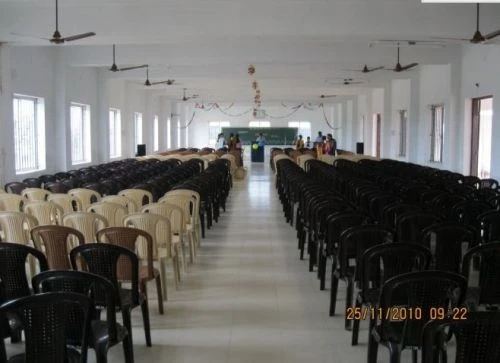
Social life is structured. There are clubs for quizzes, debates, music, and a Red Ribbon Club. The college holds events and seminars in its auditorium. However, the overall atmosphere is described as having "a lot of rules and regulations." Cell phones are reportedly restricted, and campus life can feel restrictive with limited privacy. It's a disciplined, somewhat insular environment.
Synthesizing the student sentiment is crucial to getting a true picture. The positives are clear and consistent:
And the negatives are just as consistent:
The takeaway? Students feel they get decent classroom teaching for a reasonable fee, but they sacrifice modern facilities, a vibrant social life, and strong placement support.
Holy Cross Engineering College (JEC) serves a specific student profile. It's worth serious consideration if you are a Tamil Nadu student with a mid-range TNEA rank, are budget-conscious, and prioritize classroom learning and a degree from an Anna University-affiliated college above all else. The low fees, supportive faculty, and disciplined environment can be a good fit for students from rural backgrounds who are self-motivated to study.
However, you should probably look elsewhere if your priorities include hands-on learning with modern equipment, a high probability of on-campus placement, a lively campus social life, or any degree of campus freedom. The infrastructure issues are significant for an engineering education, and the placement support seems overstated.
In essence, it's a no-frills institution. You get a basic, affordable engineering degree with decent teaching. Everything else—internships, jobs, advanced practical skills—will require immense personal initiative. For the right student, that trade-off is acceptable. For many others, it's a compromise that might be too great.
In this preview: 5 photos · 0 videos
The annual tuition fee for the B.E. in Computer Science and Engineering program for the 2025 academic year is ₹50,000. For other B.E. programs, the college mentions a total course fee of ₹3,48,000, though an exact annual breakdown is not specified in the available data.
For the 2025 academic year, the combined annual cost for hostel and mess varies by room type. It is ₹90,000 for single-sharing rooms, ₹70,000 for double-sharing, and ₹60,000 for triple-sharing. This total includes a fixed mess fee of ₹30,000 per year.
Placement reports are mixed. The college claims high placement rates, but student reviews frequently indicate more modest outcomes, with limited opportunities, especially in core engineering sectors. Recruiters that have visited include major IT service companies like TCS, Infosys, Wipro, Cognizant, and IBM, along with some manufacturing and other firms.
Admission to all B.E. and B.Tech programs is conducted through the Tamil Nadu Engineering Admissions (TNEA) counseling process. Selection is based entirely on the cutoff marks calculated from your Class 12th (physics, chemistry, mathematics) scores, along with merit and the state's communal reservation policy. No other entrance exam is required for state quota seats.
Student opinions are divided. While the teaching faculty and academic discipline are often praised, there are consistent complaints about outdated lab equipment, a lack of working machines in engineering labs, and the absence of Wi-Fi for students. Hostel food quality is also a commonly cited negative aspect of campus life.
Share what future students should know about JEC.
Student voices are not rewritten by colleges. We remove spam and abuse.
Wider admission question? Community PulseWhat should future students know?
Tell us which course you're considering. We'll help you work out the next step.
Get instant Partner access after mobile verification. Your public edits are reviewed before they go live.
Claim this college
 Auditorium
 Cafeteria
 Computer Labs
 Gym
Gym Hostel
 Medical
 Science Labs
 Sports Complex
 Study Library