Loading Admission Guardian content
Loading Admission Guardian content

Find a program, read its fee details and explore the admission requirements.
Summary of the programs shown below. Fee periods can differ by program. Check the note beside each amount before comparing costs.
| Course | Stream | Fees |
|---|---|---|
| Bachelor of Architecture [B.Arch] | Architecture | 73595 |
All accepted exams
Eligibility: 10+2 with 50% + NATA
 Bharti Airtel
 Earth Water Group
 FinStream Financial Advisors Pvt. Ltd.
 Infoaxe
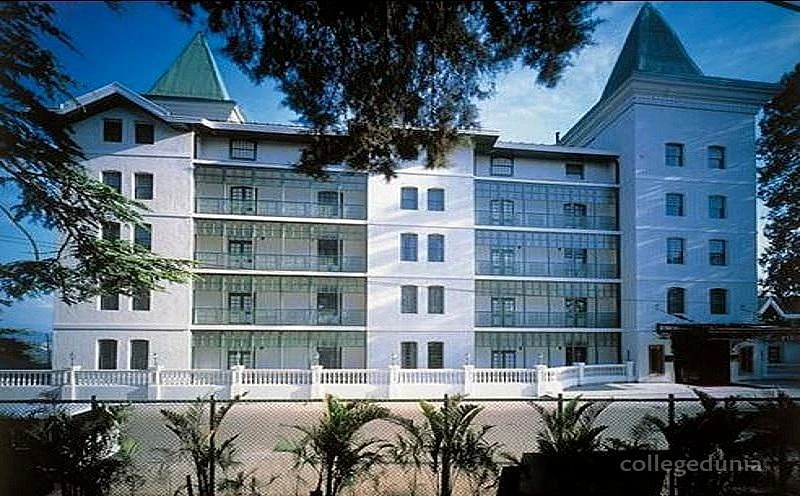
ICL Institute of Architecture and Town Planning sits on a five-acre campus off NH-72, a private college that’s been training architects since 2009. It’s affiliated with Kurukshetra University and holds the essential approvals from the Council of Architecture (CoA) and AICTE. That’s the official stamp. But the student story is more textured—a place where the promise of creative, practical learning in design studios sometimes bumps against the reality of spotty Wi-Fi and crowded hostels. If you’re looking at architecture colleges in Haryana, this one presents a classic trade-off: decent infrastructure and a project-based curriculum on one hand, and significant operational inconsistencies on the other. It’s a college you evaluate not by its brochure, but by the lived experience its students describe.
The academic offering is focused. At the undergraduate level, there’s the five-year Bachelor of Architecture (B.Arch) with an intake of 40 students. For postgraduates, a two-year Master of Architecture (M.Arch) is available with specializations in urban design, sustainable architecture, and conservation.
The B.Arch curriculum covers the standard pillars: architectural design, building materials, construction management, and theory. Where the institute tries to differentiate itself is in its approach. They emphasize project-based learning and weave sustainability into the coursework. There’s a stated focus on digital tools, with training in software like AutoCAD, SketchUp, and other 3D modeling applications. Field trips, site visits, and design workshops are part of the plan to bridge classroom theory and real-world practice.
Faculty quality, according to the official line, includes experienced architects and planners. But here’s where you need to listen to the students. One review pointedly mentioned that while faculty were helpful, many seemed to have very limited experience—"just 3-4 months"—with only the principal being singled out as truly well-qualified. That’s a significant red flag if it’s a widespread sentiment. The academic culture aims for mentorship and creativity, but its effectiveness seems heavily dependent on which instructors you get.
This is the section where official claims and ground reports diverge sharply. The institute’s placement cell claims strong industry ties and states that "90% of the students are surely placed in the firms." They list recruiters like Airtel, Netmax, Jio, and FinStream Financial Advisors.
Now, the student reality check. Reviews tell a different story. One says "almost 50% of the students are placed." Another is more blunt: "0% students were placed from the college" for architecture. The most commonly cited average salary in reviews is 2.5 Lakhs Per Annum (LPA), which is quite low for a five-year professional degree. There’s also a telling comment that "no company ever visited for architecture in any of the colleges in Haryana," suggesting the listed recruiters might be for other programs at the broader ICL group.
Internship support is officially offered, but again, a review claims "0% of students got an internship from the college." The most charitable interpretation is that placement in architecture is often a self-driven endeavor. As one comment put it, "architecture is a self-stand business... after your graduation, you are the boss yourself." That might be true, but it also means the college’s active placement role might be minimal. If you’re counting on the institute to connect you with top firms, the evidence from student experiences suggests you should temper those expectations significantly.
Pinning down an exact annual fee is tricky because the data points are from different years. According to 2022 information, the total tuition fee for the entire five-year B.Arch program is ₹3,19,980. That breaks down to roughly ₹64,000 per year for tuition alone. However, data from 2020-2021 shows the total fees (including other charges) for B.Arch were ₹3.68 lakhs.
You’ll need to budget well above just tuition. The college mentions one-time fees, registration fees, and exam fees. Hostel and mess fees are additional. The hostel fee mentioned is for the cheapest ordinary room, but a specific annual amount isn’t provided in the brief. Scholarship availability is also not mentioned. The bottom line? The total cost of attendance is likely higher than the base tuition figure, and financial aid options appear limited. Always check the official website for the latest, detailed fee structure before applying.
Admission to the B.Arch program is entrance-exam based. The institute accepts scores from the National Aptitude Test in Architecture (NATA), which is the national standard, as well as the Haryana State Technical Education Society (HSTES) exam and the Odisha Joint Entrance Examination (OJEE).
The selection process is straightforward: it’s based on your performance in one of these accepted entrance exams. There’s no mention of a management or NRI quota in the available data. For NATA 2026, registration is slated to begin on March 16, 2026, with Phase 1 exams running from April 4 to June 13, 2026. An application fee is charged. Specific cutoff ranks or percentiles for ICL aren’t available, which is common for newer or smaller private architecture colleges. Eligibility requires passing 10+2 with Physics, Chemistry, and Mathematics, and securing at least 50% marks.
The campus infrastructure gets mixed reviews, which is a theme here. Officially, it’s described as having spacious, modern design studios, well-equipped workshops for model-making, a seminar auditorium, and labs (surveying, computer). Sports facilities include basketball, volleyball, a football ground, and table tennis. The library is said to be well-stocked with books and digital resources.
But student accounts introduce some serious caveats. Some say the labs are poor. Others claim the library was "always closed." Wi-Fi is supposed to be campus-wide, but reviews state it was "not there or off for most of the part." The medical center has a first-aid facility, yet a student complained that "not even a bandage was available," noting a hospital is 1 km away.
Hostel life is a major pain point. While rooms come with basic furniture, a recurring complaint is severe overcrowding: "we were 5 students adjusted in a room. Actually that room was for 3 student sharing." There’s also no geyser for hot water in winter. Food quality in the mess and canteen is perhaps the most consistently criticized aspect, with descriptions ranging from "average good" to "disgusting" and "had flies and dirt."
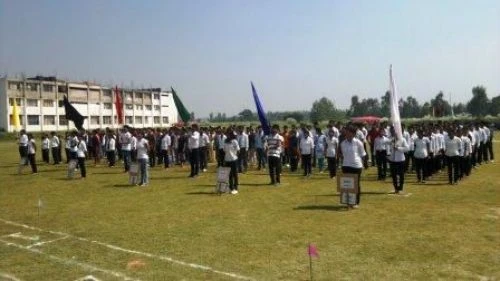
On the social side, the institute does try. They organize cultural and technical fests, sports activities, and encourage participation in design competitions. The student life can be vibrant if you engage with these events, but the quality of basic living amenities remains a significant drawback.
Synthesizing the feedback creates a clear, if contradictory, picture. The positives often highlight the physical infrastructure—classrooms, studios, sports facilities—and a supportive principal. The emphasis on practical, creative learning is appreciated.
The negatives, however, are more numerous and specific. They point to operational failures: inconsistent Wi-Fi, poor lab conditions, a library that’s often inaccessible, and inadequate medical care. Hostel overcrowding and bad food are frequent complaints. Faculty quality is questioned, with allegations of inexperienced instructors beyond the principal. The biggest gap is between placement claims and the reported experience of students finding their own paths.
Management behavior is also cited as a concern, with one student stating they were "dissatisfied with the teachers and the management team." The overall sentiment isn’t uniformly negative, but it’s cautious. It suggests a college where the foundation exists, but execution and consistency in services and outcomes are major issues.
ICL Institute of Architecture and Town Planning is a complex proposition. Its CoA and AICTE approvals make it a legitimate option for studying architecture in Haryana. The project-based curriculum and focus on software training are definite pluses for a hands-on field like this.
But the college is best suited for a specific type of student: one who is highly self-motivated, not reliant on college-driven placements, and somewhat resilient to infrastructural hiccups. If you can look past overcrowded hostels, variable food quality, and spotty campus services to focus purely on the design studio work and your own portfolio development, you might find value here, especially if other options are limited.
However, if you prioritize a consistent learning environment, strong career support from the institute, and comfortable living conditions, the student reviews suggest you should probably look elsewhere. The gap between promise and daily reality, particularly regarding placements and basic amenities, is simply too wide to ignore. Visit the campus if you can, talk to current students, and weigh the cost against the very mixed feedback before making a decision.

In this preview: 5 photos · 0 videos
The institute's core offering is the five-year Bachelor of Architecture (B.Arch) undergraduate program. It also runs a two-year Master of Architecture (M.Arch) with specializations available in urban design, sustainable architecture, and conservation.
Admission to the B.Arch program requires passing 10+2 with Physics, Chemistry, and Mathematics, securing at least 50% marks. A qualifying score in an accepted entrance exam is mandatory. The institute accepts scores from NATA (National Aptitude Test in Architecture), the Haryana State Technical Education Society (HSTES) exam, and the Odisha Joint Entrance Examination (OJEE).
Based on available data, the total tuition fee for the entire five-year B.Arch program is approximately ₹3,19,980 (2022 data). This figure is for tuition only. The total fees, including other charges, were reported as ₹3.68 Lakhs for the 2020-2021 academic year. Prospective students should account for additional costs like hostel, mess, and other mandatory fees.
The campus features design studios, workshops, a library, and computer labs with architectural software. Hostel accommodation is available for both male and female students, along with sports facilities, Wi-Fi, a canteen, and transport. However, student reviews present a mixed picture, citing issues like overcrowded hostel rooms, inconsistent Wi-Fi, variable food quality, and occasional inaccessibility of facilities like the library.
The institute's placement cell claims strong industry connections and a 90% placement rate. However, student reviews frequently contradict this, reporting low on-campus placement activity for architecture specifically, with many students securing jobs independently. The average salary package cited in reviews is around 2.5 LPA (unverified). Internship support is officially offered, but some alumni report minimal direct assistance from the college.
Share what future students should know about ICL Institute of Architecture and Town Planning.
Student voices are not rewritten by colleges. We remove spam and abuse.
Wider admission question? Community PulseWhat should future students know?
Tell us which course you're considering. We'll help you work out the next step.
Get instant Partner access after mobile verification. Your public edits are reviewed before they go live.
Claim this college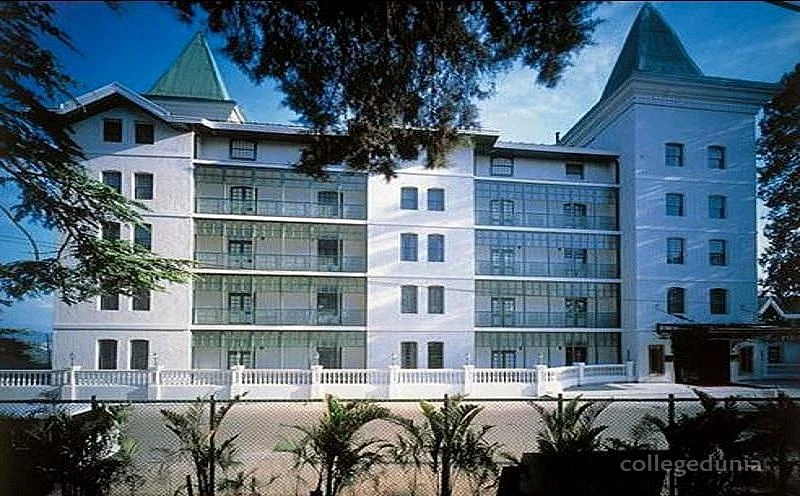

 Auditorium
 Cafeteria
 Computer Labs
 Gym
Gym Hostel
 Medical
 Science Labs
 Sports Complex
 Study Library