Loading Admission Guardian content
Loading Admission Guardian content
Provisional score based on available data. It may change as more information is verified.
Find a program, read its fee details and explore the admission requirements.
Summary of the programs shown below. First-year fee. Check the note beside each amount for inclusions and exclusions.
| Course | Stream | Fees |
|---|---|---|
| Master of Technology [M.Tech] | Engineering | 70000 |
| Bachelor of Technology [B.Tech] | Engineering | 124000 |
Specializations
All accepted exams
Eligibility: Pass in Graduation + GATE
Specializations
All accepted exams
Eligibility: 10+2 with 50% + KEAM
1 exam with cutoff data available
 Bharti Airtel
 BPCL (Refinery)
 Sobha Developers Ltd.
 Spectrum softtech solutions pvt ltd
 Suntech
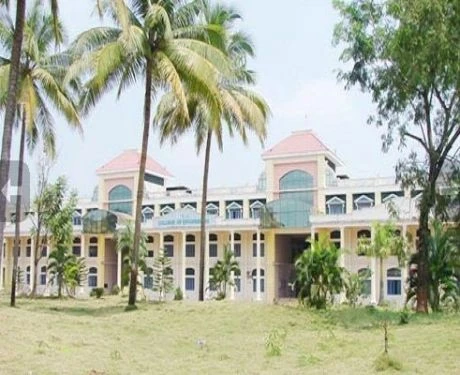
IES College of Engineering sits on a 40-acre campus in Chittilappilly, Thrissur, and has been shaping engineers since 2003. It's a private institution affiliated with APJ Abdul Kalam Technological University (KTU), and it carries the weight of AICTE approval, a 2017 NAAC accreditation, and a more recent feather in its cap: NBA accreditation for three of its programs in 2023. That last bit is a solid, tangible marker of quality that not every private engineering college in Kerala can claim. But the story here, as with many colleges, isn't just in the official stamps. It's in the lived student experience—a mix of strong infrastructure and supportive faculty, set against a backdrop of placement numbers that require a closer, more skeptical look.
The academic portfolio is fairly standard for a mid-sized engineering college, with a couple of interesting twists. At the undergraduate level, you've got the core B.Tech branches: Civil, Computer Science, Electrical, Electronics, and Mechanical. They've also added programs in Data Sciences and Robotics & Artificial Intelligence, which shows an attempt to keep pace with industry trends. Postgraduate offerings include M.Tech in Computer Science, VLSI Design, and a notable specialization in Geotechnical Engineering—reportedly only the second college in Kerala to offer it.
The college talks a good game on academics. There's a stated focus on innovation, design, and entrepreneurship, with faculty encouraged to pursue research and upgrade their skills. They've signed MoUs with a range of partners, from local firms to international names like the University of Seattle and national institutes like IIT Bombay and NIT Surathkal. On paper, these are meant to facilitate internships, guest lectures, and R&D. The real-world translation of those agreements into consistent, high-quality opportunities for every student is the part you'll want to ask current students about. The faculty, around 70 members, are frequently described in reviews as supportive and approachable, which is a significant plus. The academic calendar runs from June to May, with a full day from 9 AM to 4:30 PM.
This is the section where you need to read between the lines. The official data point provided is an average package of 1.2 Lakhs Per Annum (LPA), with a placement rate hovering around 30% of students. Let's be clear: that 1.2 LPA figure is exceptionally low for an engineering graduate in today's market, even in Kerala. It's a number that raises immediate questions.
Now, look at student reviews. They often paint a different picture, citing average packages in the 4 to 7 LPA range. That's a more believable, albeit still modest, bracket for a regional private college. The gap between the official statistic and the student-reported one is notable and worth probing. Top recruiters named are the usual suspects for campus drives in the region: TCS and Wipro. The placement process seems to lean heavily on software development roles.
The college emphasizes internship support, stating students start from their second year in areas like Machine Learning and web development. That's a decent practice. But the overarching placement narrative has a split personality. The official number suggests major challenges, while student anecdotes suggest middling outcomes. The truth likely lies somewhere in between, but it strongly indicates that securing a job is far from guaranteed and requires significant individual initiative beyond what the college's placement cell might provide.
The fee structure is a tale of two quotas, which is typical for private colleges in the state. If you come in through the government quota (via KEAM ranks), it's relatively affordable. Annual tuition ranges from ₹50,000 to ₹75,000 for a B.Tech. Over four years, you're looking at roughly ₹3-4 lakhs in tuition.
The management and NRI quota is a different world. Here, fees can start at a similar point but shoot up to over ₹2 lakhs per year. That's a massive variance, and reviews mention the fee structure isn't always stable for these seats. It's a point to clarify explicitly during admission discussions.
Hostel fees add another layer. A standard non-AC double seater with mess charges runs about ₹70,000-₹72,000 per year for girls, slightly less for boys. AC rooms and single occupancy cost more. A refundable caution deposit of ₹10,000 (plus ₹5,000 for hostel) is standard.
Where IESCE does reasonably well is in its list of scholarships. They offer a variety, primarily state-government schemes: the Central Sector Scholarship (CSS), MOMA Scholarship for minority communities, E-Grantz, and others. The Tuition Fee Waiver Scheme for meritorious students from specific backgrounds has been running since 2007. Eligibility hinges on marks and family income ceilings, which vary by scheme. It's a decent support system, but some student feedback suggests information on all available scholarships isn't always proactively communicated beyond the SC/ST categories.
For B.Tech, the primary gateway is the Kerala Engineering Architecture Medical (KEAM) entrance exam. JEE Main scores are also accepted. Government quota seats are filled through the state's Centralised Allotment Process (CAP) based on your KEAM rank. Specific cutoff ranks aren't published in the brief, which means they're likely not exceptionally high—this isn't a top-tier NIT or government engineering college vying for the top rank holders.
Management quota admissions are direct. The eligibility is a pass in 10+2 with Physics, Chemistry, and Mathematics, and a minimum of 45% aggregate in those subjects (50% for government quota). There's an age limit of 25 for general category candidates. For M.Tech, a valid GATE score is the ticket, followed by an interview.
A key detail for some: there's an NRI quota (up to 5% of intake), and NRI candidates are exempt from taking KEAM. The application process typically follows the KEAM calendar, with fees around ₹500-550.
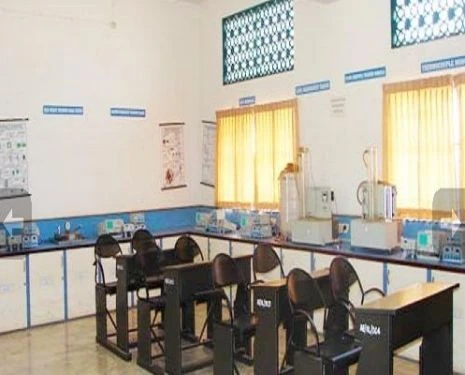
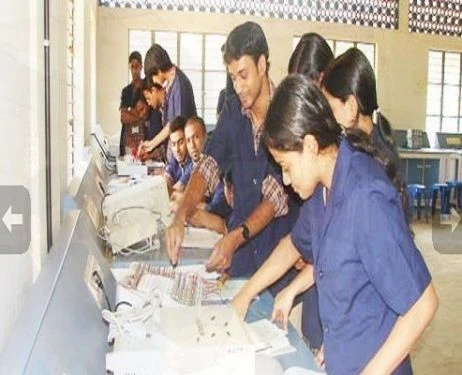
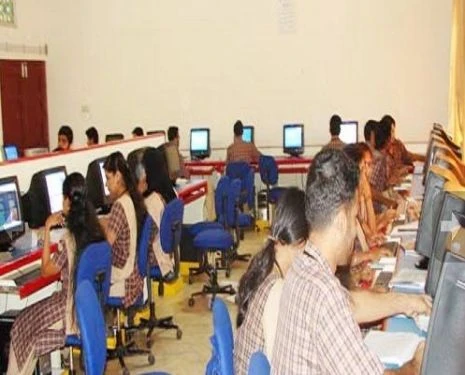
This is where IESCE gets consistently good marks. The 40-acre campus is described as having good infrastructure. Classrooms, the library (with over 20,000 volumes and digital access), and labs are reported to be well-maintained. They boast four air-conditioned computer labs with hundreds of terminals, plus specialized labs for VLSI, power systems, thermal engineering, and more. Some reviews do note that lab equipment can include older components, but it's not described as deficient.
The hostel life is organized. Separate boys' and girls' hostels offer rooms ranging from four-seaters to AC singles. Amenities include internet access, a multi-gym, common rooms, and laundry. Security is 24/7. The big point of contention? Food. Descriptions range from "hygienic and tasty" to squarely "average." It's a classic hostel complaint, but one that comes up regularly.
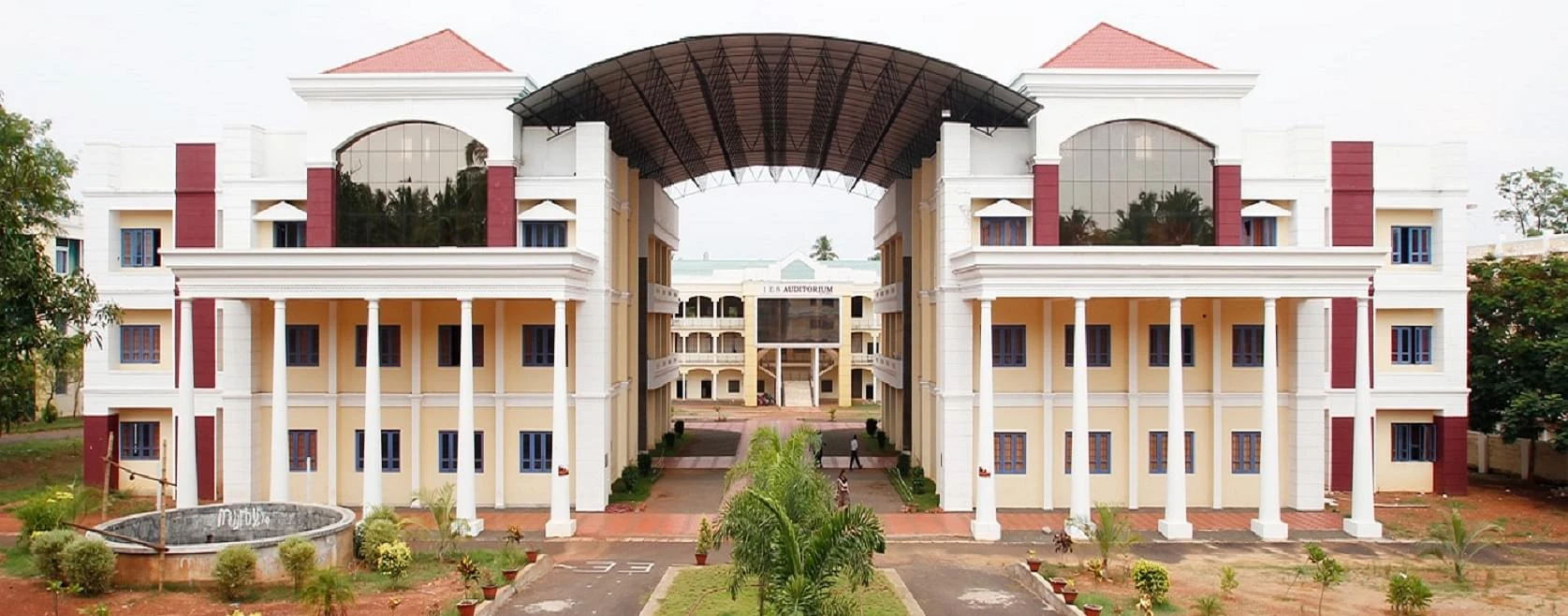
Other facilities are solid: a large auditorium, good sports grounds for cricket, football, and basketball, indoor game rooms, an on-campus ATM, a health centre, and a fleet of buses for transport. The canteen is spacious but, according to some, restricted to break times only. The Wi-Fi situation seems patchy; while the college says it's available, several student reviews explicitly state it's not accessible across campus, only in hostels.
Socially, the campus seems vibrant. There are fests, active clubs like IEEE and NSS, and cultural activities. The overall atmosphere, as per reviews, is positive and engaging.
Synthesizing the sentiment, a clear pattern emerges. Students are generally happy with the infrastructure, faculty support, and campus life. Phrases like "faculty are like our parents" and "learning scope is high" appear. The environment is seen as conducive to studying and personal growth.
The criticisms are equally pointed and revolve around practical outcomes and amenities. The placement data discrepancy is the elephant in the room. Many reviews directly question the official placement claims, aligning more with the 30% placement rate figure. Concerns about Wi-Fi availability, average hostel food, and occasional older lab equipment are repeated. There's also a note that the fee structure for management quota students can feel unpredictable.
It paints a picture of a college that provides a good educational environment on campus but whose value proposition gets shaky when you look at the job placement support at the end of the four-year journey.
IES College of Engineering is a mixed bag, and your decision hinges entirely on your priorities and entry route. If you secure a government quota seat at around ₹50,000-75,000 per year, it can represent decent value. You get a decent campus, supportive teachers, and a degree from an NBA-accredited program. You'll need to be proactive about internships and skill-building, as the placement cell may not be a reliable launchpad.
For management or NRI quota students paying significantly higher fees, the calculus changes. At over ₹2 lakhs per year, you're investing a substantial sum. The return on that investment, given the reported placement outcomes, is questionable. At that price point, you might find better-performing private colleges elsewhere in South India.
So, who is it for? It's for a student who values a supportive, campus-focused learning environment in Thrissur, who is entering via a low-cost government seat, and who is prepared to take full ownership of their final placement. Who should look elsewhere? Anyone paying top-tier management fees expecting a guaranteed, high-paying job at the end of their degree. For them, the numbers just don't add up.
In this preview: 5 photos · 0 videos
Candidates need to pass 10+2 with Physics, Chemistry, and Mathematics. For government quota seats via KEAM, a minimum of 50% aggregate in PCM is required. For management quota direct admission, the minimum is 45%. A valid score in KEAM or JEE Main is mandatory for the government quota process. There's an age limit of 25 years for general category applicants.
B.Tech fees vary drastically by quota. Government quota students pay between ₹50,000 and ₹75,000 per year. Management and NRI quota fees can range from ₹50,000 to over ₹2,00,000 annually. For M.Tech programs, the annual tuition fee is set at ₹70,000.
The college provides separate, secure hostels for boys and girls with internet access and common amenities. Charges depend on the room type. For the 2026 academic year, a non-AC four-seater costs ₹55,000 per year. Non-AC double seater fees are around ₹70,000-₹72,000, while AC single rooms can go up to ₹1.25 lakhs. These fees typically include mess charges, water, electricity, and maintenance.
Yes, several scholarships are available, primarily state-government schemes. These include the Central Sector Scholarship (CSS), MOMA Scholarship for Muslim/Christian students, the C.H. Muhammed Koya Scholarship for girls, and E-Grantz for various categories. The college also runs a Tuition Fee Waiver Scheme. Eligibility is based on academic merit and family income, with specific criteria for each scholarship.
Placement reports show mixed outcomes. Official figures cite an average package of 1.2 LPA with around 30% of students placed. However, many student reviews suggest average packages are higher, in the 4 to 7 LPA range. Top recruiting companies that visit the campus include TCS and Wipro, primarily for software development roles. Students are encouraged to seek internships from their second year onwards.
Share what future students should know about IESCE.
Student voices are not rewritten by colleges. We remove spam and abuse.
Wider admission question? Community PulseWhat should future students know?
Tell us which course you're considering. We'll help you work out the next step.
Get instant Partner access after mobile verification. Your public edits are reviewed before they go live.
Claim this college
 Auditorium
 Cafeteria
 Computer Labs
 Hostel
 Medical
 Science Labs
 Study Library