Loading Admission Guardian content
Loading Admission Guardian content
Provisional score based on available data. It may change as more information is verified.
Find a program, read its fee details and explore the admission requirements.
Summary of the programs shown below. Fee amounts are not listed. Contact the college for its current fee schedule.
| Course | Stream | Fees |
|---|---|---|
| Doctorate of Medicine [MD] | Medical | |
| Ph.D. (Alternative Medicine) | Medical | |
| Post Graduate Diploma | Medical | |
| Diploma | Paramedical | |
| Bachelor of Alternative System of Medicine | Science |
Specializations
Eligibility: Post Graduation
Specializations
Eligibility: Post Graduation
Specializations
Specializations
Eligibility: 10+2
Let's be clear from the start: the Indian Board of Alternative Medicines (IBAM) in Kolkata is not a college in any conventional sense. It's a private registration board that has been explicitly flagged by the University Grants Commission (UGC) and the Central Council of Indian Medicine (CCIM) as an unauthorized institution. Its degrees hold no legal standing for medical practice in India. For over three decades, it has operated through a distance-learning model, offering cheap, quick certifications that mimic legitimate medical degrees. That's the essential, non-negotiable context. Everything else—the courses, the fees, the promises—exists within this shadow of official non-recognition. Prospective students must understand they are not enrolling in an accredited university but purchasing a certificate of dubious utility, a fact underscored by the 2017 arrest of its founder by the West Bengal CID for running a fake degree racket.
IBAM's academic structure is entirely distance-based. You won't find classrooms or labs. Study material arrives by post, assignments are home-based, and exams are often conducted via mail. The program names are carefully crafted to sound like recognized degrees—B.A.M.S., M.D., Ph.D.—which is a significant part of the controversy. They're not the same as the CCIM-recognized Bachelor of Ayurvedic Medicine and Surgery (BAMS) or an M.D. from a medical college. The undergraduate offerings include a 2-year Bachelor of Alternative System of Medicine (B.A.S.M.) and the 4-year B.A.M.S. (A.M.). Postgraduate options are a one-year "M.D. in Alternative Medicines" and research-based Ph.D., D.Sc., or D.Litt. degrees. There's also a slew of one-year diplomas in fields like Acupressure and Medical Lab Technology, though these aren't recognized by any paramedical council either. Faculty claims are unverified, and the academic calendar runs on rolling admissions. You can sign up anytime. The entire model prioritizes convenience and low cost over any rigorous, supervised education.
This is straightforward. There are no placements. Zero. The institution has no placement cell, no recruiter ties, and no campus for companies to visit. The concept of a highest or average package is meaningless here. The career path for an IBAM certificate holder is entirely self-directed and exists outside the formal healthcare system. Some graduates are already practitioners who use the certificate to add a "Dr." prefix to their name in rural or unregulated settings where enforcement is lax. Others might use it for lifestyle coaching or holistic wellness consulting, particularly internationally where regulations vary. But let's be explicit: no recognized hospital chain like Apollo or Fortis, and certainly no government health service, will accept an IBAM degree for employment as a medical practitioner. The value is purely in the perception it can create in unregulated spaces, not in any accredited job market.
The low cost is IBAM's primary draw. Compared to the lakhs, even crores, for a legitimate MBBS or BAMS seat, IBAM's fees are strikingly cheap. The approximate total cost for the flagship B.A.M.S. (A.M.) ranges from ₹50,000 to ₹90,000. An "M.D." might cost around ₹25,000 total, and a Ph.D. could be ₹80,000. Diploma courses are around ₹15,000. Since it's all distance learning, there are no hostel or mess charges. The board claims to offer 25-50 merit-based scholarships, but there's no verified data on who actually receives them or the disbursement process. The fee structure, often listed in USD for international students, underscores the transactional nature of the relationship. You pay, you get the study materials and eventually, a certificate.
Admission is the simplest part of the IBAM experience. There are no entrance exams like NEET. None. The selection is ostensibly merit-based on your previous qualifying marks (10th, 12th, or graduation certificates), but the barrier is effectively non-existent. The application window is open year-round. You fill out a form, likely pay an application fee between ₹500 to ₹1,000, submit your documents, and you're in. Eligibility is broadly defined: for bachelor's programs, a 10+2 pass suffices; for the M.D., you need a prior degree in any medical or alternative field or, notably, ten years of experience. This open-door policy is a classic feature of institutions more focused on enrollment volume than academic selectivity.
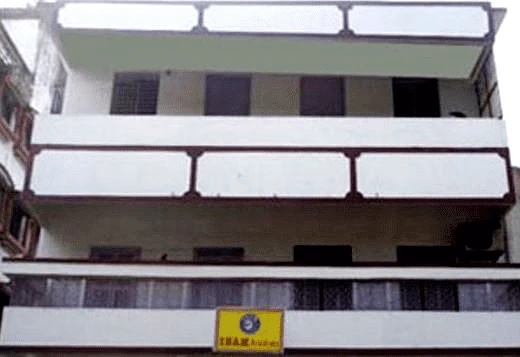
Don't expect a campus. IBAM operates from an administrative office in a commercial building on Kolkata's busy Chowringhee Road. The office handles correspondence, fee collection, and dispatch of materials. There are no hostels, no student dormitories, no labs for practical work, and no sports facilities. The board claims a "2-wing reading library" at its office, but this is unverified and irrelevant for distance learners scattered across the country or globe. There's no Wi-Fi network for students, no canteen, no annual fest. The "student life" is you, at home, with the posted study material. Any practical training is theoretical or something you must arrange independently, which is a major red flag for any form of medical education.
The student sentiment paints a stark picture of regret versus willful ignorance. On the positive side, reviewers on some education portals cite the ease and low cost of getting a certificate. International students from countries with looser regulations sometimes find value in it for non-clinical wellness coaching. But the negatives are overwhelming and consistent across platforms like Quora and Reddit. The most common complaint is the utter lack of legal validity. One Quora user summarized it: "I spent 2 years and 30k, but when I went to register with the state council, they laughed and said this is a fake board." Multiple Reddit threads (r/india, r/kolkata) explicitly label IBAM a "degree mill." Alumni warn about poor administrative follow-up—prompt communication until fees are paid, then radio silence when chasing mark sheets or degrees. The 2017 CID raid and arrest of the founder is frequently cited as definitive proof of its problematic status. The consensus on career value is unanimous: the certificate has zero weight in the formal job market. Its use is confined to scenarios where regulatory oversight is minimal.
The answer is almost certainly no for the vast majority of seekers. If your goal is to become a legally recognized medical practitioner in India—to work in a hospital, clinic, or government service—an IBAM degree is a waste of time and money. It is a dead end that provides no pathway to licensure. The risks of legal action for misrepresenting yourself as a doctor are real. However, the institution continues to exist because it fills a niche. It serves individuals who, for whatever reason, seek the title "Dr." for prestige in unregulated settings, or alternative wellness coaches operating in a legal gray area. Some international students from regions without strict accreditation may also find it sufficient for their purposes. But you must go in with eyes wide open: you are buying a certificate, not receiving an education. Your qualification will not stand up to official scrutiny. For anyone aspiring to a legitimate career in medicine or alternative therapies in India, the only path is through institutions recognized by the UGC, NMC, or the Ministry of AYUSH. Checking the UGC's list of recognized universities is the essential first step IBAM hopes you'll skip.
In this preview: 5 photos · 0 videos
No. A degree from the Indian Board of Alternative Medicines (IBAM), Kolkata is not valid for medical practice in India. It is not recognized by the National Medical Commission (NMC) or the Ministry of AYUSH, which are the official regulatory bodies.
Legally, no. Using the prefix 'Dr.' based on an unrecognized IBAM degree can lead to legal prosecution for "cheating by personation" under Indian law.
As of the latest information, the IBAM website appears active and accepts fees. However, its physical office in Kolkata has faced multiple closures and legal raids by authorities.
They share the same founder. Pragyan International University in Jharkhand is a recognized private university, while the Indian Board of Alternative Medicines (IBAM) in Kolkata is an unrecognized board. They are separate entities.
No. Government jobs in India require degrees from universities and institutions recognized by bodies like the UGC, CCIM, or NMC. An IBAM certificate does not meet this essential requirement.
Share what future students should know about IBAM.
Student voices are not rewritten by colleges. We remove spam and abuse.
Wider admission question? Community PulseWhat should future students know?
Tell us which course you're considering. We'll help you work out the next step.
Get instant Partner access after mobile verification. Your public edits are reviewed before they go live.
Claim this college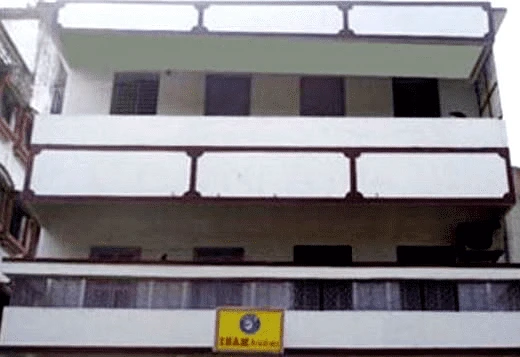
 Cafeteria
 Computer Labs
 Hostel
 Science Labs
 Sports Complex
 Study Library