Loading Admission Guardian content
Loading Admission Guardian content
Provisional score based on available data. It may change as more information is verified.
Find a program, read its fee details and explore the admission requirements.
Summary of the programs shown below. First-year fee. Check the note beside each amount for inclusions and exclusions.
| Course | Stream | Fees |
|---|---|---|
| Ph.D | Science | 60000 |
| Bachelor of Business Administration [BBA] (Logistics & Retail Management) | Management | 100000 |
| Master of Business Administration [MBA] | Management | 200000 |
| Bachelor of Science [B.Sc] (Nautical Science) | Science | 225000 |
Eligibility: Post Graduation
Specializations
Eligibility: 10+2 with 60%
Specializations
All accepted exams
Eligibility: Graduation with 50%
Specializations
All accepted exams
Eligibility: 10+2
1 exam with cutoff data available
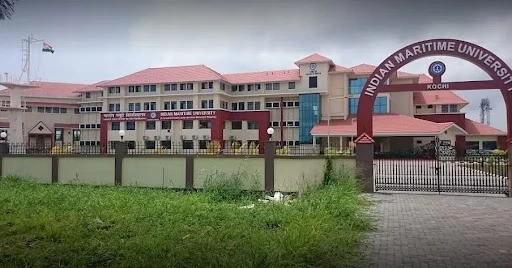
If you're looking at a career on the water or behind the scenes in global logistics, the Indian Maritime University (IMU) campus in Kochi is a name you'll hear. It's a central university, which means it's funded by the government and has a specific national mandate: to train the next generation of maritime officers and logistics managers. The campus itself sits on Willingdon Island, surrounded by the working heart of Kochi's port—the Southern Naval Command, the Kochi Shipyard, and the Port Trust are right there. That's not just scenery; it's your classroom. The vibe is professional, a bit strict by some accounts, but focused. And the placement stories from students, especially for the flagship nautical program, are what really get people talking, even if the official numbers tell a more cautious tale.
This isn't a sprawling liberal arts college. IMU Kochi's portfolio is tight, specialized, and built around the maritime and logistics industries. The academic approach is practical, with a clear line of sight to specific jobs.
The undergraduate anchor is the B.Sc Nautical Science. With 80 seats, it's the biggest program on campus. This is your route to becoming a deck officer in the Merchant Navy. The three-year curriculum is heavy on navigation, ship operations, and maritime law. After graduating, you'll need to complete a year of pre-sea training (like the Diploma in Nautical Science) and then a grueling 12-month cadetship at sea before you can sit for your officer exams. It's a structured, demanding path.
The other UG option is the BBA in Logistics & Retail Management. It's a more shore-based track, focusing on supply chain management, e-commerce logistics, and retail operations. The intake numbers aren't specified, but it's a smaller program.
At the postgraduate level, the focus sharpens further. The two MBA programs—Port & Shipping Management and International Transportation & Logistics Management—have just 10 seats each. That means small class sizes, which students say leads to better interaction with faculty. There's also an M.S. (Research) program and a Ph.D. pathway for those inclined toward academia.
You won't find sprawling electives here. The "specialization" is the program itself. But the location is a major academic feature. Being embedded in a major port complex means case studies and industry visits aren't field trips; they're a walk down the road. Faculty, according to multiple student reviews, gets high marks for being supportive and knowledgeable. "Faculty is too good they treat us like our friends," one review noted. Classrooms have smart boards and projectors, moving beyond pure chalk-and-talk.
This is where you need to read carefully. There's a significant gap between the official institutional data and the anecdotal reports from students. It's a classic case of managing expectations.
Let's start with the numbers the university provides. The latest available NIRF report for IMU as a whole (2025) shows an average annual package of ₹8 LPA and a median of ₹7 LPA for all campuses. For postgraduate programs, the median was ₹7.2 LPA. The highest package reported across IMU was ₹24 LPA. Now, the tricky part: placement percentage. An official report from 2021 showed only 22% of students were placed from this campus—a sharp drop from 52% in 2020. The university itself states it does not guarantee placements but has a "record of 70% placements recently."
Then you talk to students. The sentiment flips. Reviews on sites like CollegeDunia and Shiksha are filled with claims of 90-95% placement rates, with several insisting it's 100% for B.Sc Nautical Science. They quote average packages in the ₹8-10 LPA range, with highs around ₹12 LPA. Female cadets, in particular, are said to get placement offers very early, sometimes from the second semester.
How do you square this? The most likely explanation is the unique nature of maritime placements. For B.Sc Nautical Science, "placement" often means securing a sponsored cadetship or getting a job offer contingent on completing the mandatory pre-sea training and cadetship. It's not a traditional campus placement drive where you join an office in July. The recruiter list is impressive and niche: Maersk, Shipping Corporation of India, Fleet Management, Anglo Eastern, Synergy, Adani Ports, and DHL are all there. For the MBA and BBA grads, roles in port management, logistics coordination, and supply chain analytics with companies like TVS, Mahindra Logistics, and FedEx are the targets.
The reality check? The 2021 data can't be ignored. It suggests outcomes can be volatile, likely tied to global shipping market cycles. The student optimism is real, but your odds are strongest if you're in the nautical program and are medically fit for sea duty. For shore-based roles, you're competing in a broader, though growing, logistics market.
As a central university, IMU's fees are relatively structured and transparent, though you need to budget for several upfront costs.
For the 2026-2027 academic year, the total tuition fee for the three-year B.Sc Nautical Science is ₹8.65 lakhs. The BBA program comes in at ₹5.65 lakhs for three years. The two-year MBA programs cost ₹5.9 lakhs each in tuition.
But that's not the full picture. Before you even start, there are one-time fees: a non-refundable Admission Registration Fee of ₹10,000 and a Programme Fee of ₹30,000 to confirm your seat. You also pay a refundable Caution Deposit of ₹30,000.
If you need a place to live, the hostel fee for outstation students is an additional ₹70,000 per year (subject to availability). One student review mentioned a semester-wise payment of about ₹1.22 lakhs covering everything—tuition, hostel, and other expenses. That feels like a realistic total cost estimate.
Financial aid is available, but you have to be proactive. The IMU-Merit Scholarship is the key one, offering 100% or 50% tuition fee waivers based on academic excellence, extracurriculars, and leadership. You need to maintain a cGPA of 3.30 each semester to keep it. There are also standard government post-matric scholarships for SC/ST/OBC students. A note of caution from a student review: one claimed there were "no scholarships available for other state students except Kerala." That's worth verifying directly with the university's administration.
Admission here is entrance-exam driven, and the exam depends on the program. There's no vague "holistic review"—it's about your rank.
For the flagship B.Sc Nautical Science, you must take the IMU Common Entrance Test (IMUCET). It's mandatory for this and other Directorate General of Shipping (DGS) approved programs. For the BBA, the university accepts scores from the Common University Entrance Test (CUET).
At the PG level, for the MBA programs, you can use scores from CAT, MAT, CMAT, or CUET-PG. Admission is based on the score and subsequent e-counselling.
The process is centralized. You apply when the window opens (for IMUCET 2026, it's slated from February 6 to April 24, 2026). The application fee is ₹1000 for General/OBC candidates and ₹700 for SC/ST. After the exam, there's an e-counselling round where you lock in your seat based on your all-India rank. A counselling fee of ₹10,000 is required, which is later adjusted against your admission fee.
There are two critical non-academic gates. First, medical fitness as per DGS norms is non-negotiable for nautical candidates. Second, for all students, securing a Passport and CDC (Continuous Discharge Certificate) is essential for the sea-going roles. Cutoff ranks aren't publicly detailed in the same way as engineering colleges, but competition is stiff for the limited seats, especially in the nautical program.
The campus is compact, professional, and a bit isolated on Willingdon Island. You're not in the middle of a college town. The upside is the incredible industry immersion. The downside, as one student bluntly put it, is "pollution" and the industrial port environment. The air and water aren't what you'd find in a hill station.
Where IMU Kochi scores highly is in its hostel infrastructure. Students consistently praise the hostels as "great," "super modern," and well-maintained. Rooms come furnished with beds, study tables, wardrobes, and bookshelves. 24/7 Wi-Fi is standard. A new girls' hostel block is under construction with a budget of over ₹13 crore, which signals investment. The mess food gets a "good and hygienic" rating, which is high praise for institutional catering.
Academically, the labs are geared for the trade. The Navigation Lab and Seamanship Lab simulate shipboard environments for practical training. The library has a specialized maritime collection and access to digital resources. The auditorium is a hub for the annual cultural fest "Nautica" and various maritime seminars.
Social life is described as good but not wild. "People that come here are educated people... and will not take this course lightly," one student observed. It's a focused crowd. There are sports facilities—basketball, football, volleyball courts, and a gym—but some students complain the sports system needs better organization and equipment. The management is described as "strict," with fewer non-academic functions than a typical arts college.
Synthesizing the student voice reveals a clear consensus on strengths and a short list of consistent grumbles.
The Good:
The Not-So-Good:
The takeaway? Students who come for a clear professional mission—to go to sea or work in logistics—feel satisfied. Those looking for a typical, vibrant "college experience" might find it lacking.
IMU Kochi is a specialist institution, and its value depends entirely on your career target. If you are certain about a career at sea as a deck officer, this is one of the premier government-backed pathways in the country. The B.Sc Nautical Science program, despite the rigorous medical and training hurdles post-graduation, has a strong reputation and a loyal alumni network in the shipping industry. The placement confidence among current students is palpable, even if the official data is messy. For the MBA in Port or Logistics, the small batch size and industry-embedded location are definite advantages in a crowded management education market.
However, you have to want the specific life it leads to. The campus is professionally focused, not a playground. The environment is industrial. The rules are strict. If you're looking for a broad university experience with diverse peers and clubs, this isn't it. Your ROI is also heavily tied to the cyclical global shipping market—when trade booms, so do opportunities.
So, is it worth it? For the aspiring mariner or the logistics specialist who values a direct, government-recognized route into a niche industry, the answer is a qualified yes. Just go in with your eyes open to the realities of the path, both its rewards and its constraints.
For the B.Sc Nautical Science program, the mandatory entrance exam is the IMU Common Entrance Test (IMUCET). Admission to the BBA in Logistics & Retail Management program is based on scores from the Common University Entrance Test (CUET). Candidates must also meet the required academic percentage in their 10+2 examinations with specific subject combinations (Physics, Chemistry, Mathematics for B.Sc).
The total tuition fee for the 3-year B.Sc Nautical Science program at IMU Kochi for the 2026-2027 academic year is approximately ₹8.65 lakhs. Outstation students opting for hostel accommodation must budget an additional ₹70,000 per year. Prospective students should also account for one-time mandatory fees: a ₹10,000 admission registration fee, a ₹30,000 program fee, and a ₹30,000 refundable caution deposit.
Placement outcomes vary by program and year. While an official 2021 report showed a 22% placement rate, current student reviews frequently cite much higher figures, often 90-100% for B.Sc Nautical Science, with average packages of ₹8-10 LPA. The campus attracts major maritime and logistics recruiters including Maersk, Shipping Corporation of India, Fleet Management Ltd., Adani Ports, Anglo Eastern, Synergy, DHL, and FedEx. Success is closely linked to global shipping market conditions.
IMU Kochi provides separate, well-furnished hostels for boys and girls, consistently praised in student reviews. Rooms include study tables, wardrobes, and bookshelves. Amenities feature 24/7 high-speed Wi-Fi, water coolers, and recreational rooms. A new girls' hostel block is under construction. The mess serves hygienic food, and the overall hostel environment is considered modern and well-maintained.
Yes, IMU Kochi offers several scholarship avenues. The primary institutional scholarship is the IMU-Merit Scholarship, which covers 100% or 50% of tuition fees based on academic excellence, extracurriculars, and leadership, contingent on maintaining a minimum cGPA. Government post-matric scholarships for SC/ST/OBC students are also available. Students are advised to apply directly through the university and check for state-specific eligibility, as some reviews note limitations for non-Kerala students.
Share what future students should know about IMU.
Student voices are not rewritten by colleges. We remove spam and abuse.
Wider admission question? Community PulseWhat should future students know?
Tell us which course you're considering. We'll help you work out the next step.
Get instant Partner access after mobile verification. Your public edits are reviewed before they go live.
Claim this college Auditorium
 Hostel
 Medical
 Science Labs
 Study Library