Loading Admission Guardian content
Loading Admission Guardian content

Provisional score based on available data. It may change as more information is verified.
Find a program, read its fee details and explore the admission requirements.
Summary of the programs shown below. Fee amounts are not listed. Contact the college for its current fee schedule.
| Course | Stream | Fees |
|---|---|---|
| Bachelor of Technology [B.Tech] | Engineering | |
| Diploma in Engineering (Polytechnic) | Engineering | |
| Diploma in Tool and Die Engineering | Engineering | |
| Master of Technology [M.Tech] | Engineering |
Specializations
All accepted exams
Eligibility: 10+2 with 50% + KEAM
Specializations
Eligibility: 10+2
Specializations
Eligibility: 10+2
Specializations
All accepted exams
Eligibility: Pass in Graduation + GATE
1 exam with cutoff data available
 Royal Enfield
 SFO Technologies
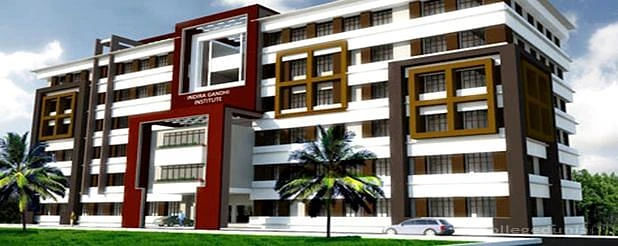
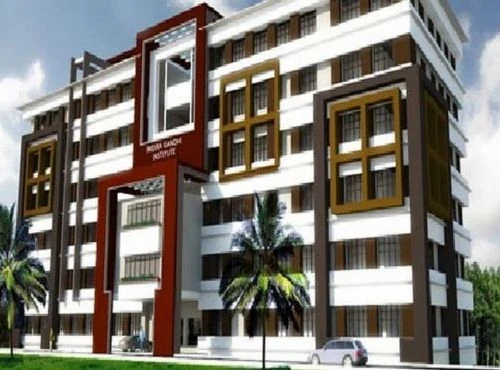
Indira Gandhi Institute of Engineering and Technology (IIET) in Kothamangalam is a private, self-financing engineering college that’s been around since at least 2009. Affiliated with A.P.J. Abdul Kalam Technological University (KTU), it’s a place where the official story and student experience often diverge. The college touts good infrastructure and supportive faculty, but student reviews consistently flag hostel food and spotty Wi-Fi as major pain points. The placement claim of “about 50%” is directly contradicted by at least one student who puts the figure closer to 10%. For a B.Tech program with total tuition around ₹4.24 lakhs, it sits in a competitive, rural pocket of Ernakulam district, drawing students primarily through the state’s KEAM exam. It’s a classic case of a mid-tier private institute where your satisfaction will hinge entirely on which aspects you prioritize—decent academics at a reasonable cost, or a more polished campus life.
IIET’s academic portfolio is built around its KTU-affiliated engineering programs. The B.Tech is the main draw, with intakes that vary by branch: Computer Science and Engineering and Civil Engineering have 60 seats each, while Electronics & Communication Engineering has 30. They’ve also added newer specializations like Artificial Intelligence & Machine Learning to the roster. Beyond the four-year degrees, the institute offers a range of three-year Diploma programs in fields from Automobile to Tool and Die Engineering, and even a BCA and BBA.
At the postgraduate level, there’s a single M.Tech in Computer Science and Engineering, which requires a GATE score for admission. The academic framework follows the Choice Based Credit System with open electives, which is standard for KTU colleges. Faculty are repeatedly described in student reviews as “supportive,” “qualified,” and “friendly.” That’s a consistent positive. However, one review offered a contradictory, pointed critique: “the faculty has no proper knowledge of practical.” So, while the teaching intent seems good, the depth of hands-on, industry-relevant expertise might be uneven. The college day runs from 8:50 AM to 4:00 PM, which is a full schedule.
This is where you need to read between the lines. The institute’s official stance is that “about 50% of students get placed.” But you have to weigh that against a direct student claim from a review: “sure than 10% of students maybe placed at our college.” That’s a massive gap, and it’s the kind of discrepancy that prospective students should be acutely aware of. No concrete highest, average, or median package figures are publicly disclosed—the website simply says “Contact for details” and “Varies by program.”
The listed recruiters are familiar names: TCS, Infosys, Wipro, along with Tata and Honda. The placement cell is described as active and providing support. But the lack of transparent stats, coupled with the starkly different placement percentage narratives, suggests outcomes can be inconsistent. It’s likely that top performers in branches like CSE find opportunities, but the overall placement rate for the entire cohort might be modest. Don’t bank on the 50% figure as a guarantee.
The B.Tech program has a tuition fee of ₹1.06 lakhs for the first year, leading to a total course tuition of approximately ₹4.24 lakhs over four years. That’s a relatively affordable sticker price for a private engineering college in Kerala. But that’s just tuition.
Hostel fees add a significant recurring cost. Figures vary slightly between sources, but you’re looking at around ₹4,000 to ₹5,000 per month. Over a typical academic year, that can add ₹40,000-₹60,000 to your expenses, not including mess charges for food—which, according to students, you might want to budget alternatives for. The college mentions scholarships as an available facility, but specific details on eligibility, amounts, or application processes aren’t readily published. You’d need to contact the administration directly for clarity on financial aid.
For B.Tech, the gateway is the Kerala Engineering, Architecture and Medical Entrance Exam (KEAM). There’s no way around it. The selection is primarily based on your KEAM rank, followed by the state counseling process.
The cutoffs give you a sense of the competition. For the 2025 cycle, the overall rank range for B.Tech Civil Engineering was between 41,278 and 62,608. For Electronics & Communication, it was 54,121 to 62,655. The general B.Tech cutoff stretched up to around 67,069. These numbers place IIET as an option for students with mid-tier KEAM ranks. It’s not competing for the top rankers who head to the premier government engineering colleges.
A key structural detail is the seat quota: 50% of seats are under the Management Quota, which includes NRI seats. The college states admission to these seats is “strictly on the basis of merit,” but the specific criteria (which might include qualifying exam marks and an interview) would need verification. For other courses like BCA or BBA, selection is based on marks in the qualifying exam and interview performance.
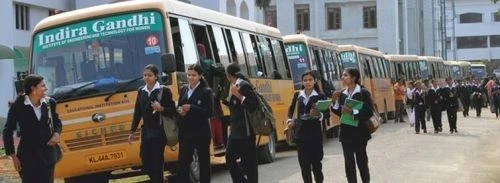
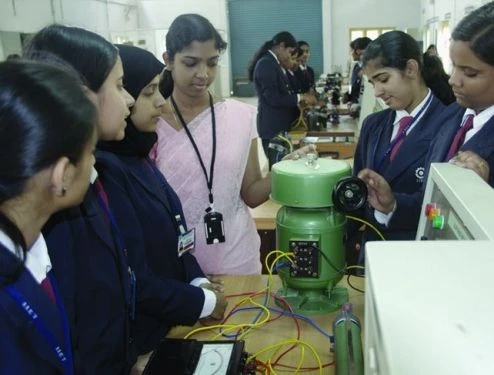
The campus infrastructure gets generally good marks. Classrooms are spacious with projectors, and labs for each branch are described as well-equipped. The library has digital and physical resources, though one review noted “few general books.” There’s a decent spread of sports facilities—grounds for football, cricket, basketball, and more. The canteen food gets a thumbs up from students, which is a notable positive.
But the hostels are the Achilles’ heel. Reviews are united in their criticism. The food quality in the hostel mess is consistently labeled from “average” down to “disastrous” and “very low quality.” Facilities are just “decent/average,” with rooms shared by four students and mentions of unclean bathrooms. The Wi-Fi situation in the hostels is a common grievance: described as average, low speed, often down, or only properly available on the ground floor. Some labs lack air conditioning, which can be a factor in Kerala’s climate. There’s also a mention of a 5:30 PM curfew, which is quite strict.
On the social side, student life isn’t dull. The college organizes cultural events and sports meets, and has active cells like the National Service Scheme (NSS) and an Innovation and Entrepreneurship Development Center (IEDC). So, while the residential experience has clear flaws, there are efforts to create an engaging on-campus environment.
Synthesizing the feedback from platforms like Shiksha and CollegeDunia paints a clear, two-toned picture. The overall rating is a mixed 3.4/5 on Shiksha, which feels about right.
The praise is reserved for the academic side and core infrastructure. “Faculties are good and helpful and friendly” is a recurring theme. The labs, library, and classrooms are seen as assets. The placement cell’s activity is noted, and the canteen is a popular spot.
The criticism is intensely focused on living conditions. The hostel food complaint is universal and severe. The unreliable hostel Wi-Fi is another major frustration. Some students also point out the lack of a proper, large campus ground and mention issues with security staff behavior. The stark contradiction in placement statistics (official 50% vs. student-claimed 10%) is perhaps the most significant red flag, indicating a potential gap between college marketing and ground reality.
IIET is a study in compromises. It’s best for a specific type of student: a KEAM rank holder in the 40,000-65,000 range who is prioritizing an affordable, AICTE-approved B.Tech degree from a KTU-affiliated college. If your focus is squarely on academics, you appreciate reportedly supportive faculty, and you can tolerate—or bypass—subpar hostel food and connectivity, the ₹4.24 lakh tuition can seem like a reasonable trade-off. You might be a local student who can commute, avoiding the hostel altogether.
But you should probably look elsewhere if a vibrant, comfortable residential campus life is important to you, or if you’re banking on strong, guaranteed placement outcomes. The consistent negativity around hostel living and the opaque placement record are legitimate concerns. It’s not the “best engineering college in Kerala” as it sometimes proclaims, but for cost-conscious students with moderate ranks, it’s a functional, if flawed, option. Go in with eyes wide open, manage your expectations around placements, and maybe scout out nearby rental options with better internet.
In this preview: 5 photos · 0 videos
The annual tuition fee for the B.Tech program at IIET is approximately ₹1.06 lakhs for the first year, leading to a total course tuition fee of about ₹4.24 lakhs over four years. This does not include additional costs like hostel fees (around ₹4,000-₹5,000 per month), mess charges, or other mandatory fees. The total cost of a four-year degree, including basic hostel accommodation, can easily exceed ₹6-7 lakhs.
Placement data from IIET is not transparently published. The college claims about 50% of students get placed, with recruiters like TCS, Infosys, and Wipro visiting. However, student reviews present a different picture, with one alleging the actual placement rate may be as low as 10%. No official highest or average package figures are available publicly, stating they "vary by program." Prospective students should treat the 50% figure with caution and seek recent graduate testimonials for a clearer reality check.
Admission to the B.Tech program at IIET is primarily based on the Kerala Engineering, Architecture and Medical (KEAM) entrance exam rank. Candidates must appear for KEAM and then participate in the state counseling process. For the 2025 cycle, the closing KEAM ranks for general B.Tech seats ranged up to approximately 67,069. Fifty percent of seats are under the Management Quota (including NRI seats), for which admission is stated to be merit-based, potentially involving qualifying exam marks and an interview.
Hostel facilities at IIET receive consistently negative feedback from students. While separate hostels for boys and girls exist with typically four students per room, the major complaints revolve around food quality (described as "average" to "disastrous") and poor Wi-Fi connectivity (low speed, frequently down, limited to ground floor). Bathrooms are sometimes cited as unclean. There is also mention of a strict 5:30 PM curfew.
IIET offers B.Tech specializations in Computer Science and Engineering (60 seats), Artificial Intelligence & Machine Learning, Civil Engineering (60 seats), Electrical & Electronics Engineering, and Electronics & Communication Engineering (30 seats). The programs are affiliated with A.P.J. Abdul Kalam Technological University (KTU) and follow the Choice Based Credit System.
Share what future students should know about IIET.
Student voices are not rewritten by colleges. We remove spam and abuse.
Wider admission question? Community PulseWhat should future students know?
Tell us which course you're considering. We'll help you work out the next step.
Get instant Partner access after mobile verification. Your public edits are reviewed before they go live.
Claim this college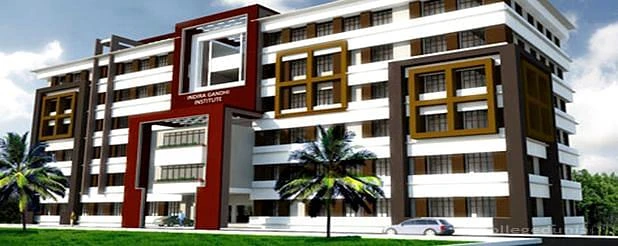
 Cafeteria
 Campus Shuttle
 Computer Labs
 Gym
Gym Hostel
 Medical
 Science Labs
 Sports Complex
 Study Library