Loading Admission Guardian content
Loading Admission Guardian content
Provisional score based on available data. It may change as more information is verified.
Selected ranking categories, with the recorded year beside each result. Open all records for the complete history.
6 published records · Lower numeric ranks are stronger
IIRF
Engineering · public
#1042024
IIRF
B.Tech · public
#1142023
Find a program, read its fee details and explore the admission requirements.
Summary of the programs shown below. First-year fee. Check the note beside each amount for inclusions and exclusions.
| Course | Stream | Fees |
|---|---|---|
| Diploma in Engineering (Polytechnic) | Engineering | 5800 |
| Master of Computer Applications [M.C.A] | Computer Applications | 64400 |
| Bachelor of Technology [B.Tech] | Engineering | 64400 |
| Master of Technology [M.Tech] | Engineering | 64400 |
| Master of Science [M.Sc] | Science | 64400 |
Specializations
Eligibility: 10th
All accepted exams
Eligibility: Graduation
Specializations
All accepted exams
Eligibility: 10+2 with 50% + JEE Main
Specializations
All accepted exams
Eligibility: Pass in Graduation + GATE
Specializations
Eligibility: Graduation
2 exams with cutoff data available - showing recent entries
 Accenture
 Bhushan Steel Ltd.
 Capgemini
 Cognizant
 Enzen
Enzen Essar E&P Ltd.
 HCL Technologies
 IBM
IBM ICICI Bank
 IFFCO
IFFCO Indal Technologies
 Infosys
 Jindal South West Steel ltd (JSW)
 Jindal Steel and Power (JSPL)
 Larsen & Toubro Ltd.
 NECO
NECO ProcessMAP
 Tata Consultancy Services
 Tata Refractories
 Tata Steel
 Tech Mahindra
 Vedanta
 Wipro
WiproIndira Gandhi Institute of Technology, Sarang, is a story of affordability meeting ambition. For decades, it’s been the go-to government engineering college in Odisha for students who want a solid technical education without the crushing fees of a private institute. With a sprawling 179-acre rural campus and a tuition fee that’s barely a fraction of what you’d pay elsewhere, IGIT offers a pragmatic path into engineering. But that rural setting comes with trade-offs—peace and quiet, yes, but also spotty connectivity and a life that revolves almost entirely within the campus walls. The institute’s autonomous status and NBA accreditation for its core branches signal a commitment to quality, even if its national ranking footprint remains modest. If you’re looking for a no-frills, value-for-money engineering degree from a reputable state institution, IGIT Sarang demands a serious look.
IGIT’s academic portfolio is broad and leans heavily into traditional and industrial engineering. That’s its heritage. The B.Tech program, with an intake of 1200 students, covers the expected spectrum: Civil, Chemical, Electrical, Mechanical, Metallurgical, ETC, CSE, and Production Engineering. They also offer a 5-year B.Arch. What’s notable is the depth in postgraduate studies, with 17 regular M.Tech specializations—from Power Systems to Wireless Communication Technology. The MCA program is relatively new, starting from the 2020-21 batch. There’s also a full suite of diploma programs and Ph.D. offerings across ten specializations.
The faculty roster of 215 boasts many PhDs from IITs and NITs, which is a strong point for a state college. The claimed 1:10 faculty-to-student ratio is decent, if accurate. Academically, they use a seven-point letter grading system and mandate a minimum CGPA of 6.0 for degree award—no class or division is given. Promotion from first to second year requires a CGPA of 4.5. The curriculum includes open electives and practical sessions, and the institute is recognized as a center of excellence in engineering research by Utkal University.
Where IGIT tries to bridge the industry gap is through its MoUs. They have partnerships with organizations like CSIR-IMMT, Tata Power, Huawei, Infosys, and several IT firms for training, workshops, and joint projects. Recent tie-ups with cyber security and IT solution firms like Resilient Shield and Brain O vision suggest an effort to stay current. It’s a decent spread for a government college, though the real-world impact on every student’s experience can vary.
This is where you need to separate the official brochure from the student chatter. The institute’s official placement cell claims a placement rate of around 60%. The highest package they officially cite for 2024 is ₹10 LPA from Byjus, with a median package of ₹4.64 LPA. That median figure is the most telling official number—it’s modest, reflecting the core-engineering and IT services roles that form the bulk of on-campus hiring.
But talk to students, and you’ll hear a different range. Reviews consistently mention a 70-80% on-campus placement rate. Average package estimates from alumni hover between ₹6-7 LPA. The highest package stories become legendary and unverified: figures of ₹24, ₹27, even ₹50 LPA get thrown around. It’s critical to understand these are almost certainly off-campus achievements—students cracking higher-paying jobs through GATE, PSU exams, or direct company drives. That’s not a knock on the college; it’s just reality. The on-campus recruiters are a solid, predictable list: TCS, Infosys, Wipro, Cognizant, Accenture, L&T, Tata Steel, Vedanta, NTPC, and a host of manufacturing and power sector companies like NALCO and Jindal.
For internships, the support is there but outcomes are mixed. The college has MoUs and staff to help, with reports suggesting 50% to 70-80% of students secure internships, often in government or PSU units like PWD, Railways, DRDO, or NALCO. They’re mandatory, which is good.
The verdict? If you’re in a core branch and want a stable job in the industrial or IT services sector in Odisha or neighboring states, IGIT’s placement cell will likely connect you. The median salary is honest for a government college at this fee point. But if you’re dreaming of ₹20-30 LPA packages right out of the gate, you’ll need to be in the top tier of your class, likely in CSE, and be prepared to hustle off-campus. The placement percentage gap between the official 60% and student-claimed 70-80% isn’t huge, but it’s worth noting.
This is IGIT’s undisputed ace card. The affordability is staggering. The total tuition fee for the entire 4-year B.Tech program is just ₹48,000. That breaks down to roughly ₹30,400 per year. Compare that to any private engineering college and the value proposition is immediate. Hostel fees are extra but still low: ₹18,000 per year for boys, ₹17,000 for girls (mess charges excluded). A rough total 4-year cost for a male B.Tech student is around ₹1.94 lakhs—tuition and hostel combined. For a female student, it’s about ₹1.90 lakhs. That’s less than a single year’s fee at many mid-tier private institutes.
The scholarship ecosystem is robust, as you’d expect from a government institute. There are merit-cum-means scholarships offering fee waivers, full government scholarships for SC/ST/OBC students, and a slew of national schemes like the PG Indira Gandhi Scholarship for Single Girl Child. They also offer a ‘free studentship’—tuition fee exemption—for up to 50% of students from the second year onwards based on merit. If finances are a primary constraint, IGIT is arguably one of the most accessible quality engineering educations in the region.
For B.Tech, the gatekeepers are JEE Main and the state’s OJEE. Admission is centralized through the OJEE counseling process. The institute’s autonomous status doesn’t change the entry path for most undergraduates. For B.Arch, you need NATA scores alongside JEE Main/OJEE. The cutoffs aren’t sky-high, which aligns with its positioning. One unverified student review suggested the closing rank for CSE might be around 1,32,000 in JEE Main, but always check the official OJEE counseling charts for the current year. For MCA, the 2023 OJEE Round 1 cutoff gives a clearer picture: 193 for General, 816 for SC, 1768 for ST.
For postgrad, M.Tech admissions lean on GATE scores, while MCA and M.Sc. use OJEE PG or CET. Ph.D. admissions involve a written test and interview, with exemptions for GATE/NET qualified candidates. The application window for OJEE 2026, for instance, is slated for January 27 to March 22, 2026, with a standard application fee of ₹1,000. A key point for out-of-state students: through OJEE, you’re only eligible for private colleges in Odisha, not government ones like IGIT. So, most UG students here are from within the state.
Life at IGIT Sarang is largely an insular experience—for better and worse. The 179-acre campus is self-contained. The hostels (with names like Aryabhatta Bhawan for boys, Rohini for girls) have a capacity for over 1300 students. Reviews on quality are a mix: facilities are generally good with Wi-Fi, common rooms, and cleaning staff, but some buildings are old. Room occupancy shifts from 3-4 students in first year to singles in the final year based on your CGPA—a nice merit-based perk. The mess food gets the typical college review spread: called “hygienic” and “healthy” by some, “average” or “not good” by others. Non-veg is typically available 4 days a week.
Infrastructure is a plus. Labs are well-furnished, there are smart classrooms, and the central library is AC-equipped with a solid collection. Sports facilities center around the Dr. M. P. Mishra Memorial Stadium. The on-campus SBI bank and post office add convenience. The medical facility is described as average, with a 24/7 ambulance.
The biggest gripe? Connectivity. Being in a rural area, mobile networks and Wi-Fi reliability are frequent complaints. The flip side is the vibrant internal campus life. There’s a full calendar of techno-cultural fests—Horizon, Utsahan, Technovation—and active clubs for robotics, coding, and culture. With no cinemas or malls nearby, the campus community becomes your entire social world. That fosters strong bonds and a busy event schedule, but you have to be okay with that trade-off.
Scouring forums and review sites paints a consistent picture. The overwhelming positive is value. Students feel they get a quality education from qualified faculty (many IIT/NIT PhDs) at an unbeatable price. The infrastructure—classrooms, labs, library—is regularly praised. Campus life is seen as active and engaging, with good junior-senior rapport and plenty of club activities.
The negatives are just as consistent. Location-based isolation tops the list. Poor network/Wi-Fi and a lack of outside entertainment options are real downsides. Mess food quality is a perennial complaint, as is the “average” on-campus medical care. Some students mention a need for self-study as syllabus coverage can be uneven. On placements, there’s a clear dissonance: while grateful for the opportunity, many acknowledge that the highest flyers are those who go beyond the placement cell’s offerings.
The management isn’t frequently discussed, but the autonomous status is viewed positively for academic flexibility. Ragging doesn’t appear as a highlighted issue in recent reviews. The overall sentiment isn’t one of raving enthusiasm, but of pragmatic satisfaction. It’s a “good government college” that does what it says on the tin, with clear limitations you learn to navigate.
IGIT Sarang is a very specific bargain. It’s best for students from Odisha and the region who are seeking a reputable, affordable government engineering education and are comfortable with a campus-centric life. If your goal is to graduate with minimal debt and secure a stable job in core engineering, power, manufacturing, or IT services, IGIT delivers that pathway reliably. The low fees and scholarship options make it a low-risk, high-value proposition. The faculty quality and NBA accreditations add legitimate academic weight.
But you should probably look elsewhere if you prioritize urban connectivity, guaranteed high-paying on-campus placements, or a glamorous college experience. The rural setting demands adjustment, and the placement ceiling for on-campus roles is honest but not spectacular. It’s a college for the pragmatic student—one who sees education as an investment and is willing to trade some conveniences for financial sense and a solid degree. For that student, IGIT Sarang isn’t just worth it; it’s a smart choice.
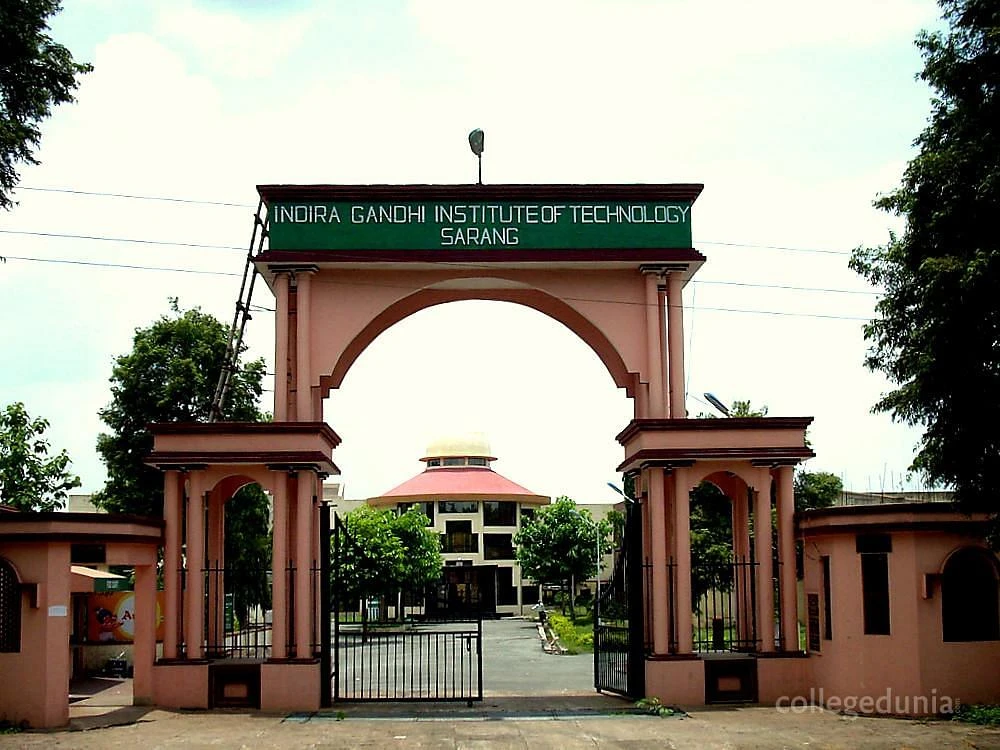
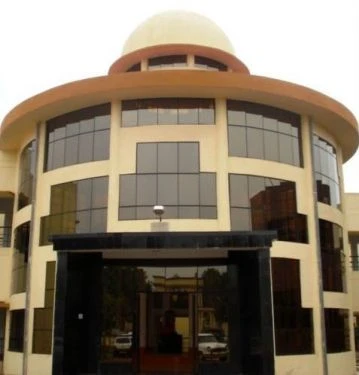
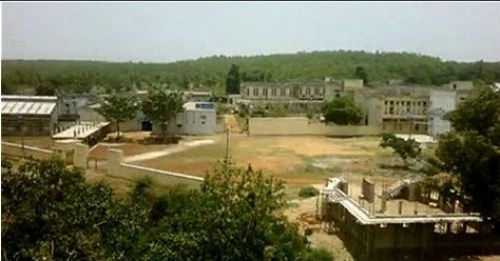
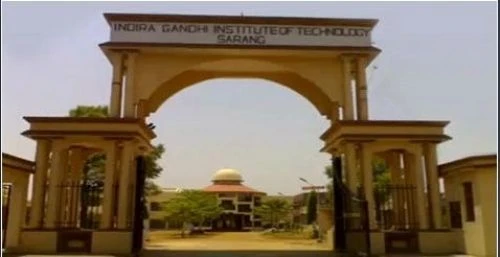
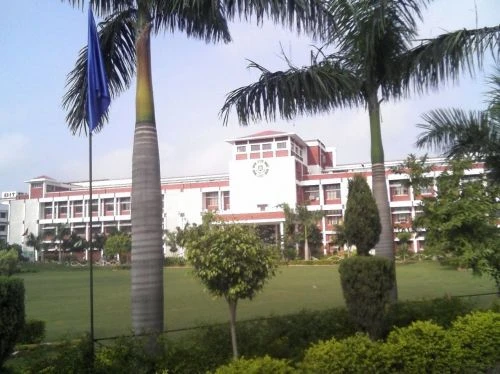
In this preview: 5 photos · 0 videos
The total tuition fee for the entire 4-year B.Tech program at IGIT Sarang is ₹48,000. This averages to approximately ₹30,400 per academic year for the 2025-2026 session, which includes various other charges. Hostel fees are separate and cost ₹18,000 per year for male students and ₹17,000 per year for female students, excluding mess charges.
According to official 2024 data, the highest on-campus package was INR 10 LPA, with a median package of INR 4.64 LPA. The institute reports a placement rate of approximately 60%. Student reviews often cite a higher on-campus placement rate of 70-80%, with average packages estimated between INR 6-7 LPA. Claims of much higher packages (up to INR 27-50 LPA) typically refer to off-campus placements secured by students independently.
For undergraduate B.Tech and B.Arch programs, IGIT Sarang accepts scores from JEE Main and the Odisha Joint Entrance Examination (OJEE). Admission to B.Arch also requires a valid NATA score. For postgraduate programs, M.Tech admissions are based on GATE scores, while MCA and M.Sc. admissions utilize OJEE PG or other relevant CET scores.
IGIT Sarang offers a reputable CSE program, especially considering its low fee structure. The faculty includes qualified professionals, and the curriculum is designed to cover new-age technologies. Placements for CSE students see recruitment from major IT firms like TCS, Infosys, Wipro, and Cognizant. However, the highest on-campus packages are modest compared to top-tier national institutes. It is a strong, value-for-money option within the state, but students aiming for top-tier tech company packages often need to supplement with significant off-campus efforts.
Campus life at IGIT Sarang is vibrant and largely self-contained due to its rural location. The hostels are well-maintained with basic amenities like Wi-Fi, common rooms, and cleaning services. Food in the mess is generally considered hygienic, though taste reviews are mixed. The campus hosts numerous annual fests and has active technical and cultural clubs. The main drawbacks are the limited off-campus entertainment options and occasional connectivity issues due to the rural setting.
Share what future students should know about IGIT Sarang.
Student voices are not rewritten by colleges. We remove spam and abuse.
Wider admission question? Community PulseWhat should future students know?
Tell us which course you're considering. We'll help you work out the next step.
Get instant Partner access after mobile verification. Your public edits are reviewed before they go live.
Claim this college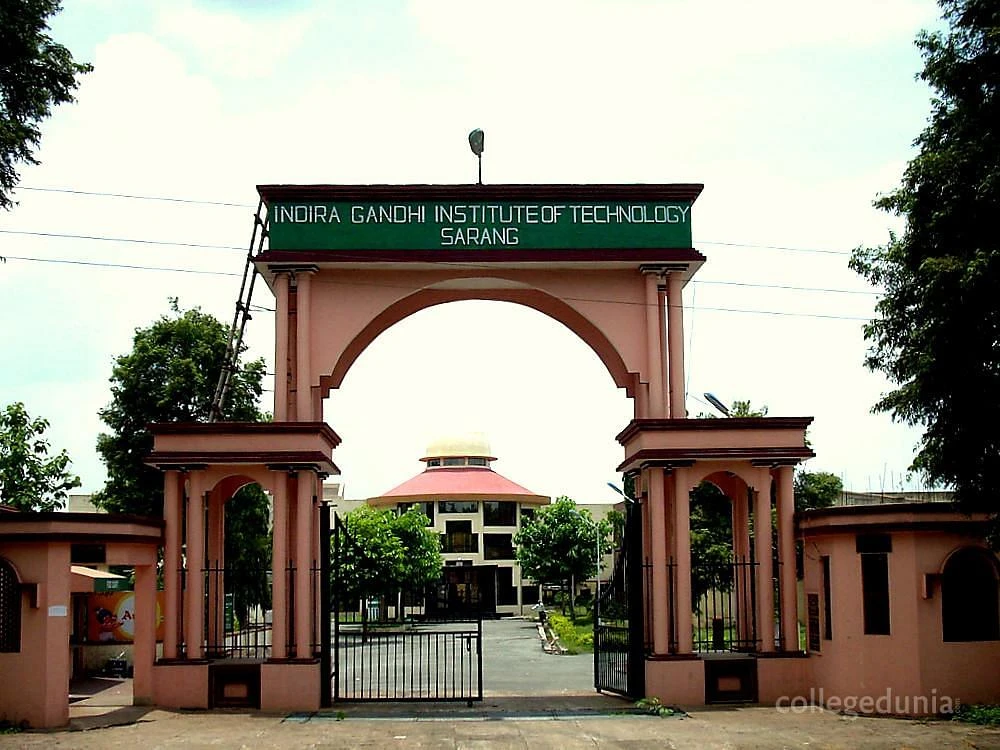
 Auditorium
 Cafeteria
 Computer Labs
 Gym
Gym Hostel
 Medical
 Science Labs
 Sports Complex
 Study Library