Loading Admission Guardian content
Loading Admission Guardian content
Selected ranking categories, with the recorded year beside each result. Open all records for the complete history.
53 published records · Lower numeric ranks are stronger
IIRF
Engineering · public
#572023
Outlook
Engineering · public
#162023
India Today
Engineering · public
#122020
THE
Overall
#6012023
Find a program, read its fee details and explore the admission requirements.
Summary of the programs shown below. Fee periods can differ by program. Check the note beside each amount before comparing costs.
| Course | Stream | Fees |
|---|---|---|
| Ph.D | Engineering | 162000 |
| Post Graduate Diploma | Engineering | 250000 |
| Master of Technology [M.Tech] | Engineering | 318667 |
| Bachelor of Technology [B.Tech] | Engineering | 462000 |
Specializations
Eligibility: Post Graduation
Specializations
Eligibility: Graduation
Specializations
All accepted exams
Eligibility: Graduation + GATE
Specializations
All accepted exams
Eligibility: 10+2 with 75% + JEE Main
3 exams with cutoff data available - showing recent entries
 Accenture
 Accolite
 Adobe
Adobe Amazon
 AMD India Pvt.Ltd
 American Express
 Aspiring Minds
 Bluegape
 BNY Mellon
 Century Link
 Cisco
Cisco Citrix
 CouponDunia
 Dell
Dell Deloitte
 Directi
 DreamWorks Animation
 EMC
EMC Endurance
 Ericsson India Pvt Ltd
 Expedia
 Flipkart
 Freescale Semiconductor
 Goldman Sachs
 Google
 Grey Orange India
 Hackerearth
 IBM
IBM IndiaMart Company
 Infineon Technologies
 Infoedge
 Informatica Business Solutions Pvt Ltd.
 InMobi
 Intel
Intel KPIT
KPIT KPMG
KPMG Linked In
 Lucideus
 MakeMyTrip India Pvt. Ltd.
 MAQ Software
 Mathworks
 Microsemi
 Microsoft
 Mobikwik
 Morgan Stanley
 Myntra
 Newgen
 Nucleus Software
 NXP
NXP Oracle
 Paytm
Paytm Philips
 PWC
PWC Qualcomm India Pvt. Ltd.
 Samsung
 Samtel India Ltd.
 Sandisk
 Sankalp Builder
 Sankalp Semiconductors Pvt
 SAP
SAP Sapient
 Siemens
 Snapdeal.com
 ST Micro Electronics
 Swiggy
If you're looking for a government-funded engineering college that feels more like a Silicon Valley research lab than a traditional campus, Indraprastha Institute of Information Technology Delhi (IIITD) demands your attention. Established in 2008, it's a young, autonomous state university that has carved a niche by being ruthlessly focused on computer science and its interdisciplinary applications. Forget the sprawling campuses and massive student bodies of older institutions. IIITD is about intense, peer-driven learning, a curriculum that ditches conventional engineering filler, and a direct pipeline to top-tier tech and research roles. The trade-off? A famously heavy workload and a tuition fee that rivals many private colleges. For the right student, it's a calculated bet that pays off spectacularly. For others, the grind and cost can be overwhelming.
IIITD doesn't do generic engineering. Every program is a deliberate fusion of computer science with another discipline, reflecting industry and research trends. The undergraduate portfolio is entirely tech-centric. The core B.Tech in Computer Science and Engineering (CSE) is the bedrock, but the institute's signature offerings are its interdisciplinary degrees: Computer Science and Artificial Intelligence (CSAI), Computer Science and Applied Mathematics (CSAM), and Computer Science and Design (CSD). More unique blends include Computer Science with Social Sciences (CSSS), Biosciences (CSB), and Economics (CSEcon). For hardware-inclined students, Electronics and Communication Engineering (ECE) and Electronics and VLSI Engineering (EVE) are available.
The academic culture is where IIITD truly diverges from the norm. There's no workshop practice or engineering chemistry for CS students in the first year. You dive straight into programming, mathematics, and your chosen specialization. The grading is on a strict 10-point CGPA scale, and evaluation is continuous—frequent quizzes, lab assignments, and projects mean you can't just cram at semester's end. The plagiarism policy, especially for code, is notoriously strict, with software like MOSS used to detect copying. It's a system designed to build rigor.
The faculty is a major strength. 100% of the ~88 regular faculty members hold PhDs, with over half from top international universities like Carnegie Mellon, UCLA, and NUS. Professors like GPS Raghava (Computational Biology) and Angshul Majumdar (a Stanford-listed top scientist) lead research groups that undergraduates can join early. This access is a huge advantage for anyone aiming for a research career or a top MS abroad. The postgraduate offerings include M.Tech programs in specialized areas and a robust PhD program across CSE, ECE, and even Social Sciences & Humanities.
The placement reports are impressive, but they come with important context. The 2024-25 cycle reflected the broader tech slowdown, with the placement percentage dipping to around 88.3% from the near-universal 96.6% of the previous year. That's a reality check. The numbers that grab headlines, however, remain strong. The highest international package was INR 1.07 Crore, and the domestic high touched INR 51.31 LPA. The average package for B.Tech graduates settled at INR 21 LPA, with a median of INR 18 LPA. For M.Tech students, the average was INR 17.26 LPA.
The recruiter list is a who's who of aspirational employers. Tech giants like Google, Microsoft, Amazon, Meta, and Adobe are consistent visitors. Finance and quantitative trading firms like Goldman Sachs, Morgan Stanley, and Tower Research recruit for high-stakes roles. Core electronics and semiconductor companies such as Qualcomm, Nvidia, and Texas Instruments pick from the ECE and EVE pools. And then there are the Indian unicorns and startups—Flipkart, Zomato, Ola, Uber, Meesho—that value the institute's practical, project-heavy approach.
Internships are a critical part of the journey. The highest domestic stipend reported was INR 1.5 lakh per month, with overseas internships reaching nearly INR 5 lakh per month. The average stipend ranges widely based on the student's year and profile, but it's not uncommon for seniors to secure internships paying between INR 70,000 to 97,000 per month. This culture of high-value internships feeds directly into the final placement success.
Let's be blunt: IIITD is expensive for a state institution. The fee structure is progressive, meaning it increases each year. For the 2025 entering batch, the first-year tuition is approximately INR 4.5 lakhs. It rises to about INR 4.75 lakhs in the second year, INR 5 lakhs in the third, and around INR 5.3 lakhs in the fourth. That's a total tuition cost of nearly INR 19.55 lakhs over four years.
Add to that hostel fees (approx. INR 38,250 per semester for a double-sharing, air-conditioned room), mess charges (INR 8,000-10,000 per semester), and one-time fees, and the total four-year cost balloons to an estimated INR 23.5 to 25.5 lakhs. This is significantly higher than neighboring Delhi government colleges like DTU or NSUT.
To offset this, the institute offers several scholarships. The most merit-based is the Chairman’s Scholarship: a 100% tuition waiver for students with a JEE Main rank under 1000, and a 50% waiver for ranks between 1000 and 2000. For Delhi students, there's an income-linked fee waiver scheme that can provide relief from 25% to 100% based on family income. There's also the WESSE scholarship, offering 50% off to the top 100 female admits with over 95% in their Class XII board exams.
For almost all B.Tech seats, the gateway is the JEE Main exam, followed by counseling through the Joint Admission Committee (JAC) Delhi. The critical detail is the massive 85% reservation for students who have passed their Class XII from schools located in Delhi. This "Home State" quota dramatically influences cutoffs.
The 2024 closing ranks (General All India quota) tell a story of high demand for core programs. Computer Science and Artificial Intelligence (CSAI) is the most competitive, with cutoffs swinging between ranks 620 and 7,000 across counseling rounds. The standard CSE program closed around rank 6,695. CSAM was around 8,500, ECE near 10,000, and EVE around 11,000. However, for Delhi students, the cutoffs are much more forgiving—the CSE program, for instance, can have cutoffs extending beyond rank 20,000 for the Delhi quota.
There are two minor exceptions to the JEE Main rule. A few seats in the Computer Science and Design (CSD) program are filled via UCEED ranks. Similarly, some seats in Computer Science and Social Sciences (CSSS) are offered to Delhi students based purely on their Class XII marks (Best of Four subjects). For M.Tech, the GATE exam is primary, though the institute conducts its own PGCAT for non-GATE candidates. PhD admissions require a qualifying score (GATE/UGC-NET/CSIR-NET) followed by a rigorous interview.
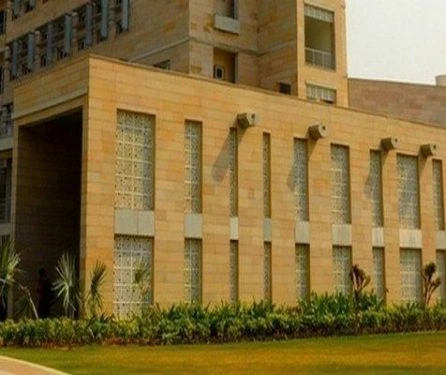
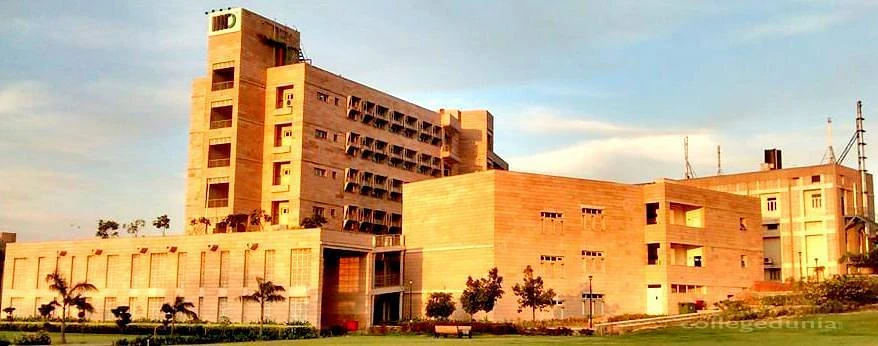
The 25-acre campus in Okhla is modern and functional, but undeniably compact. You won't find vast lawns or endless corridors here. What you will find is top-tier infrastructure that prioritizes academic and residential comfort. The hostels are a major selling point—all 13 blocks (11 for boys, 2 for girls) are centrally air-conditioned in the summer and heated in the winter, a luxury almost unheard of in government colleges. Students often compare them to good hotel rooms.
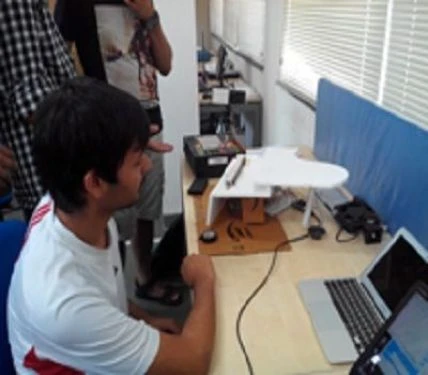
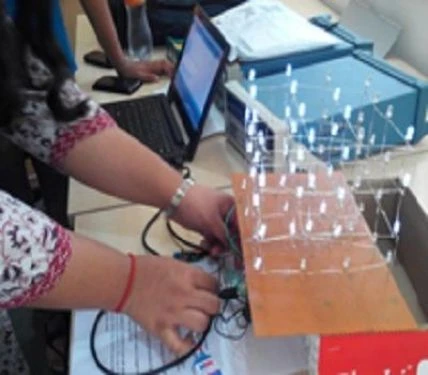
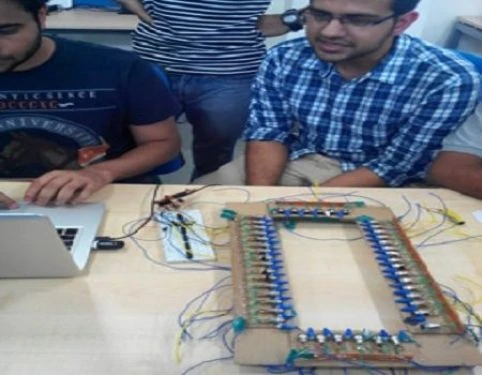
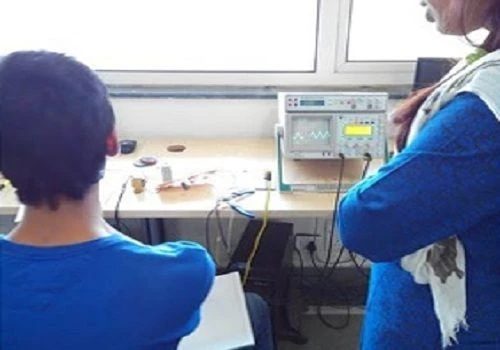
Academic facilities are excellent. The Infosys Centre for AI and the TCS Centre for Design & New Media provide cutting-edge labs. The library offers 24/7 access during exams and full digital access to major journals. Campus-wide Wi-Fi is reportedly fast and reliable. For sports, there's a gym, indoor courts for badminton and squash, a multipurpose field, and a swimming pool in the newer Phase II development. A 24/7 night canteen is a lifesaver during those infamous late-night coding sessions.
Social life exists, but it's subdued compared to the festival-heavy cultures of DTU or NSUT. The focus is inward—on club activities (coding, robotics, design), hackathons, and peer learning. The location in South Delhi means the city is accessible, with the Govindpuri metro station about a kilometer away.
Synthesizing feedback from CollegeDunia, Shiksha, Reddit, and Quora reveals a clear, almost unanimous consensus.
The positives are powerful. Students universally praise the research culture. One recurring sentiment is that "IIITD is a research institute that happens to teach B.Tech." The opportunity to work with internationally-trained faculty from the second year is a huge advantage for those targeting graduate studies abroad. The curriculum is seen as modern and relevant, stripping away outdated requirements. And the hostel infrastructure receives rave reviews.
But the negatives are equally stark and form the core of the "IIITD Grind" reputation. The workload is the number one complaint. Students describe having "zero social life" during peak assignment weeks, with a constant barrage of quizzes, labs, and projects. The strict academic integrity policies, while respected, add to the pressure. The high fee is a constant source of anxiety for middle-class families, despite the good ROI. And some simply find the small, intense campus environment too claustrophobic.
A paraphrased Quora quote sums up the trade-off perfectly: "Go to DTU if you want to enjoy life; come to IIITD if you want to grind and get a top-tier tech job."
IIITD is not for everyone. It's a specialized, high-pressure, and expensive choice. If you are a Delhi student with a solid JEE Main rank (within roughly 20,000 for the quota) and your family can manage the ~INR 25 lakh investment, it presents a unique opportunity. It's arguably the best place in India for an undergraduate who is certain about a career in computer science, artificial intelligence, or related tech research and wants a direct, no-frills path to it. The placement outcomes, faculty quality, and modern curriculum justify its reputation for those who thrive in its ecosystem.
However, if you value a traditional, vibrant "college experience" with big fests, a more relaxed pace, and a diverse peer group from all engineering branches, you might feel stifled here. The workload is real and relentless. Also, if you are an All-India candidate (non-Delhi), the cutoff ranks are extremely high, and you should carefully compare the value against other top national institutes you might get with a similar rank. In essence, choose IIITD with your eyes wide open to its grind, and it can be a transformative launchpad. Choose it for the wrong reasons, and it could be a very expensive, stressful four years.
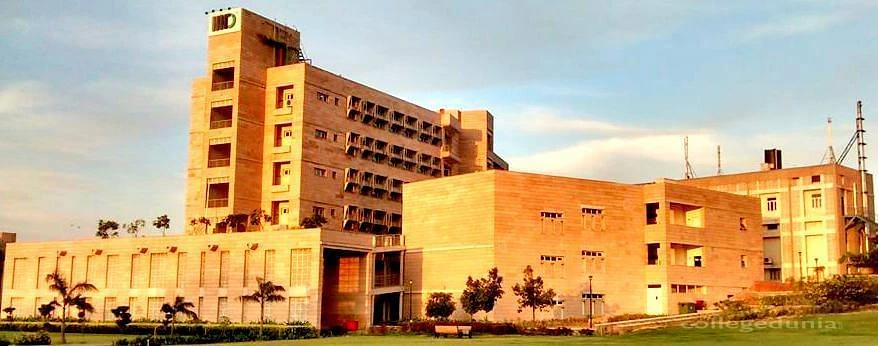
In this preview: 5 photos · 0 videos
For research and pure computer science or artificial intelligence roles, IIIT Delhi is considered superior. For a more traditional "college life" experience with large fests and lower tuition fees, Delhi Technological University (DTU) or Netaji Subhas University of Technology (NSUT) are often preferred.
Yes, the workload is manageable but requires disciplined time management throughout the semester. The evaluation is constant, and students cannot rely on cramming a week before exams to succeed.
Yes, IIIT Delhi has a significant reservation for local students. Specifically, 85% of its seats are reserved for students who have completed their Class XII education from schools located in Delhi.
Admission without JEE Main is possible only for specific seats in certain programs. Delhi students can apply for the Computer Science and Design (CSD) program via the UCEED exam and for the Computer Science and Social Sciences (CSSS) program based on their Class XII marks.
Yes, all hostels at IIIT Delhi are centrally air-conditioned, a feature that is rare among government-funded technical institutes in India.
Share what future students should know about IIIT Delhi.
Student voices are not rewritten by colleges. We remove spam and abuse.
Wider admission question? Community PulseWhat should future students know?
Tell us which course you're considering. We'll help you work out the next step.
Get instant Partner access after mobile verification. Your public edits are reviewed before they go live.
Claim this college Tata Consultancy Services
 Tata Power
 TCS
TCS Tektronix India Ltd
 Texas Instrument
 Tower Research Capital
 Trident
 UpGrad
 Urban Clap
 Vehant Technologies
 VMware
 Walmart
 Wipro
Wipro Works Applications
 Xerox
Xerox Xilinx
 Zomato
 ZS Associates
84 named recruiters in the recorded data. Company names are deduplicated.
 Auditorium
 Cafeteria
 Campus Wi-Fi
 Computer Labs
 Gym
Gym Hostel
 Medical
 Science Labs
 Sports Complex
 Study Library