Loading Admission Guardian content
Loading Admission Guardian content

Provisional score based on available data. It may change as more information is verified.
Find a program, read its fee details and explore the admission requirements.
Summary of the programs shown below. First-year fee. Check the note beside each amount for inclusions and exclusions.
| Course | Stream | Fees |
|---|---|---|
| Bachelor of Technology [B.Tech] | Engineering | 71200 |
| Bachelor of Technology [B.Tech] {Lateral} | Engineering | 71200 |
| Post Graduate Diploma in Computer Applications [PGDCA] | Computer Applications | |
| Diploma in Engineering (Polytechnic) | Engineering | |
| Diploma | Vocational Courses |
Specializations
All accepted exams
Eligibility: 10+2 with 45% + UPTAC
Specializations
All accepted exams
Eligibility: 10+3 with 45% + UPTAC
Specializations
Eligibility: Graduation
Specializations
Eligibility: 10th
Specializations
Eligibility: 10th
2 exams with cutoff data available - showing recent entries
If you're looking at engineering colleges in Uttar Pradesh with a budget under ₹4 lakhs for the entire degree, the Institute of Engineering and Rural Technology (IERT) in Prayagraj is a name that comes up fast. It's not for the campus life or the flashy placements. It's for the sheer, unvarnished value. Established in 1955 and operating as a government-aided autonomous institute, IERT has built a formidable reputation, particularly in North India, for producing engineers who go on to crack government jobs and serve in core sectors. The campus might look its age, but the focus here is intensely practical. Students don't come for a 'college experience'—they come to study, often with a GATE or UPSC book in hand, leveraging the institution's low cost and strong legacy in state government circles to build a stable career. It's a trade-off, and one that makes perfect sense for a specific kind of student.
IERT operates in two distinct, almost parallel worlds: the Degree (B.Tech) division and the storied Diploma division. That split is crucial to understanding the institute's identity.
For the B.Tech program, you've got the standard seven branches—Computer Science, Electronics, Electrical, Mechanical, Civil, Industrial & Production, and Instrumentation & Control. The intake is about 60 per branch, and the academic schedule strictly follows AKTU's often-criticized calendar. The faculty situation is a mixed bag. The permanent professors are often highly qualified, with PhDs from IITs and NITs, and students say they're supportive if you seek them out. But a significant portion of teaching is handled by guest or contract faculty, which can lead to inconsistency. Don't expect spoon-feeding; the academic culture is self-driven.
The Diploma side is where IERT's legendary status comes from. It's consistently called the #1 Polytechnic in North India for a reason. The intake is larger, and the specializations are uniquely practical: Tube well Engineering, Plastic Technology, Public Health Engineering. These are job-ready skills tailored to India's infrastructure and manufacturing needs. The workshops here are historically better equipped than some B.Tech labs, reflecting the program's hands-on, rural technology mandate. This is reinforced by the Community Development Through Polytechnic (CDTP) scheme, which provides free technical training to local communities.
This is where you need to separate the official brochure from the student hallway talk. The college's official placement claim for 2024 was 97.2%. That's a headline number. The reality, pieced together from student reviews on platforms like CollegeDunia and Shiksha, is more nuanced and varies wildly between divisions.
For B.Tech students, especially in core branches like Mechanical or Civil, the on-campus placement rate is often cited at a more modest 30-40%. The average package sits in the ₹3-4.5 LPA range, with a median around ₹3 LPA. The highest on-campus offer reported was ₹6 LPA. You'll hear stories of top CSE grads landing off-campus roles at Amazon or Goldman Sachs for ₹24-45 LPA, but those are exceptional, self-driven cases, not the norm. Top recruiters visiting campus are solid, core-sector names: L&T, Maruti Suzuki, Tata Power, Adani Group, UltraTech Cement, and IT service giants like TCS and Infosys.
Now, for the Diploma division, the story flips. Placement is significantly stronger, often hitting 60-70% or higher for core specializations. These graduates are snapped up by the same core engineering firms, sometimes even more eagerly, because they come with practical workshop training. The gap between the two divisions' placement outcomes is the single biggest point of student contention.
This is IERT's unbeatable ace card. The return on investment is arguably the best in the region for a government-aided institute. The B.Tech tuition is approximately ₹70,500 per year. Diploma fees are even lower, between ₹20,000-25,000 annually. Add in hostel lodging (₹27,500/year) and a cooperative mess run by students (₹2,500-3,000/month), and the total cost for a 4-year B.Tech degree lands between ₹3.5 to ₹4 lakhs. That's less than a single year's fee at many private colleges.
Financial aid is primarily through the UP State Scholarship (Dashmottar), which a large number of students utilize. For eligible students from EWS, OBC, SC, and ST categories, this scholarship can cover a major portion, if not all, of the tuition fee. It makes technical education genuinely accessible.
Admissions are strictly merit-based—there's no management quota. For the B.Tech program, you must have a valid JEE Main score. Counseling is conducted through the state's UPTAC/AKTU process. The cutoffs reflect IERT's position as a high-value, budget option. For the 2024 session, the Round 1 closing ranks for the General category were: Computer Science & Engineering at 136,776, Electronics at 281,289, Electrical at 398,594, and Mechanical at 545,962. Branches like Instrumentation & Control can see closing ranks go beyond 8-10 lakhs, making it a viable backup for many.
For the Diploma programs, admission is through the IERT Entrance Exam, an institutional-level test. Details and applications are handled on the separate admissions portal. Lateral entry into the second year of B.Tech is possible via CUET-UG scores.
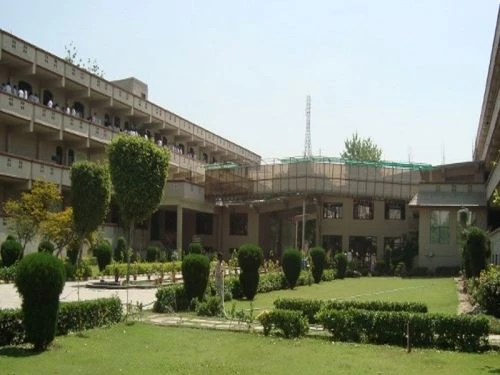
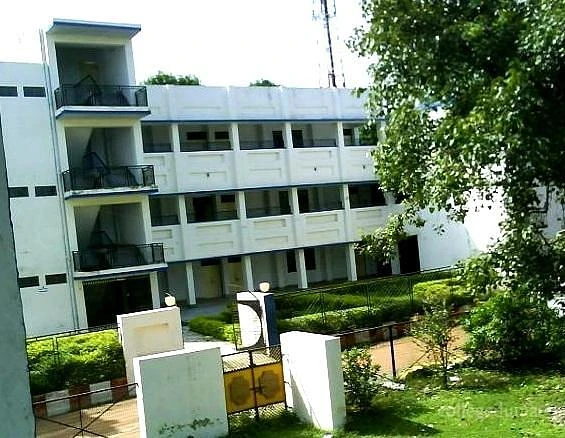
Let's be direct: if you're dreaming of a lush, modern campus with vibrant student clubs and events, IERT will disappoint. The infrastructure is its most criticized aspect. The 26.5-acre campus houses buildings that are undeniably old and show a lack of maintenance. The hostels, separate for boys and girls, are basic. Amenities like consistent Wi-Fi and 24/7 power backup are not guaranteed. The library has a vast collection of over 80,000 books, but digital resources are limited.
Sports facilities are minimal—a main ground for cricket and football, with almost no indoor infrastructure. Consequently, the campus life is quiet, almost austere. A common student refrain is that "it feels more like a coaching center than a college." The social scene is low-key. The real student life often revolves around preparation for competitive exams. Its location in Prayagraj, a major hub for UPSC and engineering coaching institutes, is a strategic advantage for that very purpose.
Synthesizing years of reviews online paints a clear, consistent picture. The positives are all about value and outcome. "If you want a job in a private MNC, go elsewhere. If you want to crack GATE or a JE/AE government job, IERT is the best place," captures the consensus. The low fee, the lack of distractions, and the "IERTian" brand's weight in Uttar Pradesh government departments (PWD, Jal Nigam, UPPCL) are huge pluses. Alumni like Nikhil Tiwari (IES Officer) and Sajal Srivastav (Engineer at ONGC) are held up as proof points.
The negatives are equally consistent. The poor infrastructure and bureaucratic, slow-moving administration top the list. The placement gap between the Diploma and B.Tech divisions causes frustration. There's also a sense that the institute's primary energy is directed towards its diploma programs, with the B.Tech side sometimes feeling like an afterthought. Ragging isn't reported as a serious issue, with strict policies in place.
IERT isn't for everyone, and it makes no pretensions about that. It's a specialist institution for a specific career path. If your priority is a low-cost, no-frills engineering education with the explicit goal of preparing for GATE, ESE, UPSC, or a stable government job in Uttar Pradesh's core sectors, IERT is an outstanding choice. The ROI is phenomenal, and the alumni network in state departments is real. The Diploma programs, in particular, are arguably the best value-for-money technical education in North India.
But if you're seeking a holistic campus experience, cutting-edge labs, high-paying campus placements in tech, or a brand name that resonates across India, you'll likely feel short-changed. You'd be better served by a higher-ranked NIT, a newer private institute with better infrastructure, or even a different AKTU college with a more balanced environment. IERT is a tool—a highly effective, affordable, and focused one for a particular job. Just know exactly what job you're hiring it to do.
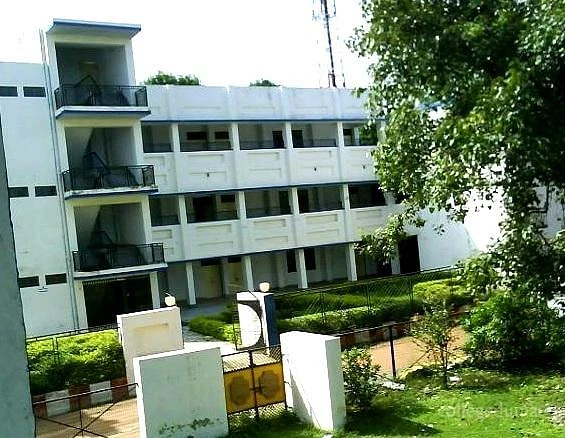
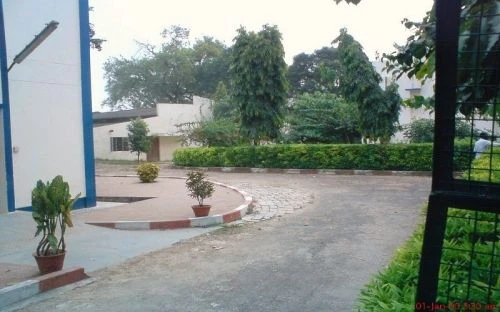
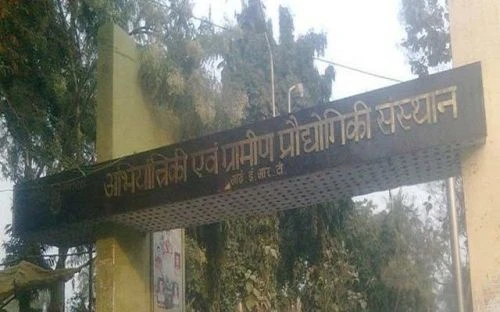
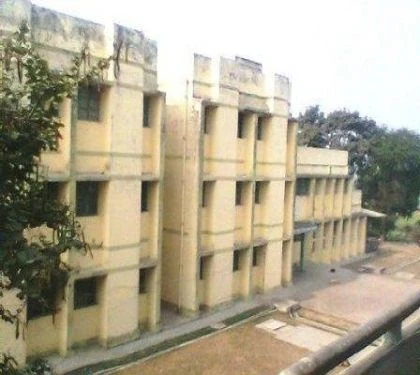
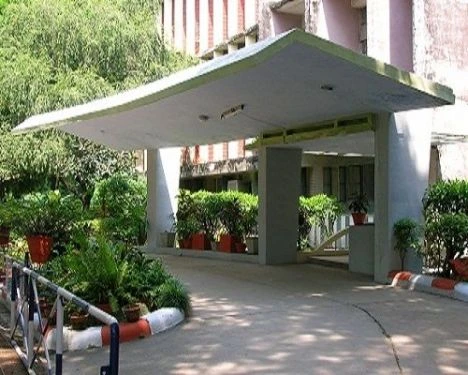
In this preview: 5 photos · 0 videos
The Institute of Engineering and Rural Technology (IERT) Allahabad is a government-aided autonomous institute.
No, IERT does not have a management quota. Admissions are strictly merit-based, conducted through JEE Main for B.Tech programs and the IERT Entrance Exam for Diploma programs.
Historically, the Diploma program is considered more prestigious with better core industry placements. The B.Tech program is often preferred by students aiming for higher studies or competitive exams like GATE.
The institute enforces strict anti-ragging policies. Student reports indicate there are introductory sessions but no serious incidents of physical ragging in recent years.
Yes, admission is possible with a lower JEE Main rank for certain branches. For example, the closing ranks for programs like Industrial & Production Engineering or Instrumentation Engineering have historically exceeded 8-10 Lakhs.
Share what future students should know about IERT.
Student voices are not rewritten by colleges. We remove spam and abuse.
Wider admission question? Community PulseWhat should future students know?
Tell us which course you're considering. We'll help you work out the next step.
Get instant Partner access after mobile verification. Your public edits are reviewed before they go live.
Claim this college
 Auditorium
 Cafeteria
 Campus Security
 Computer Labs
 Hostel
 Medical
 Science Labs
 Study Library