Loading Admission Guardian content
Loading Admission Guardian content

3 programmes · 1 institution. Check the admission year and requirements.
3 programmes · 1 institution. Check the admission year and requirements.
International Management Institute (IMI), Bhubaneswar publishes three distinct management routes: its two-year full-time residential PGDM, a separate two-year online PGDM, and the Fellow Programme in Management (FPM) for doctoral research. The programme pages describe different delivery and study purposes, so an applicant should not transfer the campus PGDM’s admission tests, fee figures or housing assumptions to the online course or FPM. This overview focuses on the campus PGDM because it is the route with a currently dated July 2027 admission cycle and the detailed published fee schedule.
The institute names the campus credential as an AICTE-approved Post-Graduate Diploma in Management. Its recognition page describes it as a two-year full-time residential programme. The brochure organises study into six trimesters, generally 11 to 12 weeks each; it says the first three are mainly foundation courses. That structure gives applicants a short academic cycle to plan for rather than a semester-based calendar. The brochure describes a broad management foundation followed by later elective choices, but it does not guarantee that every elective or specialisation will run for every intake. Ask for the current course catalogue if a particular concentration is central to your decision.
The online PGDM is also a two-year AICTE-approved diploma, but the institute presents it as an online, work-integrated option for working professionals and freshers. That makes it a different practical choice from the residential campus programme: check its own selection process, workload and fee schedule instead of assuming the campus schedule applies.
The FPM is a separate research qualification. IMI describes it as a four-year programme aimed at doctoral-level management research, with coursework and a comprehensive examination before a scholar develops and defends a thesis. It is for applicants considering an academic or research path, not a shorter alternative to the campus PGDM. The official FPM page describes residential and non-residential modes and lists a ₹50,000 monthly stipend for residential scholars, subject to progress approval and physical campus presence. Confirm current admission dates and terms on the FPM page because the campus PGDM calendar does not establish them.
The current IMI Bhubaneswar admissions portal displays an application deadline of 19 December 2026. It lists interviews in January 2027, admission decisions in February and the programme beginning in July 2027. These dates are the portal’s published schedule; the page does not establish that every applicant will be interviewed on the same date. Use the portal for the live application process and keep a copy of any deadline notice or application confirmation.
For this cycle, the portal accepts CAT 2026, XAT 2027, CMAT 2027, or GMAT scores dated from January 2022 through January 2027. It says applicants need a recognised bachelor’s degree of at least three years with 50% marks or an equivalent result, and that 2026 graduates may also apply. Applicants who are completing a degree should check the institute’s documentation and final-result conditions rather than assume that submitting an application settles the degree requirement.
IMI says it has no fixed cutoff and describes a video assessment before the personal interview. The materials reviewed here do not give a numeric shortlist threshold, selection-weight formula, or category-wise cutoff table. A percentile from an informal predictor should therefore not be read as an institute-issued guarantee of an interview or offer. Use the accepted exam editions and submit the strongest valid score available, then prepare to explain academic choices, work or internship experience, and why the residential PGDM fits your plans.
The current portal is also the place to confirm whether any later notice changes the application calendar, exam window or required documents. The application dates belong to the campus PGDM cycle; they do not establish an intake date for the online PGDM or FPM. If you are comparing those options, follow their own programme pages and admission instructions.
The current admissions FAQ displays a programme fee of ₹14.98 lakh. IMI’s detailed PGDM brochure shows a matching total for Indian students and itemises it as follows:
The fee schedule is useful for understanding what the published total contains, but the sources reviewed do not explicitly label it as the final invoice for students starting in July 2027. The security deposit is a separate line; confirm its refund conditions and the payment instalments in your offer documents. Treat the FAQ’s headline amount as the institute’s current display, not as a guaranteed 2027-29 bill.
The brochure separately lists accommodation by room type and academic year. It labels Year 1 as 2026-27 and Year 2 as 2027-28. Boys’ twin-sharing air-conditioned rooms with a common bathroom are shown at ₹1.45 lakh and ₹1.50 lakh. The same common-bathroom rates are shown for girls, while girls’ twin-sharing air-conditioned rooms with an attached bathroom are ₹1.60 lakh and ₹1.65 lakh. Vegetarian or non-vegetarian mess charges are listed separately at ₹80,000 and ₹85,000 for the two years. The public materials reviewed do not say that these amounts will apply unchanged to a student starting in July 2027. They also do not establish whether hostel allocation is compulsory or guaranteed for every student.
The admissions portal describes an AICTE Tuition Fee Waiver (TFW) for students whose parents’ annual income is below ₹8 lakh and says the scheme covers up to 5% of seats. This is a limited, eligibility-based scheme, not a general discount or an automatic reduction for every applicant. Ask admissions what documents, application steps and current-cycle deadlines apply, and do not subtract a waiver from your budget until your eligibility and award are confirmed.
Before accepting an offer, request one written statement that separates tuition and academic charges from room, mess, deposits and optional costs. Compare that document with the brochure, check which fee edition applies to your intake, and ask how instalments and deposits work. A realistic budget should also include travel and personal expenses, but the sources reviewed do not quantify those costs. Do not rely on the old article’s ₹18.5-19.5 lakh estimate: the current published component schedule is different and still needs intake-specific confirmation.
IMI’s final placement report for the 2023-25 batch highlights a highest offer of ₹40.31 lakh per annum, an average of ₹12.74 lakh per annum, a median of ₹12.48 lakh per annum, a top-quartile average of ₹18.10 lakh per annum and more than 130 recruiters. Those numbers describe that report’s batch and metric definitions. The highest offer is an outlier measure, not a likely salary for a typical student. The average and median are more useful for orientation, but neither is a promise of an individual offer, role, location or fixed compensation. Read the report’s tables and eligibility notes before comparing it with another school’s figures.
A separate NIRF 2026 institutional submission reports two-year postgraduate placement rows by academic year. It lists 109 students graduating in the minimum stipulated time and 109 placed in 2022-23, with a median salary amount of ₹12 lakh and zero selected for higher studies. For 2023-24, the row is 179 graduates, 179 placed, ₹12 lakh median and zero higher studies. For 2024-25, it is 193 graduates, 193 placed, ₹12.48 lakh median and zero higher studies. These are academic-year rows in a submitted NIRF form, not three versions of the 2023-25 batch report. The counts and salary measure should be compared only with data using the same programme scope, years and reporting rules.
The NIRF document is labelled “Submitted Institute Data.” It is useful for the placed-versus-graduating counts and submitted salary data, but it is not a published NIRF 2026 rank. The final-placement report and the NIRF table answer different questions: one presents a batch-level recruitment summary, while the other records an institution-submitted annual outcome row. Avoid combining the two into a single placement percentage or recalculating an average from a median.
For your own decision, ask for the newest complete final placement report, its batch profile and the share of students who meet the placement-report denominator. Compare median compensation, roles and cohort composition with your alternatives. The report cited here is historical evidence for 2023-25; it does not establish what the July 2027 cohort will earn.
In NIRF’s India Management category, IMI Bhubaneswar was ranked 61st with a score of 50.38 in 2024, then 94th with a score of 46.24 in 2025. The year-to-year movement is a reason to inspect the underlying category, score and edition, not a standalone verdict on teaching or an individual student’s prospects. The institute’s NIRF 2026 submission is not a ranking result. When comparing business schools, keep the same publisher and category, and treat ranking data as one input alongside programme fit, total cost and cohort outcomes.
Housing needs a direct check. IMI’s accommodation page calls the PGDM residence a “120 single bedded residence facility,” while its 2025 corporate brochure describes a residence for 240 students. The sources do not explain whether these are different measures, campus arrangements or editions. Do not resolve the discrepancy by guessing that one number means rooms and the other means beds. Ask admissions for the current capacity, room occupancy, bathroom type, allotment policy, hostel fee and mess schedule in writing. The pages reviewed also do not establish that every PGDM student receives a room or that the published rates apply to the July 2027 intake.
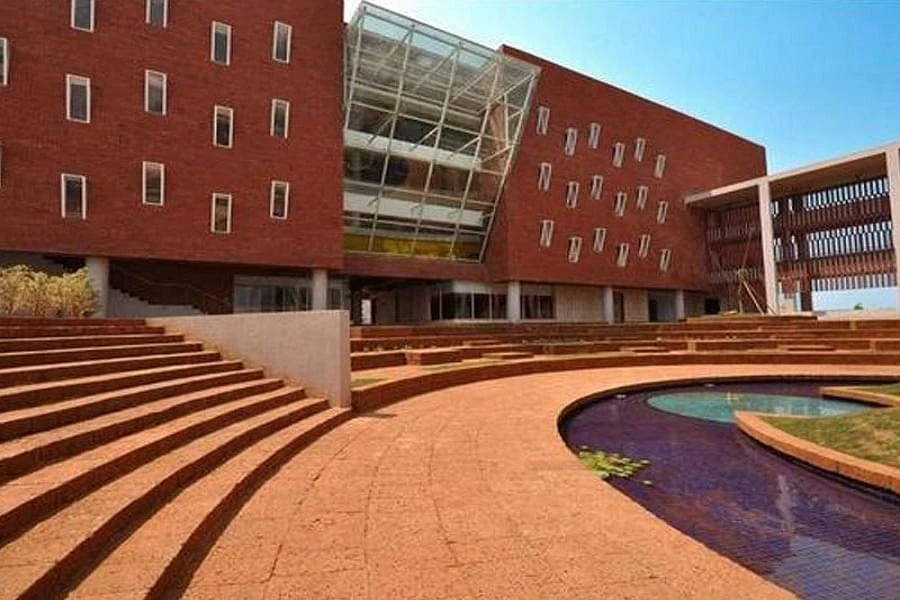
The practical picture is therefore a residential management programme with a published inventory of classrooms, library and computing resources, but some access and capacity details remain unconfirmed. A campus tour can help you judge the environment; it does not replace written answers about the room, current charges or how often students can use a particular facility.
IMI Bhubaneswar is most relevant to applicants who want the campus-based, full-time management PGDM and are comfortable with a residential format. The 2027 portal gives a concrete test window and application calendar, while the institute says it has no fixed cutoff. That combination rewards a complete application and a credible interview, but it does not make admission predictable from a single percentile.
The main financial question is whether the ₹14.98 lakh programme-fee display and any hostel or mess charges fit your budget once IMI confirms the applicable 2027-29 schedule. The headline placement figures can help compare reported outcomes, but the 2023-25 report and NIRF academic-year rows are historical, and do not forecast a new cohort. The movement in NIRF Management rank between 2024 and 2025 also argues for checking the exact edition and score rather than relying on one ranking badge.
Before you pay an application fee or accept an offer, verify four items directly with the institute: the current fee letter and refund terms; whether a hostel room is compulsory, available and guaranteed; the exact documents and dates for your accepted entrance score; and the latest full placement report with its cohort denominator. If you need an online programme or doctoral research route, compare those separately instead of treating them as interchangeable versions of the campus PGDM. The official programme and admissions pages are the best place to confirm a changed date or newly issued cycle notice.
Loading programmes and admission routes.
Selected ranking categories, with the recorded year beside each result. Open all records for the complete history.
41 published records · Lower numeric ranks are stronger
NIRF
MBA
#622021
IIRF
Management · private
#142025
IIRF
MBA · private
#172024
TOI
MBA
#512021
Indiatoday
MBA
#472021
Find a program, read its fee details and explore the admission requirements.
Summary of the programs shown below. Total course fee
Eligibility: Graduation
Eligibility: Post Graduation with 60%
Specializations
Listed entrance exams
Eligibility: Graduation with 50%
1 exam with cutoff data available
 ADP Private Limited
 Amazon
 Asahi India Glass Ltd.
 Axis Bank
 Berger
 Bharti Airtel
 Bisleri
 Britannia Industries
 Capgemini
 Capital Via
 Coffee Day Beverages
 Dabur India Ltd.
 Decathlon
 Deloitte
 DLF
 Elara Capital
 Factset
 First Source
 Flipkart
 Future Group
 GEP
 Havells
 HDFC Bank
 HPC
 ICICI Bank
 IDBI Bank
 IMRB International
 InBody
 India Power Corp Ltd
 ITC
 Janalakshmi Financial Services
 Kotak Mahindra Bank
 Kotak Securities
 Mahindra & Mahindra
 Marico Industries Ltd.
 McKinsey & Co
 Muthoot Finance
 Nobroker.com
 Northern Trust
 Philips
 Polycab
 Puma
 PWC
 Royal Bank of Scotland
 Tata Power
 Team Lease
 Tech Mahindra
 Tresvista Financial Services
 TTK Healthcare
 Vedanta
 Videocon
 Vodafone
 Vritika Technologies Pvt. Ltd.
 WATER HEALTH INDIA Pvt. Ltd.
 Yes Bank
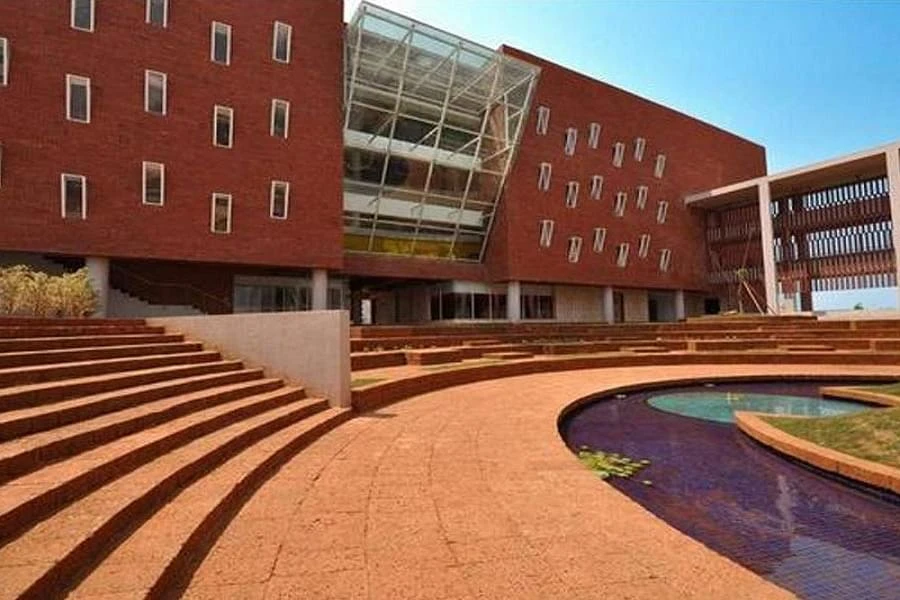

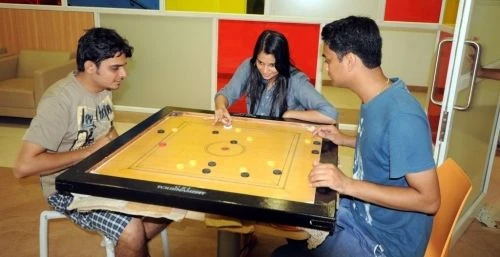
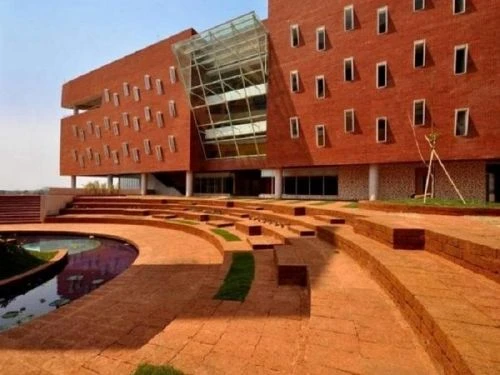

In this preview: 5 photos · 0 videos
Both IMI Bhubaneswar and IMI Kolkata are comparable institutions. IMI Bhubaneswar offers a better campus and Bloomberg facilities, while IMI Kolkata has a slight edge due to its location in the Kolkata business hub. Placement records for both campuses are nearly identical.
A safe CAT percentile for IMI Bhubaneswar is considered to be 75. However, the institute also frequently extends interview calls to candidates with a percentile around 70 if they possess a strong overall profile, including good academics or prior work experience.
Yes, the PGDM (Post Graduate Diploma in Management) awarded by IMI is approved by the Association of Indian Universities (AIU). This approval makes the degree equivalent to an MBA for purposes such as government employment and applications for PhD programs.
IMI Bhubaneswar runs a mandatory residential program. The hostel facilities are high-quality, featuring amenities like air conditioning and Wi-Fi. Students should note that hostel rules, particularly regarding entry and exit timings, are strictly enforced.
The ROI for IMI Bhubaneswar is generally considered moderate to good for a private business school. With a total program cost of approximately ₹19 Lakhs and an average placement package of around ₹12 LPA, it offers a favorable return compared to many Tier-3 colleges.
About IMI.
Colleges cannot rewrite published reviews. We remove spam and abuse.
Ask the communityWhat should future students know?
Tell us which course you're considering. We'll help you work out the next step.
Get instant Partner access after mobile verification. Your public edits are reviewed before they go live.
Claim this collegeProgramme information: Official source · Source as of: 2026-11-05
Programme information: Official source · Source as of: 2026-11-05
Programme information: Official source · Source as of: 2026-11-05
Each route applies only to this named programme and the stated year.
CAT: Common Admission Test · 2027-28
Admission-route evidence: Official source · Source as of: 2026-11-05
CMAT: Common Management Admission Test · 2027-28
Admission-route evidence: Official source · Source as of: 2026-11-05
GMAT: Graduate Management Admission Test · 2027-28
Admission-route evidence: Official source · Source as of: 2026-11-05
XAT: Xavier Aptitude Test · 2027-28
Admission-route evidence: Official source · Source as of: 2026-11-05
3 recorded programmes · 1 institution. Admission years and conditions apply to the named programme.
 Auditorium
 Cafeteria
 Computer Labs
 Hostel
 Medical
 Science Labs
 Sports Complex
 Study Library