Loading Admission Guardian content
Loading Admission Guardian content
Provisional score based on available data. It may change as more information is verified.
Find a program, read its fee details and explore the admission requirements.
Summary of the programs shown below. Total course fee. Check the note beside each amount for inclusions and exclusions.
| Course | Stream | Fees |
|---|---|---|
| Master of Computer Applications [M.C.A] | Computer Applications | 41000 |
| Master of Business Administration [MBA] | Management | 41000 |
| Master of Engineering [ME] | Engineering | 60000 |
| Master of Technology [M.Tech] (Information Technology) | Engineering | 60000 |
| Bachelor of Engineering [BE] | Engineering | 220000 |
All accepted exams
Eligibility: Graduation
Specializations
All accepted exams
Eligibility: Graduation
Specializations
Eligibility: Graduation
Specializations
Eligibility: Graduation
Specializations
All accepted exams
Eligibility: 10+2
1 exam with cutoff data available
 Flipkart
 Gemini Communication Ltd
 Hindustan Times
 HTC Global
 Kotak Mahindra Bank
 Skavasystems Pvt. Ltd.
Jayam College of Engineering and Technology (JCET) in Dharmapuri is a study in contrasts. It’s a private, tier-3 institution that’s been around since 1998, offering a low-cost engineering degree with a side of strict discipline. The campus is peaceful, the fees are among the most affordable in Tamil Nadu, and its Computer Science students occasionally land roles at companies like Zoho. But you won’t find cutting-edge innovation here. The academic approach is traditional, focused squarely on clearing Anna University exams, and the social life is muted by a rulebook that feels, as students say, ‘like a school.’ For a student with a TNEA rank between 85,000 and 1,30,000 looking for a budget-friendly, no-frills path to a B.E. degree, JCET is a pragmatic choice. For anyone dreaming of a vibrant, research-driven campus life, it’s probably not the right fit.
JCET runs a standard set of programs under the Anna University curriculum. At the UG level, B.E. programs in Mechanical, Civil, and ECE have the highest intake (90 seats each), followed by CSE, EEE, and IT (60 each). The B.E. in Aeronautical Engineering is a smaller, niche offering with 30 seats. For postgraduates, the college provides M.E. programs in several specializations, an MBA, and an MCA. The academic rhythm is entirely dictated by the Anna University calendar, with a heavy emphasis on syllabus completion for the semester exams. Faculty are generally described as approachable and knowledgeable, with HODs and senior professors often holding PhDs. But the teaching methodology is overwhelmingly traditional—chalk-and-talk lectures aimed at helping you pass. There’s little buzz about groundbreaking research or avant-garde tech labs. Industry exposure comes through MoUs with local firms like Rampro Infotech and membership in societies like ISTE and CSI. It’s a straightforward, exam-centric academic environment.
This is where the college’s marketing meets student experience, and the gap is telling. The official website has claimed a 96% placement rate. Talk to alumni on platforms like Shiksha and CollegeDunia, and the working figure for eligible students (those without backlogs) is closer to 70-80%. The highest package touted is 8.3 LPA from Zoho for a CSE student, with an unverified student claim of 12 LPA in 2024. The average package, however, sits firmly in the ₹1.5 to ₹3.5 LPA range, with a median likely around ₹2.4 LPA. That’s a decent outcome for the fee bracket, but you need to look at the roles. For CSE and IT, recruiters include TCS, Wipro, Infosys, HCL, and Cognizant. For other branches, placement often veers towards service desk or BPO roles. Core company visits for Mechanical or Civil engineers are scarce, though internships at places like HAL (for Aeronautical) do happen. The placement cell starts training from the first year, which is a plus. The verdict? If you’re in CSE and you work on your skills, you can get a decent IT job. For other branches, manage your expectations—the degree itself is the primary value.
The strongest card JCET holds is affordability. For a B.Tech student coming through the TNEA government quota, the annual tuition can be as low as ₹50,000 to ₹85,000. The management quota will cost ₹1.2 to ₹1.5 lakhs per year. Add to that hostel and mess charges, which bundle together for about ₹45,000 to ₹55,000 annually. Over four years, the total cost can range from ₹4.5 lakhs to ₹7 lakhs, all-in. That’s strikingly low for a private engineering college. PG courses like MBA and MCA have total course fees reported around ₹35,000 to ₹41,000. To support students, the college facilitates government scholarships like the First Graduate Scholarship and Post-Matric schemes for SC/ST/SCA students. The management also offers its own merit-based and sports scholarships. The financial accessibility is a major reason many students from the surrounding Dharmapuri, Krishnagiri, and Salem districts choose JCET.
Admission for the flagship B.E./B.Tech programs is almost exclusively through TNEA (Tamil Nadu Engineering Admissions), the state’s single-window counseling based on Class 12 marks. The college’s counseling code is 2606. Cutoffs aren’t fiercely competitive, reflecting its tier-3 status. For the 2023-24 cycle, the closing ranks for the popular CSE branch hovered between 85,000 and 1,10,000. For ECE, it was around 1,10,000 to 1,30,000. Branches like Mechanical and Civil often have seats available in later counseling rounds or through lateral entry. For students who don’t make it via TNEA or are from other states, there’s a management quota. The eligibility is a minimum of 50% in PCM, and you need to apply directly to the college. For PG courses, admissions are via TANCET (for MBA/MCA) and CEETA-PG/GATE (for M.E. programs). The process is bureaucratic but transparent, following the Anna University system.
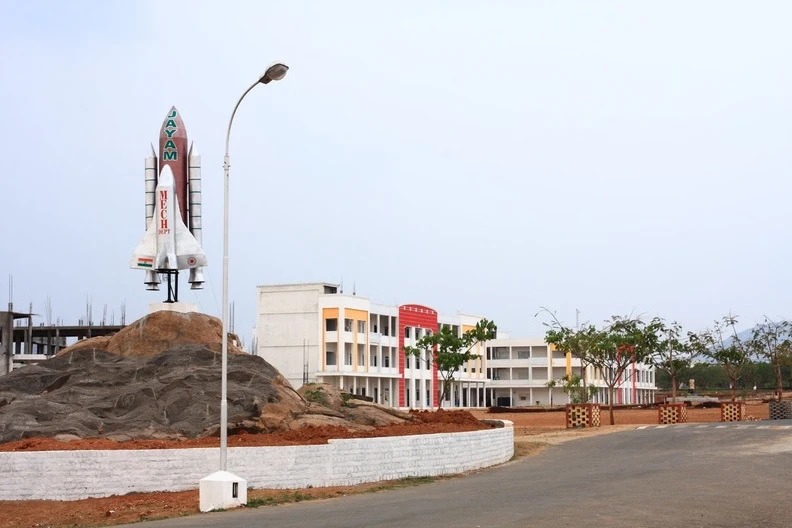
The campus, reportedly around 29 acres (less than the claimed 75), is described as ‘eco-friendly’ and ‘peaceful’—a polite way of saying it’s quiet and somewhat isolated. The infrastructure is functional. Labs for ECE and Mechanical have the necessary equipment, though some student reviews hint it’s ‘aging.’ The library has a decent collection and digital access. Hostels are separate for boys and girls, with 2-3 sharing rooms rated around 3.5/5 for quality. The mess provides both vegetarian and non-vegetarian food, consistently called ‘average but hygienic.’ Now, the defining feature of student life: rules. This is the most consistent thread in all student feedback. There has historically been a ban on mobile phones in academic blocks (though it’s relaxing for seniors), strict in-times for hostels (as early as 6 PM), and general discouragement from bringing personal vehicles. The warden’s approach is often termed ‘strict but parental.’ Social events like the annual ‘Jayam Talentz’ fest and sports meets do occur, but the overarching atmosphere is academically rigid and disciplined. The college provides bus transport covering a 60 km radius, which is essential given the location.
Synthesizing voices from CollegeDunia, Shiksha, and Quora paints a clear, consistent picture. The positives are cost, peace, and supportive faculty. “If you want a degree with decent discipline and low fees, it's good,” sums up the pragmatic appeal. Many appreciate the early start to placement training. But the negatives are just as consistent. The discipline crosses into strictness that feels infantilizing to many. The comment “the rules are like a school” appears repeatedly. Academically, there’s a frustration that teaching is solely exam-focused, not innovation-driven. On placements, while grateful for the opportunity, many note the disparity between branches: “The placement training is good... but the companies coming are mostly mid-tier.” For core branches, the opportunities are genuinely limited. Hostel life is a mixed bag—the environment is good, the food is okay, but the curfews are tight. The consensus? JCET is a specific product for a specific need: a low-cost, disciplined environment to get an Anna University degree and a shot at an IT job. It delivers that, but not much more.
JCET is a value-for-money proposition, but only for the right student. It’s worth serious consideration if you have a TNEA rank between 85,000 and 1,30,000, have a tight budget, and are primarily seeking an affordable, recognized B.E. degree to enter the workforce. This is especially true for CSE aspirants, who benefit from the best placement track record here. The college provides a structured, distraction-free environment that can work for students who thrive on routine. However, you should probably look elsewhere if you crave a vibrant campus life with academic freedom, cutting-edge research opportunities, or strong placement prospects in core engineering fields like Mechanical or Civil. The strict discipline is a deal-breaker for many. Ultimately, JCET is a pragmatic stepping stone. It won’t dazzle you with opportunities, but for its price point, it delivers a baseline engineering education and a pathway to entry-level IT roles. Just go in with your eyes wide open about what it is—and what it isn’t.
Yes, JCET's Computer Science and Engineering (CSE) branch is considered good. It is the most popular branch at the college and has the best placement record, with companies like Zoho and TCS recruiting from it.
The TNEA (Tamil Nadu Engineering Admissions) counseling code for Jayam College of Engineering and Technology (JCET) is 2606. This code is used during the centralized admission process.
Mobile phone policies are specific to different areas. While they are allowed in the hostel premises, their usage is officially restricted during study hours. Mobile phones are strictly prohibited within the academic blocks and classrooms.
The hostel fee at Jayam College of Engineering and Technology is approximately ₹45,000 to ₹55,000 per year. This cost typically includes accommodation and mess charges for food.
No, Jayam College of Engineering and Technology (JCET) is not an autonomous college. It is a non-autonomous institution affiliated with Anna University, following its curriculum and regulations.
Share what future students should know about JCET.
Student voices are not rewritten by colleges. We remove spam and abuse.
Wider admission question? Community PulseWhat should future students know?
Tell us which course you're considering. We'll help you work out the next step.
Get instant Partner access after mobile verification. Your public edits are reviewed before they go live.
Claim this college Auditorium
 Cafeteria
 Campus Shuttle
 Computer Labs
 Hostel
 Medical
 Science Labs
 Sports Complex
 Study Library