Loading Admission Guardian content
Loading Admission Guardian content
Provisional score based on available data. It may change as more information is verified.
Selected ranking categories, with the recorded year beside each result. Open all records for the complete history.
6 published records · Lower numeric ranks are stronger
IIRF
Engineering · public
#1362025
IIRF
B.Tech · public
#1462022
Find a program, read its fee details and explore the admission requirements.
Summary of the programs shown below. Total course fee. Check the note beside each amount for inclusions and exclusions.
| Course | Stream | Fees |
|---|---|---|
| Master of Technology [M.Tech] | Engineering | 112000 |
| Bachelor of Technology [B.Tech] {Lateral} | Engineering | 253000 |
| Bachelor of Technology [B.Tech] | Engineering | 337000 |
| Master of Computer Applications [M.C.A] | Computer Applications | |
| Ph.D | Engineering |
Specializations
All accepted exams
Eligibility: Pass in Graduation + GATE
Specializations
All accepted exams
Eligibility: 10+3 with 45% + UPTAC
Specializations
All accepted exams
Eligibility: 10+2 with 45% + UPTAC
All accepted exams
Eligibility: Graduation
Specializations
Eligibility: Post Graduation
2 exams with cutoff data available - showing recent entries
 Accenture
 Aditya Birla Group
 Adobe
Adobe Airports Authority of India
 Alstom Group
 Amazon
 Ansal API
 Areva
Areva Aricent Group
 Bharat Electronics Limited
 Bharat Electronics Limited (BEL)
 Bharat Heavy Electricals Ltd. (BHEL)
 Bharti Infratel Limited
 Birlasoft
 Blue Star
 Bosch Ltd
 CodeChef
 Cognizant
 DSCL
DSCL Era Group
 Fiserv
 Google
 HCL Technologies
 Hindustan Aeronautics Limited (HAL)
 Huawei
 Hughes Systique
 IBM
IBM Idea Cellular
 iFlex
iFlex IGATE
IGATE Indian Army
 Indian Navy
 Infosys
 ISRO
ISRO Larsen & Toubro Ltd.
 LOHIA Starlinger Limited
 MEDIA.NET
 Mediatek
 Microsoft
 Newgen
 NIIT Ltd
 NTPC Limited
 ONGC
ONGC Polaris
 Power Grid Corporation of India
 Sail
Sail Samsung
 Sasken Communications
 Snapdeal.com
 Soma Enterprises
 Tata Consultancy Services
 TCS
TCS Tech Mahindra
 TELCO
TELCO Unilever
 Wipro
Wipro Wipro Technologies
Kamla Nehru Institute of Technology (KNIT) in Sultanpur is a government autonomous college that offers a classic, high-value proposition: a solid engineering education at a remarkably low cost. Established in 1976 and now affiliated with Dr. A.P.J. Abdul Kalam Technical University (AKTU), its primary draw is the combination of an NAAC 'A' grade accreditation and annual B.Tech fees that hover around ₹61,200. For students who clear JEE Main and secure a seat through UPTAC counseling, it's a path to a respected degree without the financial strain of a private institution. But KNIT’s story is one of stark contrasts—especially between its computer-related branches and its traditional core engineering programs. While CSE and IT students often land decent IT jobs, the placement rates for Civil, Mechanical, and Electrical Engineering have historically been low, sometimes in the single digits. That’s the reality you need to weigh against the affordable fee structure.
KNIT operates as a full-fledged technical institute under AKTU, offering a range of programs from diploma to doctoral levels. The undergraduate B.Tech is the main attraction, with specializations in Computer Science and Engineering (CSE), Electronics and Communication Engineering (ECE), Mechanical, Civil, Electrical, and Information Technology (IT). Postgraduate options include M.Tech, MCA, and an MBA. There are also pharmacy programs (B.Pharm and D.Pharm).
The academic culture is described by students as disciplined and focused on building a strong foundation. The semester system is standard for AKTU colleges. A recurring positive in reviews is that the internal evaluation and teaching are often considered better and more consistent than at many other AKTU-affiliated colleges. The institute emphasizes practical training, and you’ll find advanced labs for robotics, embedded systems, and CAD. The computer centre is decently equipped. While the faculty details aren't publicly quantified, the NAAC ‘A’ grade suggests a baseline of qualified staff. It’s not a research powerhouse, but for a government college at this fee point, the academic delivery gets the job done.
This is where you need to look closely, branch by branch. The official placement claim is around 80%, but student-reported data tells a more nuanced—and for some, concerning—story.
For the 2024-2025 cycle, the branch-wise placement percentages shared by students are eye-opening: B.Tech CSE at 72.58%, IT at 56.72%, but then a sharp drop to 29.85% for Electronics Engineering, 30.77% for Mechanical, 25% for Electrical, and just 6.45% for Civil Engineering. The overall student-reported placement rate sits around 68%. That gap between the official figure and the ground reality is notable. If you’re in CSE, IT, or ECE, your chances are decent. If you’re in a core branch, you should realistically plan for pursuing GATE, higher studies, or government job exams.
Package figures fluctuate. The highest package for 2025 was ₹17.5 LPA from American Express. The average package for that year was reported at ₹10 LPA overall, with a median of ₹6.25 LPA. For context, NIRF 2025 data cited a median of ₹4.80 LPA for UG programs. The highest package ever recorded was an off-campus offer of ₹45 LPA from Amazon in 2023.
The recruiter list is impressive on paper, featuring names like Adobe, Amazon, Samsung, Google, Dell, TCS, Infosys, and Bloomberg. But these companies predominantly hire from CSE and IT. Core sector recruitment is limited. Internships aren’t a strong suit here; the college doesn’t extensively facilitate them, so students often have to hustle on their own. Some have landed internships at TCS, Dell, and similar firms.
This is KNIT’s undeniable strength. For a government autonomous institution, the fees are exceptionally affordable. The first-year B.Tech tuition is approximately ₹61,200. When you add hostel fees (around ₹10,000 per year) and mess charges (roughly ₹14,000-₹25,000 per semester), the total annual cost ranges between ₹68,000 to ₹83,000. Over four years, you’re looking at a total cost of roughly ₹2.7 to ₹3.3 lakhs. That’s a fraction of what most private engineering colleges charge for a single year.
Scholarship support is robust and critical for many students. The Uttar Pradesh government offers a Merit Scholarship for the top 10% of students in each B.Tech branch. There are also need-based scholarships: the General Scholarship and SC/ST/OBC Minority Scholarship reimburse tuition fees (₹50,000-₹80,000 annually) for students with a family income under ₹2 lakhs. Full tuition waivers exist for economically weaker students, and there are smaller merit-based awards of ₹3,000-₹5,000 per branch. Applications are processed through the National Scholarship Portal (NSP) and the institute’s portal. On-campus branches of Punjab National Bank and Bank of Baroda facilitate education loans.
Admission to the B.Tech program is strictly through national/state entrance exams. You must appear for JEE Main. Your rank, along with your category, determines your eligibility during the centralized counseling process conducted by UPTAC/AKTU.
Cutoff ranks vary each year based on applicant pool and seat matrix. For reference, 2023 B.Tech admission thresholds (Round 1-6) are available, but for the most accurate and updated cutoffs for the 2026-2027 cycle, you must wait for the official release by UPTAC counseling. Typically, the closing ranks for CSE are the most competitive, followed by ECE and IT. Core branches often have significantly lower closing ranks.
For M.Tech, a valid GATE or CUET PG score is required. MCA admissions are through CUET PG. Admissions to B.Pharm, D.Pharm, and MBA programs are based on prescribed entrance exams like UPCET. The process is entirely merit-based through these counseling channels; there’s no management or NRI quota mentioned.
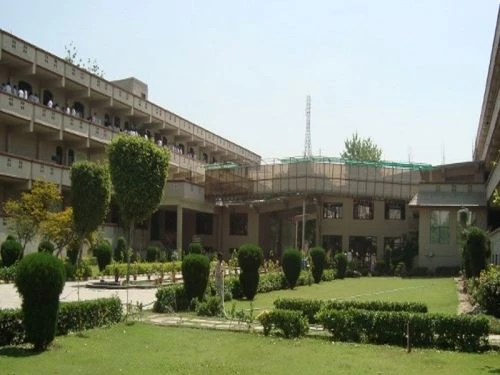
KNIT’s 100-acre campus is described as green and pleasant. Academically, the infrastructure is adequate: well-furnished classrooms, a library with over 50,000 books, and a reliable 24x7 high-speed Wi-Fi network (1 Gbps) that covers hostels and departments. Sports facilities include grounds for cricket, football, and courts for basketball and badminton. There’s a spacious cafeteria, on-campus bank branches with ATMs, a health centre, and college buses.
The hostel experience is a mixed bag. There are 10 boys' hostels and 3 girls' hostels, with new ones under construction. The rooms are shared (2-4 students) and come with basic furniture. The common complaint is that the older hostel buildings feel dated and need maintenance, though they’re functional. The mess food is perhaps the most debated topic. Reviews range from “amazing in the first year” to “average” and “not up to the mark.” The consensus leans toward it being just okay. A notable gripe is the lack of flexibility—if you live in the hostel, you’re required to subscribe to the mess.
Social life is active thanks to various clubs and annual events like the Techno-Cultural Festival, Twaran, and the KNIT Sports League. It’s a typical government engineering college vibe—self-contained, with a community feel, but located a bit away from the city center (Sultanpur bus stop is about 4-5 km away).
Synthesizing feedback from platforms like CollegeDunia and Shiksha, a clear consensus emerges.
Students praise the value for money. The low fee for a government autonomous degree is the biggest plus. They appreciate the strong academic foundation, especially in CSE and IT, and note that the teaching and evaluation are better than at other AKTU colleges. The green, disciplined campus and 24/7 Wi-Fi are consistently liked. The social scene with fests and clubs gets a thumbs up.
However, the criticisms are serious and consistent. The huge disparity in placement success between CS/IT and core branches is the foremost concern. Many core branch students feel the college provides little career support for them. Hostel infrastructure is called old and in need of repair. Mess food quality is divisive but skews negative over time, and the compulsory mess subscription irritates many. Some also point to administrative hurdles, particularly around scholarship paperwork, describing notices as “never precise.”
KNIT Sultanpur is a very specific, clear-cut choice. It is absolutely worth it for a student with a limited budget who secures a seat in Computer Science & Engineering, Information Technology, or Electronics & Communication Engineering. For them, it’s a low-risk, high-reward path to a decent engineering degree and a probable IT job, all without financial burden. The ROI is excellent.
However, it is a much harder recommendation for students interested in core branches like Civil, Mechanical, or Electrical Engineering. The placement data and student reviews are unequivocal: on-campus job opportunities are scarce. If you’re entering these branches, you should do so with a plan—aiming for GATE, higher studies (M.Tech from a better institute), or government services from day one. The affordable fee still makes it a viable base for those plans, but don’t expect the institute to open core industry doors for you.
Ultimately, KNIT delivers exactly what a good government engineering college should: a rigorous, affordable education. But it mirrors the broader Indian engineering landscape where software reigns supreme. Choose your branch with your eyes wide open.
The average package for KNIT Sultanpur in 2025 was ₹10 Lakhs Per Annum (LPA) overall. However, this figure varies significantly by branch. Computer Science and IT students typically secure higher packages, while placements for core engineering branches (Civil, Mechanical, Electrical) are considerably lower, which pulls down the overall average.
The annual tuition fee for the B.Tech program at KNIT Sultanpur is approximately ₹61,200 for the first year. Including hostel charges (around ₹10,000/year) and mess fees (approx. ₹14,000-₹25,000 per semester), the total annual cost for a student ranges between ₹68,000 to ₹83,000. This makes it a highly affordable government autonomous engineering institute.
Placements for Computer Science and Engineering (CSE) at KNIT are relatively strong compared to other branches. For the 2024-2025 cycle, the reported placement percentage for B.Tech CSE was around 72.58%. Top recruiters like Adobe, Amazon, Google, TCS, and Infosys hire from this branch. Students from CSE secure the highest and most frequent on-campus offers.
Admission to the B.Tech program at Kamla Nehru Institute of Technology is based on the JEE Main entrance exam. Candidates must qualify for JEE Main and then participate in the centralized state counseling process conducted by UPTAC/AKTU. Seats are allotted based on JEE Main rank, category, and branch preference during the counseling rounds.
Yes, KNIT Sultanpur offers several scholarship programs. These include a Merit Scholarship from the UP Government for the top 10% in each branch, need-based General and SC/ST/OBC Minority Scholarships for families with income under ₹2 lakhs (providing fee reimbursement), full tuition waivers for economically weaker students, and branch-specific merit awards. Applications are made via the National Scholarship Portal (NSP) and the institute's portal.
Share what future students should know about KNIT.
Student voices are not rewritten by colleges. We remove spam and abuse.
Wider admission question? Community PulseWhat should future students know?
Tell us which course you're considering. We'll help you work out the next step.
Get instant Partner access after mobile verification. Your public edits are reviewed before they go live.
Claim this college
 Auditorium
 Bank & ATM
 Cafeteria
 Campus Security
 Campus Shuttle
 Computer Labs
 Hostel
 Medical
 Science Labs
 Sports Complex
 Study Library