Loading Admission Guardian content
Loading Admission Guardian content

Provisional score based on available data. It may change as more information is verified.
Selected ranking categories, with the recorded year beside each result. Open all records for the complete history.
2 published records · Lower numeric ranks are stronger
IIRF
Nursing
#712022
Find a program, read its fee details and explore the admission requirements.
Summary of the programs shown below. Programs record different fee periods. Compare the individual amounts and their notes below.
| Course | Stream | Fees |
|---|---|---|
| Post Basic Bachelor of Science [P.B.B.Sc] (Nursing) | Paramedical | 10000 |
| General Nursing and Midwifery [GNM] | Paramedical | 35000 |
| Master of Science [M.Sc] | Paramedical | 100000 |
| Ph.D. (Nursing) | Paramedical | 150000 |
| Bachelor of Science [B.Sc] (Nursing) | Paramedical | 550000 |
Specializations
Eligibility: 10+2
Eligibility: 10+2
Specializations
Eligibility: Graduation
Specializations
Eligibility: Post Graduation
Specializations
Eligibility: 10+2
1 exam with cutoff data available
Karnataka College of Nursing in Bangalore is a place that understands its purpose. Established in 2003, it’s a private institution that doesn’t try to be a sprawling university. Instead, it focuses on turning out nurses who are ready for the ward. With a compact campus and a student body drawn from over 25 countries, the vibe is less about campus fests and more about clinical rotations. The college claims 100% placement assistance, but the real story, as you’ll hear from students, is about the grind—strict attendance, demanding hospital postings, and a pathway that often leads overseas. If you’re looking for a disciplined, no-frills launchpad into nursing, especially with an international career in mind, this is a contender. If you want a vibrant college life with all the trimmings, you might feel a bit cramped.
The academic menu here is standard for a nursing college, running from diploma to doctorate. The B.Sc Nursing program is the main draw, with an intake of 60. They also offer a Post Basic B.Sc for GNM diploma holders, a GNM diploma itself, and an M.Sc Nursing with five specializations: Medical-Surgical, Obstetrics, Paediatrics, Psychiatry, and Community Health. There’s a Ph.D. program, too, for those aiming for academia.
What defines the academic experience isn’t a fancy curriculum but the execution. The student-teacher ratio is a decent 11:1, which means you’re not just a number in a lecture hall. Faculty, led by Principal Dr. M. Bharathi, are generally described as supportive guides through the notoriously tough RGUHS syllabus. The real classroom, though, is the hospital. Clinical tie-ups with institutions like Aster Multi-Speciality Hospital and Regal Hospital mean rotations start early and are frequent. That’s the college’s strongest academic selling point—you get your hands dirty, fast.
Let’s separate the brochure from the bench. The college officially claims 100% placement assistance. In practice, student reviews suggest the actual on-campus placement rate for corporate hospitals is closer to 80-85%. That’s still a solid figure for the sector. The highest packages quoted range from ₹6.2 LPA for B.Sc grads up to ₹9.1 LPA for M.Sc postgraduates, though these numbers are unverified. The working average package most alumni cite is between ₹2.5 and ₹3.8 LPA.
Top recruiters are a who’s who of Bangalore’s healthcare scene: Aster CMI, Fortis, Columbia Asia (now Manipal), and Vikram Hospital. It’s worth noting that "placement" in government hospitals usually means training rotations; a permanent government job requires clearing separate KEA or DME exams.
The standout feature isn’t the domestic package, honestly. It’s the international pathway. KCON provides specific coaching for the NCLEX-RN (USA) and CGFNS exams, which is a clear signal of where many students are headed. An estimated 30%+ of alumni are working in the UK’s NHS or the Middle East. So, the placement story here is less about a single high-paying offer at graduation and more about building a globally portable career.
The fee structure is a classic tale of two quotas, common in Karnataka. If you secure a seat through the Karnataka Common Entrance Test (KCET) counseling, you’re in the Government Quota. That’s a steal—around ₹10,000 per year for B.Sc Nursing. The vast majority of students come via the Management Quota, where the annual tuition jumps to between ₹1,00,000 and ₹1,40,000 for the B.Sc program.
Add in hostel and mess fees (₹60,000 - ₹85,000/year) and other one-time charges for kits and exams (₹15,000 - ₹20,000), and the total 4-year cost for a Management Quota B.Sc student can land between ₹6.5 and ₹8.5 lakhs. For the GNM diploma, the total cost is lower, around ₹3.5-4.5 lakhs. Financial aid primarily exists in the form of government scholarships for SC/ST/OBC students, accessible through the Karnataka State Scholarship Portal (SSP).
For B.Sc Nursing, the game has changed. As of recent government orders, a whopping 80% of seats must be filled through the KCET entrance exam. This makes KCET mandatory for most aspirants. The remaining 20% are Management Quota seats, which may involve a direct application and a college-level interview or aptitude test.
The KCET cutoffs give you a sense of the competition. In the 2025 first round, the General Merit rank for B.Sc Nursing hovered between 1,34,170 and 2,05,361. For Category 1G, it was around 1,51,538. These are not ultra-competitive ranks compared to engineering or medicine, but they do indicate a consistent demand.
Eligibility is straightforward: 10+2 with Physics, Chemistry, and Biology and a 45% aggregate. The application window follows the KCET calendar, typically from April to July, with selection happening via the Karnataka Examination Authority (KEA) counseling process. For other programs like M.Sc, eligibility requires a B.Sc Nursing degree and often a year of experience.
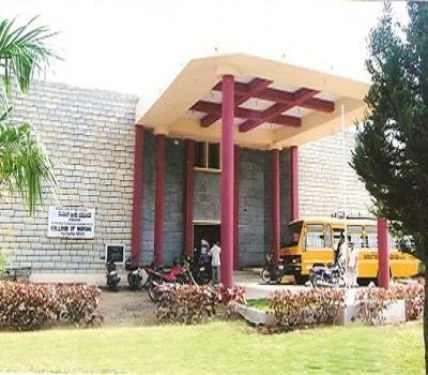
Don’t picture a sprawling, leafy campus. KCON sits on about 2 acres, sharing space with other institutions in the Karnataka Educational Trust group. Reviews call it "compact" and note it can feel crowded. Infrastructure is functional: labs with simulation manikins, a digital library with HELINET access, and Wi-Fi across campus and hostels.
The hostels—separate for boys and girls—are on-site and secure, with 24/7 warden supervision. Rooms are typically 3-6 sharing. Quality gets a middling 3.5/5 from students. The most consistent complaint is about the mess food, described as "average," with many students opting for outside options after their first year. Social life isn’t the main attraction. The campus vibe is shaped by its international diversity, with students from across Africa, the Middle East, and South Asia. It’s a working environment, not a resort.
The consensus paints KCON as a middle-tier, pragmatic choice. The praise is consistent and focused: clinical exposure. Students repeatedly say the hospital postings are frequent, well-organized, and in reputable hospitals like Aster, providing real, hands-on skills from an early stage. The multicultural environment and generally supportive faculty are also big pluses.
The criticisms are just as consistent. The small, shared campus and infrastructure constraints top the list. Administrative rigidity is a major theme—strict attendance policies, fines for missed clinicals, and reported hassles with document retrieval. One recurring verbatim quote from a Shiksha review sums it up perfectly: "If you want a fancy campus life with fests and fun, this isn't it. But if you want to become a disciplined nurse and go abroad, the training here is solid." That’s the trade-off, laid bare.
Karnataka College of Nursing is a specific tool for a specific job. It’s best for students who are dead-serious about nursing as a profession, particularly those with an eye on working internationally. The strong clinical partnerships, INC recognition, and focused NCLEX/CGFNS coaching provide a legitimate runway for a global career. The KCET Government Quota is fantastic value. For Management Quota students, the ₹7-8 lakh investment needs to be weighed against the no-frills, disciplined, and sometimes rigid environment. If your priority is a vibrant, holistic "college experience" with top-tier infrastructure, you’ll likely be disappointed. But if you want to graduate as a competent, work-ready nurse, KCON gets the fundamentals right. Just be prepared for a grind, not a party.
Yes, Karnataka College of Nursing is officially recognized by the Indian Nursing Council (INC) as well as the Karnataka Nursing Council (KNC), which are the essential regulatory bodies for nursing education in India.
For the B.Sc Nursing program under the management quota, the total cost, which typically includes hostel fees, generally ranges between ₹7.5 Lakhs to ₹8.5 Lakhs for the entire 4-year duration.
The college provides clinical training in government hospitals as part of the curriculum. However, securing a permanent government job requires candidates to independently pass the competitive exams conducted by the Karnataka Examination Authority (KEA) or the Directorate of Medical Education (DME).
Admission to the B.Sc Nursing program at KCON typically requires candidates to qualify for the Karnataka Common Entrance Test (KCET) for most seats. For management quota seats, the process may involve a college-level interview.
The college provides an on-campus and secure girls' hostel with 24/7 warden supervision. While safety and supervision are noted strengths, student reviews regarding the quality of the food served are often mixed.
Share what future students should know about Karnataka College of Nursing.
Student voices are not rewritten by colleges. We remove spam and abuse.
Wider admission question? Community PulseWhat should future students know?
Tell us which course you're considering. We'll help you work out the next step.
Get instant Partner access after mobile verification. Your public edits are reviewed before they go live.
Claim this college Auditorium
 Cafeteria
 Campus Shuttle
 Computer Labs
 Hostel
 Science Labs
 Sports Complex
 Study Library