Loading Admission Guardian content
Loading Admission Guardian content
Find a program, read its fee details and explore the admission requirements.
Summary of the programs shown below. Fee periods can differ by program. Check the note beside each amount before comparing costs.
| Course | Stream | Fees |
|---|---|---|
| Diploma in Engineering (Polytechnic) | Engineering | 45000 |
| Bachelor of Computer Applications [BCA] | Computer Applications | 55000 |
| Bachelor of Business Administration [BBA] | Management | 55000 |
| Bachelor of Technology [B.Tech] | Engineering | 75000 |
| Master of Business Administration [MBA] | Management | 110000 |
Specializations
Eligibility: 10th
Specializations
Eligibility: 10+2
Specializations
Eligibility: 10+2
Specializations
All accepted exams
Eligibility: 10+2 + UPTAC
Specializations
All accepted exams
Eligibility: Graduation
3 exams with cutoff data available - showing recent entries
 Alembic Pharmaceuticals
 Amazon
 Ambuja Cement
 Asahi India Glass Ltd.
 Bajaj Allianz
 Bosch Ltd
 Byju's
 Capgemini
 Ceasefire Industries
 Decathlon
 Dr. Reddy's Laboratories
 Extramarks Education India Pvt. Ltd.
 Genpact
 Gyansys
 HCL
HCL HDFC Bank
 ICICI Prudential
 IDFC First Bank
 IDS Infotech
 IndiaMart Company
 Infosys
 Intellipaat
 Jaro Education
 Jindal
 JK Cement
 Josh Tech
 Just Dial
 Karvy Group
 Kranti tech
 Nerolac Paints
 Newgen Software Technologies Ltd.
 Outlook Magazine
 Parle Agro
 Religare Health Insurance Company Limited
 Shyam Steel
 SRVA Education
 TCS
TCS Tech Mahindra
 Tejas Networks
 TIAA
TIAA UltraTech Cement
 Utkarsh Bank
 Vedantu Innovations
 Wipro
WiproKashi Institute of Technology (KIT) in Varanasi presents a classic trade-off. For students in Eastern Uttar Pradesh seeking a private engineering college with solid infrastructure and AKTU affiliation, it’s a visible option. But you have to look past the glossy brochures. The campus is modern and disciplined, yes. The Apple iOS lab and HCL partnership are real assets for CSE students. Yet, the conversation among alumni online often circles back to a single, frustrating point: the gap between the college’s placement claims and the reality of sales-heavy job offers. It’s a college that promises a professional environment, but one that many students describe as rigid, almost school-like in its rules. So, is it worth it? That depends entirely on what you’re bringing to the table and what you expect to get out.
KIT offers a standard private college portfolio under the AKTU umbrella. The B.Tech program is the main draw, with an intake of around 390 students. Specializations include CSE, CSE with AI & ML, IT, ECE, Mechanical, Civil, Biotechnology, and Electrical. They also run BBA, BCA, B.Pharm, MBA, MCA, and M.Tech programs, plus diploma courses in polytechnic and pharmacy.
The academic rhythm is dictated by AKTU’s calendar—odd semesters from August, even from January. The student-teacher ratio is a decent 7:1, which means you’re not just a number in a massive hall. Faculty quality is a mixed bag, though. Senior professors often hold PhDs and are noted for being approachable, especially for project guidance. But a lot of the teaching load falls on junior M.Tech holders, which can affect depth in some core subjects.
Where KIT tries to stand out is in its industry linkages. The HCL GUVI Center of Excellence and the dedicated Apple iOS Development Lab are tangible, modern facilities for CSE and IT students. There’s also an incubation tie-up with IIT BHU for startups, and corporate training partnerships with names like TCS and Bajaj Finance. These are genuine advantages, but their benefit is proportional to a student’s own initiative. The college provides the tools; you have to be the one to use them aggressively.
This is the section that requires the most careful reading. The official placement cell claims an 80-90% placement rate. The highest package for the 2025 batch is reported at ₹10.50 LPA from Jaro Education. For engineering, the 2024 high was ₹7.23 LPA. The median package for UG programs in 2023 was ₹4.20 LPA, with the average typically sitting between ₹3.36 and ₹4.50 LPA.
Now, the reality check. Scouring student reviews on platforms like Shiksha and CollegeDunia reveals a consistent narrative. The effective placement rate for on-campus, core technical roles is estimated by alumni to be closer to 60-70%. A significant portion of the “placed” students land offers in sales, business development, or customer support roles from EdTech and BFSI companies. Recruiters like Jaro Education, Hike Education, PlanetSpark, and Utkarsh Small Finance Bank are frequent visitors, alongside IT services giants like TCS, Wipro, and Infosys.
So, what’s the takeaway? If you’re in CSE or IT and you leverage the HCL and Apple labs, you have a reasonable shot at an IT services job in the 3.5-5 LPA range. That’s a standard outcome for a private tier-3 college in the region. But if you’re in Mechanical or Civil, your on-campus options thin out considerably. The college provides a platform, but for top-tier packages or pure software developer roles, off-campus hustle is almost a prerequisite. The gap between the official brochure and the student forum whispers is notable, and it’s wise to factor that in.
KIT’s fee structure is transparent but adds up. For the flagship B.Tech program, annual tuition ranges from ₹80,000 for branches like Civil or Mechanical to ₹1,20,000 for CSE. Over four years, plan for a total tuition cost between ₹3.2 and ₹4.8 lakhs. But that’s just the start.
Hostel fees are a major additional cost. They range from ₹50,000 per year for a non-AC, quadruple-sharing room to ₹82,000 for AC double-sharing. There are also mandatory one-time charges: a ₹10,000 admission fee and about ₹8,000 for uniforms. When you tally tuition, hostel, and these charges, the total annual outlay can easily cross ₹1.5 to ₹1.8 lakhs for a CSE student in an AC hostel.
Financial aid is limited. The primary options are state government scholarships for SC/ST/OBC and EWS students from Uttar Pradesh. The college also offers an internal SPY Scholarship based on merit. It’s not a lot, so budgeting for the full fee is the safest approach.
Admission to the B.Tech program primarily flows through UPTAC counseling, which uses your JEE Main rank. For the 2024 session, the closing ranks were quite relaxed, reflecting the college’s position in the market. The General All India quota cutoff for CSE was around 1,141,942, and for CSE (AI & ML) it was about 1,156,716. Other engineering branches have even lower cutoffs. They also accept CUET-UG scores.
If you don’t have a competitive entrance rank, direct admission under the Management Quota is available. This is based on your Class 12 marks, with a minimum requirement of 45-50% in PCM. It’s a straightforward, if more expensive, route. For MBA, they accept CAT, MAT, or CUET-PG scores. MCA admissions are via CUET-PG.
The application window usually opens in April or May. The process isn’t complicated, but it’s essential to watch the UPTAC and college websites for official notifications.
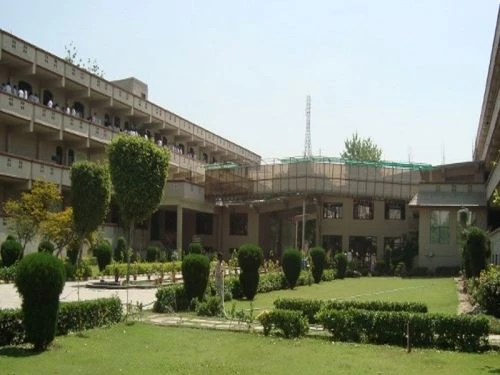
KIT’s 16-acre campus on the Varanasi-Prayagraj highway is arguably its strongest physical selling point. The infrastructure is modern, clean, and well-maintained—it genuinely looks the part of a professional institute. The library (dubbed the Knowledge Resource Centre) has a solid collection of 43,000+ books and digital access. Labs for computer science are well-equipped, especially the specialized Apple and HCL facilities. Labs for core engineering are described as functional.
Hostels are separate for boys and girls, with students rating them around 3.5 out of 5. The rooms are okay, the food is consistently described as “average but hygienic.” The campus has 24/7 Wi-Fi, though students note the speed can be variable.
And here’s the catch that defines student life: discipline. The management runs a tight ship. Attendance is strictly enforced with a 75% minimum, and fines are common for falling short. Uniforms are mandatory every day. There are rules governing movement and conduct that many students on Quora and Reddit label as “school-like.” If you crave a liberal, unstructured university experience, KIT will feel restrictive. The location, 25 km from Varanasi Junction, also isolates you. Social life is largely campus-centric, revolving around the sports facilities (volleyball, badminton, cricket, gym) and annual fests.
Synthesizing the chatter from review sites and forums paints a clear, two-sided picture.
The praise is almost always for the infrastructure and safety. “The campus is one of the best in the area for a private college,” is a common refrain. Students also appreciate that teachers are accessible and supportive for academic projects and guidance. The Apple iOS lab and industry ties are repeatedly mentioned as genuine positives for motivated CSE students.
The criticism is equally consistent and focuses on administration and outcomes. The strict attendance policy and fines are a major pain point. The perceived overemphasis on placing students in sales roles, particularly with EdTech firms, leads to frustration among those seeking core engineering jobs. The remote location and rigid rules make the overall environment feel confined to some.
One paraphrased review sums up the median opinion well: “The college is good if you want a degree with decent infrastructure, but don’t expect top-tier placements. You have to work hard off-campus.” Another common quip from Quora: “They treat you like a school student. Fines for everything.”
Kashi Institute of Technology is a specific solution for a specific set of needs. It’s worth serious consideration if you are a student from Uttar Pradesh or nearby regions with a moderate JEE Main rank (or planning for management quota), who prioritizes a clean, secure, and disciplined campus environment over a liberal college experience. If you’re entering CSE or IT and are confident in your ability to leverage the industry labs and partnerships for skill-building—while simultaneously driving your own off-campus job search—it can be a viable launchpad.
However, look elsewhere if you expect a vibrant, autonomous campus life, or if you’re enrolling in non-CS branches expecting strong, core-placement support. The financial investment is significant, and the return, in terms of placement quality and autonomy, is debated. Ultimately, KIT provides a structured academic path and decent tools, but the onus for a standout career outcome rests heavily on the student. It’s a college that manages you more than it empowers you, and your tolerance for that dynamic should be the deciding factor.
Yes, the B.Tech in Computer Science and Engineering (CSE) is considered the best branch at KIT. This is due to specialized facilities like the Apple iOS lab and higher placement rates, which are reported to be around 80-90%. The typical placement packages for CSE graduates generally fall in the range of 3 to 5 LPA.
For the 2025 placement season, the highest package offered at Kashi Institute of Technology is ₹10.50 LPA. Historically, some students have secured off-campus placements with packages as high as ₹18 LPA.
Yes, Kashi Institute of Technology has a strict mandatory uniform policy that applies to all students attending the college.
Yes, direct admission is possible at KIT Varanasi through the Management Quota. To be eligible, candidates typically need to meet the minimum academic criteria, which is usually securing 45-50% marks in Physics, Chemistry, and Mathematics (PCM) in their 12th standard.
Hostel life at KIT is disciplined with fixed timings. The food provided is vegetarian and is generally considered average. Students have the option to choose between AC and Non-AC rooms.
Share what future students should know about KIT.
Student voices are not rewritten by colleges. We remove spam and abuse.
Wider admission question? Community PulseWhat should future students know?
Tell us which course you're considering. We'll help you work out the next step.
Get instant Partner access after mobile verification. Your public edits are reviewed before they go live.
Claim this college
 Auditorium
 Cafeteria
 Campus Shuttle
 Campus Wi-Fi
 Computer Labs
 Gym
Gym Hostel
 Medical
 Science Labs
 Sports Complex
 Study Library