Loading Admission Guardian content
Loading Admission Guardian content

Provisional score based on available data. It may change as more information is verified.
Find a program, read its fee details and explore the admission requirements.
Summary of the programs shown below. Fee amounts are not listed. Contact the college for its current fee schedule.
| Course | Stream | Fees |
|---|---|---|
| Bachelor of Science [B.Sc] (Nursing) | Paramedical | |
| Master of Science [M.Sc] (Nursing) | Paramedical | |
| P.B.Bachelor of Science [B.Sc] (Nursing) | Paramedical |
Specializations
Eligibility: 10+2
Specializations
Eligibility: Graduation
Specializations
Eligibility: 10+2
1 exam with cutoff data available
Masood College of Nursing sits in the heart of Mangalore, a private institution that’s been quietly training nurses since 2003. Affiliated with the major Rajiv Gandhi University of Health Sciences (RGUHS) and recognized by the all-important Indian Nursing Council, it’s a straightforward option for students in Karnataka looking for a regulated nursing education. The vibe here is functional rather than flashy. It’s a place where hostel living is mandatory, clinical postings are spread across city hospitals, and the focus is squarely on turning out capable bedside caregivers. If you’re after a no-frills, INC-approved pathway into nursing, this college checks the basic boxes. But you won’t find much chatter about it online, which says something about its profile.
The program lineup is standard for a nursing college in Karnataka, covering the essential tracks. The B.Sc Nursing (Basic) is the main draw with 90 seats, followed by a Post Basic B.Sc for diploma holders (60 seats), a two-year M.Sc Nursing (25 seats), and a General Nursing & Midwifery (G.N.M.) diploma (60 seats). That puts total intake around 235 students across programs, which is a decent size. The academic philosophy, as stated on their official website, is about building a “broad concept” of nursing fundamentals. In practice, that means the syllabus from RGUHS is king, and the college’s role is to deliver it.
Where the rubber meets the road is clinical exposure. And here, Masood College has structured tie-ups that give students a varied experience. They’re affiliated with Krishna Nursing Home (50 beds) for regular postings. But students also rotate through major government facilities like Wenlock Hospital and Lady Goshen Hospital. That’s a solid mix—private nursing home practice alongside the high-volume, resource-constrained reality of a government hospital. They also get the mandatory rural and urban community postings required by the INC syllabus. The labs on campus—seven of them, as per INC norms—are said to be equipped with modern instruments. Faculty are described as experienced, but there’s no detailed breakdown of qualifications or student-faculty ratios available. It’s a teaching-focused setup, not a research powerhouse.
This is the big question mark. The college’s official placement data is essentially non-public. Their materials mention “comprehensive support” and generic lists of recruiters like “Various MNCs, Top Corporates,” but no named hospitals, no average packages, and no placement percentages are provided. The field simply says “To be updated” or “Contact for details.” That’s not uncommon for smaller private nursing colleges, but it’s a significant gap for anyone trying to assess return on investment.
The reality for nursing graduates, especially from RGUHS-affiliated colleges, is that placement is often a self-driven endeavor. The degree and registration with the nursing council are the primary tickets to employment. Many graduates find jobs through hospital recruitment drives, government exams, or direct applications. The college’s network of associated hospitals (Krishna, Wenlock, Lady Goshen) could provide a foot in the door for some, but it’s not a guaranteed pipeline. If you’re looking for a college with a strong, data-backed track record of placing students in top corporate hospital chains, you’ll need to dig much deeper here—likely by reaching out to the administration directly or trying to find alumni on LinkedIn.
The fee structure appears to follow Karnataka government norms, which keeps costs relatively manageable compared to some private institutions. For the 2025-26 session, the first-year fee for B.Sc Nursing is listed at ₹40,000. But estimates suggest the annual fee could range anywhere from ₹50,000 to ₹2,00,000. That’s a wide band, so confirming the exact four-year cost during admission is critical. For M.Sc Nursing, the first-year fee is higher at ₹1,60,000.
A major cost factor is the hostel, which is compulsory for all students. The fee includes accommodation and all meals—breakfast, lunch, evening tea, and dinner. The exact combined hostel and mess charge isn’t spelled out in available data, so it must be added to the tuition. There’s also a Rs. 300 application fee to collect the prospectus. On the upside, the college does offer scholarships. These are based on academic merit and categories like reserved quotas or financial need. It’s worth asking about these during the admission process to see if you qualify.
Admissions run through the standard channels for nursing in Karnataka. For the B.Sc program, eligibility is 10+2 with PCB and English, with a minimum of 45% marks (40% for SC/ST). You also need to be at least 17 years old. Selection is typically based on entrance exams. The Karnataka Common Entrance Test (KCET) is a major pathway for state quota seats. For postgraduate M.Sc Nursing, the Karnataka Examinations Authority (KEA) conducts a separate entrance exam.
The process is administrative: check eligibility, take the relevant entrance exam, submit your application (with that Rs. 300 fee), and then go through document verification and counseling based on your merit rank. The college states that admissions follow RGUHS recommendations. There’s no available data on previous year’s cutoff ranks, which makes it hard to gauge competitiveness. Your best bet is to focus on scoring well in KCET or the KEA PG exam. The application form is available from the college secretary or potentially through their website.
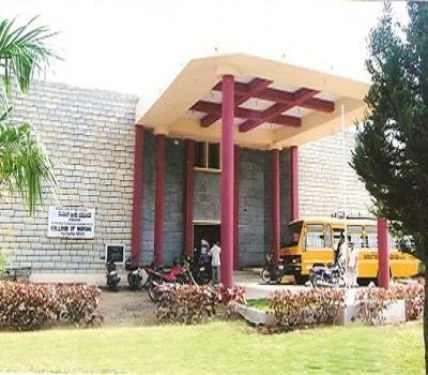
The campus in Bikarnakatte is compact and functional. Hostel life is a central experience here, since staying on campus is mandatory. They have separate hostels for boys and girls, with rooms described as spacious and furnished with a cot, table, chair, and locker. The inclusion of all meals simplifies things, but student reviews on the actual quality of the food or the strictness of hostel rules are absent. The college owns a fleet of buses, which is essential for ferrying students to the various hospitals and community postings around Mangalore.
Academically, classrooms are equipped with projectors and internet. The library is well-stocked and, importantly, provides digital access to e-journals and e-books through the Helinet consortium—a key resource for research. There’s a sports complex for indoor and outdoor games, an auditorium, and a cafeteria. A notable infrastructure advantage is the on-campus hospital and pharmacy, which is useful for minor medical needs. The college organizes the usual set of events—Lamp Lighting, Freshers’ Day, Nurses’ Day, Sports Day, and a Cultural Fest. It’s not a bustling metropolitan campus, but it provides the necessary facilities for a focused nursing education.
Here’s the thing: there’s a notable silence. Detailed, verified student reviews on platforms like CollegeDunia or Shiksha are scarce. Most available information is factual or promotional. A Malayalam-language YouTube review from 2025 suggests a generally positive outlook, but specific student testimonials about teaching quality, administration, or placement support are hard to come by. This lack of organic chatter can be interpreted in a couple of ways. It might mean the college is a quiet, drama-free place that simply gets on with the job of training nurses. Or, it could indicate a less engaged student body or a management that doesn’t actively cultivate an online feedback culture.
The few generalized points mention “good academics” and “experienced” faculty. But there’s no insight into internal marking, lecture styles, or grievance redressal. The absence of negative reports about ragging or terrible food is a positive sign, but it’s an absence of data, not a confirmation of excellence. Prospective students should really try to visit the campus, if possible, or connect with current students through professional networks to get the unfiltered perspective.
Masood College of Nursing is a legitimate, INC-recognized institution that delivers a standardized nursing curriculum from RGUHS. Its strengths are its clinical postings across different hospital types and a fee structure that starts at a reasonable point. The compulsory hostel with meals creates a controlled environment for learning. However, the complete lack of transparent placement data is a significant drawback for a professional course. The muted online student sentiment also makes it hard to gauge the actual day-to-day experience.
So, who is it for? This college is a pragmatic choice for students in Karnataka who have secured a seat through KCET or the KEA process, who prioritize a regulated, affiliation-safe education, and who are comfortable with a self-driven approach to securing a job after graduation. It’s probably not the best fit for students seeking a highly reputed college with a strong brand name, robust industry connections, or a vibrant, well-documented campus life. Do your homework, visit if you can, and get clear, written details on fees and any placement assistance promises before committing.
Based on available information, prospective students frequently search for the fee structure for the B.Sc Nursing program at Masood College of Nursing in Mangalore for the 2025-2026 intake. For the most accurate and current tuition and other charges, it is essential to contact the college administration directly, as fees can be subject to change.
Admission to the M.Sc Nursing program at Masood College of Nursing involves specific criteria and entrance exams. Interested candidates should verify the exact eligibility requirements, which typically include a relevant bachelor's degree, and confirm which entrance examinations are accepted or required by the college for the application process.
A common query among students is regarding hostel accommodation at Masood College of Nursing. The college does provide hostel facilities. Prospective students should contact the college directly to confirm current availability, fees, and whether residency in the hostel is mandatory for their specific course or student category.
Students often inquire about career prospects after graduating from Masood College of Nursing. The college offers placement opportunities for its nursing graduates. For detailed information on recent placement records and a list of top recruiting hospitals that hire from the college, it is best to consult the college's placement cell or official communications.
A key question regarding the college's credibility is its affiliations and recognitions. Masood College of Nursing is affiliated with the Rajiv Gandhi University of Health Sciences (RGUHS) and is recognized by the Indian Nursing Council (INC), which are essential for the validity of its nursing degrees in India.
Share what future students should know about Masood College of Nursing.
Student voices are not rewritten by colleges. We remove spam and abuse.
Wider admission question? Community PulseWhat should future students know?
Tell us which course you're considering. We'll help you work out the next step.
Get instant Partner access after mobile verification. Your public edits are reviewed before they go live.
Claim this college Auditorium
 Cafeteria
 Computer Labs
 Science Labs
 Sports Complex
 Study Library