Loading Admission Guardian content
Loading Admission Guardian content
Provisional score based on available data. It may change as more information is verified.
Find a program, read its fee details and explore the admission requirements.
Summary of the programs shown below. Total course fee. Check the note beside each amount for inclusions and exclusions.
| Course | Stream | Fees |
|---|---|---|
| Master of Science [M.Sc] | Paramedical | 250000 |
| General Nursing and Midwifery [GNM] | Paramedical | 265000 |
| Bachelor of Science [B.Sc] (Nursing) | Paramedical | 400000 |
| Post Basic Bachelor of Science [P.B.B.Sc] (Nursing) | Paramedical |
Specializations
Eligibility: Graduation
Specializations
Eligibility: 10+2
Specializations
Eligibility: 10+2
1 exam with cutoff data available
If you're looking for a nursing college in Bangalore that prioritizes clinical exposure over campus glamour, Nightingale Institute of Nursing (NIN) is a name that comes up. Established in 2003 and affiliated with the Rajiv Gandhi University of Health Sciences (RGUHS), it’s a private institute that’s built a reputation as a disciplined, no-frills training ground. Its biggest selling point isn't fancy labs, but its location—right in the city's medical hub near Majestic. That proximity translates to clinical rotations in busy government and private hospitals, which is where nursing students really learn their craft. The trade-off, as you'll hear from students, is a highly regimented environment, especially in the hostels. It’s a classic case of function over form, and whether that works for you depends entirely on what you value in your education.
NIN offers the standard ladder of nursing qualifications, from a diploma to a master's degree. The B.Sc Nursing (Basic) is the flagship, with an annual intake of 60 students. They also run a Post Basic B.Sc for GNM diploma holders, the three-and-a-half-year GNM diploma itself, and a two-year M.Sc Nursing program. The M.Sc offers specializations in five areas—Medical-Surgical, OBG, Pediatric, Psychiatric, and Community Health Nursing—though each takes in only about four students, making admission competitive.
Academically, it’s a straightforward RGUHS-affiliated setup. You’ll follow their calendar and be graded on their percentage-based system, with internal marks coming from sessional exams and clinical performance. Where NIN pulls ahead of many suburban colleges is in practical training. The institute has its own parent facility, Nightingale Hospital, and tie-ups with several multi-specialty hospitals across Bangalore. This network means students get their clinical hours in environments with high patient volume, which is invaluable. The faculty, a mix of about 35-40 academic and clinical practitioners, is generally described as knowledgeable and supportive, particularly if you’re regular with your work.
Placement in nursing doesn’t work like engineering. There’s no mass recruitment day with companies vying for candidates. Instead, it’s about converting clinical training into job offers. The institute officially claims an 80-90% placement rate. Dig into student reviews, and you’ll find a near-universal consensus: if you’re willing to work in Bangalore’s vast private hospital network, getting a job is almost a given. The placement cell itself, however, isn’t described as overly proactive. Most students land roles through the contacts they make during their rotations.
For a B.Sc Nursing fresher in a Bangalore hospital, the starting salary typically falls between ₹2.4 and ₹3.6 LPA. That’s the realistic average. M.Sc graduates or those securing positions in premium corporate chains like Apollo or Manipal can see higher packages, reportedly in the ₹5.5 to ₹7 LPA range. Top recruiters are the big names in Karnataka healthcare: Apollo Hospitals, Manipal Hospitals, Fortis, Narayana Hrudayalaya, and CARE Hospitals. The path is clear—solid performance during your internship and clinical postings is your best interview.
Fees at NIN follow the standard Karnataka private college model, with a significant gap between government quota (via KCET) and management quota seats. For the 2024-2024 estimates, management quota students can expect to pay between ₹1,00,000 and ₹1,25,000 per year for the B.Sc Nursing program. Over four years, that totals an estimated ₹4.5 to ₹5.5 lakhs for tuition alone.
Add to that hostel and mess fees, which run between ₹60,000 and ₹70,000 annually. Other annual costs include exam fees (around ₹5,000) and library/lab charges (another ₹5,000 or so). It adds up. For financial aid, the primary avenue is state government scholarships for SC/ST/OBC students, accessible through the Karnataka State Scholarship Portal (SSP). Claims of institutional merit-based discounts are not well-verified, so don’t bank on them during your budgeting.
Your entry path depends on the program. For the sought-after B.Sc Nursing, the Karnataka Common Entrance Test (KCET) is mandatory if you’re aiming for a government quota seat. For the 2024 cycle, the closing ranks for general category candidates floated between 1,40,000 and 2,00,000. Management quota seats are often filled directly by the institute, typically based on your 10+2 PCB marks (45% minimum for general, 40% for SC/ST) and sometimes an interview.
For M.Sc Nursing, you’ll need to take the RGUHS PGET. Admissions to the GNM and Post Basic B.Sc programs are usually handled through an institutional-level entrance test conducted by NIN itself. The application window generally opens around May or June, with the process wrapping up by August or September. It’s a system that rewards planning—keep an eye on the official college website and the RGUHS and Karnataka Examination Authority (KEA) portals for notifications.
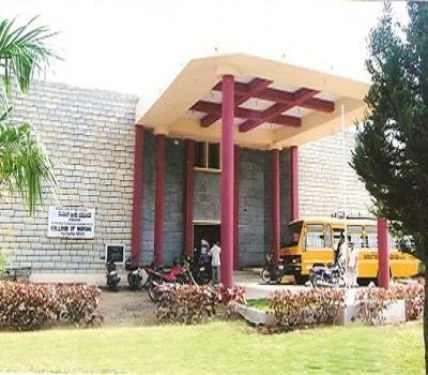
This is where student opinions diverge sharply from the brochure. The 8-acre campus provides the basics: specialized nursing labs (Anatomy, Nutrition, OBG, etc.) that are described as functional and adequate, a well-stocked library with over 3,000 titles and journal access, and outdoor space for sports like volleyball. The college runs buses for ferrying students to clinical sites.
The hostels, however, are a major point of contention. They’re separate for genders and mandatory for most outstation students, especially women in their first year. The quality is rated as basic—a bed, an almirah, a table, often with three students to a room. The real issue students highlight is the discipline. Reviews frequently use terms like "strict" and "jail-like," citing restricted outings and intense attendance monitoring. The mess food, predominantly South Indian, is another common gripe, noted for being repetitive. Student life here is less about campus festivals and more about the rhythm of classes, clinicals, and library time.
Synthesizing feedback from platforms like Shiksha and CollegeDunia, a clear picture emerges. NIN is seen as a solid, mid-tier institution that delivers on its core promise: clinical training. The overwhelming positive is the exposure. Being located near Majestic means students get posted to major hospitals with high patient inflow, which builds confidence and skill rapidly. Faculty support and the convenience of the location (close to the city station and bus stand) are also consistently praised.
But the negatives are just as consistent. The strict hostel regime is the biggest deterrent for many. The administrative bureaucracy is called out as slow and frustrating. And while job placement is almost guaranteed, students feel the institute’s placement cell could be more active in facilitating opportunities rather than relying on students’ own networking. It’s a trade-off—excellent professional grounding in a rigid environment.
Nightingale Institute of Nursing is a specific choice for a specific kind of student. It’s worth it if your top priority is becoming a clinically competent nurse and you want to be in the heart of Bangalore’s medical ecosystem. The access to diverse hospital postings is a genuine advantage that colleges in quieter locations can’t match. If you can handle—or even appreciate—a highly structured, disciplined environment where the focus is squarely on your studies, you’ll get a decent return on your investment in terms of education and job readiness.
You should probably look elsewhere if a vibrant campus life, modern hostels, and a more relaxed college experience are important to you. The strictness is real, not exaggerated. Think of NIN less as a traditional "college" and more as a professional training academy. For the student who sees nursing as a direct path to a job and is willing to trade some personal freedom for intensive practical training, NIN Bangalore gets the job done. Just go in with your eyes open.
Yes, the Nightingale Institute of Nursing is recognized and established as a good college for B.Sc Nursing. It is known for its strong clinical tie-ups with hospitals, though it also has a reputation for being very strict in its academic and disciplinary approach.
The total fee for the 4-year B.Sc Nursing course under the management quota is approximately ₹4.5 Lakhs to ₹5.5 Lakhs. This fee is for the full course and typically excludes hostel or accommodation charges.
Yes, the college provides clinical training at its parent hospital, Nightingale Hospital. It also has established tie-ups with several major corporate hospitals in Bangalore to ensure comprehensive practical exposure for its nursing students.
Hostel accommodation is generally mandatory, especially for outstation female students in their first year. This policy is in place due to the college's emphasis on student safety and discipline.
Yes, Nightingale Institute of Nursing is a co-educational institution and admits male students (boys) into all its nursing programs, including B.Sc Nursing. However, the female-to-male student ratio in the courses is typically high.
Share what future students should know about NIN.
Student voices are not rewritten by colleges. We remove spam and abuse.
Wider admission question? Community PulseWhat should future students know?
Tell us which course you're considering. We'll help you work out the next step.
Get instant Partner access after mobile verification. Your public edits are reviewed before they go live.
Claim this college Auditorium
 Cafeteria
 Campus Shuttle
 Computer Labs
 Gym
Gym Hostel
 Medical
 Science Labs
 Sports Complex
 Study Library