Loading Admission Guardian content
Loading Admission Guardian content
Provisional score based on available data. It may change as more information is verified.
Selected ranking categories, with the recorded year beside each result. Open all records for the complete history.
8 published records · Lower numeric ranks are stronger
Indiatoday
Medical
#192022
The Week
Medical
#182022
Find a program, read its fee details and explore the admission requirements.
Summary of the programs shown below. First-year fee. Check the note beside each amount for inclusions and exclusions.
| Course | Stream | Fees |
|---|---|---|
| Post Diploma in Psychological Medicine | Medical | 26600 |
| Post Graduate Diploma | Medical | 26600 |
| Diploma in Tuberuclosis & Chest Disease | Paramedical | 26600 |
| DM | Medical | 28100 |
| M.B.B.S. | Medical | 29000 |
Specializations
Eligibility: Graduation
Specializations
Eligibility: Graduation
Specializations
Eligibility: 10+2
Specializations
All accepted exams
Eligibility: Post Graduation
All accepted exams
Eligibility: 10+2 with 50% + NEET
3 exams with cutoff data available - showing recent entries
Osmania Medical College isn't just a medical school; it's a piece of Hyderabad's history that still trains doctors today. Founded in 1846, it's one of the oldest medical institutions in the country, and that legacy is felt everywhere—from its sprawling 20-acre campus in the heart of Koti to the sheer volume of patients flowing through its affiliated hospitals. For a student, that translates to one thing above all else: clinical exposure you simply can't buy. You're not just learning from textbooks here. You're learning in the corridors of Osmania General Hospital, one of the busiest in South India. That's the real draw. The college consistently ranks among the top 50 medical colleges in India, holding steady at #48 in the NIRF Rankings for 2024 and 2025. But rankings are just a number. The lived experience is about walking the same halls as pioneers like Rupa Bai Furdoonji, the world's first qualified female anesthesiologist who graduated here in 1889. It's a government institution, which keeps fees astonishingly low, but it demands top-tier NEET ranks in return. This is a college built on tradition, volume, and hands-on practice, not flashy brochures.
The academic structure here is classic and comprehensive, covering the full spectrum from undergraduate to super-specialization. The MBBS program is the engine room, taking in 250 new students every year. That's a large batch, which has its pros and cons. On the plus side, it creates a massive, diverse peer network. The potential downside is that you need to be proactive to stand out. Postgraduate offerings are extensive, with MD and MS programs across all major specialities—General Medicine, Surgery, Pediatrics, Orthopedics, Radiology, Dermatology, and more. M.S. in Ophthalmology is noted as a particularly popular choice. At the apex are the doctoral programs (DM and M.Ch) for super-specialization in fields like Cardiology, Neurology, and Surgical branches.
The faculty, as described by students, is "experienced and supportive." Given the college's age and status, many professors are veterans in their fields. The teaching is heavily oriented towards clinical practice from an early stage. You won't find much here on industry MoUs or corporate tie-ups—that's not the model. The real collaboration is with the hospital network. Your "industry exposure" is the daily OPD. The college is affiliated with a formidable list of major hospitals including Osmania General Hospital, Niloufer Hospital for Women and Children, the Government ENT Hospital, and the MNJ Institute of Oncology. This network is the single biggest academic advantage OMC offers. It's an almost overwhelming volume of clinical material.
Let's be clear: medical colleges don't have "placements" in the engineering sense. There's no average package or top recruiters list. The career trajectory is different. For an MBBS graduate from OMC, the immediate next step is the compulsory one-year rotating internship, usually completed within the affiliated hospital system itself. After that, the primary goal for most is securing a postgraduate (PG) seat.
This is where OMC's reputation and the quality of your training pay off. A strong foundation from here is a significant advantage in cracking the NEET PG exam. The college notes that its graduates have "excellent career prospects" and that alumni have made significant contributions nationally and internationally. Success is measured in PG seat rankings, specializations secured, and eventually, the establishment of a successful practice or a senior position in the healthcare system. The pathway is well-trodden and respected, but it's a long, competitive haul that depends entirely on individual performance after the MBBS degree.
This is one of OMC's most compelling features. As a government college, the fees are a fraction of what a private institution charges. For the 2026-2027 academic year, the first-year tuition fee for MBBS is just INR 29,000. Even more staggering, the total program fee for the entire 5.5-year MBBS course (including internship) was listed as approximately ₹ 52,250 for the 2025-2026 cycle. If that number holds, it's arguably the best value-for-money medical education in the country.
Postgraduate fees are similarly low: INR 20,000 per year for MD/MS, with total program fees ranging from ₹ 30,000 to ₹ 81,000. DM and M.Ch programs are around INR 28,100 per year. Hostel fees are an additional ₹ 23,000. When you add it all up, the total annual cost for an MBBS student living in the hostel could be around INR 52,000. That's less than a single semester's fee at many private colleges. Specific details on scholarships aren't highlighted in the available data, but government schemes like state and national merit scholarships are typically accessible to eligible students. The financial accessibility is a major part of OMC's service-oriented ethos.
Admission is strictly through merit in the national NEET examinations. No exceptions.
The selection process is a two-channel system based on quotas. For MBBS, 85% of seats (the State Quota) are filled through counseling conducted by the Kaloji Narayana Rao University of Health Sciences (KNRUHS). The remaining 15% (All India Quota seats) are allocated through counseling by the Medical Council Committee (MCC).
The cutoffs are competitive, reflecting the college's reputation and low fees. For the 2024 admission cycle, the closing ranks for MBBS give a clear picture of the score needed:
For postgraduate seats, the competition is even fiercer among specialists. In 2024, for example, the rank for MD in General Medicine went down to 560 in the general category by the third round, and MD Radiodiagnosis saw a rank of 526. You need a top-tier NEET rank to get in. The application window is tied to the national NEET exam schedules—NEET UG typically in May, NEET PG around August.
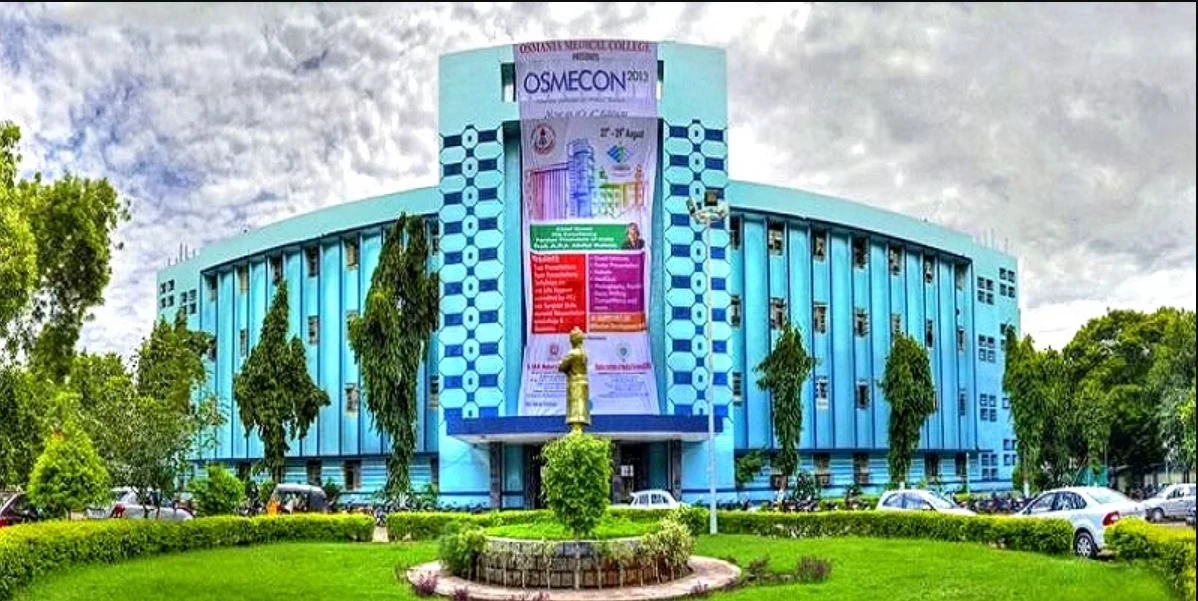
The campus is located centrally in Koti, which means you're in the middle of the city with all its conveniences and chaos. The 20-acre space houses the academic blocks, separate hostels for boys and girls (with online registration mentioned), and supporting infrastructure. It's not a secluded, lush campus; it's a working medical complex in an urban environment.
Specifics on hostel room quality, food, or sports facilities aren't detailed, but student sentiment points to a "vibrant atmosphere." The college has student-maintained clubs and organizes events that contribute to soft skill development. There's an A.C. Seminar Hall for conferences and a guest house for visiting examiners. A notable infrastructure highlight is the Temporal Bone Dissection Lab at the ENT Hospital, equipped with new microscopes. The e-library, maintained at a cost of Rs. 20,000 per month with 32 systems, indicates a move towards digital resources. But let's be honest—the primary infrastructure isn't the lawns or the cafeterias. It's the hospitals. Your student life is deeply intertwined with the rhythm of the wards, the OPD, and the emergency room. The social life is what you make of it amidst that demanding schedule.
Synthesizing the available sentiment, a clear and positive consensus emerges. Students consistently praise three things above all:
Notably, the typical complaints about private management, exorbitant fees, or poor placement support don't apply here. The negatives one might find—bureaucratic delays, crowded facilities, the intensity of the workload—are common to most large, old government hospitals and are part of the trade-off for the experience and affordability. The reviews suggest students feel it's a fair trade.
Absolutely—if you get the rank. Osmania Medical College is a benchmark for what a public medical education should be: historically significant, academically rigorous, clinically immersive, and radically affordable. It's best for the pragmatic, resilient student who wants to learn medicine by practicing medicine from day one, surrounded by the sheer scale and diversity of pathology that Hyderabad offers. You're here for the wards, the OPD, and the legacy, not for a resort-style campus.
Who should look elsewhere? If your priority is pristine, modern infrastructure, a secluded campus life, or a more curated, less chaotic learning environment, a newer private college might suit you better—but be prepared to pay 50 to 100 times the fee. Also, if your NEET rank is just outside the cutoff, the competition is brutal, and there are no backdoor entries. Your rank is your ticket. For the right student—one with a strong rank, a high tolerance for intensity, and a desire to be a clinician first—OMC offers an education that is both elite and accessible, a rare combination in Indian medical education today.
Osmania Medical College is located in Koti, Hyderabad, Telangana. Some outdated online sources may incorrectly mention Medak, but the institution's official address, campus, and all affiliated hospitals are firmly within Hyderabad.
OMC offers a full spectrum of medical programs: the undergraduate MBBS (250 seats/year) and B.Sc. courses; postgraduate MD and MS degrees across specialities like Medicine, Surgery, and Radiology; and doctoral-level DM and M.Ch super-specialty programs.
Admission is solely based on your NEET UG rank. You must qualify the exam and then participate in counseling—85% of seats (State Quota) are filled via KNRUHS counseling, and 15% (All India Quota) via MCC counseling. For the 2024 cycle, the closing rank for the General category was 5919.
For the 2026-2027 academic year, the first-year tuition fee for MBBS is approximately INR 29,000. For MD and MS programs, it's INR 20,000 per year. Hostel fees are an additional ₹ 23,000 annually, making the total cost exceptionally low for a top-ranked college.
Students consistently highlight three major strengths: 1) Extensive clinical exposure due to affiliation with major hospitals like Osmania General, 2) Experienced and supportive faculty, and 3) A student-friendly environment with active clubs and events that aid overall development.
Share what future students should know about Osmania Medical College.
Student voices are not rewritten by colleges. We remove spam and abuse.
Wider admission question? Community PulseWhat should future students know?
Tell us which course you're considering. We'll help you work out the next step.
Get instant Partner access after mobile verification. Your public edits are reviewed before they go live.
Claim this college Auditorium
 Cafeteria
 Computer Labs
 Gym
Gym Hostel
 Medical
 Science Labs
 Sports Complex
 Study Library