Loading Admission Guardian content
Loading Admission Guardian content

Provisional score based on available data. It may change as more information is verified.
Find a program, read its fee details and explore the admission requirements.
Summary of the programs shown below. Programs record different fee periods. Compare the individual amounts and their notes below.
| Course | Stream | Fees |
|---|---|---|
| P.B.Bachelor of Science [B.Sc] (Nursing) | Paramedical | 90000 |
| Master of Science [M.Sc] | Paramedical | 100000 |
| General Nursing and Midwifery [GNM] | Paramedical | 250000 |
Specializations
Eligibility: 10+2
Specializations
Eligibility: Graduation
1 exam with cutoff data available
If you're looking for a no-frills, clinically-focused nursing education in North Karnataka, Parshwanath Doddanavar Bharatesh College of Nursing (PDBCN) is a name that comes up. Established in 2003 and run by the Bharatesh Education Trust, it’s built a reputation for turning out job-ready nurses, not social butterflies. The college’s biggest selling point is its direct attachment to a 100-bed hospital, which means clinical training isn't a bus ride away—it's right outside the classroom door. That practical immersion, combined with fees that are manageable compared to metro city colleges, makes it a pragmatic choice for many. But you should know what you're signing up for: this is a place of discipline and workload, not a typical "campus life" experience. It’s a trade-off students here seem to accept.
PDBCN covers the nursing education ladder from diplomas to post-graduation. The B.Sc Nursing (Basic) is the main draw, with an intake of around 60 students per year. Eligibility is the standard 10+2 with Physics, Chemistry, Biology, and English, needing at least 45% aggregate. They also run a Post Basic B.Sc for GNM diploma holders, a 3-year GNM program, and a 2-year ANM course.
The postgraduate M.Sc Nursing program offers five specializations—Medical-Surgical, OBG, Pediatric, Psychiatric, and Community Health Nursing. With just 5 seats per specialization, it's a small, focused setup. The academic calendar strictly follows RGUHS, which usually means a start in late September or October. Faculty strength is around 32, led by Principal Prof. Dr. Sangeeta A. Moreshwar, a PhD holder. The academic culture, as you'll hear from students, is regimented. RGUHS mandates 80% attendance for theory and 100% for practicals, and the college enforces it. This isn't a place for casual attendance.
Nursing placements work differently. There's no single "placement day" with a stage and offers. Instead, competency and clinical performance lead to recruitment from partner hospitals. The college claims near 100% placement, which is plausible given the chronic demand for nurses. But you need to look at the salary bands realistically.
For a fresher in a local or domestic private hospital, the starting monthly salary is typically between ₹15,000 to ₹22,000. That translates to an annual package of roughly ₹1.8 to ₹2.6 lakhs. Some portals mention higher figures for international roles, which is where the real earning potential lies. Alumni have secured positions in Germany, the UAE, Kuwait, and Saudi Arabia, where packages can reportedly start from 15-20 LPA and go much higher. Top domestic recruiters include major hospital chains like KLE's Prabhakar Kore Hospital in Belgaum, Max Healthcare, Narayana Health, and Apollo.
The verdict? You will likely get a job. The initial pay in India is modest, reflective of the broader nursing sector's compensation challenges. But the clinical training here is designed to make you employable, and for those aiming internationally, the college's track record provides a pathway.
Let's break down the cost for the flagship B.Sc Nursing program. For the Management Quota, annual tuition hovers between ₹50,000 and ₹85,000. Over four years, with other fixed costs, the total course fee lands in the ₹3.5 to ₹5 lakh range.
Hostel and mess fees are a significant add-on. They range from ₹55,000 to a steep ₹1,25,000 per year, depending on whether you opt for AC accommodation and single or shared occupancy. Add in one-time and annual charges for application, exams, library, and technology, and you should budget an extra ₹5,000-₹6,000 annually.
Financial aid primarily comes through government schemes. SC/ST/OBC students from Karnataka can apply for scholarships via the Karnataka State Scholarship Portal (SSP). The college itself doesn't prominently advertise its own merit-based scholarships, so it's best to inquire directly during admission.
Admission routes depend on the quota. For Karnataka domicile students, securing a government quota seat requires appearing for the KCET (Karnataka Common Entrance Test). The KCET cutoff for B.Sc Nursing at PDBCN isn't fiercely competitive compared to engineering or medical streams. For the 2024 cycle, the General Merit closing rank was around 87,000-95,000. For reserved categories (like 2A, 3B), it was slightly higher, around 92,000 to 1,10,000.
If you're opting for the Management Quota, admission is typically direct, based on your 10+2 merit (PCBE marks). While KCET might not be mandatory in this case, a good score certainly strengthens your application. The application window usually opens in June or July, right after the 12th-grade board results are out. The process is straightforward: submit forms to the college, and if eligible, attend counseling.
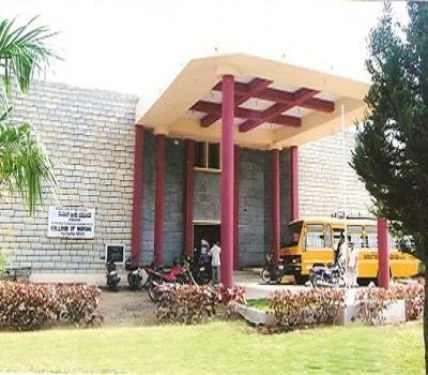
The 7-acre campus is functional. Its prime feature is the attached Bharatesh Hospital, which is the heart of the practical learning experience. Academically, the infrastructure is adequate: specialized labs for foundations, nutrition, community health, and mother-child care are well-equipped with manikins and simulation tools. The library has a decent collection of over 3,900 books and journal subscriptions, with digital access via the RGUHS Helinet consortium.
Hostels are separate for boys and girls, with a capacity for about 100 each. They provide the basics—a bed, a cupboard, common rooms with TV, and laundry facilities. Security is reported to be tight, which is a relief for parents. The food in the mess, however, earns the typical Indian hostel review: "monotonous" and average at best. College buses ferry students to external clinical postings.
And here's the thing about student life: don't expect a vibrant, fest-filled calendar. The schedule is hectic with classes, practicals, and hospital postings. The environment is professional and disciplined, with a strong emphasis on uniforms and punctuality. It's a training ground for a demanding profession, not a liberal arts college.
Sifting through feedback on portals like CollegeDunia and Shiksha reveals a consistent, almost unanimous, narrative.
The praise is laser-focused on clinical exposure. Students repeatedly say the hands-on training at the parent hospital is exhaustive and makes them confident, job-ready nurses. They value the affordability, seeing it as good value for the education received. The strict discipline is viewed as a positive by many, framing it as necessary professional grooming.
But the negatives are just as consistent. The workload is described as "hectic." The lack of social events and a traditional "college life" is a common gripe. The hostel food is a perennial complaint. Some also mention that administrative processes can be slow when you need a document or have a grievance.
One alumni review summed it up perfectly: "If you want to learn actual nursing skills, the hospital here is great. But don't expect a lot of holidays or fests." Another noted, "The faculty are helpful but very strict about uniforms and timing." That's the PDBCN experience in a nutshell—effective but demanding.
PDBCN is a very specific kind of institution. It's best for students who are serious about nursing as a craft and a career, not just a degree. If your priority is to graduate with solid, hands-on clinical skills without paying metro-level private college fees, this is a strong contender in North Karnataka. The direct hospital access is a legitimate advantage, and the placement record, while starting with modest domestic salaries, does lead to employment. It's also a proven launchpad for nurses targeting international markets.
You should probably look elsewhere if you crave a balanced college life with clubs, fests, and a more relaxed atmosphere. The discipline and workload here are intense by design. It’s a trade-off. For the right student—one who views nursing as a vocation—PDBCN delivers a pragmatic, skills-focused education that gets the job done. Just go in with your eyes open to what that really entails.
Yes, Parshwanath Doddanavar Bharatesh College of Nursing (PDBCN) is approved by the Indian Nursing Council (INC) and is also recognized by the Karnataka Nursing Council.
The total fee for the B.Sc Nursing program under the management quota at Bharatesh College of Nursing ranges between ₹4 lakh to ₹5 lakh for the entire 4-year course, which includes miscellaneous fees.
Yes, the college has its own attached hospital for clinical training. It is connected to the Gopal Jinagouda Bharatesh Hospital, which is located on the same campus.
Yes, the Karnataka Common Entrance Test (KCET) is mandatory for Karnataka residents seeking admission to government-subsidized seats. For management quota seats, KCET may not be strictly mandatory, but admission is typically based on merit.
The girls' hostel at PDBCN is located on-campus and is secure. It offers both shared and individual room options and provides 24/7 security for the residents.
Share what future students should know about PDBCN.
Student voices are not rewritten by colleges. We remove spam and abuse.
Wider admission question? Community PulseWhat should future students know?
Tell us which course you're considering. We'll help you work out the next step.
Get instant Partner access after mobile verification. Your public edits are reviewed before they go live.
Claim this college Computer Labs
 Medical
 Study Library