Loading Admission Guardian content
Loading Admission Guardian content
Provisional score based on available data. It may change as more information is verified.
Selected ranking categories, with the recorded year beside each result. Open all records for the complete history.
11 published records · Lower numeric ranks are stronger
NIRF
B.Tech
#792023
IIRF
Engineering · public
#392024
IIRF
B.Tech · public
#752023
Find a program, read its fee details and explore the admission requirements.
Summary of the programs shown below. First-year fee. Check the note beside each amount for inclusions and exclusions.
| Course | Stream | Fees |
|---|---|---|
| Master of Technology [M.Tech] | Engineering | 92600 |
| Ph.D | Science | 92600 |
| Bachelor of Technology [B.Tech] | Engineering | 271600 |
| Bachelor of Technology [B.Tech] (Computer Science and Engineering) + Master of Technology [M.Tech] (Artificial Intelligence) | Engineering | 272600 |
| Master of Business Administration [MBA] | Management | 371600 |
Specializations
All accepted exams
Eligibility: Graduation
Specializations
Eligibility: Post Graduation with 60%
Specializations
All accepted exams
Eligibility: 10+2 with 60%
Specializations
All accepted exams
Eligibility: 10+2 with 60%
Specializations
All accepted exams
Eligibility: Graduation with 60%
2 exams with cutoff data available - showing recent entries
 A.T. Kearney
 Accenture
 Acg Pam Pharma Technologies P. Ltd.
 Adani Power Limited
 AIG Group
 Algoworks
 Bharat Oman Refinery
 Bharat Petroleum Corporation Limited (BPCL)
 BNY Mellon
 Byju's
 Cairn
Cairn Chola MS
 Directorate of Hydrocarbons (DGH)
 Engineers India Ltd (EIL)
 Essar Group
 GAIL
GAIL Gujarat Mineral Development Corporation (GMDC)
 Haldia Petrochemicals Ltd
 Halliburton
 Hindustan Petroleum
 HMEL
HMEL HPCL
HPCL Indian Oil Corporation Ltd (IOCL)
 Indian Oil Corporation Ltd. Research & Development Centre
 IndianOil - Adani Gas Pvt. Ltd.
 Infosys
 Infraline
 L&T Infotech
 LatentView
 Mahanagar Gas Ltd.
 Nagarjuna Construction Company Ltd.
 Oil & Natural Gas Corp.
 Oil India Ltd
 ONGC
ONGC OPAL India
 Palantir Technologies
 Reliance
 Shell
Shell Tata Steel
 TCS
TCS Tech Mahindra
 Trident Group
 UOP India Private Limited
 Weatherford
 Wipro
WiproRajiv Gandhi Institute of Petroleum Technology (RGIPT) in Amethi is a government engineering school with a very specific, and sometimes risky, proposition. Established by an Act of Parliament in 2007, it’s an ‘Institution of National Importance’ built to serve India’s core energy sector. That’s the promise. The reality is a campus of 47 acres in rural Uttar Pradesh, where the placement data tells a story of two distinct worlds. For students in its flagship Petroleum and Chemical Engineering programs, RGIPT offers a direct, if volatile, pipeline to giants like ONGC and OIL. For everyone else in newer streams like Computer Science, the path is less clear, and the institute’s remote location becomes a much bigger factor. It’s a college defined by its niche, for better and for worse.
RGIPT’s academic structure is a clear reflection of its founding mission, with some recent, significant expansions. The core strength remains its traditional B.Tech programs in Petroleum Engineering and Chemical Engineering, each with an intake of 60. These are the programs with the deepest industry roots and the most established placement pathways into the public sector oil giants.
But the institute has been actively diversifying. Starting from 2020, it introduced a slew of new B.Tech programs including Computer Science & Engineering, Electronics Engineering, and Electrical & Electronics Engineering (E-Vehicle). The total B.Tech intake now stands at 595, which is a substantial increase. They also offer 5-year Integrated Dual Degree (IDD) programs that combine a B.Tech with an M.Tech or M.S., and 2-year M.Tech programs in areas like Energy Transition and Robotics.
The MBA program is another key offering, with specializations in Energy Management, Financial Management, and others, aiming to create management professionals for the energy sector.
Faculty strength is listed at around 70 core members, with a teacher-to-student ratio of approximately 1:15. That’s a decent number on paper, but the real academic currency here is the industry connection. The list of MoUs is a who’s who of the energy sector: ONGC, IOCL, BPCL, Shell, Reliance Industries, and many more. For petroleum and chemical students, this network is the primary value proposition. For the newer CSE and ECE students, it’s less clear how directly these ties translate into opportunities.
This is where the RGIPT story splits decisively. The official numbers for 2025 show an average package of INR 10.79 LPA and a high of INR 25 LPA. That average is respectable for a government engineering college. But the more telling figure is the overall placement percentage: 74%. For an institute of national importance, that’s a number that requires explanation.
The explanation lies in the sectoral divide. Placement data for the last four years shows a rate of 60-70% specifically for Petroleum Engineering students. In a challenging job market for upstream oil and gas, that’s arguably a solid performance, driven almost entirely by public sector undertakings (PSUs) like ONGC and Oil India. The institute reports that almost 100% of students secured internships with ONGC and OIL last year, which is a major positive for those core disciplines.
For students in Computer Science, Electronics, or the MBA program, the recruiter list broadens to include IT services firms (TCS, Wipro, Infosys), fintechs like PhonePe, and financial institutions like ICICI Prudential. The average package for these streams isn’t broken out separately, but it likely pulls the overall average away from the petroleum-specific numbers.
The top recruiters are a mix of the old guard and the new: ONGC, OIL, Indian Oil, Reliance Industries (RIL), Jio, BPCL, GAIL, TCS, and Wipro. If you’re aiming for a stable career in a PSU, RGIPT’s petroleum program is a targeted bet. If you’re in CSE dreaming of product-based tech companies, the remote location and the institute’s primary industry focus are tangible hurdles. The placement cell is working to bridge that gap, but the 74% figure is the honest, aggregate result of that effort.
RGIPT’s fee structure is straightforward for a central government institution. For the 2025-26 academic year, the semester-wise fee for a General/OBC/EWS B.Tech student breaks down to a tuition fee of INR 1,00,000 per semester. Adding other mandatory fees and the hostel establishment charge, the non-refundable semester fee is about INR 1,36,500. You then need to add a mess advance of INR 20,000 per semester.
Over four years, the total cost for a General category student lands in the ballpark of INR 12 to 12.67 lakhs, inclusive of hostel and mess charges. For SC/ST/PwD students, there’s a 25% waiver on the tuition fee, bringing their semester tuition down to INR 75,000, which significantly reduces the total cost.
The institute offers a robust system of scholarships and financial aid, which is a strong point. These include:
This financial support system makes the institute accessible and can substantially offset the fee burden for meritorious and needy students.
Admission routes are program-specific and follow standard national patterns for technical institutes.
For B.Tech and the 5-year Integrated Dual Degree programs, the primary gateway is JEE Advanced. Admissions are conducted through the JoSAA counselling process. The institute also mentions a clause for JEE Main qualifiers who have secured 80% or more in their Class 12 board exams, but the primary and dominant channel is JEE Advanced. Specific cutoff ranks for RGIPT are not publicly detailed in the same way as older IITs, but securing a seat, especially in Petroleum or Chemical Engineering, requires a competitive JEE Advanced score.
For the 2-year M.Tech programs, a valid GATE score is mandatory. Admission for the MBA program is based on national management entrance exams like CAT, XAT, MAT, CMAT, or GMAT.
PhD admissions require a qualifying score in GATE, UGC-NET, CSIR-NET, or an equivalent fellowship, followed by a written test and interview conducted by the institute.
The process is centralized and transparent, leaning on national exam scores. Your JEE Advanced rank is your ticket.
Let’s be direct about location: the campus is in Jais, Amethi, about 100 km from Lucknow. The nearest railway station (Jais) is 1.5 km away. This isn’t a metropolitan or even a typical university-town experience. Access involves buses from Lucknow or Allahabad to Raebareli, and then a further connection to the institute. This isolation is the single biggest trade-off students make.
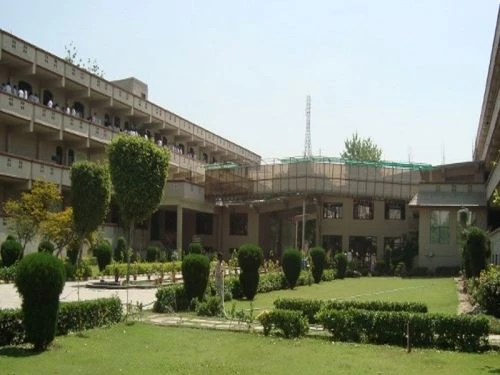
The 47-acre campus houses all the essential infrastructure: academic blocks, labs tied to the engineering specializations, a library, and hostels. The hostel fees are included in the semester charges (INR 8,000 for establishment and INR 8,000 for seat rent). The mess advance is INR 20,000 per semester. It’s a fully residential setup, which is necessary given the remote setting.
Social and extracurricular life is largely campus-centric. You’ll find student clubs, technical societies, and sports facilities. But the buzz of a big city, the exposure to unrelated industries, or the casual internship opportunities that urban campuses offer are absent. Your world is the RGIPT campus and its network. For some, this fosters a strong, focused community. For others, it can feel restrictive. It’s a factor that weighs more heavily on students in IT fields than on those in petroleum, who are bought into the sectoral ecosystem anyway.
Piecing together the consensus from student forums and reviews, a clear pattern emerges. The feedback is polarized, and the program you’re in dictates your experience.
Petroleum and Chemical Engineering students often express satisfaction with the core academic quality and the direct line to PSU internships and placements. They acknowledge the location is a drawback but see it as a worthwhile sacrifice for the sector-specific opportunities that are hard to find elsewhere. The 60-70% placement rate in their field is accepted as a reality of the market, not necessarily a failure of the institute.
Students in newer programs like Computer Science and Electronics are more critical. Common points of feedback include the challenge of attracting a diverse set of top-tier IT recruiters to a remote campus, and a feeling that the institute’ culture and resources are still heavily tilted towards its energy core. The placement percentage for these branches isn’t explicitly broken out, but it contributes to the overall 74% figure, suggesting outcomes may be more variable.
Almost all reviews mention the remote location as a significant factor. It’s praised for eliminating distractions and fostering campus bonding, but panned for limiting external exposure and weekend mobility. The quality of hostels and food is described as standard for a government institute—functional, not luxurious.
The takeaway is that student satisfaction is highly correlated with how closely your career goals align with RGIPT’s historic strength: the public sector energy industry.
RGIPT is a specialist institution, and its value is entirely conditional. It’s not a generic engineering college.
It is worth a serious look if: You have a clear, unwavering goal to work in the upstream oil, gas, or petrochemicals sector, preferably with a PSU like ONGC or OIL. Your JEE Advanced rank might not get you into an old IIT for these streams, but it could get you into RGIPT’s core programs. Here, the remote location is a minor trade-off for a focused curriculum and a direct industry pipeline. The fee is reasonable for a government institute, and the scholarship support is good.
You should probably look elsewhere if: You are joining for Computer Science, Electronics, or the MBA with dreams of the broader tech or corporate world. The institute’s primary network isn’t in those areas, and the geographical isolation will work against you for internships and recruitment outside the energy sphere. In that case, a more well-rounded, urban engineering college or university would offer a better ecosystem.
In short, RGIPT is a high-reward, high-risk bet for petroleum aspirants, and a less optimal choice for almost everyone else. Choose it for its niche, not in spite of it.
The average placement package for Rajiv Gandhi Institute of Petroleum Technology (RGIPT) in 2025 was INR 10.79 Lakhs Per Annum (LPA). The highest package offered was INR 25 LPA. It's important to note that placement outcomes vary significantly by program, with core branches like Petroleum Engineering having distinct recruiters and averages compared to newer streams like Computer Science.
Admissions to the B.Tech programs at RGIPT are primarily based on JEE Advanced scores. The selection is conducted through the centralized JoSAA counselling process. The institute also mentions an alternative route for candidates with a JEE Main score who have secured 80% or more in their Class 12 board exams, but the JEE Advanced route is the primary and most common pathway for securing a seat.
For the 2025-26 academic year, the total approximate cost for a 4-year B.Tech program at RGIPT for a General/OBC/EWS category student is between INR 12 to 12.67 lakhs. This includes tuition fees (INR 1,00,000 per semester), other semester fees, and hostel and mess charges. SC/ST/PwD students receive a 25% tuition fee waiver, significantly reducing their overall cost.
Yes, Rajiv Gandhi Institute of Petroleum Technology is a government institution. It was established in 2007 by an Act of Parliament and is declared an 'Institution of National Importance'. It is autonomous, AICTE-recognized, and operates as a public engineering school.
The top recruiters at RGIPT are a mix of public sector energy giants and private sector firms. Key recruiters include ONGC, Oil India (OIL), Indian Oil Corporation (IOCL), Reliance Industries (RIL), BPCL, HPCL, GAIL, Shell, TCS, Wipro, Infosys, Jio, and ICICI Prudential. The list heavily reflects the institute's core focus on the petroleum and energy sectors.
Share what future students should know about RGIPT.
Student voices are not rewritten by colleges. We remove spam and abuse.
Wider admission question? Community PulseWhat should future students know?
Tell us which course you're considering. We'll help you work out the next step.
Get instant Partner access after mobile verification. Your public edits are reviewed before they go live.
Claim this college Auditorium
 Cafeteria
 Communication Centre
 Computer Labs
 Gym
Gym Hostel
 Medical
 Science Labs
 Sports Complex
 Study Library