Loading Admission Guardian content
Loading Admission Guardian content

Provisional score based on available data. It may change as more information is verified.
Find a program, read its fee details and explore the admission requirements.
Summary of the programs shown below. Fee amounts are not listed. Contact the college for its current fee schedule.
| Course | Stream | Fees |
|---|---|---|
| Bachelor of Science [B.Sc] (Nursing) | Paramedical | |
| General Nursing and Midwifery [GNM] | Paramedical |
Specializations
Eligibility: 10+2
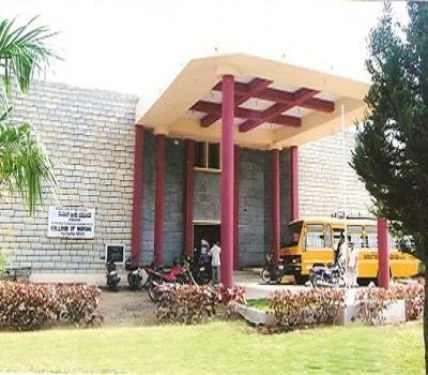
Ravindranath Tagore Nursing School, operating under the SJES College of Nursing banner, is a name you'll hear a lot if you're looking at private nursing colleges in Bangalore's eastern corridor. Established in 2003 by the older Sri Jayachamarajendra Education Society, it's built a steady reputation as a practical, no-frills launchpad for a nursing career. Its biggest draw? Direct affiliation with Rajiv Gandhi University of Health Sciences (RGUHS) and full recognition from the Indian Nursing Council (INC)—that's the non-negotiable stamp you need if working abroad is on your mind. The campus sits on a busy stretch of Old Madras Road, which means it's connected but not exactly serene. For students from Kerala, Nepal, and other states, it's often a first-choice option, seen as more accessible than some of the city's elite institutes. But is it the right fit? That depends entirely on what you're looking for in a nursing education.
The program lineup here is standard for an INC-recognized school, covering the ladder from diploma to postgrad. The B.Sc Nursing program takes in about 60 students a year, split between government and management quota seats. You've also got the 3-year GNM diploma, a 2-year Post Basic B.Sc for GNM holders looking to upgrade, and an M.Sc Nursing program with specializations in Medical-Surgical, Pediatrics, OBG, Community Health, and Psychiatry.
The academic rhythm is dictated by RGUHS, so expect the standard university exam patterns and schedules. Faculty is a mix of M.Sc Nursing holders and clinical instructors—adequate for covering the syllabus, but don't expect a deep bench of PhDs. Where the real learning happens, according to students, isn't in the college's own labs (which are functional but described as average), but out in the field. The school has tie-ups for clinical postings, which are mandatory and rigorous. Students mention rotations at places like TREDA Counselling Centre for psychiatry and various government Primary Health Centres for community nursing. Claims about regular postings at major chains like Manipal or Apollo Hospitals are frequent in brochures but are listed as unverified in the official brief—a point worth clarifying directly with the administration.
Let's talk numbers. The institution, as part of the SJES group, claims a 98% placement rate. That's a strong headline figure. The reality for nursing graduates, especially freshers, is that salaries in Bangalore are somewhat standardized at the entry level. The average starting package for an RTNS graduate typically falls between ₹2.4 and ₹3.6 LPA. You won't find wildly variable "highest packages" here like in engineering; nursing is a profession with a more structured starting scale.
The recruiter list is solid and reads like a who's who of Bangalore's healthcare private sector: Manipal Hospitals, Apollo, Fortis, Narayana Health, and Aster CMI. Placement is essentially guaranteed in the sense that there's a high demand for nurses, but the quality of that first job—the hospital, the department, the shift rotations—can vary. A significant number of alumni use this first job as a stepping stone. After gaining two years of experience, a large portion look to write exams like the NCLEX (for the USA) or the OSCE (for the UK), leveraging that crucial INC recognition. So, the placement story isn't just about the first job in Bangalore; for many, it's about getting a valid ticket to work internationally.
The fee structure is a classic two-tier system for the B.Sc program. If you secure a seat through the Karnataka Examination Authority (KEA) counseling, you're looking at a very reasonable ₹40,000 or so per year in tuition. The management quota is a different ballgame, with annual tuition ranging from ₹1.25 to ₹1.75 lakhs.
Add hostel and mess charges of ₹60,000 to ₹80,000 per year, and the total 4-year cost for a management quota B.Sc student can land between ₹7 and ₹8.5 lakhs. That's a substantial investment. The GNM program is often quoted as a total package of ₹2.5 to ₹3.5 lakhs for the three years. Financial aid primarily comes through state government scholarships for SC/ST/OBC students, accessible via the Karnataka State Scholarship Portal (SSP). Don't expect a plethora of merit-based scholarships from the institution itself.
The admission pathway depends on the program and quota. For B.Sc Nursing, the rule is clear: as of the 2024-25 cycle, you must appear for the Karnataka Common Entrance Test (KCET) for any seat in Karnataka. Selection for government seats is then through the KEA counseling process based on your KCET rank. Cutoffs fluctuate yearly but are generally less astronomically high than for engineering or medicine.
For management quota B.Sc seats, GNM, and PG programs, admission is more direct. It's based on your 10+2 marks (PCB with a minimum of 45% for B.Sc) and often involves an interview with the college. The application window usually runs from April to August, aligning with the RGUHS academic calendar that starts in September/October. There's also an NRI quota, which explains the notable population of students from Nepal and the Gulf countries on campus.
The 5-acre campus is shared with other SJES institutions, so it's not exclusively a nursing school domain. Infrastructure is functional. You'll find the necessary labs—Nursing Foundation, Anatomy, Nutrition, MCH—and a library with a reported 3,000+ books and journals. There's a playground for sports like volleyball and badminton.
The hostels, with a capacity for about 280 students across separate boys' and girls' blocks, are a focal point of student reviews. They're described as safe but strictly managed, especially for female students who often cite early curfews (6-7 PM). The mess provides both South and North Indian food, with reviewers noting that the kitchen sometimes accommodates specific dietary preferences for Kerala or Nepali students, though complaints about repetitive menus are common. The location on Old Madras Road means auto-rickshaws and buses are easy to find, and the Hoodi Metro Station is about a 4-5 km ride away.
Scouring platforms like CollegeDunia and Quora paints a consistent picture. This isn't a glamorous, top-tier institute, and students don't pretend it is. They call it a "middle-tier" option that gets the job done.
The praise is usually reserved for the clinical exposure. Students feel the hectic rotations at hospital tie-ups are where they truly learn their craft. They also value the cultural diversity and the campus's connectivity.
But the criticisms are just as consistent. The administration is frequently labeled as "money-minded," with grumbles about unexpected fines and fees. Infrastructure, while adequate, is often said to need better upkeep. The strictness is a double-edged sword—parents might appreciate the safety, but students chafe under rigid attendance policies (80-100% for clinicals) and hostel rules that feel "old-fashioned." One paraphrased comment sums it up: "The teachers are helpful, but the office staff is very slow with paperwork." Another notes, "Clinical duties are hectic but you learn everything there."
RTNS is a pragmatic choice. It's best for students who are clear-eyed about their goal: to get an INC-recognized nursing degree from an RGUHS-affiliated college, gain clinical experience in Bangalore, and start working. If you're from outside Karnataka and need a straightforward admission process, or if you secure a government quota seat, the value proposition is strong.
However, if you're looking for a luxurious campus life, cutting-edge college infrastructure, or a deeply research-oriented environment, you'll likely be disappointed. The investment for a management quota seat is significant, so weigh it against the standardized starting salaries. Think of it as a workhorse institution. It might not be the most polished, but for many, it's a reliable vehicle to launch a solid, mobile nursing career, whether that's in Bangalore or, eventually, overseas. Always cross-check those hospital tie-up claims directly before you commit.
For official information, visit the Ravindranath Tagore Nursing School website. To verify the importance of INC recognition for practice, you can refer to the Indian Nursing Council guidelines.
Yes, Ravindranath Tagore Nursing School is officially affiliated with the Rajiv Gandhi University of Health Sciences (RGUHS).
Yes, as per the latest Karnataka government norms, appearing for the Karnataka Common Entrance Test (KCET) is mandatory for admission to the B.Sc Nursing program here.
Yes, the college provides separate hostel facilities for both boys and girls, located on or near the campus.
The total fee package for the four-year B.Sc Nursing program under the management quota typically ranges between ₹7 Lakhs to ₹8.5 Lakhs, which often includes hostel charges.
Yes, the degree is valid for working abroad as the college is recognized by the Indian Nursing Council (INC). This recognition makes graduates eligible to take international licensing exams like the NCLEX for the USA and the OSCE for the UK.
Share what future students should know about Ravindranath Tagore Nursing School.
Student voices are not rewritten by colleges. We remove spam and abuse.
Wider admission question? Community PulseWhat should future students know?
Tell us which course you're considering. We'll help you work out the next step.
Get instant Partner access after mobile verification. Your public edits are reviewed before they go live.
Claim this college Auditorium
 Cafeteria
 Computer Labs
 Hostel
 Medical
 Sports Complex
 Study Library