Loading Admission Guardian content
Loading Admission Guardian content
Provisional score based on available data. It may change as more information is verified.
Find a program, read its fee details and explore the admission requirements.
Summary of the programs shown below. First-year fee. Check the note beside each amount for inclusions and exclusions.
| Course | Stream | Fees |
|---|---|---|
| Diploma in Engineering (Polytechnic) | Engineering | 40000 |
| Bachelor of Technology [B.Tech] | Engineering | 61000 |
| Bachelor of Technology [B.Tech] {Lateral} | Engineering | 61000 |
| Master of Business Administration [MBA] | Management | 76000 |
| Post Graduate Diploma in Management [PGDM] | Management |
Specializations
Eligibility: 10th with 35% + JEECUP
Specializations
All accepted exams
Eligibility: 10+2 with 75% + UPTAC
Specializations
All accepted exams
Eligibility: 10+3 with 75% + UPTAC
Specializations
All accepted exams
Eligibility: Graduation
Specializations
All accepted exams
Eligibility: Graduation
2 exams with cutoff data available
RISHI Institute of Engineering and Technology (RIET) in Meerut presents a classic case of a private engineering college trying to find its footing. Established in 2008 under the older RIET Group banner, it's an AICTE-approved institution affiliated with Dr. A.P.J. Abdul Kalam Technical University (AKTU). The official placement report for 2023 shows a highest package of 14 LPA and an average of 6 LPA—numbers that, on paper, look decent for a tier-3 college in Uttar Pradesh. But that's where the story gets complicated. A deep dive into available student sentiment, though dated, paints a starkly different picture of poor placements, a lack of campus life, and faculty concerns. This gap between recent official data and older, scathing reviews is the central puzzle for any prospective student. Is RIET a college on the upswing, or one still struggling with foundational issues? Let's break it down.
RIET offers a standard set of programs you'd expect from a private AKTU affiliate. The B.Tech program has a total intake of 150 students, split evenly—30 seats each—across five branches: Computer Science, Electronics & Communication, Information Technology, Mechanical, and Civil Engineering. For management aspirants, there's an MBA with a 60-seat intake. The institute also runs a sizable Diploma (Polytechnic) program with a 240-student intake across engineering streams.
The academic structure is dictated by the AKTU curriculum. That's neither a pro nor a con; it's just the reality. You'll follow the same syllabus and exam patterns as hundreds of other colleges in the state. Where RIET's own influence comes in is through execution—the quality of classroom teaching and lab sessions. And here, the data is thin. The brief mentions an unverified figure of just 3 faculty members, which seems improbably low for the stated intake. More telling are the student reviews, which consistently point to "unexperienced faculties" and "poor quality of studies." That's a red flag you can't ignore. While the institute claims "state-of-the-art" labs, the true test is how often and how effectively students get to use them.
This is the section where you have to read between the lines. The official 2023 placement report states a highest package of 14 LPA, an average of 6 LPA, and a median of 5.5 LPA. They also mention making 100 offers. If you take these numbers at face value, they're not terrible for a college of this profile. An average of 6 LPA is a livable starting salary in many Indian cities.
But.
There are significant omissions. The report doesn't name a single top recruiter, only vaguely stating the institute is "sought after by numerous MNCs and Indian corporations." In the placement game, specifics build credibility. Names like TCS, Infosys, Wipro, or even local IT/engineering firms would help. Their absence is notable.
Then there's the student sentiment, which is brutally contradictory. A review from 2017 calls the placement level "very poor." Now, 2017 was a while ago, and improvement is possible. But the sheer vehemence of the complaint—"she regrets that day she had taken admission"—suggests a systemic issue that doesn't vanish overnight. The placement cell aims for "100% placement assistance," which is very different from 100% placement. Assistance means support in applying; it doesn't guarantee a job offer.
So, what's the reality? It's likely bimodal. A handful of top performers might land decent offers, pulling up the average to that 6 LPA figure. But the median of 5.5 LPA is telling—it's close to the average, suggesting maybe the distribution isn't wildly skewed. The real question is the placement percentage: what portion of the batch actually gets these on-campus offers? That number is conspicuously absent. Without it, the package data is incomplete. Proceed with cautious optimism, and definitely plan on being in that top cohort of students.
On the fee front, RIET is positioned as a budget option. The annual tuition for B.Tech is around ₹61,250, totaling ₹2.45 lakhs for four years. The MBA program costs about ₹66,500 per year. These numbers are quite affordable compared to many private engineering colleges. You'll need to add mandatory other fees—application, exam, library, and miscellaneous—which could add another ₹10,000-₹15,000 or so per year, based on the brief's figures.
The big missing piece is the hostel cost. The brief confirms hostels exist but provides no pricing. That's a critical part of your budget calculation if you're not from Meerut. Always contact the institute directly for the latest hostel and mess fees.
For financial aid, RIET mentions merit- and need-based scholarships, along with tie-ups with banks for education loans. As with most private colleges, the details and availability of substantial scholarships are often limited. Your best bet is to ask the admissions office directly for a list of available scholarships and the exact eligibility criteria.
Admissions follow the standard routes for AKTU-affiliated colleges. For B.Tech, you need a valid JEE Main score or you go through the state's UPTAC counseling. For the Diploma program, it's the JEECUP exam. Management aspirants can use scores from a wider basket of exams: CUET PG, CAT, MAT, XAT, or CMAT.
The process is merit-based, meaning they'll create a rank list based on your entrance exam score. There's no data on recent cutoff ranks for RIET specifically, which suggests they likely fill seats through the later rounds of AKTU/UPTAC counseling. There are also tentative application windows provided (like UPTAC registration from late May to mid-July), but you should always double-check these on the official AKTU and UPTAC websites, as dates shift yearly.
It's also widely rumored, though unverified in the brief, that a management quota exists. This is common in private institutions and typically involves a separate, higher fee structure.
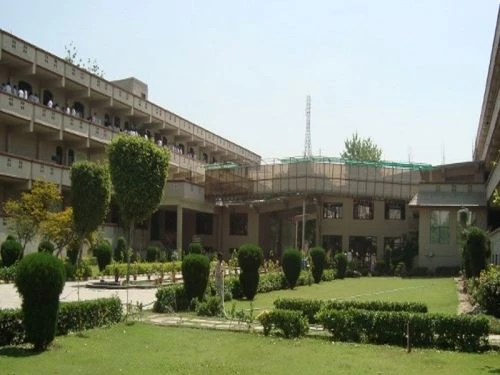
The campus is compact at just over 5 acres, located on the bypass road about 12 km from Meerut Railway Station. They offer transport facilities, which is a necessity given the location.
Infrastructure claims include a library (with a reported 13,278 books), Wi-Fi, labs, a canteen, and sports facilities. The descriptions—"well-maintained grounds," "fully equipped gymnasium"—are standard boilerplate from college brochures. The truth often lies in the maintenance. Older reviews don't complain about the buildings but about the lack of life within them.
And that's the biggest knock on student life, according to those same reviews: a near-total absence of it. "No fresher party, no annual function," as one student put it. If a vibrant campus culture with fests, clubs, and events is important to you, RIET, based on this feedback, might feel barren. The social scene would likely be what you and your classmates make of it in the hostels or the city.
This is the most critical section, and the data is troubling, albeit old. The consensus from available reviews (circa 2017) is overwhelmingly negative. The complaints are foundational:
The tone is one of regret. Now, a college can change in seven years. The 2023 placement data suggests an attempt at improvement. But cultural and academic shifts are slower. The absence of more recent, positive reviews in the public domain is itself a data point. In today's age, if students were happy, you'd likely see some Google or Facebook reviews saying so.
You must weigh these older, harsh critiques against the newer, official statistics. It's possible the truth lies somewhere in the middle—a college that is functional and affordable but lacks the polish, rigorous academics, and vibrant community of more established institutions.
RIET is a classic budget-tier private engineering college. Its primary appeal is its low cost. If your JEE Main rank only gets you into the lower rungs of AKTU counseling and your family budget is tight, RIET's fee structure makes it a viable, no-frills option to get an engineering degree. The reported 2023 placement averages, if accurate, provide a reasonable ROI at that price point.
But you have to go in with your eyes wide open. Manage your expectations on campus life, faculty mentorship, and institutional support. Your education will be what you aggressively make of it—self-study, online courses, and hustling for internships will be crucial. Don't expect the college to hand you a vibrant student experience or a top-tier job on a platter.
Who should probably look elsewhere? Students who have options at older, more reputed government colleges or even private institutes with a stronger track record of student satisfaction and visible campus activity. If a dynamic college experience is as important as the degree itself, the older reviews strongly suggest you'll be disappointed here. For the extremely cost-conscious student who is fiercely self-motivated and views the college primarily as a degree-granting affiliate of AKTU, RIET could serve its purpose. Just don't say you weren't warned about the potential social and academic trade-offs.
RIET was established in 2008, though the broader RIET Group began in 1992. It is affiliated with Dr. A.P.J. Abdul Kalam Technical University (AKTU), Lucknow, and is approved by the All India Council for Technical Education (AICTE).
RIET offers B.Tech programs in Computer Science, Electronics & Communication, Information Technology, Mechanical, and Civil Engineering, each with 30 seats (total 150). It also offers an MBA program with an intake of 60 students and Diploma in Engineering programs with a total intake of 240 students.
For the 2025-2026 academic year, the annual tuition fee for the B.Tech program is approximately ₹61,250. The total program fee for four years is ₹2,45,000. For the MBA/PGDM program, the annual tuition fee is approximately ₹66,500, with a total two-year program cost of ₹1,33,000.
According to the institute's 2023 placement report, the highest package offered was 14 LPA, the average package was 6 LPA, and the median package was 5.5 LPA. A total of 100 job offers were made during that placement cycle.
Older student reviews (from around 2017) express significant concerns, citing a lack of co-curricular activities like fresher parties, a poor alumni network, and dissatisfaction with placement levels and faculty experience. More recent, comprehensive student sentiment from public forums is not widely available, creating a gap between these older critiques and newer official placement data.
Share what future students should know about RIET.
Student voices are not rewritten by colleges. We remove spam and abuse.
Wider admission question? Community PulseWhat should future students know?
Tell us which course you're considering. We'll help you work out the next step.
Get instant Partner access after mobile verification. Your public edits are reviewed before they go live.
Claim this college Auditorium
 Cafeteria
 Computer Labs
 Gym
Gym Hostel
 Medical
 Science Labs
 Sports Complex
 Study Library