Loading Admission Guardian content
Loading Admission Guardian content

Provisional score based on available data. It may change as more information is verified.
Find a program, read its fee details and explore the admission requirements.
Summary of the programs shown below. First-year fee. Check the note beside each amount for inclusions and exclusions.
| Course | Stream | Fees |
|---|---|---|
| Post Basic Bachelor of Science [P.B.B.Sc] (Nursing) | Paramedical | 125000 |
| Master of Science [M.Sc] | Paramedical | 150000 |
| General Nursing and Midwifery [GNM] | Paramedical | 190000 |
| Bachelor of Science [B.Sc] (Nursing) | Paramedical | 195000 |
| Ph.D. (Nursing) | Paramedical |
Specializations
Eligibility: 10+2
Specializations
Eligibility: Graduation
Eligibility: 10+2
Specializations
Eligibility: 10+2
Specializations
Eligibility: Post Graduation
If you're looking at nursing colleges in Bangalore and want a campus with a hospital attached, RR Nursing Institutions is a name that comes up. Established in 2004 under the older PKM Educational Trust, it's a private college that's built a reputation for being serious and disciplined. The big draw is the clinical training. With its own 250-bed NRR Hospital right on the shared 27-acre campus and tie-ups with major hospitals like Kidwai Institute of Oncology, students get hands-on experience from the start. It's affiliated with the Rajiv Gandhi University of Health Sciences (RGUHS), and all its programs are recognized by the Indian Nursing Council (INC) and Karnataka Nursing Council (KNC). That's the official stamp you need for your degree to be valid for exams like the NCLEX for the USA or the DHA for Dubai. But talk to students, and you'll hear a more nuanced story. The campus is green and quiet, which is great for studying. The faculty are often praised for being supportive. Yet, the rules are strict—think school-like discipline with no phones in class—and the hostel food is a common gripe. It's a trade-off. You come here for the skills and the degree, not for a vibrant social calendar.
The college operates through three units, but the academic structure is centralized. The B.Sc Nursing program is the main attraction, with an intake of 60-100 students annually. You need a 10+2 with Physics, Chemistry, and Biology and at least 45% aggregate to be eligible. For those already in the field, the Post Basic B.Sc (P.B.B.Sc) for GNM holders and the M.Sc Nursing programs offer a path for advancement. The M.Sc specializations are pretty standard—Community Health, Medical-Surgical, Pediatric, Psychiatric, and OBG Nursing. The GNM diploma is also an option if you're looking for a three-year route into nursing.
The academic calendar follows RGUHS, so expect classes to start around September or October. The faculty, led by Dean Dr. Ramu K, is described by students as approachable and helpful, often providing notes and exam blueprints. But the real academic strength here is the clinical rotation. You're not just visiting hospitals; you're working in them. Mandatory postings happen at the on-campus NRR Hospital, Prakriya Super Specialty Hospital, and affiliated giants like Narayana Health and Victoria Hospital. That exposure is the college's biggest selling point. It's practical, sometimes intense, and designed to make you job-ready from day one.
Here's where you need to read between the lines. The official placement claim is 100%. In reality, student reviews and alumni chatter suggest a more active placement rate of around 85-90% for those seeking jobs right after graduation. That's still a strong number, especially in a field with high demand. The packages, however, are modest for entry-level nursing roles in India. The average starting salary is typically between ₹2.5 to ₹3.5 LPA. You might see a figure like ₹5.91 LPA quoted as the "highest package," but that's likely for an international placement or a specialized role—it's not the norm for a fresh graduate in Bangalore.
The recruiter list is solid and reads like a who's who of Indian healthcare: Apollo Hospitals, Fortis, Manipal, Columbia Asia (now part of Manipal), Narayana Health, and Max Healthcare. NRR Hospital itself also absorbs a number of graduates. The 6-month mandatory internship in the 4th year is part of the B.Sc curriculum. Don't expect a hefty stipend; reports indicate it might be around ₹8,000 to ₹10,000 per month, if it's offered at all in the private hospital setups. The placement story here is about access to good hospital brands and building a resume, not about landing a high-paying corporate job.
The cost depends entirely on how you get in. There's a massive difference between the Government Quota (secured through KCET counseling) and the Management Quota (direct admission).
For the flagship B.Sc Nursing program, the total package for Management Quota students is estimated at ₹5.6 to ₹5.95 lakhs for the entire 4-year course. That breaks down to about ₹1.4-₹1.5 lakhs per year in tuition. For Government Quota seats, the annual tuition is dramatically lower, ranging from ₹40,000 to ₹60,000. The GNM diploma follows a similar pattern, costing ₹1.9-3.9 lakhs total for management seats.
On top of tuition, you have to budget for living expenses. Hostel and mess fees range from ₹40,000 to ₹85,000 per year, depending on whether you opt for a 2-sharing, 3-sharing, or more crowded room. And then there are the "other" fees. Students frequently mention extra charges for RGUHS exams, uniforms, and clinical posting transport, which can add another ₹15,000-₹20,000 annually. The college doesn't heavily advertise large-scale scholarship programs, so financial aid is something you'd need to inquire about directly.
The path to admission splits in two. If you're a Karnataka domicile student aiming for the low-cost government quota seats, you must appear for the Karnataka Common Entrance Test (KCET). The competition is reflected in the cutoffs. For the 2024 cycle, the Round 3 closing ranks for B.Sc Nursing stretched from about 1,51,548 to 1,94,827. That's a wide range, indicating seats are available but you need a decent rank. The Karnataka Examinations Authority (KEA) manages this counseling process, usually in July/August.
If you're going for the Management Quota, the process is more straightforward—and more expensive. There's no entrance exam. Admission is typically based on your 10+2 marks (with that 45% PCB minimum for B.Sc) and often involves a direct application and interview with the college. The application window for both routes usually opens around April or May. It's a classic choice: spend time and effort on KCET for a subsidized seat, or pay a premium for a more direct route.
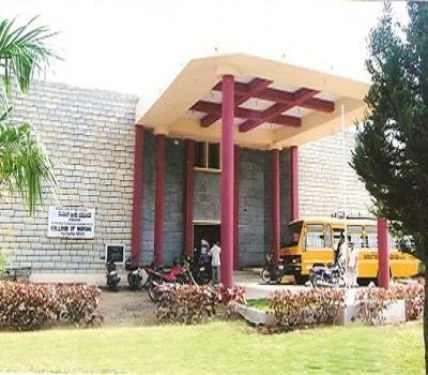
The 27-acre campus is a double-edged sword. On one hand, it's sprawling, green, and quiet—a genuine escape from Bangalore's urban chaos, which is great for focusing on your dense nursing syllabus. The infrastructure for learning is there: well-maintained nursing labs for foundations, anatomy, and community health, and a library with over 10,000 books plus access to the RGUHS HELINET digital library. Having the NRR Hospital on-site isn't just for postings; it means medical facilities are immediately available.
The hostel facilities get a middling rating from students, around a 3.5 out of 5. Rooms are furnished and Wi-Fi is available, but the connectivity can be spotty. The biggest complaint, almost universally, is the food. Reviews consistently call out the hostel mess for repetitive and sometimes low-quality meals, with the girls' hostel mess drawing particular criticism. There are two main canteens offering North Indian/Bengal and South Indian/Andhra styles, but they don't seem to fully solve the problem.
And then there's the social life. Or the relative lack of it. This is a disciplined, professional program. Fests and events are fewer compared to the engineering side of the RR Group. The rules are strict: uniforms are mandatory, and mobile phones are prohibited during college and clinical hours. As one Quora user put it, "It feels like a school." Don't come here expecting a movie-style college experience.
Synthesizing the chatter from CollegeDunia, Shiksha, and Quora paints a clear, consistent picture. The consensus is that RR Nursing is a "Serious & Disciplined" institution.
The positives are powerful and career-focused. Alumni overwhelmingly praise the clinical exposure. Getting to train at NRR, Kidwai, and other major hospitals is seen as invaluable, real-world preparation that sets them up for their first job. The faculty also gets high marks for being supportive and invested in student success, often going beyond the textbook.
But the negatives are about quality of life and administrative friction. The strict rules (no phones, strict uniforms) are a frequent point of contention for students wanting more autonomy. The hostel food is a near-universal complaint. Many also report frustrations with the management, citing delays in paperwork and unexpected "hidden charges" for various fees.
The takeaway from students is practical: this college is highly recommended if your top priorities are building clinical skills and clearing your exams to launch a nursing career. If you're looking for a liberal, fun-filled campus life, you'll likely find it frustrating.
RR Nursing Institutions is a specific kind of college for a specific kind of student. It's worth a serious look if you are a career-focused aspiring nurse who values rigorous clinical training above all else. The access to the on-campus NRR Hospital and rotations at top Bangalore hospitals is a legitimate advantage that many colleges can't match. The INC/KNC recognition is essential, and the placement access to major hospital chains is real. If you get a government quota seat through KCET, the value proposition becomes very strong given the low tuition.
However, you should probably look elsewhere if you chafe under strict discipline, prioritize a vibrant social and extracurricular life, or are sensitive to administrative hassles and inconsistent hostel living conditions. The college delivers on its core promise—nursing education with hands-on experience—but it does so within a structured, no-frills environment. It's a trade-off. For the right student, one who views college as a professional launchpad, it's a solid choice in Bangalore's crowded nursing education landscape.
Yes, RR Nursing College is considered a good choice for a B.Sc Nursing degree, particularly due to the strong clinical exposure it provides through its parent hospital, NRR.
The total approximate cost for the 4-year B.Sc Nursing program under the management quota at RR Nursing College is around ₹6 Lakhs, which includes hostel fees.
RR Nursing College provides 100% placement assistance, but securing a job ultimately depends on the individual student's performance in the final interviews conducted by the hiring hospitals.
Mobile phones are allowed in the hostel premises. However, they are strictly prohibited inside the college building and during clinical hours.
No, there is typically no entrance exam for management quota seats. Admissions are usually based on 10+2 (or equivalent) marks, with a minimum requirement of 45-50% in Physics, Chemistry, and Biology (PCB).
Share what future students should know about RR Nursing Institutions.
Student voices are not rewritten by colleges. We remove spam and abuse.
Wider admission question? Community PulseWhat should future students know?
Tell us which course you're considering. We'll help you work out the next step.
Get instant Partner access after mobile verification. Your public edits are reviewed before they go live.
Claim this college Auditorium
 Cafeteria
 Computer Labs
 Gym
Gym Science Labs
 Sports Complex
 Study Library