Loading Admission Guardian content
Loading Admission Guardian content

Provisional score based on available data. It may change as more information is verified.
Selected ranking categories, with the recorded year beside each result. Open all records for the complete history.
3 published records · Lower numeric ranks are stronger
IIRF
Physiotherapy
#82023
Find a program, read its fee details and explore the admission requirements.
Summary of the programs shown below. First-year fee. Check the note beside each amount for inclusions and exclusions.
| Course | Stream | Fees |
|---|---|---|
| Bachelor of Science [B.Sc] | Paramedical | 21600 |
| Diplomate National Board [DNB] (Orthopeadics) | Medical | |
| Master of Surgery [MS] (Orthopaedics) | Medical |
Specializations
Eligibility: 10+2
Specializations
Specializations
All accepted exams
Eligibility: Graduation
2 exams with cutoff data available
If you want to learn orthopaedics and trauma by seeing it, not just reading about it, Sanjay Gandhi Institute of Trauma and Orthopaedic (SGITO) in Bangalore is a unique proposition. Established in 1984, this government-run autonomous super-specialty hospital is less a traditional campus and more a high-volume clinical battlefield. Its location, right behind NIMHANS in the heart of Jayanagar, places it at the epicenter of urban trauma cases. For students in its MS Orthopaedics, B.Sc. Nursing, and allied health programs, the education is brutally practical. You won't find sprawling lawns or a vibrant fest culture here. What you will find is an unmatched density of real-world cases, from complex fractures to sports injuries, all under the guidance of surgeons who are often national authorities in their field. It's a place where the line between classroom and emergency room is virtually non-existent.
SGITO offers 15 courses, but its soul is in trauma and orthopaedics. The academic structure is a vertical integration of theory and relentless practice.
For undergraduates, the main draws are the B.Sc. Nursing (60 seats via KCET) and the Bachelor of Physiotherapy (BPT). There's also a cluster of niche allied health sciences programs like Medical Imaging Technology (MIT) and Operation Theatre Technology (OTT), each with intakes of 10-20 students. The postgraduate crown jewel is the MS Orthopaedics program, with 10 highly contested seats filled through NEET PG counseling. The institute also runs sought-after one-year Fellowship programs in areas like Arthroplasty and Spine Surgery, which are typically for post-MS doctors looking to super-specialize.
The faculty, around 30-35 dedicated professionals, are the institute's greatest asset. Professors like Dr. Madan Ballal (former team doctor for the Indian Davis Cup team) and Dr. H.S. Chandra Shekar aren't just teachers; they're practicing surgeons managing the hospital's caseload. The grading follows the RGUHS system, but the real learning happens in the wards and OTs. The academic calendar is standard for RGUHS, but the clinical calendar is 24/7.
"Placement" at a hospital-based institute like SGITO means something different. It's less about a corporate recruitment drive and more about the natural professional pathways that open up after training here.
The institute reports a consistent 88-90% placement rate. For B.Sc. Nursing and allied health graduates, the average starting package is cited between INR 3 to 5 LPA. BPT graduates can expect around INR 5.5 LPA. For MS Orthopaedics postgraduates, the median package is reportedly INR 8 to 10 LPA, with the highest reaching INR 12-15 LPA for specialized surgical roles or positions in major corporate chains.
Top recruiters are the who's who of Indian healthcare: Narayana Health, Apollo Hospitals, Fortis, and Manipal Hospitals. Many alumni also join other Government Medical Colleges as Assistant Professors. A significant perk for PG residents is the stipend: as per Karnataka government norms, they earn INR 45,000 to 60,000 per month during their residency, which is a decent financial cushion.
The reality check? That 90% figure likely reflects the high employability of its specialized graduates rather than a formal placement cell with dozens of companies visiting. Your network, the institute's reputation, and the skills you've honed on real trauma cases become your job placement engine.
This is where SGITO's government status shines. The fees are a fraction of what private medical institutes charge.
For undergraduate B.Sc. programs, annual tuition is between INR 30,000 to 45,000. Over a 3-4 year program, the total cost lands around INR 1.2 to 1.5 lakhs. Even the MS Orthopaedics program costs just INR 1.2 lakhs per year (total ~INR 3.7 lakhs). Hostel fees add another INR 20,000 to 40,000 annually, with mess charges running INR 2,500 to 3,500 per month.
Financial aid is primarily through state government schemes. SC/ST/OBC students should actively check the Karnataka State Scholarship Portal (SSP) for applicable scholarships. The low base cost itself is the biggest financial aid for many middle-class families aspiring for a quality medical education.
Admission is strictly through entrance exams and centralized counseling. There's no management quota.
For MS Orthopaedics, you must have an MBBS degree and a qualifying rank in NEET PG. The 2024 counseling rounds showed closing ranks for the General All-India category around 1860 in Round 1, slipping to about 3571 by Round 3. These ranks are competitive and reflect the program's prestige.
For B.Sc. Nursing and BPT, the key is the Karnataka Common Entrance Test (KCET). The 2024 closing rank for B.Sc. Nursing stretched from around 88,725 to 1,20,799, indicating a broader range. Remember, a significant portion of seats are reserved for Karnataka domicile students.
The selection process is handled by government bodies: the Karnataka Examination Authority (KEA) for KCET-based courses and the Medical Counselling Committee (MCC) for All-India NEET PG seats. Application windows are typically April-July for UG and January-March for PG. Be prepared for the mandatory 3-year service bond if you take a government PG seat in Karnataka.
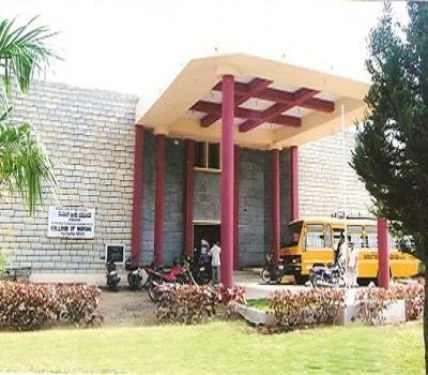
Don't picture a typical college campus. Picture a busy, 240-bed super-specialty hospital with academic blocks attached. The infrastructure is functional and geared towards clinical work.
The hospital is the core—a trauma center with 24/7 emergency services and six ambulances. The library is well-stocked with orthopaedic resources and has digital access via RGUHS HELINET. Labs for pathology and radiology (with MRI/CT) support the diagnostic needs.
Hostels are on-campus, separate for boys and girls. Student reviews rate them a 3.5/5—basic, clean, and disciplined. The word "strict" comes up often, with gate closure times around 10:30 PM enforced. The canteen provides affordable meals (about INR 70 for a thali), but hostel food is often described as average, leading many to eat out in the well-connected Jayanagar area.
Social life is minimal. There's a basic outdoor play area, but no major fests or active clubs. The student life is dominated by clinical duties and studies. The location in Jayanagar is a plus, with easy access to metro (Jayanagar station ~2 km away), markets, and eateries.
Synthesizing student sentiment online reveals a clear, consistent picture. The trade-off is explicit.
The overwhelming positive is clinical exposure. Reviews almost universally state, "The hands-on experience is incredible." Managing a high volume of trauma cases provides a learning curve unmatched in calmer, private settings. The quality of teaching from practicing surgeons is highly praised. The affordable fees and prime Bangalore location are also big pluses.
The negatives revolve around lifestyle and administration. The hospital environment is described as crowded and chaotic—because it is a working trauma center. Social life is nearly non-existent. The hostel rules are strict, and the food is just okay. Administrative processes can be slow, a common gripe in government institutes. As one review summarized, it's not a "campus life" experience; it's a rigorous clinical apprenticeship.
SGITO is a specialist's institute. It's not for everyone.
It is absolutely worth it if you are a pragmatist seeking maximum surgical or clinical hands-on experience in orthopaedics and trauma, and you want it at a remarkably low cost. For the MS Orthopaedics aspirant or the B.Sc. Nursing student who wants to learn in a high-pressure, real-hospital environment, SGITO offers a rare and valuable education. The faculty pedigree and case diversity are its undeniable strengths.
However, you should probably look elsewhere if you desire a balanced college life with fests, clubs, and a spacious residential campus. The environment is intense, disciplined, and entirely medically focused. The administrative pace is governmental. It's a choice for the dedicated, not the dilettante.
In short, SGITO trades frills for fractures. If your goal is to become a highly competent, unflappable trauma or orthopaedics professional, the trade is more than fair. You can find more official details on the SGITO website.
Sanjay Gandhi Institute of Trauma and Orthopaedic (SGITO) is a Government-run Autonomous Institute.
For the General category, the NEET PG cutoff for the MS Orthopaedics program at SGITO typically falls within the top 2000 to 4000 ranks.
Yes, SGITO offers a B.Sc. in Nursing program with an intake of 60 seats, for which admissions are conducted through the Karnataka Common Entrance Test (KCET).
The institute provides basic on-campus hostel facilities, with separate accommodations available for boys and girls.
Yes, postgraduate students admitted to government medical seats at SGITO are required to sign a mandatory 3-year service bond, which is standard for Karnataka government medical institutions.
Share what future students should know about SGITO.
Student voices are not rewritten by colleges. We remove spam and abuse.
Wider admission question? Community PulseWhat should future students know?
Tell us which course you're considering. We'll help you work out the next step.
Get instant Partner access after mobile verification. Your public edits are reviewed before they go live.
Claim this college Cafeteria
 Campus Shuttle
 Computer Labs
 Medical
 Science Labs
 Sports Complex
 Study Library