Loading Admission Guardian content
Loading Admission Guardian content

Provisional score based on available data. It may change as more information is verified.
Find a program, read its fee details and explore the admission requirements.
Summary of the programs shown below. Total course fee. Check the note beside each amount for inclusions and exclusions.
| Course | Stream | Fees |
|---|---|---|
| Certification | Engineering | 25000 |
| Bachelor of Computer Applications [BCA] | Computer Applications | 90000 |
| Diploma in Engineering (Polytechnic) | Engineering | 90450 |
| Bachelor of Technology [B.Tech] | Engineering | 220000 |
| Bachelor of Technology [B.Tech] {Lateral} | Engineering |
Specializations
Specializations
All accepted exams
Eligibility: 10+2
Specializations
All accepted exams
Eligibility: 10th with 35% + UPJEE
Specializations
All accepted exams
Eligibility: 10+2 with 45% + UPTAC
Specializations
All accepted exams
Eligibility: Diploma with 45% + UPTAC
1 exam with cutoff data available
 Bajaj Allianz
 Cummins India Ltd
 HDFC Bank
 ICICI Bank
 Jindal
 uCertify
SP Memorial Institute of Technology (SPMIT), tucked away in Kaushambi on the outskirts of Allahabad, does a lot of things that new private engineering colleges do. It calls itself a campus of 20 acres. It lists AICTE approval, NAAC accreditation, ISO certification. It talks about academic tie-ups with IIIT Allahabad and IIT Bombay’s remote centre. And then you start reading what students actually say. The contrast is stark—especially around placements, teaching quality, and whether facilities promised at admission ever materialise. For a family considering AKTU-affiliated colleges in Uttar Pradesh, the gap between the brochure and the lived experience matters. This profile unpacks both sides, sticking to the facts and feedback available.
The institute offers a fairly standard set of AKTU-syllabus courses. Undergraduate B.Tech covers seven branches: Civil, Computer Science, Electrical, Electronics & Communication, Information Technology, Mechanical, and Electrical & Electronics. Intake per branch is 60 seats, though some specialisations appear only occasionally based on approvals. For students inclined toward management, the MBA programme admits 60 students and lets them pick from Finance, HR, IT, International Business, or Marketing. BBA and BCA are also on offer—both with 120 seats each—and rely on merit-based admission from Class 12 marks. Diploma-level engineering adds 60 seats each for Civil, Electrical, and Mechanical streams, plus ITI certificate programmes.
Academically, SPMIT benefits from being an IIIT-Allahabad adopted institute and a remote centre of IIT Bombay, which may give students access to virtual labs or faculty development programmes. The Computer Society of India membership is another plus. That said, the faculty count stands at 56, and verified student reviews rate teaching quality at 2.67 out of 5. Some reviews call the teaching methods “very bad,” so the academic experience appears inconsistent. Course-based projects and social impact projects are mentioned in official material, but no specifics on how frequently these run or what they produce are publicly available.
If you’re reading reviews on Shiksha or CollegeDunia, you’ll spot the issue right away. The college’s own placement cell reports a highest package of ₹12 LPA and an average of ₹5.5 LPA for 2024. That would be competitive for a tier-3 private institute. But multiple student reviews from batches between 2016 and the recent past contradict these numbers. The highest package recalled by students is ₹3.5 LPA, and the average hovers between ₹2 LPA and ₹2.9 LPA. One B.Tech Mechanical graduate from 2016 stated bluntly, “In our batch, no one is placed.”
The college claims that at least 65% of B.Tech IT students in 2023 got placed. Yet current student sentiment puts placement percentages much lower—around 20%—with some branches seeing almost no campus recruitment. The list of visiting recruiters includes names like Vodafone, Thyrocare, Oracle, Siemens, Cognizant, Accenture, Yes Bank, and HDFC Bank. However, whether these companies actually extend offers, and for what roles, is less clear. When you see the phrase “software development companies” lumped together in official materials, it’s often a sign that the bulk of hires come from small IT service firms offering salaries closer to the lower end.
The internship story is similarly vague: the institute says opportunities are provided, but no numbers back that up. For a student weighing options, the placement reality check is crucial. Plan on getting your degree and hunting off-campus—that’s the takeaway from alumni.
Annual tuition for B.Tech is ₹2,20,000 per year. That puts the four-year tuition total around ₹8.8 lakhs, which is reasonable for a private college in Uttar Pradesh but not the cheapest. MBA students pay a total of ₹1,19,000 for two years, which is extremely low for a management programme. BCA and BBA fees are even more modest: BCA costs ₹90,000 for the first year, while BBA totals ₹90,000 for three years. Diploma in Engineering (Polytechnic) charges ₹90,450 for the first year. Hostel and mess fees are not clearly listed anywhere—the prospectus says facilities exist, with mess, medicare, indoor games, and a general store, but the monthly or annual cost isn’t published. That’s a gap that can catch families off guard. No specific scholarship information is available, and the institute doesn’t highlight any financial aid programmes.
SPMIT’s admission process follows the AKTU counselling ecosystem. For B.Tech, you’ll need a JEE Main rank; the institute also accepts scores from UPCET (previously UPSEE) through UPTAC counselling. The academic minimum is 45% in PCM at 10+2 (40% for SC/ST). MBA applicants can use CAT, MAT, or UPCET scores, with a graduation percentage threshold of 50% (45% for reserved categories). Diploma candidates take JEECUP, while BBA and BCA seats are filled based on 10+2 merit.
Cutoffs aren’t made public, which makes it hard to gauge competitiveness. A 15% management quota exists for B.Tech and MBA, with admission through an institute-level entrance test and interview. For 2026, JEECUP’s application deadline was extended to May 10, and JEE Main Session 2 exams were scheduled for April 5–8. Generally, the counselling window runs July–August, and classes start by September. Even if the process sounds routine, keep an eye on the official counselling dates—UPTAC delays are common.
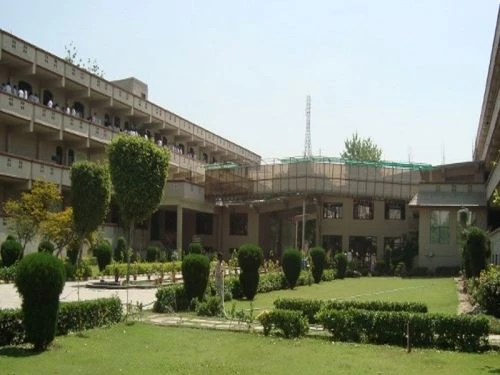
The campus covers 20 acres and packs in the expected infrastructure: seven dedicated labs for Civil, Chemistry, Computer Science, Electrical, Electronics, Mechanical, and Physics; a computer centre with updated software; a library housing over 10,000 books and digital resources through NGL software with RFID kiosks; smart classrooms, auditoriums, and air-conditioned conference rooms. Sports facilities include a gymnasium, jogging track, and grounds for cricket, football, basketball, volleyball, badminton, table tennis, and chess. A cafeteria serves meals, and transport is handled by a fleet of buses connecting Allahabad city areas and Kaushambi district.
Separate hostels for boys and girls come with wardens, CCTV, and a general store. The food situation is divisive. The official line calls it hygienic and nutritious; student reviews repeatedly label it “very bad.” Wi-Fi is another sore point—the campus claims to be Wi-Fi enabled, but at least one review says it isn’t present. Facilities like a resident doctor and a health centre sound reassuring, though no one quantifies how responsive medical help really is.
Social life appears subdued. A student review advises, “If you want proper college life experiences, then please don’t take admission in this college.” There’s little mention of fests, cultural clubs, or student-driven events. The vibe seems more commute-and-class than a holistic campus experience.
Collating sentiments from CollegeDunia, Shiksha, and other forums reveals a split pattern. Positive remarks highlight the modern infrastructure, well-equipped labs, and the library. Some students consider the college decent value for money, particularly if you’re looking for an affordable technical degree in the region. Hostel security gets a nod, too.
But the negatives are louder and more consistent. Placement failure is the dominant theme. Multiple reviews state that companies rarely visit, and when they do, the salaries are meagre. A paraphrased review goes, “The placement was very bad, so don’t think you will get placed after completing your course. If you want placement, go elsewhere.” Teaching quality scores just 2.67 out of 5, with complaints about outdated methods. The hostel food and missing Wi-Fi add to daily frustrations. Another recurring thread: promises made during admission (certain games facilities, Wi-Fi, etc.) aren’t always fulfilled, pointing to administrative gaps. Delays in result publication have also been flagged.
There’s a clear disconnect between what the institute claims in its brochures and what students recount. Whether that stems from a poorly managed placement cell, weak industry links, or over-optimistic marketing is hard to pin down—but the pattern is hard to ignore.
SPMIT isn’t a scam; it’s a functional private college with decent infrastructure and genuine accreditations. If your priority is graduating with an AKTU degree at a manageable cost—especially in BBA, BCA, or an MBA programme with remarkably low fees—and you’re okay with finding your own job or pursuing higher studies, this might serve the purpose. The academic ties with IIIT Allahabad and IIT Bombay’s remote centre could offer some hidden value for motivated students who seek it out.
But here’s the sharper truth: the placement support is underwhelming, and the gap between official numbers and ground reality is wide. If campus recruitment matters to you, look elsewhere. The social experience is thin, and administrative follow-through on promises seems inconsistent. Before committing, speak to at least two current students or recent graduates—ideally from the branch you’re interested in—and verify what’s actually happening on the ground. Trust what you hear, not what you read in the glossy brochure.
The official placement report for 2024 claims a highest package of INR 12 LPA and an average package of INR 5.5 LPA. However, student reviews frequently report significantly lower figures, with a highest package of around 3.5 LPA and an average of 2-2.9 LPA. Many students also state that placement percentages are very low, with some batches experiencing no placements, suggesting a discrepancy between official claims and student experiences.
The annual tuition fee for B.Tech is approximately ₹2,20,000, while the total fee for a 2-year MBA program is ₹1,19,000. Specific, comprehensive breakdowns for hostel, mess, and other mandatory fees for SPMIT are not explicitly available in the latest data. Hostel facilities are provided, including mess, but detailed costs for these are not published.
For B.Tech, accepted entrance exams include JEE Main, UPCET, and UPTAC. MBA admissions consider UPCET, CAT, and MAT scores. For Diploma courses, JEECUP is required. BCA and BBA admissions are primarily based on academic merit in the 10+2 examination.
SPMIT boasts a 20-acre campus with modern infrastructure, including well-equipped labs, a library with digital access, and sports facilities. Hostels are available for boys and girls with amenities and security. While the campus is stated to be Wi-Fi enabled, some student reviews contradict this. Food quality in the mess receives mixed reviews, with some calling it hygienic and others "very bad." Student sentiment suggests a less vibrant social life, with limited emphasis on fests, clubs, or cultural activities.
SPMIT is accredited by NAAC, though a specific grade is not publicly available. It is approved by AICTE and the HRD Ministry, Govt. of India, and is ISO 9001:2015 certified. The institute has been ranked 40th among the Top 50 Private MBA Institutions in India and has received two international and two national awards for Excellence in Technical Education.
Share what future students should know about SPMIT.
Student voices are not rewritten by colleges. We remove spam and abuse.
Wider admission question? Community PulseWhat should future students know?
Tell us which course you're considering. We'll help you work out the next step.
Get instant Partner access after mobile verification. Your public edits are reviewed before they go live.
Claim this college Auditorium
 Cafeteria
 Campus Shuttle
 Computer Labs
 Hostel
 Medical
 Science Labs
 Sports Complex
 Study Library