Loading Admission Guardian content
Loading Admission Guardian content
Provisional score based on available data. It may change as more information is verified.
Find a program, read its fee details and explore the admission requirements.
Summary of the programs shown below. First-year fee. Check the note beside each amount for inclusions and exclusions.
| Course | Stream | Fees |
|---|---|---|
| Bachelor of Siddha Medicine & Surgery [BSMS] | Medical | 10150 |
Eligibility: 10+2
If you're looking at Siddha medicine colleges in Tamil Nadu, Sri Sairam Siddha Medical College and Research Centre (SSSMCRC) is a name that comes up fast. And it comes with a reputation. It's not just another private college; it's a disciplined, results-oriented institution that consistently ranks among the state's top three private Siddha colleges for university pass percentages. Founded in 2001 on a sprawling 200-acre campus in Tambaram, it's part of the larger Sairam group, which means infrastructure and systems are a clear strength. But that strength comes with a very specific, almost regimented, environment. Think of it less as a typical college campus and more as a focused training ground for future Siddha practitioners. The 250-bed attached hospital provides serious clinical exposure, a critical advantage in a field where hands-on practice is everything. It's a place that produces knowledgeable, exam-ready graduates, but you have to be ready for its famously strict code of conduct.
The academic offering is focused, which is typical for a specialized medical college. The undergraduate program is the Bachelor of Siddha Medicine and Surgery (BSMS), a 5.5-year course that includes a mandatory one-year rotatory internship. The annual intake is 50 students. The curriculum is standard for the university, covering core subjects like Siddha Maruthuvam (General Medicine), Gunapadam (Pharmacology), and Sirappu Maruthuvam (Special Medicine), alongside modern anatomy and physiology. Where Sairam distinguishes itself is in execution. Student reviews consistently highlight the supportive, mentor-like faculty who are focused on helping students clear university exams with high marks. That's a tangible benefit.
For postgraduates, the college offers a 3-year MD Siddha program. Specializations include Maruthuvam (General Medicine), Gunapadam, Sirappu Maruthuvam, Kuzhanthi Maruthuvam (Pediatrics), Noi Naadal (Pathology), and Nanju Noolum Maruthuva Neethi Noolum (Toxicology). The total seat count across categories is reportedly around 94. Admission is through the AIAPGET entrance exam. Academically, the college has a research bent, with a dedicated R&D cell and its own publication, the "Sai Siddha Forum." The principal, Dr. S. Mathukumar, and several department heads hold PhDs, lending academic heft.
Placement data for Siddha colleges operates differently from engineering. Don't expect a massive corporate recruitment drive. The outcomes here are a mix of structured placement and self-driven career building. The college reports an 85-90% placement rate, which seems plausible given the avenues. The highest package cited for the 2024-25 cycle is ₹12.5 LPA, likely for a specialized role in a private healthcare group. The median or average package sits around ₹4.8 LPA.
Where do graduates go? The pathways are clear. A significant portion enters government service as Assistant Medical Officers (AMOs) through the Tamil Nadu Medical Services Recruitment Board (MRB). Others join private Siddha hospitals and chains like Deepam Hospital, or start their own private practice. There's also a growing niche in the wellness and spa industry, and some enter pharmaceutical R&D or academia. The compulsory 12-month internship at the in-house 250-bed Sri Sairam Siddha Medical Hospital is a major advantage, providing the practical case exposure that makes graduates employable. Interns receive a stipend, rumored to be between ₹5,000 - ₹10,000 per month, as per state norms for self-financing colleges.
The cost of a BSMS degree here has two very different tiers, dictated by the quota system. If you secure a seat through the Government Quota (65% of seats), it's remarkably affordable. Tuition is around ₹10,150 per year. Over 5.5 years, the total academic cost could be as low as ₹4-6 Lakhs.
The Management Quota (35% of seats) is a different story. Here, the annual fee package can range from ₹1.5 Lakhs to ₹3 Lakhs. Add in hostel and mess fees (₹48,000 to ₹1 Lakh per year), plus additional costs for books, exams, and development, and the total 5.5-year investment can balloon to ₹15-20 Lakhs.
The college does offer some financial relief through scholarships. These include the Leo Muthu Merit Scholarship, the First Graduate Scholarship, and various BC/MBC/SC/ST government scholarships. It's worth checking the official website for the latest application details.
Admission is centralized and exam-based. For the BSMS program, NEET-UG is mandatory. There is no direct admission. Selection for all seats—both government and management quota—is done through the centralized counseling conducted by the Directorate of Indian Medicine and Homoeopathy (DIM&H), Tamil Nadu.
Cutoffs fluctuate yearly. For the 2024 cycle, a NEET-UG score in the 240-260 range is generally considered safe for the management quota. Securing a government quota seat is far more competitive and typically requires a much higher score, often cited by students as 400+. For SC/ST categories, the cutoff is lower, historically between 150-200 marks. For the MD Siddha program, the entrance exam is the All India AYUSH Post Graduate Entrance Test (AIAPGET).
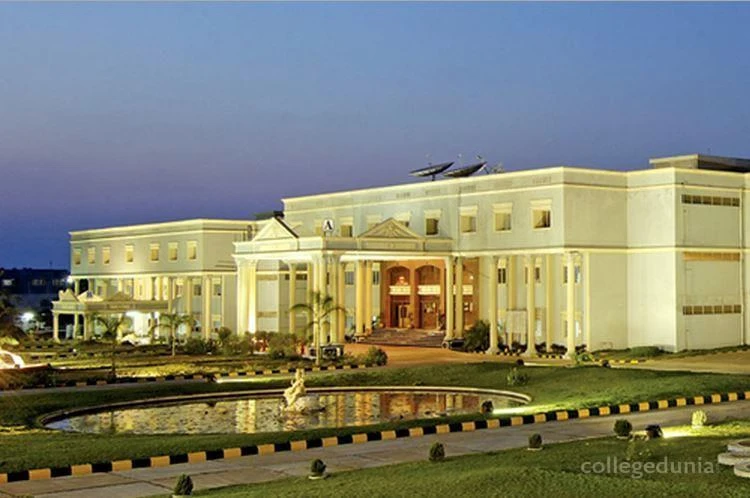
This is where Sairam's identity is most sharply defined. The infrastructure is undeniably good. The campus is massive and shared with other Sairam institutions. The 250-bed teaching hospital is a standout, providing daily OPD and IPD exposure. There's a well-stocked library with digital archives of palm leaf manuscripts, a large herbal garden for pharmacognosy, and modern labs. Hostels (separate for boys and girls) have capacity for about 850 students, with 24/7 Wi-Fi, gym facilities, and on-campus banking.
And then there's the famous Sairam discipline. The student sentiment is unanimous: the rules are strict. There's a formal dress code—saris for women, formals for men. Mobile phone usage is restricted during academic hours. Attendance is tracked meticulously. Interaction between genders is limited and regulated. The hostel food, interestingly, is one of the most praised aspects, with specific shout-outs for hygiene and the availability of non-vegetarian options. Social life is minimal. There are fests and events, but they're tightly managed. You don't come to Sairam for a vibrant, liberal campus life. You come for a structured, no-distractions education.
Scouring forums like Quora and Reddit, alongside reviews on Shiksha and CollegeDunia, paints a consistent picture. The college is a study in contrasts.
The Positives: Alumni are nearly universal in praising the academic rigor and faculty support. The phrase "mentor-like" comes up often. The hospital exposure is considered excellent, giving students a confidence boost before internship. The hostel food and infrastructure are regularly cited as major pluses. Many feel the strict environment forced them to focus, leading to strong university results and gold medals.
The Negatives: The strictness is the overwhelming critique. The term "school vibe" is used constantly. The rules on dress, phones, and socializing are described as oppressive by some. One recurring, poignant online consensus sums it up: "Sairam is a jail with a gold-plated gate. You will come out as a very knowledgeable doctor, but you will miss the 'fun' college life others talk about." That captures the trade-off perfectly.
SSSMCRC is not for everyone. It's a specialized choice with a very clear value proposition. If your primary goal is to become a competent, exam-ready Siddha practitioner with strong clinical foundations from day one, this college delivers. The infrastructure, hospital access, and focused teaching are top-tier for a private Siddha institution. The placement support into government and private sectors is real. However, you must be willing to accept—or even thrive under—a highly regimented, disciplined environment that prioritizes academics above all else. If you're seeking a typical, socially vibrant college experience with lots of personal freedom, you will likely find Sairam stifling. For the disciplined student who sees college purely as a professional launchpad, the investment (especially in the government quota) can be worth it. For others, the trade-offs might be too significant.
Yes, Sri Sairam Siddha Medical College and Research Centre (SSSMCRC) is known for following a rigid discipline policy. This includes enforcing dress codes and restricting mobile phone usage on campus.
The NEET-UG cutoff for the BSMS program varies by quota. For the management quota, a score above 250 is generally considered safe. For the government quota, a score of 400 or higher is typically required.
Yes, the college provides a stipend during the compulsory internship. The amount is paid as per the Tamil Nadu government's prescribed rates for private AYUSH colleges.
Yes, the quality of the hostel food is one of the most positively reviewed aspects of student life at Sri Sairam Siddha Medical College and Research Centre.
No, you cannot. NEET-UG is a mandatory requirement for all Siddha medical admissions in India, including at Sri Sairam Siddha Medical College and Research Centre. There is no provision for direct admission without a valid NEET score.
Share what future students should know about SSSMCRC.
Student voices are not rewritten by colleges. We remove spam and abuse.
Wider admission question? Community PulseWhat should future students know?
Tell us which course you're considering. We'll help you work out the next step.
Get instant Partner access after mobile verification. Your public edits are reviewed before they go live.
Claim this college Bank & ATM
 Cafeteria
 Campus Shuttle
 Hostel
 Study Library