Loading Admission Guardian content
Loading Admission Guardian content
Provisional score based on available data. It may change as more information is verified.
Selected ranking categories, with the recorded year beside each result. Open all records for the complete history.
1 published record · Lower numeric ranks are stronger
Find a program, read its fee details and explore the admission requirements.
Summary of the programs shown below. First-year fee. Check the note beside each amount for inclusions and exclusions.
| Course | Stream | Fees |
|---|---|---|
| Bachelor of Pharmacy [B.Pharm] (Pharmacy Practice) | Pharmacy | 75300 |
| Diploma in Pharmacy [D.Pharm] | Pharmacy | 130100 |
| Bachelor of Pharmacy [B.Pharma] | Pharmacy | 163500 |
| Pharm.D (Post Baccalaureate) | Pharmacy | 170700 |
| Pharm.D | Pharmacy | 208500 |
Specializations
Eligibility: D.Pharma
Specializations
Eligibility: 10+2
Eligibility: 10+2 with Science stream
Eligibility: B.Pharm
Eligibility: Post Graduation
 Century Metal Recycling (CMR)
 FDC Limited
 Genpact
 Mankind
 Unichem Laboratories
Teerthanker Mahaveer University's College of Pharmacy (TMU COP) sits on a sprawling 130-acre campus in Moradabad, offering a full spectrum of pharmacy programs from diploma to doctorate. What makes it stand out in Uttar Pradesh is its NAAC 'A' grade accreditation and, crucially, direct access to an 800-bed super-specialty hospital on campus—a massive advantage for its Pharm.D and clinical pharmacy students. But the story here is one of contrasts: impressive infrastructure and strict academic rules meet a placement reality for pharmacy graduates that's more modest than the university's overall claims. It's a solid, well-equipped private option where your experience will largely depend on how actively you leverage its clinical facilities and navigate its conservative, rule-bound environment.
TMU COP covers the entire academic ladder. The undergraduate B.Pharm program takes in 100 students annually, alongside a 60-seat D.Pharm diploma. For postgraduates, they offer four M.Pharm specializations—Pharmaceutics, Pharmacology, Pharmacognosy, and Pharmaceutical Analysis—with 15 seats each. The real differentiator is the doctoral-level practice-based program: the 6-year Pharm.D, which has 30 seats and is a relatively rare offering in private universities across UP.
Academically, it's a mixed bag. The college follows a strict 10-point CGPA system and a semester schedule. You'll find some highly qualified senior faculty, like Principal Dr. Anurag Verma, leading research initiatives. They have active MoUs with companies like Atharva Laboratories and even a technical support agreement with IIT Madras. But student feedback consistently points out a reliance on junior M.Pharm lecturers for routine teaching, with a method often described as "PowerPoint reading." Attendance is non-negotiable at 75%. So, while the framework and senior mentorship for research exist, the day-to-day classroom experience might not feel equally robust for everyone.
This is where you need to separate university hype from pharmacy-specific data. The university proudly advertises placement packages up to 60 LPA, but those are almost exclusively for B.Tech and MBA graduates. For pharmacy, the numbers are far more grounded.
The highest package cited for pharmacy roles is in the ₹7-9.5 LPA range, though that's not consistently verified. The average package for B.Pharm and M.Pharm graduates typically falls between ₹3.5 to 4.5 LPA, with a median around ₹3 LPA. The official placement rate is claimed to be 82-85%, but talk to students and alumni, and they'll tell you a different story. The working figure from reviews is closer to 60-70% for on-campus offers, with many students pursuing higher studies or finding off-campus roles in sales.
Top recruiters include major pharma names like Sun Pharma, Mankind, Zydus Cadila, Abbott, and Akums Drugs, alongside hospital chains like Apollo and Max Healthcare. Roles are mostly in production, quality control (QC), quality assurance (QA), and hospital pharmacy. A common student complaint is that the placement cell's focus is skewed toward engineering and management, leaving pharmacy students to hustle more on their own. The verdict? It's a decent pipeline into the industry, especially for core manufacturing roles, but don't expect the stellar packages you see in the university's brochures. You need to be in the top tier of your class to land the best-branded recruiters.
As a private institution, TMU COP's fees are significant and subject to annual increases of 3-5%. For the flagship B.Pharm program, the annual tuition fee is approximately ₹1,44,000. Over four years, with other charges, the total cost can reach around ₹6.33 lakhs. The 6-year Pharm.D program is a major investment, with annual fees of ~₹1,80,000, leading to a total cost exceeding ₹11.6 lakhs.
Beyond tuition, budget for a one-time admission fee of ₹5,000, annual exam fees (₹5,000–11,000), and lab charges. Hostel fees add a substantial amount: non-AC rooms range from ₹50,000 to ₹75,000 per year, while AC or premium options can cost between ₹1 lakh and ₹1.3 lakhs. Mess charges are usually included.
Financial aid primarily comes in two forms. As a Jain minority institution, it offers fee waivers of 20-25% on tuition and 30% on hostel fees for Jain students. There are also merit-based scholarships, offering 10-15% off tuition for students who scored over 80% in their 12th board exams.
Admission into the B.Pharm program primarily hinges on entrance exams. The university accepts scores from CUET-UG and also conducts its own Teerthanker Mahaveer University Entrance Exam (TMUEE). If seats remain after the entrance-based rounds, direct admission is possible based on 10+2 merit scores.
The basic eligibility is a minimum of 50% aggregate in Physics, Chemistry, and Biology/Mathematics in your 12th standard. The application fee is ₹1,000. The selection process is straightforward: the university prepares a merit list based on your entrance exam score (or 12th marks for direct admission), followed by document verification and fee payment. For M.Pharm, a valid GPAT score is strongly preferred. The process is managed centrally by the university, and while systematic, students often describe it as slow-moving.
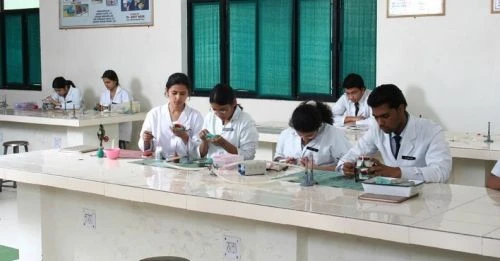
The infrastructure is arguably TMU COP's strongest selling point. The campus is large, clean, and well-maintained. For pharmacy students, the 16 UG and 7 PG labs are adequately equipped, with specialized facilities for instrumentation and pharmacognosy. The library holds over 5,200 pharmacy-specific texts and provides e-journal access.
The hostel system is extensive, with five separate buildings (2 for boys, 3 for girls) housing over 4,600 students. Rooms are generally well-kept and secure, earning the infrastructure a 4/5 rating in reviews. However, the food in the mess often gets a mediocre 3/5. The rules, though, are a major point of contention. Hostel timings, especially for women, are strict (with entry often required by 6 or 7 PM), and warden oversight is frequently described as "school-like" or overly rigid.
Social life revolves around the campus. There's a massive indoor sports stadium, gyms, canteens, and even a shopping complex. The annual university fest, "Rock-on," is a major highlight. But the overall atmosphere is more conservative than what you'd find in Delhi-NCR colleges. Movement around campus during class hours can be restricted, which some find stifling. And a practical note: many classrooms lack air-conditioning, which can be a genuine ordeal during Moradabad's intense summer heat.
Sifting through student feedback paints a clear, consensus-driven picture. The positives are consistently about the physical assets: "The campus is beautiful and very clean," and "Clinical exposure in the on-campus hospital is a huge plus for Pharm.D" are repeated verbatim. The sports facilities also get high praise.
But the criticisms are just as consistent. Teaching quality is seen as uneven—great with senior PhDs, lackluster with junior faculty. The administration is labeled slow, with complaints of "hidden charges" for various penalties. The placement gap between claims and reality is a frequent sore point, with many noting the cell's focus isn't on pharmacy. The strictness of rules, from attendance to hostel curfews, is the most common grievance, making the environment feel overly controlled for university students.
TMU COP is a competent, infrastructure-rich pharmacy college with one exceptional advantage: its attached multi-specialty hospital. This makes it a particularly strong choice for students aiming for the Pharm.D program or a career in clinical pharmacy, where hands-on experience is everything. The NAAC 'A' grade adds credibility, and the range of programs is comprehensive.
However, it comes with caveats. The fee is high for the region, and the promised placement outcomes for B.Pharm graduates often don't match the brochure. The conservative, rule-heavy campus culture won't suit everyone. So, who is it for? It's worth serious consideration if you are a Jain student (for the fee waiver), are specifically targeting the Pharm.D program, or value a clean, secure, and well-equipped campus over a more liberal collegiate experience. Who should look elsewhere? Students seeking a vibrant, autonomous campus life, those with tight budgets without a scholarship, or anyone expecting guaranteed, high-paying placements directly from campus might find better-suited options elsewhere in Uttar Pradesh or the NCR.
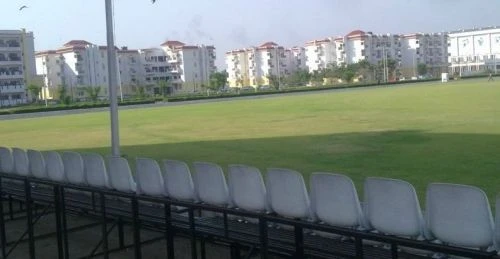
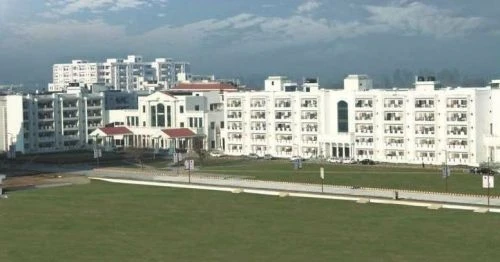
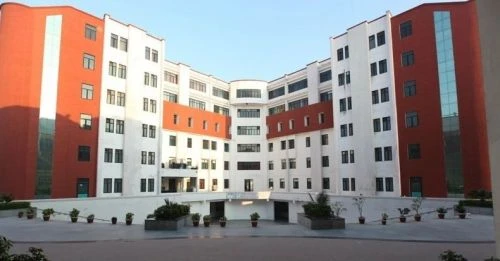
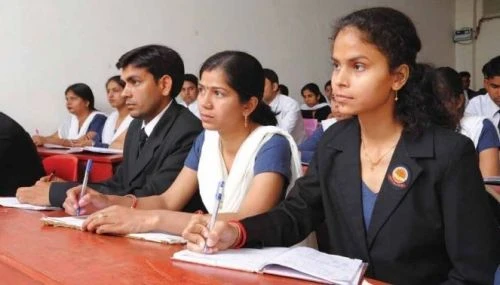
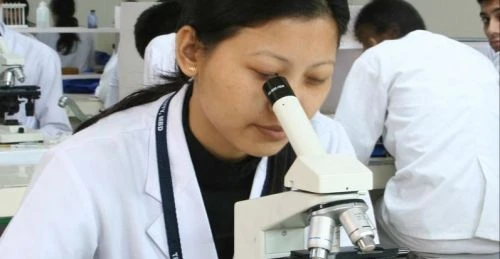
In this preview: 5 photos · 0 videos
Yes, Teerthanker Mahaveer University's College of Pharmacy is considered good for B.Pharm, particularly for its infrastructure and clinical exposure. A key advantage is that it is one of the few institutions in Uttar Pradesh with an attached medical college hospital, which enhances practical learning.
Jain students at TMU College of Pharmacy are typically eligible for a fee waiver of 20-25% on tuition fees. Additionally, they can receive a 30% waiver on hostel fees.
Yes, the Pharm.D program at Teerthanker Mahaveer University is fully recognized. It is approved by the Pharmacy Council of India (PCI), and TMU is one of the few private universities in Uttar Pradesh offering this comprehensive 6-year program.
The girls' hostel facilities at TMU College of Pharmacy are described as very secure with 24/7 security. However, they maintain strict entry timings, typically requiring residents to return by 6:00 PM or 7:00 PM.
Yes, direct admission for B.Pharm at TMU College of Pharmacy is possible if you meet the eligibility criteria of 50% in PCB/PCM. You can apply directly through the university's admission cell, though preference is given to candidates with CUET scores.
Share what future students should know about TMU COP.
Student voices are not rewritten by colleges. We remove spam and abuse.
Wider admission question? Community PulseWhat should future students know?
Tell us which course you're considering. We'll help you work out the next step.
Get instant Partner access after mobile verification. Your public edits are reviewed before they go live.
Claim this college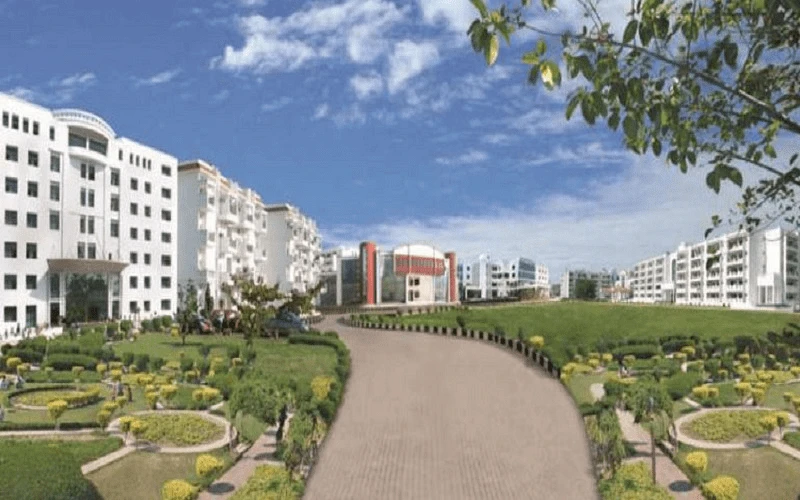
 Auditorium
 Bank & ATM
 Cafeteria
 Campus Shuttle
 Campus Wi-Fi
 Communication Centre
 Computer Labs
 Gym
Gym Hostel
 Medical
 Science Labs
 Sports Complex
 Study Library