Loading Admission Guardian content
Loading Admission Guardian content
Provisional score based on available data. It may change as more information is verified.
Find a program, read its fee details and explore the admission requirements.
Summary of the programs shown below. First-year fee. Check the note beside each amount for inclusions and exclusions.
| Course | Stream | Fees |
|---|---|---|
| General Nursing and Midwifery [GNM] | Paramedical | 25000 |
| Bachelor of Science [B.Sc] (Nursing) | Paramedical | 68900 |
Specializations
Eligibility: 10+2
If you're looking for a nursing college in Kerala that prioritizes clinical rigor over campus glamour, Theophilus College of Nursing in Devagiri is a name that comes up. Established in 2002 and managed by the Manohar Hill Charitable Trust, this private institution has built a reputation for producing competent, exam-ready nurses. Its biggest selling point isn't a sprawling campus or flashy placements—it's the direct, daily access to a 360-bed multi-specialty hospital right on its grounds. That hands-on experience is what draws students who are serious about the profession, even if it means accepting a highly disciplined, almost monastic, academic environment. Think of it as a trade-off: you'll get exceptional practical training, but you'll follow strict rules to get it.
The college offers a focused suite of nursing programs, all under the umbrella of the Kerala University of Health Sciences. The B.Sc. Nursing program is the main draw, with an annual intake of 50 students. For those looking to advance, there's a Post Basic B.Sc. (PBBSc) and an M.Sc. Nursing program with five specializations: Medical-Surgical, Child Health, Mental Health, Community Health, and Obstetrics & Gynaecological Nursing. The M.Sc. intake is small, around 20 seats total, which suggests a more personalized postgraduate environment.
Academic life here is known to be demanding and structured. The faculty, led by Principal Mrs. Shyla Ipe Varghese, is generally considered experienced and knowledgeable. But don't expect a casual classroom atmosphere. The teaching style is often described as authoritative, with a heavy emphasis on discipline and adherence to the KUHS syllabus. The college consistently reports a pass rate above 90% in university exams, which speaks to its focused, exam-oriented approach. The real academic differentiator, though, is clinical practice. From early in the program, students are rotated through the attached MGDM Hospital, getting exposure to a steady flow of patients across departments.
You won't find traditional "placement drives" with package announcements here. Nursing careers in Kerala don't work that way. The placement model at Theophilus is more organic and long-term. A significant number of fresh graduates are directly absorbed into the parent MGDM Hospital for their mandatory internship and often continue there as staff nurses. Others find positions in other major private hospitals in the state, like Caritas Hospital in Kottayam or Rajagiri Hospital in Kochi.
The more notable career trajectory, and one the college is quietly known for, is international migration. After gaining a year or two of solid clinical experience at MGDM, a considerable portion of alumni pursue opportunities abroad. The most common destinations are the United Kingdom (for NHS roles), the United Arab Emirates, and Germany. This path isn't managed by a college placement cell but is facilitated by the strong, practical training and the globally recognized KUHS degree. Top recruiters for those staying in India or the Gulf region include hospital chains like Apollo and Fortis. So, while there's no "average package" to quote, the career outcome for a diligent student is a stable, in-demand profession with clear pathways for global mobility.
Fees are regulated by the Government of Kerala, which brings some predictability. For the B.Sc. Nursing program, costs vary significantly by quota. Government quota seats are the most affordable, with annual tuition around ₹40,000. Management quota seats, which make up 35% of intake, cost between ₹73,025 and ₹85,000 per year. NRI quota fees are higher and can range up to ₹2 lakhs annually.
On top of tuition, all students pay an annual special fee of ₹19,500. Hostel accommodation adds roughly ₹20,000 per year, and the monthly mess fee for traditional Kerala meals is about ₹2,500. All in, the total cost for the four-year B.Sc. program, including hostel and mess, typically falls between ₹4.5 lakhs and ₹6.5 lakhs for management quota students. That's a relatively manageable investment for a professional degree. For financial support, eligible students can apply for scholarships through the National Scholarship Portal (NSP) and the state's E-Grantz scheme for SC/ST/OBC categories.
Admission is a three-channel process based on quotas. For the 50% government quota seats, selection is purely merit-based through the LBS Centre for Science & Technology rank list, which uses your 10+2 marks. The 35% management quota seats are filled through a common entrance process conducted by the Private Nursing College Management Association of Kerala (PNCMAK). The remaining 15% is reserved for the NRI quota, which is typically direct admission based on eligibility.
The basic eligibility across all quotas is a pass in 10+2 (or equivalent) with Physics, Chemistry, and Biology (PCB) and a minimum of 50% aggregate marks in those subjects. The application window usually opens in June or July, right after the Kerala HSE results are announced. It's a competitive process, especially for the lower-fee government seats, so having marks significantly above the 50% threshold is advisable.
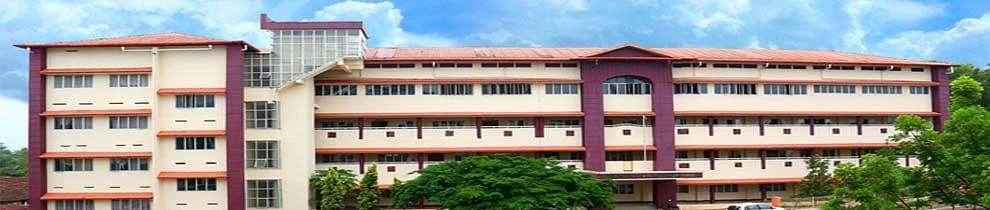
The campus is spread over a quiet, green area in Kangazha. It's serene—some might say isolated. The academic buildings are functional, with well-equipped labs for Nutrition, Anatomy, and Nursing Foundations. The library holds a collection of over 3,000 books and journals. Classrooms have audio-visual aids, but a notable point for students: college Wi-Fi is generally not available for student use.
Hostel life is a defining experience. There are separate hostels for boys and girls, with the girls' hostel being a large multi-story building. The rooms are reported to be basic but spacious. The mess serves traditional Kerala cuisine, with non-vegetarian meals available occasionally. The overarching theme, however, is discipline. Wardens are strict about curfews (typically around 6:00 PM) and rules. The official policy restricts smartphone usage in college and hostel areas during study hours. If you're imagining a vibrant campus life with fests and events, you'll be disappointed. Social and cultural activities are minimal here. The student experience is intensely focused on academics, clinicals, and hostel routines.
Sifting through student feedback paints a consistent picture. The praise is almost universally directed at the clinical exposure. Students feel they get far more hands-on practice than peers in many city colleges because of the direct, daily access to MGDM Hospital. They also appreciate the qualified faculty and the quiet environment that forces you to focus on your studies.
The criticisms are just as consistent. The number one complaint is the strictness. Rules regarding attendance, leave, dress code, and especially mobile phone usage are rigidly enforced. The administrative management is often described as slow and inflexible. The lack of a vibrant social scene or college fests is a common negative for students who crave a more balanced college experience. Hostel life is deemed safe and clean, but the strict curfews and rules can feel oppressive to some.
In short, students agree you come here for the education and the clinical training, not for the "college life." It's a trade-off most are willing to make, but it's not for everyone.
Theophilus College of Nursing is a specific kind of institution for a specific kind of student. It's absolutely worth it if your primary goal is to become a clinically proficient, exam-ready nurse without distractions. The direct access to MGDM Hospital provides a practical training ground that is hard to match, and the track record of alumni migrating to the UK, UAE, and other destinations is a strong testament to the quality of its core education. The fees, while not cheap, are regulated and offer a clear return on investment in a stable profession.
However, you should probably look elsewhere if you value a balanced college experience with social events, campus freedom, and a less rigid administrative environment. The discipline here is non-negotiable, and the remote location amplifies that insulated feel. It's best for students who are self-motivated, resilient, and 100% certain about their nursing career path. For them, Theophilus offers a no-frills, high-yield professional launchpad.
Yes, Theophilus College of Nursing Devagiri is approved by the Indian Nursing Council (INC). The college maintains its yearly approval from the national regulatory body.
The approximate annual fee for the B.Sc. Nursing program under the management quota at Theophilus College of Nursing Devagiri ranges from ₹73,000 to ₹85,000. This fee does not include additional costs for hostel accommodation or other special fees.
Yes, Theophilus College of Nursing Devagiri is a co-educational institution and does admit boys into its nursing programs. It is noted, however, that the female-to-male student ratio is typically high.
The hostel at Theophilus College of Nursing is described as safe and disciplined, with a focus on providing Kerala-style food. The facility operates under strict rules, particularly regarding the use of mobile phones by residents.
The nearest railway station to the college is Changanassery Railway Station, which is located approximately 21 kilometers away from the campus.
Share what future students should know about Theophilus College of Nursing Devagiri.
Student voices are not rewritten by colleges. We remove spam and abuse.
Wider admission question? Community PulseWhat should future students know?
Tell us which course you're considering. We'll help you work out the next step.
Get instant Partner access after mobile verification. Your public edits are reviewed before they go live.
Claim this college Auditorium
 Cafeteria
 Computer Labs
 Hostel
 Medical