Loading Admission Guardian content
Loading Admission Guardian content

Provisional score based on available data. It may change as more information is verified.
Find a program, read its fee details and explore the admission requirements.
Summary of the programs shown below. First-year fee. Check the note beside each amount for inclusions and exclusions.
| Course | Stream | Fees |
|---|---|---|
| Bachelor of Commerce [B.Com] | Commerce | 894 |
| Bachelor of Science [B.Sc] | Science | 1024 |
| Master of Science [M.Sc] | Science | 1054 |
| Bachelor of Computer Applications [BCA] | Computer Applications | |
| Master of Computer Applications [M.C.A] | Computer Applications |
Specializations
Eligibility: 10+2
Specializations
Eligibility: 10+2
Specializations
Eligibility: Graduation
Specializations
Eligibility: 10+2
Eligibility: Graduation
If you're looking for a safe, affordable, and academically solid women's college in coastal Tamil Nadu, A.D.M. College for Women (ADMC) in Nagapattinam is a name that comes up consistently. Established in 1975 and now an autonomous institution with a coveted NAAC 'A+' grade, it offers a surprisingly wide range of programs—from traditional B.Sc. in Physics to niche B.Voc. in Marine Food Processing—all on a sprawling 26-acre green campus. The college's defining characteristic is its dual-stream model: government-aided courses with near-symbolic fees and self-financing programs that are still remarkably cheap. For families prioritizing a secure, value-for-money education with a strong local reputation, ADMC is a compelling choice, even if its placement outcomes are more modest than metropolitan colleges.
ADMC offers 36 programs across 11 degree levels, which is a broad portfolio for a regional college. The split between government-aided and self-financing courses is crucial to understand. Aided programs like B.A. in History or B.Sc. in Mathematics have fees that are barely a few thousand rupees for the entire degree—a legacy of its private-aided status. The self-financing wings, which include popular choices like BCA, BBA, and B.Sc. Computer Science, are still affordable, with total three-year tuition hovering around INR 17,000-18,000.
Academically, autonomy allows them to run a Choice Based Credit System (CBCS) and Outcome-Based Education (OBE). The faculty base of about 100 includes over 60% with PhDs, with particular strength noted in Commerce and Economics departments. They've got practical collaborations too, like an MoU with Chennai Petroleum Corporation Limited (CPCL) for industrial visits and a tie-up with the ICT Academy for digital skilling. The B.Voc. programs in Marine Food Processing and Software Development are attempts to align with local industry and modern tech needs, respectively. It's a curriculum that tries to balance traditional arts and science with employable skills, even if the execution varies by department.
Let's separate the official data from the student sentiment. The NIRF 2024 report provides the most reliable numbers: a median package of INR 2.64 LPA for undergraduate programs and INR 3.80 LPA for postgraduates. Placement percentage for UG is around 71%, though the college highlights that for streams like BBA, it can touch 91% in some years.
The highest packages touted in student reviews range from INR 3.4 to 4 LPA. That's the ceiling. The recruiters list tells a story: Simho HR Service, Ageas Federal Life Insurance, Good Hands Facility Management. You'll also see TCS and Wipro listed, but these are typically accessed through off-campus or pooled drives, not dedicated on-campus recruitment. The reality, as echoed on platforms like CollegeDunia and Shiksha, is that placement is high in volume but the roles are often in insurance sales, back-office operations, local banking, or teaching. For core science graduates or those dreaming of product-based IT roles, you'll likely be on your own. The placement cell facilitates a job, but not necessarily the dream job. It's a decent outcome given the ultra-low fee structure, but temper your expectations.
This is where ADMC arguably shines brightest. The fee structure is a study in contrasts. If you get a seat in an aided program, you're looking at annual tuition between INR 800 and 1,200. Yes, for a year. A three-year B.Com. might cost you a total of INR 3,000-5,000. Self-financing programs are more but still low: B.Sc. Computer Science is about INR 5,500-6,000 per year, BCA is INR 5,700 annually, and BBA is around INR 3,800-4,000.
The big add-on is hostel fees, estimated at INR 40,000 to 60,000 per annum including mess charges. So for an out-of-town student, the hostel cost becomes the major expense, dwarfing the academic fee. Financial aid is robust, with over 56% of UG students receiving some form of government scholarship—SC/ST, BC/MBC, and farmer welfare schemes are common. The low base cost combined with high scholarship penetration makes this college accessible to a wide socioeconomic spectrum.
The process here is straightforward and entirely merit-based. There are no national entrance exams like CUET for undergraduate admissions. Your ticket in is your Class 12 marks. The college releases an online application, usually in May after state board results, and then generates a merit list. This is followed by a counseling or interview round. Cutoffs vary by program and category, with aided courses (especially B.Sc. Computer Science) being the most competitive. For self-financing courses and the NRI/management quota, the barriers are lower. If you're a student from the region with good academic scores, the path to admission is clear and uncomplicated.
The 26-acre campus is repeatedly praised in student reviews for its greenery and peaceful, "natural" atmosphere. Infrastructure is a mix of old and new. The library is a standout, with over 40,500 books and digital access via N-LIST. Labs for Geology and Marine Food Processing are noted as well-equipped. There's an indoor stadium and decent sports facilities.
The single girls' hostel, with a 200-student capacity, is a focal point. Reviews unanimously call it safe—"lots of cameras and strict monitoring"—which is a primary comfort for parents. The flip side of that safety is a ruleset some find restrictive: regulated mobile phone use and a dress code. Hostel mess food gets mixed reviews, labeled "repetitive" by some, while the general canteen is considered okay. It's a self-contained, secure environment, not a bustling metropolitan campus. Social life is what you make of it within these boundaries.
Synthesizing feedback from education portals and forums, a clear consensus emerges. The positives are strong: Safety is the number one praise, followed by supportive faculty and the calm, green campus. The unbeatable value for money is a constant refrain, especially from those in aided courses.
The criticisms are equally pointed. Placement quality is the biggest gripe—students feel prepared for a degree but not for a high-growth career, with most on-campus roles being in sales or low-tier services. The strict disciplinary code chafes some. And while the campus is good, it's in Nagapattinam, a town not known for industry or internship opportunities. You're getting a good education in a protected bubble, but the connection to the broader corporate world is weak.
ADMC is an excellent choice for a specific type of student. If you are a young woman from Tamil Nadu (or nearby) prioritizing a safe, affordable, and quality undergraduate education in arts, science, or commerce, this college delivers. Its NAAC A+ grade and autonomous status lend academic credibility, and the cost is almost impossible to beat. It's perfect for students aiming for government exams, teaching careers, or further studies (like an M.Sc. or MBA), where a solid foundational degree from a reputable institution is the goal.
However, if your primary objective is a high-paying campus placement in a top IT or core company, you will likely be disappointed. The location and recruitment network limit those opportunities. The environment is also traditional and rule-bound, which may not suit everyone. In short, ADMC is worth it for the academically inclined, budget-conscious student seeking a secure environment. It's probably not the right fit for someone with dreams of immediate, high-flying corporate careers straight after graduation.
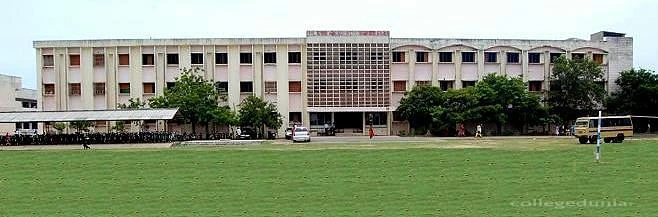
In this preview: 1 photo · 0 videos
Yes, A.D.M. College for Women (ADMC) is considered one of the best colleges for BCA in Nagapattinam. It offers an autonomous curriculum and has dedicated computer labs. It is noted that placements are typically in entry-level IT services roles.
The total tuition fee for the three-year B.Sc Computer Science program at A.D.M. College for Women is approximately INR 17,105. This program is offered under the Self-Financing stream.
Yes, A.D.M. College for Women has a safe, on-campus hostel facility that can accommodate up to 200 students.
No, there is no entrance exam for admission to A.D.M. College for Women. Admissions are conducted based on the merit marks obtained in the 12th-grade qualifying examinations.
A.D.M. College for Women is a Private Aided college. This means it receives government grants for some of its courses (Aided), while other programs, like the Self-Financing streams, are funded independently.
Share what future students should know about ADMC.
Student voices are not rewritten by colleges. We remove spam and abuse.
Wider admission question? Community PulseWhat should future students know?
Tell us which course you're considering. We'll help you work out the next step.
Get instant Partner access after mobile verification. Your public edits are reviewed before they go live.
Claim this college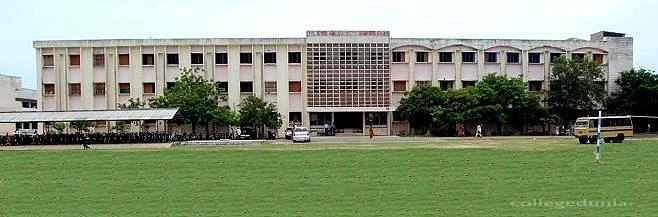
 Auditorium
 Cafeteria
 Computer Labs
 Hostel
 Medical
 Sports Complex
 Study Library