Loading Admission Guardian content
Loading Admission Guardian content
Find a program, read its fee details and explore the admission requirements.
Summary of the programs shown below. Fee periods can differ by program. Check the note beside each amount before comparing costs.
| Course | Stream | Fees |
|---|---|---|
| Bachelor of Technology [B.Tech] | Engineering | 68000 |
| Bachelor of Technology [B.Tech] {Lateral} | Engineering | 68000 |
Specializations
Eligibility: 10+2
Specializations
Eligibility: 10+3
Achariya College of Engineering Technology (ACET) in Pondicherry is a private institution that’s built a specific reputation over its 14 years. It’s not a top-tier NIRF-ranked powerhouse, but it’s carved out a niche as a disciplined, structured option for students in the region. The college leans heavily into its newer, tech-focused programs like Artificial Intelligence and Data Science, which reportedly get better resources and placement attention. But the overwhelming student sentiment paints a clear picture: this is a place of rules. Think 85% mandatory attendance, formal dress codes, and restrictions that many alumni compare to being back in school. For some, that structure is a positive. For others, it’s a deal-breaker. The placement story follows a similar pattern—official claims are optimistic, but the on-ground reality for most graduates is entry-level IT roles with modest packages. If you’re a local student looking for a safe, supervised environment to earn a degree and a foothold in the IT sector without the distractions of a big city campus, ACET might fit. If you prioritize academic freedom, a vibrant social life, or high-flying corporate recruitment, you’ll likely find it lacking.
ACET’s academic portfolio is standard for a regional engineering college, with a clear tilt towards computer-related fields. The B.Tech program is the main offering, with intakes that tell the story: Computer Science and Mechanical Engineering lead with 120 seats each, followed by AI & DS, ECE, and EEE at 60. Civil and the newer Robotics and Automation programs have smaller intakes of 30. They also run three-year Diploma programs in Mechanical and Electronics.
The curriculum follows the affiliating university’s (PTU) regulations. Where ACET tries to differentiate is through add-ons. The promise of a free laptop upon admission is a long-standing perk, though students note the configurations are basic. They also offer value-added certification courses in partnership with names like IBM and Google, focusing on AI/ML and Python—a clear attempt to stay relevant. Faculty strength is around 140, but only about 15-20% hold PhDs; the majority are M.Tech holders. Reviews consistently praise the teaching staff as supportive and approachable, which is a significant positive in an otherwise strict environment. The academic culture is described as focused and pressure-oriented, fitting the overall institutional demeanor.
This is where you need to read between the lines. The college’s official placement literature claims a 90-100% placement rate. Talking to students and scanning alumni reviews on platforms like Shiksha and CollegeDunia reveals a more tempered reality. The working figure most cite is 60-70% for on-campus offers, with many students eventually finding off-campus jobs or roles in smaller IT firms.
The packages reflect the nature of the roles. The highest package touted for 2024 was 8 LPA for AI & DS or CSE students. The average spread is between 2.75 and 4.5 LPA, with a median hovering around 3 LPA. That’s a decent starting point for the region, but it’s not transformative. About 70% of placements are in IT/ITES, with recruiters like TCS, Infosys, Wipro, Cognizant, and Accenture leading the pack. However, alumni often specify that these are often mass-recruitment drives for support or service roles. Core engineering placements for Mechanical or EEE students are less frequent, making up maybe 20% of the pie, with companies like Schneider Electric showing up. The college does start placement training early, in the second year, focusing on aptitude and soft skills.
The gap between the official claim and the alumni narrative is notable. It suggests that while the placement cell is active, the outcomes are largely in line with what you’d expect from a mid-tier private college in this part of the country—a pathway into the vast IT services sector, not a shortcut to product-based tech giants.
The cost structure at ACET has two very different tracks, depending on how you get in. For students admitted through the government CENTAC quota (primarily Puducherry residents), it’s quite affordable. Annual tuition is just ₹40,000-₹45,000. For those coming in via the Management or NRI quota, which can account for 30-50% of seats, tuition jumps to between ₹75,000 and ₹1,10,000 per year.
Then there’s the hostel, which is a major point of contention in reviews. A non-AC hostel room costs ₹1,00,000 annually, and an AC room is ₹1,25,000. Students widely consider this overpriced for the shared (2-3 per room) accommodations provided. Add in other annual fees of ₹10,000-₹15,000, and the total four-year cost balloons. A government quota day scholar might spend around ₹2.2 lakhs total. A management quota hosteller is looking at ₹7.5 to ₹8.5 lakhs.
Scholarship options exist. Puducherry residents can avail CENTAC scholarships, and SC/ST students are eligible for full tuition fee waivers through government schemes. The management also offers merit scholarships for students with over 90% in their Class 12 board exams.
Admission to ACET’s B.Tech programs is primarily driven by two channels. The main route for Puducherry residents is the CENTAC (Centralised Admission Committee) counseling, which is based on Class 12 merit scores. For students from other states, and for some management seats, scores from JEE Main are accepted.
The cutoffs aren’t fiercely competitive, which aligns with the college’s positioning. For the 2024-25 session, the closing CENTAC rank for the popular AI & Data Science branch was around 1638 for the General category. For Computer Science, it was around rank 2100. Mechanical and Civil engineering typically have even lower closing ranks. The application window usually runs from May to July. The process is straightforward: qualify through either CENTAC or JEE Main, participate in the counseling, and secure a seat based on your rank and branch availability. The management quota operates alongside this, often requiring direct application to the college.
The ACET campus in Villianur is described as pleasant and green, offering a peaceful atmosphere conducive to studying—which is good, because there aren’t many distractions. The infrastructure is adequate. Labs for CSE and the new AI department are noted as well-equipped. Labs for core branches like Mechanical and Civil are called functional but not exceptional. The library is a standalone building with access to DELNET and e-journals, open from 8:45 AM to 7:00 PM. There’s a 600-seat auditorium and smart classrooms.
Sports facilities include grounds for cricket, football, volleyball, and basketball, plus a gym and a swimming pool shared with other institutions in the Achariya group. Wi-Fi is present but gets mixed reviews—decent in labs, spotty in hostels.
Now, the hostels and the life. Hostel capacity is about 700. The quality is rated as average (3 out of 5 by most accounts). The food is reportedly hygienic but repetitive. And the rules? They are the defining feature of student life. The college enforces a strict formal dress code, mandatory ID cards, and an 85% attendance policy. There are also noted restrictions on social interaction between genders. This “strict but safe” environment is a recurring theme in every review. It creates a disciplined, study-focused bubble, but at the cost of a typical collegiate social experience. For outstation students, the hostel is an option, but many locals prefer the college bus service to avoid the high hostel fees.
Synthesizing feedback from CollegeDunia, Shiksha, Reddit, and Quora gives you a remarkably consistent picture. The median consensus is that ACET is a “strict but safe” choice.
The positives are clear: supportive and friendly faculty, a clean and green campus, and early placement training. The AI & Data Science department gets specific praise for being more modern and industry-focused. “The AI department is the only one with high-end systems,” one review notes.
But the negatives are just as prominent and repeated. The extreme strictness is the biggest gripe. “It feels like a school,” is a common refrain. The 85% attendance rule is rigidly enforced. The high cost of hostel fees relative to the facilities is another major pain point. On placements, while the college promotes high numbers, alumni caution that many jobs are in “BPOs or low-paying IT roles.” There’s also a sentiment among some that the management is overly focused on fines and fee collections.
A paraphrased Quora review sums up the trade-off well: “If you want a free life, don’t come here. If you want to study under pressure and get a basic job, it’s okay.” Another student mentioned the free laptop scheme, but added, “the configuration is basic—good for coding, not for high-end projects.”
ACET is a college with a very specific profile. It’s not trying to be an IIT or a top-tier private institute. Its value proposition is clarity and structure. For a disciplined student from Puducherry or nearby regions who secures a government quota seat, it offers an affordable, no-frills engineering degree with a reliable (if modest) track record of placing graduates into the IT services sector. The supportive faculty and focused environment are genuine pluses for those who want to keep their heads down and study.
However, the drawbacks are significant for the wrong candidate. The restrictive, school-like atmosphere will chafe anyone seeking an independent college experience. The high management quota and hostel fees are hard to justify given the average outcomes. And if you’re aiming for cutting-edge research, elite corporate placements, or a vibrant campus life, you will be disappointed.
Who is it for? Local, cost-conscious students who value discipline, are targeting stable IT jobs, and can handle a rigid rule structure. Who should look elsewhere? Students who prioritize freedom, social life, high-paying packages, or advanced research facilities. Also, anyone comparing it to the unrelated (and larger) Acharya institutes in Bangalore should know they are completely different entities.

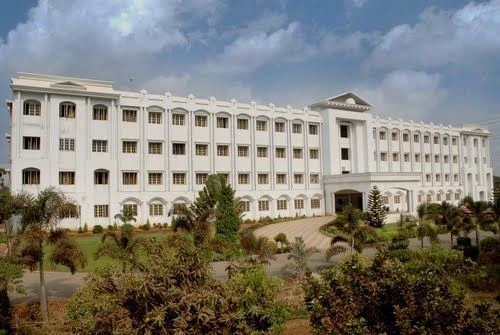
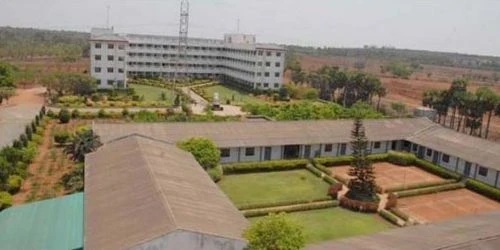
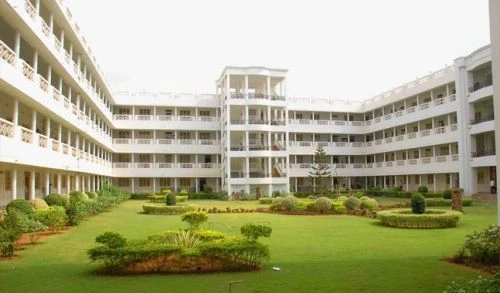
In this preview: 4 photos · 0 videos
Yes, the Computer Science Engineering (CSE) department is considered one of the strongest at ACET. It is noted for having the best placement record and excellent laboratory facilities.
They are entirely different and unrelated institutions. Achariya College of Engineering Technology (ACET) is located in Pondicherry. Acharya Institute of Technology (AIT) is a much larger, separate campus located in Bangalore.
No, hostel accommodation is not mandatory for students. Many outstation students do opt for it, while local students often prefer to use the college's bus facility.
Yes, the college has a long-standing welfare scheme where it provides free laptops to students. The specific brand and model of the laptop can vary from year to year.
The dress code at ACET is very strict. Formal wear is mandatory for students, and the college enforces strict rules regarding grooming and the carrying of ID cards.
Share what future students should know about ACET.
Student voices are not rewritten by colleges. We remove spam and abuse.
Wider admission question? Community PulseWhat should future students know?
Tell us which course you're considering. We'll help you work out the next step.
Get instant Partner access after mobile verification. Your public edits are reviewed before they go live.
Claim this college Cafeteria
 Campus Shuttle
 Campus Wi-Fi
 Computer Labs
 Gym
Gym Hostel
 Medical
 Science Labs
 Smart Classrooms
 Sports Complex
 Study Library