Loading Admission Guardian content
Loading Admission Guardian content
Selected ranking categories, with the recorded year beside each result. Open all records for the complete history.
2 published records · Lower numeric ranks are stronger
Find a program, read its fee details and explore the admission requirements.
Summary of the programs shown below. Fee periods can differ by program. Check the note beside each amount before comparing costs.
| Course | Stream | Fees |
|---|---|---|
| Bachelor of Dental Surgery [BDS] | Dental | 250000 |
| Master of Dental Surgery [MDS] | Dental | 585000 |
| Doctorate of Medicine [MD] | Medical | 1490000 |
| Master of Surgery [MS] (General Surgery) | Medical | 1490000 |
| M.B.B.S. | Medical | 1550000 |
All accepted exams
Eligibility: 10+2 with NEET
Specializations
Eligibility: B.D.S.
Specializations
All accepted exams
Eligibility: MBBS
Specializations
All accepted exams
Eligibility: MBBS
All accepted exams
Eligibility: 10+2 with 50% + NEET
1 exam with cutoff data available
Adesh Institute of Medical Sciences and Research (AIMSR) in Bathinda is a study in contrasts. On one hand, it’s a sprawling 40-acre campus anchored by a massive 750-bed hospital that delivers the kind of high-volume clinical exposure medical students crave. On the other, it’s a private institution where the total cost of an MBBS degree can creep toward a crore of rupees, all while students chafe under a famously strict disciplinary regime. If you’re looking at private medical colleges in Punjab, AIMSR is a name that consistently comes up—not just for its academics, but for the very specific, regimented environment it offers.
The academic offering here is straightforward and focused on medicine. The MBBS program, with an annual intake of 150 students, is the main draw. It follows the NMC-mandated Competency-Based Medical Education (CBME) curriculum over 4.5 years of study plus a one-year compulsory rotatory internship. For postgraduates, AIMSR offers MD/MS degrees in about 21 specializations, with a total intake of roughly 55-64 seats. The split between clinical branches (like General Medicine, Surgery, Orthopaedics) and para-clinical/basic sciences (like Anatomy, Pharmacology) is standard.
Faculty quality gets mixed but generally positive remarks in student reviews. You’ll find a mix of seasoned senior professors, like those noted in the brief, and younger tutors. The student-to-faculty ratio is reported to meet NMC norms, which is a basic expectation. Academically, the teaching is described as traditional and disciplined—effective for clearing university exams, but perhaps not the most innovative. The college has some industry MoUs, like one with MRSPTU for research and another with Arvind Remedies, but for an MBBS student, the primary academic asset is undeniably the attached hospital.
Let’s be clear: medical colleges don’t have "placements" like engineering schools. Success is measured differently—by internship quality, junior residency (JRship) opportunities, and performance in PG entrance exams.
The official data from the NIRF 2024 report puts the median salary for MBBS graduates at 6.0 LPA. For MD/MS graduates, that median jumps to between 13.0 and 15.0 LPA, depending on the specialization. That’s a decent outcome, broadly in line with many private medical colleges. Many graduates are absorbed into the Adesh Hospital system itself or find roles in other private hospital chains like Fortis or Max, or as Medical Officers in government services.
The real point of discussion—and student grievance—is the internship stipend. For the 2024-25 academic year, AIMSR pays its MBBS interns Rs. 8,000 per month. That’s notably lower than the Punjab government stipend (around Rs. 15,000) and less than a third of what interns at the nearby AIIMS Bathinda receive (Rs. 30,070). For PG residents, the stipend starts at Rs. 25,000/month in the first year, scaling up to Rs. 29,000 by the third year. The clinical exposure is the trade-off for that lower pay during training.
This is where the rubber meets the road, and prospective students need to pay very close attention. AIMSR is a high-fee private institution, and costs are subject to annual increments.
For the 2024-25 session, the first-year MBBS fee for the Management Quota (which covers 85% of seats) is approximately Rs. 15.50 Lakhs. There is a Government Quota for Punjab domicile students, but Adesh has often charged a unified private fee; checking the latest Baba Farid University of Health Sciences (BFUHS) notification is essential. The NRI Quota fee is set at $1,25,000 for the entire course.
And that’s just year one. A standard 10% annual increment on tuition is baked into the prospectus. Add in hostel fees (Rs. 84,000 to a whopping Rs. 2.08 Lakhs for AC rooms), a one-time refundable security deposit of Rs. 1,15,000, and other annual charges like development fees, and the total estimated cost for the 5.5-year MBBS program balloons to Rs. 80 to 95 Lakhs. Student reviews frequently mention "hidden costs" and "random fees," so budgeting for surprises is wise. Specific information on substantial scholarships or financial aid is not prominently detailed in available sources.
Admission is strictly through the national entrance exams. For MBBS, you need a valid NEET UG score. For MD/MS, it’s NEET PG.
The counseling for Punjab state quota seats is conducted by Baba Farid University of Health Sciences (BFUHS). Adesh University also conducts its own registration process for the 15% All India/Management seats. The application window typically opens after the NEET results are declared, around June or July.
Cutoffs fluctuate yearly. For the 2024 admission cycle, the closing rank for the General Category under the Management Quota was around 471-474 NEET marks. For the SC Category, it was significantly lower, in the range of 262-323 marks. These numbers give you a ballpark, but always refer to the official counseling authority for the most current data.
The campus is self-contained and spread over 40 acres, with the total university area being 100 acres. The infrastructure is a strong point. The 750-bed Adesh Hospital is the heart of it all, providing immense clinical material. The library is sizable, with over 13,500 books and journal access. There are standard sports facilities—a cricket ground, football field, basketball court, and gym.
Hostel capacity is large (1,702 for girls, 576 for boys), but quality and rules are the major sticking points. Rooms are typically double-sharing. The food in the mess is consistently rated as average (around 2.5/5). Wi-Fi is available in the library and some hostel areas, but students report inconsistent speeds.
Now, the student life part. It’s famously restrictive. Hostel curfews are strict, especially for girls, with mentions of a 7:00 PM deadline. The overarching sentiment from reviews is that the atmosphere is more like a disciplined school than a college campus. Fests are rare, and the social scene is limited. If you’re looking for a vibrant, autonomous campus life, this isn’t it.
Synthesizing the consensus from platforms like Quora, Reddit, and Shiksha paints a very clear picture.
The positives are substantial but specific. The clinical exposure is excellent. The high patient load from the rural Malwa region means students see a wide variety of cases. Academically, faculty are generally found to be helpful and competent. The infrastructure provides all basic amenities in one place.
But the negatives are equally loud and consistent. The "fine" culture is a massive grievance. Students report penalties for minor infractions: not wearing the specified black shoes, low attendance, or even being in an unauthorized area. The administration is often described as unresponsive. The strictness extends to social life, with the early curfews frequently cited. And, as covered, the financial surprises and lower internship stipend are persistent themes.
One paraphrased Quora review sums it up: "If you want to study and don't mind being treated like a school kid, come here. But be ready to pay a fine for everything, even your shoe color." Another, from Reddit, highlights the trade-off: "Patient load is the only saving grace. You will see cases here that you won't see in city private hospitals."
AIMSR presents a very clear value proposition, but it’s not for everyone. It’s worth serious consideration if your primary, non-negotiable goal is robust clinical hands-on experience from day one, and you have the financial means to afford a private medical education costing up to a crore. The hospital is its greatest asset. It’s also a viable option if your NEET score lands you in that 470s range for private colleges in North India and you prioritize academics and training over campus freedom.
You should probably look elsewhere if you chafe under strict, school-like discipline, value a vibrant social and extracurricular life, or are seeking a lower-cost education. The gap between its internship stipend and that of government colleges is stark. Also, if you have options at a government medical college (even a lesser-known one) or a central institute like AIIMS Bathinda, the fee and prestige difference makes those objectively better choices. AIMSR is a functional, clinically strong private medical college with a reputation for rigidity—choose it with your eyes wide open to that reality.
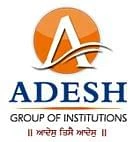
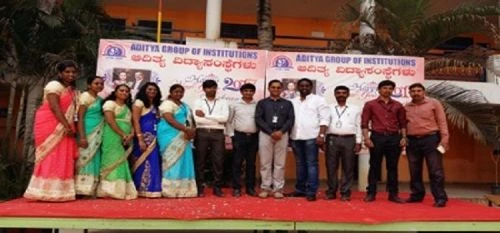
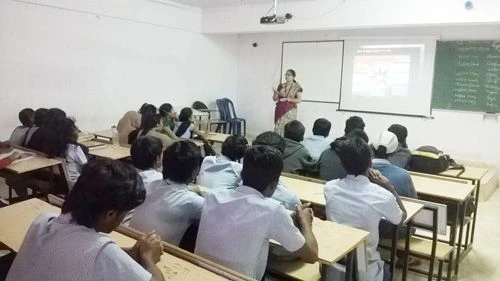
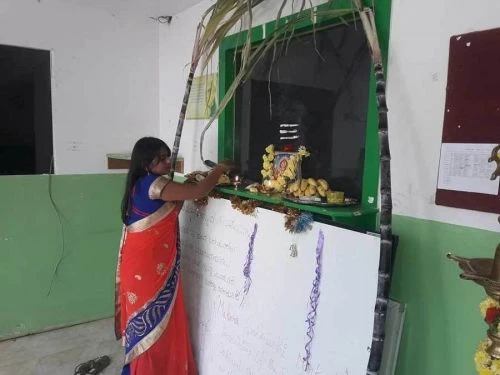
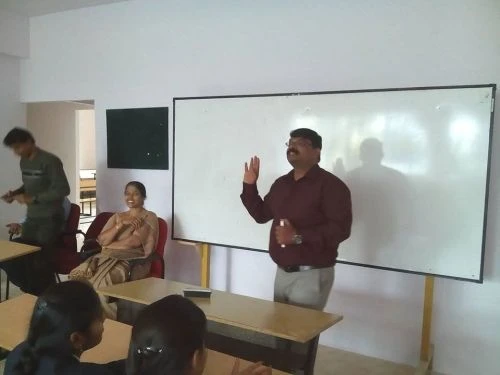
In this preview: 5 photos · 0 videos
Including tuition, hostel fees, and annual increments, the total estimated cost to complete the MBBS program at Adesh University ranges between ₹85 lakhs to ₹95 lakhs. Prospective students should note that fee structures are subject to change based on university policy and interim court orders.
For students admitted under private management quota seats, there is generally no compulsory service bond. However, students admitted under the state quota must consult the latest official prospectus from Baba Farid University of Health Sciences (BFUHS) for the most current and binding bond conditions, as these are subject to change.
The clinical exposure is considered excellent. Adesh Hospital serves as a major tertiary care center for the Malwa region of Punjab, which ensures a high patient load and provides medical students with substantial hands-on clinical experience.
Yes. In recent years, the institute's Managing Director and Principal were involved in a legal investigation concerning a D-Pharmacy degree scam, as verified by news reports and public records.
No, AIIMS Bathinda is considered superior. It is a premier central government institute with significantly lower fees and carries higher national prestige. AIMSR Bathinda is a private college with comparatively high tuition fees.
Share what future students should know about AIMSR.
Student voices are not rewritten by colleges. We remove spam and abuse.
Wider admission question? Community PulseWhat should future students know?
Tell us which course you're considering. We'll help you work out the next step.
Get instant Partner access after mobile verification. Your public edits are reviewed before they go live.
Claim this college
 Auditorium
 Cafeteria
 Computer Labs
 Hostel
 Medical
 Science Labs
 Sports Complex
 Study Library