Loading Admission Guardian content
Loading Admission Guardian content
Provisional score based on available data. It may change as more information is verified.
Find a program, read its fee details and explore the admission requirements.
Summary of the programs shown below. Total course fee. Check the note beside each amount for inclusions and exclusions.
| Course | Stream | Fees |
|---|---|---|
| Bachelor of Business Administration [BBA] | Management | 6500 |
| Master of Computer Applications [M.C.A] | Computer Applications | 90000 |
| Bachelor of Computer Applications [BCA] | Computer Applications | |
| Bachelor of Science [B.Sc] | Science | |
| Master of Science [M.Sc] | Science |
Specializations
Eligibility: 10+2
All accepted exams
Eligibility: Graduation
Specializations
Eligibility: 10+2
Specializations
Eligibility: 10+2
Specializations
Eligibility: Graduation
1 exam with cutoff data available
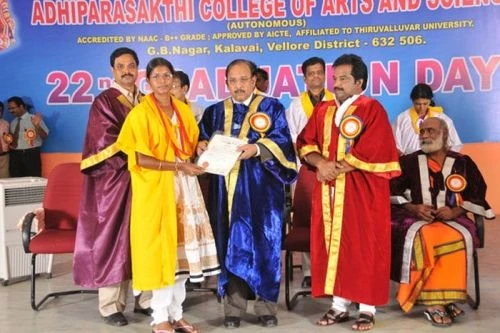
Adhiparasakthi College of Arts and Sciences sits in a quiet corner of G.B. Nagar, Kalavai, about 40 kilometers from Vellore. It's a place that feels removed from the chaos of city campuses. Established back in 1988, it was the first self-financing college in the area and has since carved out a reputation for disciplined, fundamentals-focused education. With autonomy since 2011 and a B++ NAAC grade valid until 2027, it offers a specific kind of experience. That experience is defined by a serene, green campus, strict rules—including a notorious mobile phone ban—and academic programs that lean heavily into the sciences and commerce. If you're looking for a raucous, tech-saturated college life with guaranteed high-flying placements, this isn't it. But for students seeking a structured, affordable environment to build a solid academic foundation, APCAS presents a clear, if traditional, option.
The academic portfolio here is straightforward and science-heavy. At the undergraduate level, the B.Sc. programs are the main draw, with Computer Science, Microbiology, and Biochemistry each having an intake of around 50 students. BCA is another popular choice. They've recently added a B.Sc. in Artificial Intelligence, which is a nod to market trends. For commerce and management students, B.Com and BBA are available, but they aren't the college's historic strength.
Postgraduate offerings include MCA (which requires a TANCET score), M.Sc. programs in Applied Microbiology and Biochemistry, and M.Com. The college also runs Ph.D. and M.Phil. programs in core departments like Microbiology and Computer Science, which is a positive signal for research activity.
Academically, the culture is described as traditional. The faculty—49 strong, with a good number holding PhDs—gets consistently high marks from students for being supportive and knowledgeable. The teaching focuses on building strong fundamentals rather than chasing the latest industry frameworks. They use the Choice Based Credit System (CBCS) and have some industry links, like an MoU with Microlabs Ltd., for practical exposure. It's a no-frills, classroom-and-lab kind of education.
This is where you need to temper expectations with data. The official NIRF 2025 report provides a sobering baseline: a median package of ₹1.97 Lakhs Per Annum (LPA) for undergraduates and 42% of them getting placed. For postgraduates, it's ₹2.11 LPA with a 59% placement rate. The highest package touted in student reviews is around ₹3.6 LPA, though you'll see unverified claims of higher numbers.
The gap between the official statistic and student sentiment is notable. On review platforms, the consensus is that only 20-30% of a batch lands what they'd call a "quality" role. A lot of the placement activity is in the BPO, insurance, and local manufacturing sectors. Recruiters like TCS, Eureka Forbes, Salcomp, and Shriram Life Insurance visit. Some students mention Google appearing in pooled drives, but those are highly competitive and not exclusive to APCAS.
For core science students—Microbiology or Biochemistry grads—placements often mean roles in healthcare BPOs or quality control in local labs. The college provides basic placement support, but it doesn't have a deep bench of high-tier MNC relationships. You'll need to be proactive. The takeaway? It's a decent launchpad for a first job, especially given the low fee structure, but don't expect a parade of tech giants offering premium salaries.
Affordability is a key advantage here. For the 2025-26 academic year, undergraduate tuition fees range from ₹18,000 for B.Sc. Mathematics to ₹35,000 for B.Sc. Computer Science and BCA. Postgraduate fees are similar, with MCA at ₹30,000 and M.Com at just ₹15,000. Over three years, a UG degree might cost between ₹1.2 to ₹1.8 lakhs in tuition and exam fees.
Hostel and mess fees are extra, estimated at ₹45,000 to ₹55,000 per year. The mess is strictly vegetarian, which is a deal-breaker for some. Financial aid comes primarily through government schemes: Tamil Nadu's SC/ST scholarships, the Farmer’s Scholarship, and some merit-based concessions from the college's managing trust, the Adhiparasakthi Charitable, Medical, Educational and Cultural Trust. You won't find hefty corporate-sponsored scholarships, but the existing schemes do help eligible students significantly reduce the cost.
The process is merit-based and follows the state's reservation policy. For almost all undergraduate programs, there's no entrance exam. Admission is strictly based on your Class 12 marks. The college follows the Tamil Nadu government's communal reservation (BC, MBC, SC/ST), so cutoffs vary by category. Generally, for sought-after programs like B.Sc. Computer Science, you'd need a percentage in the high 70s or 80s, depending on the year and quota.
The one exception is for the MCA program, which requires a valid TANCET (Tamil Nadu Common Entrance Test) score. The application window typically opens in May. It's a straightforward process: submit your marks, wait for the merit list, and then complete document verification. There's no complex interview or group discussion for most courses.
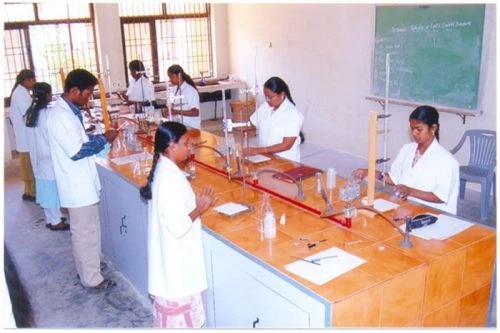
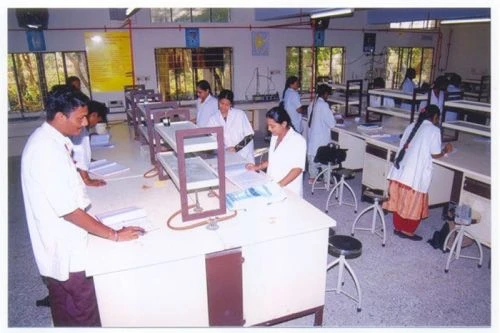
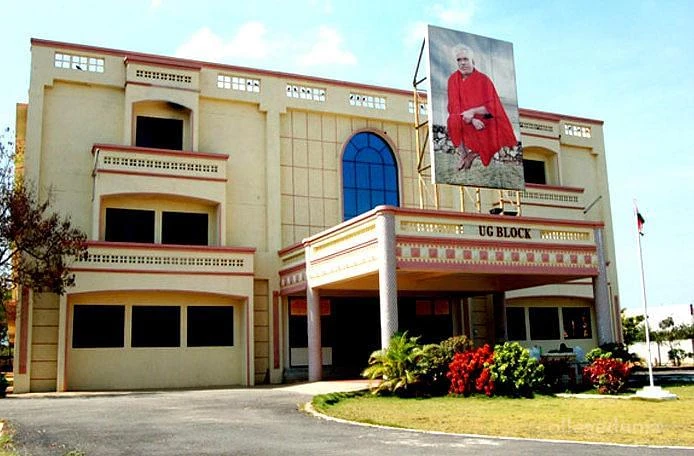
The campus is often described as peaceful, green, and away from urban pollution. Infrastructure is functional. There are separate hostels for boys and girls—they're secure and disciplined, but the rules are strict. The vegetarian-only mess is a constant point of discussion in reviews. You get AC labs for Computer Science and decent research halls for the life sciences departments. The library, with around 10,000 books and a digital section, is a highlight and a popular study spot.
Now, for the big caveats that define daily life. Wi-Fi is available in specific zones like labs and the library, but students consistently report it's not available in classrooms. And then there's the mobile phone policy. The college officially prohibits students from using mobile phones on campus. This is a major point of contention and feels outdated to many. Attendance is strictly enforced, with the usual 75% minimum required to sit for exams. Social life is quiet; this isn't a campus known for festivals or a bustling nightlife. It's for studying.
Sifting through student feedback online gives you a clear, consistent picture. The positives are strong but specific. Students love the "serene and green" environment, the "excellent library," and the "supportive, friendly faculty." They appreciate the emphasis on discipline and traditional culture. The teaching quality, especially for building core subject knowledge, gets high praise.
The negatives are just as consistent and revolve around connectivity and opportunity. The lack of classroom Wi-Fi and the blanket ban on mobile phones are the top complaints, seen as hindrances to modern learning. Placement support is viewed as basic, with limited opportunities for non-IT branches. The strictness of the hostel rules and the vegetarian mess aren't for everyone. The location, while peaceful, is remote, making internships or part-time jobs in the city a commute.
APCAS is a college with a clear identity. It's worth serious consideration if you're a student who thrives in a structured, disciplined, and distraction-free environment and your priority is getting a solid, affordable undergraduate education in the sciences or commerce. The low fees, decent faculty, and autonomous status that allows for a tailored curriculum are genuine strengths. It's a good fit for students from nearby towns who value a campus atmosphere over city life.
But you should probably look elsewhere if you're seeking a vibrant, connected campus life with cutting-edge tech infrastructure and a strong pipeline to top-tier companies. The placement record is modest, the rules are strict, and the location is isolated. Your success here will depend heavily on your own drive to supplement classroom learning with online courses and to aggressively hunt for off-campus opportunities. Think of it as a economical platform for building academic credentials, not a turnkey solution for a corporate career.
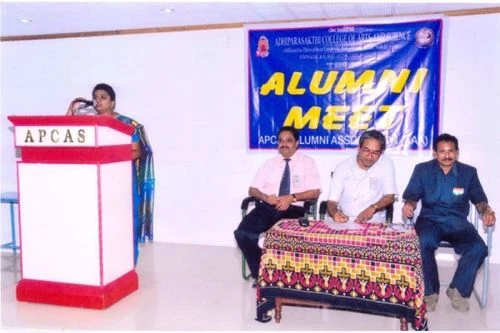
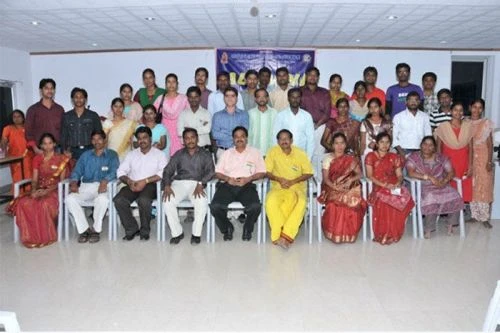
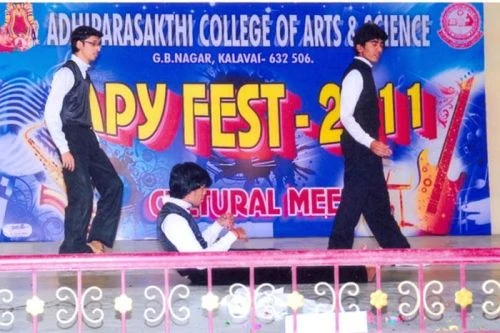
In this preview: 5 photos · 0 videos
No, Adhiparasakthi College of Arts and Sciences is a private, self-financing autonomous college.
The annual tuition fee for the BCA program at Adhiparasakthi College of Arts and Sciences for the 2025-26 academic year is ₹35,000.
Yes, the college provides separate and secure hostel facilities for both boys and girls. The hostels include vegetarian mess facilities.
Placements for B.Sc. Microbiology are moderate. Graduates are typically placed in healthcare BPOs or quality control roles in local laboratories, with a median salary of approximately ₹1.9 Lakhs Per Annum (LPA).
No, student reviews consistently report that mobile phones are banned within the college campus.
Share what future students should know about APCASGBN.
Student voices are not rewritten by colleges. We remove spam and abuse.
Wider admission question? Community PulseWhat should future students know?
Tell us which course you're considering. We'll help you work out the next step.
Get instant Partner access after mobile verification. Your public edits are reviewed before they go live.
Claim this college
 Cafeteria
 Campus Shuttle
 Sports Complex
 Study Library