Loading Admission Guardian content
Loading Admission Guardian content

Provisional score based on available data. It may change as more information is verified.
Selected ranking categories, with the recorded year beside each result. Open all records for the complete history.
1 published record · Lower numeric ranks are stronger
Find a program, read its fee details and explore the admission requirements.
Summary of the programs shown below. Total course fee. Check the note beside each amount for inclusions and exclusions.
| Course | Stream | Fees |
|---|---|---|
| Master of Computer Applications [M.C.A] | Computer Applications | 41000 |
| Master of Business Administration [MBA] | Management | 41000 |
| Master of Engineering [ME] | Engineering | 60000 |
| Bachelor of Engineering [BE] | Engineering | 220000 |
| Bachelor of Technology [B.Tech] | Engineering | 220000 |
Eligibility: Graduation
Specializations
All accepted exams
Eligibility: Graduation with 50% + TANCET
Specializations
Eligibility: Graduation with 50% + TANCET
Specializations
All accepted exams
Eligibility: 10+2 with 50% + TNEA
Specializations
All accepted exams
Eligibility: 10+2 with 50% + TNEA
2 exams with cutoff data available - showing recent entries
 Bonfiglioli Transmission Pvt Ltd
 Dalmia Construction
 Polaris Software
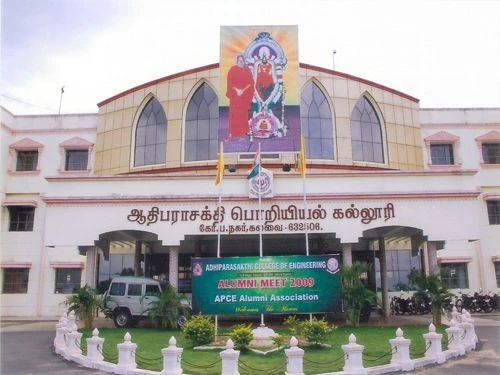
If you're looking at engineering colleges in Tamil Nadu and your priorities are discipline, safety, and a campus that feels far removed from big-city distractions, Adhiparasakthi Engineering College (APEC) in Melmaruvathur will come up. Established in 1984 and affiliated with Anna University, it's a private institution that has built a reputation for academic rigor within a highly structured, almost monastic environment. The 52-acre campus, located right on the Chennai-Trichy highway and a stone's throw from the railway station, offers undeniable connectivity. But the real story of APEC isn't just in its NAAC 'A' grade or its decent Anna University rank; it's in the trade-off. You get a peaceful, green campus with approachable faculty focused on helping you clear university exams, but you also sign up for rules that many students describe as reminiscent of high school. The placement numbers tell a similar story of moderation—steady, mass-recruiter driven jobs with packages that are more about securing a start than a dream salary.
APEC runs a standard set of programs under the Anna University umbrella, with intakes reflecting market demand. The Computer Science and Engineering department is the largest, taking in about 120 students annually, followed by ECE at 90. Newer specializations like CSE in Artificial Intelligence and Machine Learning (60 seats) and Computer Science and Design (30 seats) show an attempt to keep pace with trends. Core branches like Mechanical, Civil, and Chemical Engineering have smaller, more traditional intakes of 30-60 students.
The academic rhythm is dictated entirely by Anna University's calendar and syllabus. That means a lecture-heavy teaching style, where the primary goal for both students and the roughly 143 faculty members is to comprehensively cover the prescribed material for the semester-end exams. About 35-40% of the faculty hold PhDs, which is a decent proportion for an affiliated college. Reviews consistently note that professors are accessible and particularly focused on guiding students through the challenging university exam patterns. The 75% minimum attendance rule is strictly enforced. It's a system built for predictability and exam clearance, not necessarily for groundbreaking pedagogical innovation.
For postgraduates, the college offers M.E. programs in high-demand areas like CSE, VLSI Design, and Power Electronics, each with 18 seats, alongside MBA and MCA programs. They also have recognized research centers for Ph.D. candidates across several engineering and science disciplines.
This is where you need to read between the lines of the official brochure. The college reports a placement percentage of over 90%, but student sentiment across forums suggests a more nuanced picture. The consensus is that while a high number of students do receive some form of job offer, the quality and pay scale vary widely.
The NIRF 2024 report provides a sobering, likely more accurate, median figure: ₹2.40 LPA for both undergraduate and postgraduate programs. That's the statistical middle point. The average package is typically cited between ₹3.2 to ₹4.0 LPA. You'll hear about a highest package of ₹12.7 LPA, but that's widely considered an unverified outlier; a more realistic top tier for the best-placed students in CSE or IT is ₹5.0 to ₹6.0 LPA.
Recruiters are a mix of familiar names. The IT/Software cohort is dominated by mass recruiters like TCS, Wipro, Infosys, Cognizant, and HCL. For core engineering roles, companies like Renault Nissan, Hyundai, L&T, and TVS visit. A significant number of offers also come from BPOs and small-scale financial or logistics firms.
So, what's the reality check? If you're in CSE or IT, you have a very good chance of landing a job, but it will most likely be a standard offer from a service-based company in the 3-4 LPA range. For core branches, opportunities are thinner and often require more proactive effort. The gap between the official "90%+ placed" claim and the alumni-reported experience of 70-75% landing core/IT roles, with others in support functions, is notable. Internships, while mandatory, are often left for students to source themselves.
The cost structure is straightforward and relatively affordable compared to many private engineering institutions, especially if you secure a government quota seat. For the 2024-25 academic year, tuition under the government quota (via TNEA counseling) is approximately ₹50,000 to ₹65,000 per annum. Management quota seats range from ₹85,000 to ₹1,25,000 per annum.
Hostel and mess fees are a significant add-on, costing between ₹63,600 to ₹85,000 per year depending on whether you opt for a dormitory, non-AC, or AC room. The mess is strictly vegetarian. Add in semester exam fees (around ₹2,500) and potential one-time charges for placement training, and the total four-year cost paints two pictures: a day scholar on government quota might spend ₹2.5 to ₹3.0 lakhs, while a hosteller on management quota could see a total cost of ₹6.5 to ₹7.5 lakhs. There's no widely advertised major scholarship program from the college itself, but students can avail of state and central government schemes.
For almost all undergraduate B.E./B.Tech programs, the gateway is the TNEA (Tamil Nadu Engineering Admissions) counseling conducted by Anna University. Admission is purely merit-based, using your normalized 12th-standard marks (Physics, Chemistry, Mathematics) to generate a cutoff score.
The 2024-25 cutoff trends give a clear idea of competitiveness. For the sought-after CSE program, the cutoff hovered between 140 to 155 marks (which roughly translates to a rank between 40,000 and 70,000 in the state). ECE was slightly lower, in the 130 to 145 range. Branches like Mechanical and Civil Engineering often see seats available in later counseling rounds with cutoffs dipping to around 100-120 marks. The college's TNEA counseling code is 1401.
If you miss the cutoff, the management quota is an option for direct admission based on your 12th-grade aggregate. For postgraduate M.E. programs, you need a valid TANCET or GATE score. The MBA and MCA programs also primarily use TANCET scores for admission.
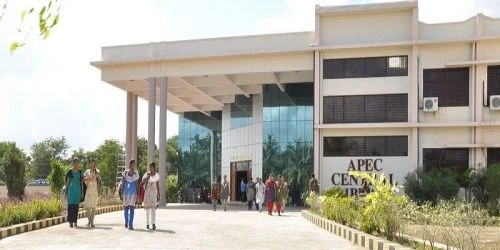
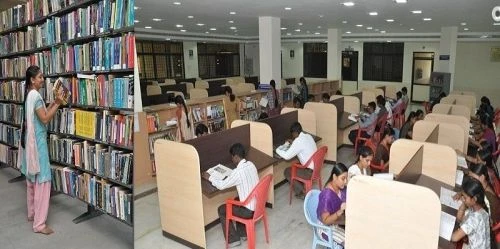
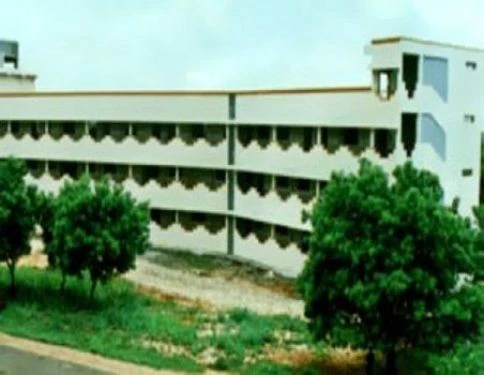
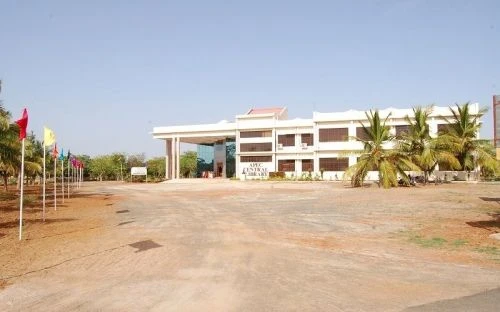
The infrastructure is functional and serves its purpose. Labs for key departments like CSE and Mechanical are well-maintained with equipment that meets Anna University's curriculum requirements. The central library has a solid collection of over 50,000 volumes and digital journal access. Wi-Fi is available but reported to be average and limited to specific zones like the library and labs.
The hostels are separate for boys and girls, are generally rated as clean and basic (around a 3.5/5 for quality), but don't expect luxury. The vegetarian mess food is considered hygienic but gets monotonous over time—a common grievance in most college hostels. A major plus is the on-campus 24/7 medical facility and the proximity to the full-fledged Adhiparasakthi Multi-Speciality Hospital. The college also runs a large fleet of buses for student transport.
Now, the defining aspect of student life: the rules. APEC is known for its strict, disciplined environment. Mobile phones are officially banned during academic hours and can be confiscated. There is a strict dress code, often involving uniforms on specific days and formal attire on others. Numerous student reviews mention an atmosphere of gender segregation and constant monitoring of behavior, leading many to call it a "school-like" environment. Large-scale cultural fests or a vibrant social scene are not the college's strengths. The atmosphere is heavily influenced by its founding body, the Adhiparasakthi Trust, which lends a spiritual and quiet tone to the campus.
Synthesizing feedback from years of reviews on platforms like CollegeDunia, Shiksha, and Quora reveals a clear, polarized consensus.
The positives are always the same: parents and students who value safety and a distraction-free environment love APEC. The discipline, the peaceful green campus, the excellent transport links (being right next to the railway station and highway), and the supportive, approachable faculty are consistently praised. One recurring sentiment is: "If you want a peaceful place to study and don't care about a 'happening' college life, this is for you."
The negatives are equally consistent. The strictness is the biggest pain point. Students feel infantilized by rules like gender segregation, mobile phone bans, and constant surveillance. Comments like "The management treats us like school kids. You can't even talk to the opposite gender without being questioned" are common. Academically, the focus is criticized as being purely on rote learning to pass university exams. On placements, while the college claims high percentages, alumni are cynical, with one paraphrased review stating, "Placements are 100% only on paper. Most companies are BPOs or small startups."
APEC is a college of clear trade-offs, and your decision hinges entirely on what you prioritize. It's not a fit for everyone.
Consider APEC if: You are a student (or your parents are) seeking a highly disciplined, safe, and academically focused environment away from the potential distractions of a metropolitan campus. You're comfortable with strict rules and a quiet social life. You're aiming for a cost-effective engineering degree from an Anna University-affiliated college with a decent NAAC 'A' grade, and your primary career goal is to secure a stable entry-level job with a major IT service provider or a core sector firm. The excellent connectivity is a major practical bonus.
Look elsewhere if: You value campus freedom, a vibrant student community with active clubs and large fests, or a pedagogical style that encourages innovation beyond the syllabus. If you have your sights set on high-paying product-based tech roles or ambitious research, the placement record and academic model here might feel limiting. The strict, regimented lifestyle is a deal-breaker for many students seeking a traditional "college experience."
In short, APEC delivers reliably on its core promise: a disciplined pathway to an Anna University degree and a modest job. Just know exactly what you're signing up for.
In this preview: 5 photos · 0 videos
Yes, the Computer Science and Engineering department is considered one of the better departments at APEC. It has the highest placement rate, which is approximately 90%, though the offered salary packages are mostly in the 3-4 LPA range.
The TNEA counseling code for Adhiparasakthi Engineering College (APEC) is 1401. This code is used during the Tamil Nadu Engineering Admissions (TNEA) single window counseling process.
Yes, Adhiparasakthi Engineering College has a dress code. Students are required to wear a prescribed uniform on specific days and formal attire on other designated days.
No, mobile phones are not allowed during academic hours at APEC. The college enforces a strict policy against their use, and phones are often confiscated if seen on campus during class time.
The food served at the APEC hostel is strictly vegetarian and maintained to be hygienic. However, students often report that the menu becomes repetitive and boring over time.
Share what future students should know about APEC.
Student voices are not rewritten by colleges. We remove spam and abuse.
Wider admission question? Community PulseWhat should future students know?
Tell us which course you're considering. We'll help you work out the next step.
Get instant Partner access after mobile verification. Your public edits are reviewed before they go live.
Claim this college
 Auditorium
 Cafeteria
 Campus Shuttle
 Computer Labs
 Gym
Gym Hostel
 Medical
 Science Labs
 Sports Complex
 Study Library