Loading Admission Guardian content
Loading Admission Guardian content

Provisional score based on available data. It may change as more information is verified.
Find a program, read its fee details and explore the admission requirements.
Summary of the programs shown below. First-year fee. Check the note beside each amount for inclusions and exclusions.
| Course | Stream | Fees |
|---|---|---|
| Bachelor of Law [L.L.B] | Law | 3307 |
| Bachelor of Arts [BA] | Arts | 3557 |
| Bachelor of Science [B.Sc] | Science | 4512 |
| Bachelor of Arts + Bachelor of Laws [B.A.L.L.B.] | Law | 14100 |
| Bachelor of Technology [B.Tech] | Engineering |
Eligibility: Graduation
Specializations
Eligibility: 10+2
Specializations
Eligibility: 10+2
Eligibility: 10+2
Specializations
Eligibility: 10+2 with 45% + UPSEE
1 exam with cutoff data available
 HCL Technologies
 IBM
IBM ICICI Bank
 ITC
ITC Kotak Mahindra Bank
 Larsen & Toubro Limited
 TCS
TCS Teleperformance
Founded in 1823, Agra College isn't just an educational institution; it's a piece of North Indian history operating on a sprawling 66-acre campus in the heart of the city. With alumni like a former Prime Minister and a fee structure that can dip below five thousand rupees a year for aided courses, it represents one of the most accessible gateways to a degree in Uttar Pradesh. But that historic legacy and affordability come with a very specific reality—a place where highly qualified professors teach in sometimes crumbling buildings, and where the definition of success is more likely to be a government exam rank than a corporate offer letter. This is a college of stark contrasts, and understanding them is key.
Agra College operates like a mini-university, with distinct faculties for Law, Engineering, and the traditional Arts and Sciences. The academic experience varies wildly between them. The Faculty of Engineering & Technology (FET) runs B.Tech programs in CSE, ME, CE, EE, and ECE with an intake of about 60 per branch. Over in the Faculty of Law, you'll find both the 3-year LL.B. and the 5-year B.A. LL.B., which are considered among the college's stronger offerings.
But the heart of the institution, by sheer volume, is its traditional curriculum. The B.Sc. programs in Biology and Maths see intakes over 1,700, while B.A. and B.Com each enroll more than a thousand students annually. The faculty here is notably qualified—over 70% of permanent staff hold PhDs—and they operate in an old-school lecture format. The grading follows the DBRAU 10-point CGPA system. The catch? Student reviews consistently note that lecture regularity and administrative support can be inconsistent in these non-professional courses. You get what you put in, and then some.
This is where the split personality of Agra College is most apparent. The official placement cell will quote a highest package of 14.5 LPA for 2024. That's a real number, but it's a rare outlier, typically for a top B.Tech graduate. The working average for professional courses like B.Tech and BCA is closer to 3-3.5 LPA, with a placement rate around 60-70%. Recruiters like Wipro, TCS, Tech Mahindra, and Godrej do visit the FET campus.
For the vast majority of students in B.A., B.Sc., or B.Com, the concept of on-campus placement barely exists. The placement percentage for these streams is under 20%. The career path here is almost pre-defined: higher studies (M.A., M.Sc.) or intensive preparation for government service exams like UPSC, SSC, and state-level PSCs. The college library becomes a strategic asset for these students. Internships are also limited, with about 22% of students securing formal ones, often in Agra's local footwear or tourism industries.
The affordability is Agra College's undisputed superpower, but you have to understand the model. It's a government-aided institution, so fees for "aided" seats in traditional courses are astonishingly low. A year in B.A. or B.Sc. can cost between INR 4,500 and 6,000. Self-financed courses, like the B.Com stream or BBA/BCA, are higher, in the INR 13,500-18,000 range. The B.Tech program is the most expensive, with annual tuition between INR 55,000 and 75,000.
Add in hostel fees (INR 15,000-22,000/year) and mess charges (INR 2,500-3,500/month), and the total cost for a 4-year B.Tech can still be a reasonable INR 3.5-4 lakhs. Financial aid primarily comes through the UP State Post-Matric Scholarship, heavily utilized by SC, ST, OBC, and EWS students. The value-for-money equation, especially for aided courses, is extremely hard to beat.
Admission routes are clearly divided by program. For B.Tech, it's strictly through JEE Main scores followed by the state's UPTAC counseling process. For B.Ed., you need to clear the UP B.Ed JEE. Law admissions (LL.B. and B.A. LL.B.) are primarily merit-based on your previous qualifying exam marks, though DBRAU may conduct its own entrance test.
For the flagship traditional UG programs—B.A., B.Sc., B.Com—admission is purely merit-based on your Class 12 marks. The cutoffs give you a sense of the demand: for the 2024-25 session, B.Com closed around 81.6% for General category students, BBA at 85.6%, and B.Sc. (Maths) at 68.4%. The application window is typically open from May to July, with a nominal fee of INR 250-500. You can find the official forms and updates on the Agra College website.
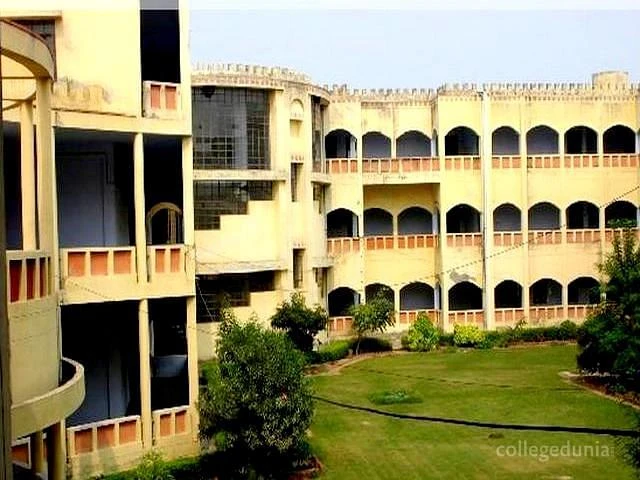
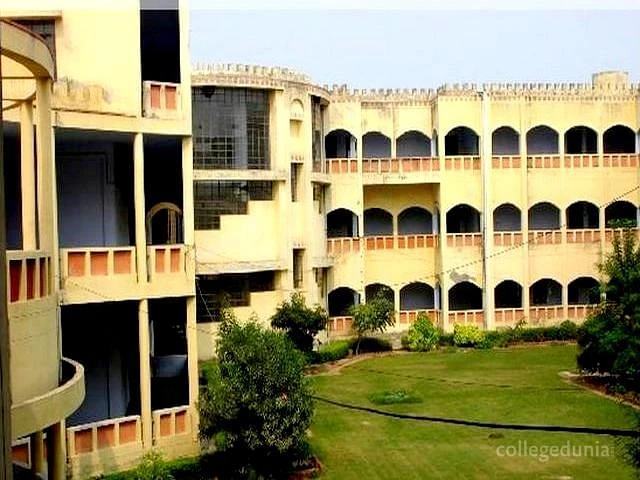
The campus is historic, massive, and a bit worn at the edges. Students love the heritage aesthetic—the old buildings have stories to tell—but reviews are frank about broken furniture, aging fans, and outdated washrooms in some wings. There are 5-6 hostel blocks (like Thomson Hostel and Bhagat Singh Hostel) with separate, secure facilities for women. They're large and affordable, but maintenance is a common complaint.
Infrastructure highlights include a central library with over 150,000 books and digital access via INFLIBNET, a major draw for serious students. The FET has upgraded computer labs, and there's a central instrumentation lab for research. Sports facilities are actually quite good, with large playgrounds, a hockey ground, and indoor courts. Wi-Fi is available but patchy, limited to zones like the library and FET. The social atmosphere is known to be politically active and can feel intense; some students mention a "rough crowd," while others thrive in the vibrant NCC and NSS cultures. It's not a sheltered campus.
Sifting through student feedback on platforms like CollegeDunia and Shiksha reveals a clear, nuanced consensus. The positives are powerful: "Extremely affordable fees for a high-repute degree" is the universal refrain. The central library is consistently praised as a "goldmine." Many appreciate the location on M.G. Road, with the Agra Metro station nearby, making commuting simple.
But the negatives are just as consistent. Administrative delays and bureaucratic office staff are a frequent headache. The lack of campus placements for Arts and Science students is a stated fact of life, not a surprise. And the element of campus politics is mentioned enough that prospective students should be aware of it. The teaching quality gets respect for faculty qualifications, but the onus is on the student to be proactive. As one review summed it up, the infrastructure is a "mixed bag"—full of character, but often lacking in comfort.
Agra College is a very specific bargain. It's an outstanding choice for a specific type of student: one seeking a recognized, affordable degree from a historic institution, who is self-motivated and whose career plan is either government service or further postgraduate studies. If you're in a B.A. program and your goal is the UPSC, the low fees and vast library are perfect. For B.Tech, it's a budget-friendly option with decent faculty, but you must be realistic that placements won't match those of premium private universities.
It's probably not the right fit if you're looking for a modern, corporate-focused campus with high-placement guarantees, a polished infrastructure, or a sheltered, apolitical environment. You come here for the legacy and the cost, not the gloss. For the right student with clear goals, Agra College offers a unique and valuable path. For others, the trade-offs might be too significant. Check the official NIRF rankings to see where its parent university, DBRAU, stands, as that's the degree you'll ultimately earn.
In this preview: 1 photo · 0 videos
The consensus is that St. John's College is often perceived as more disciplined with better infrastructure. However, Agra College is generally preferred for its Law programs and offers a vast government-aided seat capacity.
Agra College is considered a budget-friendly option for B.Tech with decent faculty. However, its placement records are noted to lag behind those of prominent private universities in the region like GLA or Sharda.
Admission to the Law faculty is strictly merit-based. For the LL.B. program, selection is based on graduation marks. For the integrated B.A. LL.B. program, selection is based on 12th standard marks.
Officially, a 75% attendance requirement is in place. However, the enforcement of this rule varies significantly by department, with professional courses like B.Tech and B.Ed. known to be stricter.
Yes, Agra College provides secure hostel facilities for female students, including a dedicated Women’s Wing.
Share what future students should know about Agra College.
Student voices are not rewritten by colleges. We remove spam and abuse.
Wider admission question? Community PulseWhat should future students know?
Tell us which course you're considering. We'll help you work out the next step.
Get instant Partner access after mobile verification. Your public edits are reviewed before they go live.
Claim this college
 Auditorium
 Cafeteria
 Computer Labs
 Hostel
 Medical
 Science Labs
 Smart Classrooms
 Sports Complex
 Study Library