Loading Admission Guardian content
Loading Admission Guardian content
Provisional score based on available data. It may change as more information is verified.
Selected ranking categories, with the recorded year beside each result. Open all records for the complete history.
1 published record · Lower numeric ranks are stronger
Find a program, read its fee details and explore the admission requirements.
Summary of the programs shown below. First-year fee. Check the note beside each amount for inclusions and exclusions.
| Course | Stream | Fees |
|---|---|---|
| Diploma | Paramedical | 424500 |
| M.B.B.S. | Medical | 1080152 |
| Doctorate of Medicine [MD] | Medical | 1150205 |
| Bachelor in Hospital Administration [BHA] | Management | |
| Bachelor of Science [B.Sc] | Science |
Specializations
All accepted exams
Eligibility: 10+2 with 50% + NEET
Specializations
All accepted exams
Eligibility: Post Graduation
Eligibility: 10+2
Specializations
Eligibility: 10+2
2 exams with cutoff data available
If you're looking at private medical colleges in Karnataka, AJ Institute of Medical Sciences and Research Centre (AJIMS) in Mangalore is one that keeps coming up. It’s not the oldest, but it’s built a solid reputation on one thing: clinical exposure. With a 1,200-bed attached hospital seeing over 1,300 outpatients daily, the learning curve is steep and practical. That’s the main draw. But talk to students, and you’ll hear a more nuanced story—excellent hands-on training wrapped in a package of strict rules and high costs. It’s a trade-off many are willing to make for a medical degree in a coastal city known for its educational hubs.
AJIMS runs the full spectrum of medical education, from undergraduate to super-specialty levels. The MBBS program, with 150 seats, follows the NMC's Competency-Based Medical Education (CBME) pattern. It’s a 4.5-year course plus a mandatory one-year rotating internship. The academic calendar is tied to RGUHS, meaning annual university exams rather than a semester system, with internal assessments every three months. Passing requires a minimum of 50% in both theory and practicals—a standard that’s non-negotiable.
The postgraduate offerings are substantial, with about 137 MD/MS seats across 22 specializations. High-intake departments include General Medicine (16 seats), Anaesthesiology (12), and General Surgery (12). For those aiming higher, super-specialty DM and MCh programs are available in fields like Cardiology, Medical Oncology, and Neurosurgery. The faculty strength is around 331, with experienced heads like Dr. Ashok Hegde (Dean) and Dr. Thrivikrama Tantry (Anaesthesia) leading departments. The academic culture is described as rigorous, heavily focused on clinical postings from the early years.
Let’s be clear: medical colleges don’t have "placements" in the engineering sense. Success is measured by internship quality, PG seat attainment, and initial job prospects. On that front, AJIMS performs decently. The compulsory internship happens at their own AJ Hospital & Research Centre, with a stipend ranging from ₹15,000 to ₹20,000 per month—that’s fairly standard. For postgraduates, the residency stipend climbs to between ₹45,000 and ₹60,000.
The college claims 85-95% of graduates find immediate employment or proceed to PG. A significant number are absorbed by the attached hospital itself, while others join major chains like Apollo or Fortis, or fulfill the state's compulsory rural service bond. There’s an unverified student claim floating around about a median package of 10 LPA for those jumping into private practice or junior residency right after MBBS. Take that figure with a grain of salt. The real "placement" advantage here is the sheer volume of clinical cases you handle, which arguably makes you more practice-ready and competitive for PG entrance exams later.
The fee structure is a classic three-tier system dictated by the Karnataka Examination Authority (KEA). The disparity is massive. If you secure a government quota seat, you’re looking at about ₹1.41 lakhs per year in tuition. The private or management quota fee, however, hovers around ₹10 lakhs annually. For NRI candidates, the annual tuition soars to approximately ₹40 lakhs.
That’s just tuition. Hostel and mess fees add another ₹1.2 to ₹1.6 lakhs per year, depending on whether you opt for a triple, double, or single room. There’s also a hefty one-time refundable caution deposit for the hostel, reported to be between ₹1.5 and ₹3 lakhs. Throw in annual university and other charges (₹40,000-₹60,000), and the total 5.5-year cost for a private quota student can easily land between ₹55 and ₹65 lakhs. Scholarships or financial aid specifically from the institute aren’t prominently highlighted; most assistance is through state or national schemes based on merit or need.
Admission is strictly through the National Eligibility cum Entrance Test. For MBBS, it’s NEET-UG; for MD/MS, NEET-PG; and for super-specialties, NEET-SS. The selection is then channeled through centralized counseling. For 85% of the MBBS seats (including state and All India quotas), the Karnataka Examination Authority (KEA) handles it. The remaining seats are managed by the Medical Counseling Committee (MCC).
The cutoffs give you a sense of the competition. For the 2024 admission cycle, the closing rank for the General Category under the state quota was around 29,055. For the private quota, it was more relaxed, around 42,638. These ranks are consistent with a mid-tier private medical college with a strong regional reputation. The application window typically opens after NEET-UG results are declared, running from June through August. You don’t apply directly to the college; you register for the counseling process through KEA or MCC.
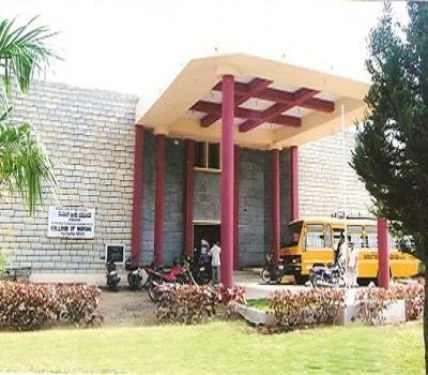
The 30-acre campus is built around its crown jewel: the 1,200-bed multi-specialty AJ Hospital. This isn’t just for show; it’s a functional, busy hospital that forms the core of student learning. The academic blocks have air-conditioned lecture halls with decent AV support. The library spans 5,000 sq. meters, housing over 16,000 books and digital access to more than 110 international journals. For practical skills, there’s a dedicated simulation lab alongside 29 other departmental labs.
Hostels are separate for genders, with a notably better-equipped NRI block. Reviews on the hostel experience are mixed. Rooms are generally reported as spacious, but the management is famously strict. The biggest gripe on forums like Reddit is a policy that allegedly requires students to pay for all five years of hostel fees upfront or on a binding annual basis, even if they choose to move out later. It’s a point of significant contention. Campus life includes a basketball court, a playground, and a gym. Wi-Fi is available, but mainly in the library and specific zones, not ubiquitously across hostels.
Synthesizing opinions from Shiksha, Quora, and Reddit paints a clear picture of trade-offs. The praise is almost unanimous for clinical exposure. Students consistently say the high patient load provides unmatched hands-on experience, making textbook cases come alive. The hospital infrastructure is praised as modern and well-utilized.
But the criticisms are just as consistent. The administration is described as rigid, with an 80-85% mandatory attendance rule that’s strictly enforced. The hostel fee policy is labeled as "scummy" by some. North Indian students frequently complain about the mess food, which is heavily oriented towards local Mangalorean cuisine, leading many to eat at the canteen or outside. A practical, city-wide issue also pops up: occasional water shortages during the peak summer months of March to May.
One Quora reviewer put it succinctly: "Internal marks are fair but they won’t give you a single mark extra if you don’t show up for postings." Another on Reddit said, "AJ is the best in Mangalore for clinicals, but be ready to be treated like a school kid regarding attendance." That’s the core student sentiment in a nutshell.
AJIMS presents a very specific value proposition. If your primary goal is to become a clinically confident doctor from day one, and you’re comfortable with a structured, rule-heavy environment, it’s a strong contender. The patient exposure is its killer feature, arguably better than many newer private colleges. For a student with a NEET rank between 30,000 and 45,000 (General Category) who can afford the ~₹10 lakhs annual fee, it offers solid medical training in a pleasant coastal city.
However, if you chafe under strict discipline, are on a tight budget, or are a North Indian extremely particular about food, you might find the experience frustrating. The hostel fee lock-in is a significant financial consideration. It’s not a college known for a vibrant, liberal campus life; it’s known for work. Ultimately, AJIMS is worth it for the pragmatist—the student who views medical school as a training ground for a profession and is willing to trade some personal freedom for a dense, hands-on clinical curriculum. For that specific buyer, it delivers.
For the most official and current information, always refer to the AJIMS website and the Karnataka Examination Authority (KEA) portal.
Yes, AJ Institute of Medical Sciences and Research Centre (AJIMS Mangalore) is considered good for MBBS, primarily due to its high patient inflow and the strong clinical training this provides for students.
The total MBBS fee under the management quota at AJ Institute of Medical Sciences is approximately ₹10 Lakhs per year. For the full course, this totals around ₹55 to ₹60 Lakhs.
The hostel food for North Indian students at AJIMS Mangalore is generally rated poorly, with a common rating of 2 out of 5. As a result, most North Indian students prefer to eat at the college canteen or at outside establishments.
Yes, there is a compulsory rural service bond. As per Karnataka state law, MBBS graduates from AJ Institute of Medical Sciences must complete a 1-year compulsory rural service. Alternatively, graduates can opt out by paying a penalty, which is currently around ₹10 Lakhs.
For the General Merit category, the NEET cutoff for MBBS at AJ Institute of Medical Sciences typically requires an All India Rank within the range of 30,000 to 45,000.
Share what future students should know about AJ Institute of Medical Sciences and Research Centre.
Student voices are not rewritten by colleges. We remove spam and abuse.
Wider admission question? Community PulseWhat should future students know?
Tell us which course you're considering. We'll help you work out the next step.
Get instant Partner access after mobile verification. Your public edits are reviewed before they go live.
Claim this college Auditorium
 Cafeteria
 Campus Security
 Gym
Gym Hostel
 Medical
 Science Labs
 Sports Complex
 Study Library