Loading Admission Guardian content
Loading Admission Guardian content
Provisional score based on available data. It may change as more information is verified.
Find a program, read its fee details and explore the admission requirements.
Summary of the programs shown below. Fee amounts are not listed. Contact the college for its current fee schedule.
| Course | Stream | Fees |
|---|---|---|
| Bachelor of Technology [B.Tech] | Engineering | |
| Master of Technology [M.Tech] | Engineering | |
| Master of Business Administration [MBA] | Management |
Specializations
All accepted exams
Eligibility: 10+2 with 45% + RPET
Specializations
Eligibility: Graduation
Specializations
Eligibility: Graduation with 50% + RMAT
If you're looking at engineering colleges in Rajasthan with a JEE Main rank beyond 4 lakhs, Ajmer Institute of Technology (AIT) will almost certainly appear in your REAP counseling options. That's its primary identity: a private, RTU-affiliated college on the scenic but remote Pushkar Bypass, offering a functional degree to students who need a backup. But there's a persistent, confusing shadow. Online, student reviews and even some local directories often conflate it with the prestigious Government Engineering College Ajmer (GECA). They are not the same. GECA is a state-run institution with a long history; AIT, established in 2004, is part of the private Bhagwant Education Foundation. This mix-up is the first thing to untangle, and it hints at a broader narrative of blurred lines between AIT and its parent Bhagwant University—a theme that recurs in student complaints about everything from infrastructure to placements.
The academic offering is standard for an RTU-affiliated private college. At the undergraduate level, B.Tech programs are available in Computer Science, Electronics & Communication, Electrical, Mechanical, Civil, and likely Information Technology, with seat intakes ranging from 30 to 60. Postgraduate options include an MBA and M.Tech specializations in Power Systems, Structural Engineering, and Digital Communication. The curriculum is strictly the RTU Kota syllabus, delivered on a semester system. Faculty strength is reported around 114 across the group, but the percentage of PhD holders is low, estimated at 10-15%. Student feedback consistently points to high faculty turnover and a reliance on junior lecturers. The academic culture, therefore, is what you'd expect: the syllabus will be covered, but driving deeper conceptual understanding or industry-ready skills often falls to the student's own initiative. It's a system designed to get you through the RTU exams with a degree that holds recognition, particularly for government job eligibility and higher studies.
This is where the gap between official claims and ground reality is most pronounced. The institute's website and brochures may cite placement percentages around 70%. The consensus from student reviews on platforms like Shiksha and MouthShut paints a different picture, with the effective on-campus placement rate for the graduating batch estimated at 30-40%. Many students actively pursue off-campus opportunities. The highest packages quoted in recent student reports range from ₹6 to ₹8 LPA, but you should view any claim significantly higher than that with skepticism—alumni on Quora have explicitly called out inflated marketing figures. The average package sits in the ₹2.5 to ₹3.2 LPA range, which is a realistic expectation for CSE and other branches. Top recruiters who visit for pool drives with Bhagwant University include mass IT recruiters like TCS, Wipro, HCL, and Tech Mahindra, along with core companies like L&T and the Indian Army for its University Entry Scheme. The verdict from alumni is blunt: "Don't expect high-end placements. If you are a self-learner, you can survive here."
For a private institution, AIT's fee structure is relatively moderate, which is one of its few consistent advantages. The annual tuition fee for B.Tech is estimated between ₹49,000 and ₹60,000. The MBA program is similarly priced at ₹46,000 to ₹55,000 per year. However, the hostel and mess fees add a significant chunk, ranging from ₹55,000 to ₹75,000 annually depending on AC or non-AC accommodation. When you factor in development fees, caution money, and RTU exam fees, the total cost for a four-year B.Tech degree, including hostel, lands between ₹4.5 and ₹5.5 lakhs. Scholarships are available as per Rajasthan state government norms for SC/ST/OBC students, and the institute offers merit-based discounts for students with high scores in JEE Main or their 12th board exams.
Admission is the least challenging part of the AIT journey. For B.Tech, the primary pathways are through a JEE Main score or the state-level Rajasthan Engineering Admission Process (REAP). The cutoffs are not high; the college routinely accepts students through REAP who have scored 45% in their 12th (General category) and JEE Main ranks well beyond 6,00,000. For MBA, scores from CMAT, MAT, or the state RMAT exam are considered. M.Tech admissions prefer a GATE score. The selection is via centralized counseling for these entrance exams. If seats remain vacant after counseling, direct admission under the management quota is also an option, with the application window typically running from May to August. The process underscores the college's role as an accessible option.
The campus is spread over 15-20 acres, sharing space and infrastructure with Bhagwant University. This shared model is a double-edged sword and a frequent point of student criticism. The hostels, with a capacity for about 380 students across separate boys' and girls' facilities, are described as basic, with quality ratings hovering around 2.5 out of 5 in reviews. The most consistent and severe complaints are reserved for the mess food, with multiple reports citing unhygienic conditions. Academically, labs are functional but equipped with aging machinery. The computer center has around 250 PCs. The library is well-stocked with physical books but offers limited digital access. Sports facilities include cricket and football grounds and basic indoor options. Wi-Fi is available in specific zones like the library and labs, but students report the speed as inconsistent. Life here is quiet, even isolated, given the distance from Ajmer city center (~10 km to the railway station). The social scene is limited to campus events.
Synthesizing feedback from Quora, Reddit's r/Indian_Academia, and review sites like MouthShut reveals a clear, if unflattering, consensus. The positives are few but specific: ease of admission for low scores, a recognized RTU degree, and a quiet, scenic location away from city chaos.
The negatives are more detailed and damning. A recurring theme is the "two-in-one" college allegation, where students claim the physical campus switches branding between AIT (for RTU) and Bhagwant University (for UGC) depending on inspections. Placement promises are viewed with deep suspicion, with most agreeing that securing a job requires off-campus hustle. Infrastructure maintenance is poor, particularly regarding hostel hygiene and lab equipment. Faculty are often seen as transient and inexperienced. The administration is frequently described as uncooperative. One verbatim MouthShut review captures a common sentiment: "The mess food is the biggest challenge. Finding bugs in the plate is not uncommon."
Ajmer Institute of Technology serves a very specific, narrow demographic. It is a viable last-resort option for a student from the Ajmer region or western Rajasthan with a low JEE/12th score, limited budget for private education, and a primary goal of obtaining an AICTE-approved, RTU-affiliated B.Tech degree as a baseline credential for government exams or further studies. For this student, who is a disciplined self-learner and plans to rely entirely on external resources for skill development, AIT provides the formal structure of a degree at a relatively low cost.
For almost everyone else—students seeking a vibrant campus life, quality teaching, reliable placements, modern infrastructure, or a clear institutional identity—it is not worth it. The overwhelming negativity in student reviews about management practices, food, and placement realities presents a significant risk. If you have the rank or means to secure a seat in a government engineering college, a better-regarded private institute in Kota or Jaipur, or even a polytechnic, those are almost certainly wiser investments. AIT is the college you settle for, not the one you choose.
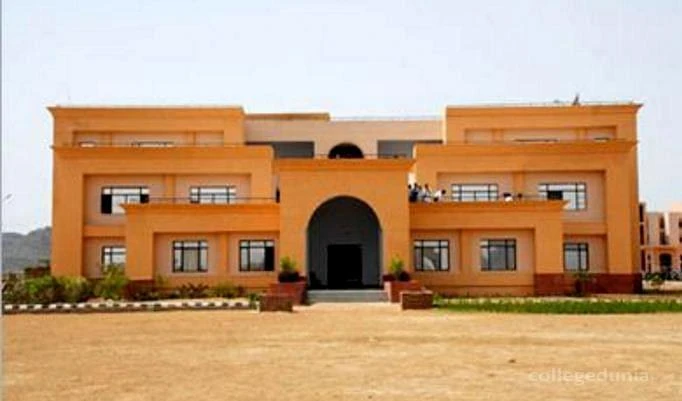
In this preview: 1 photo · 0 videos
No, Ajmer Institute of Technology (AIT) is not the same as Government Engineering College Ajmer (GECA). AIT is a private college located on Pushkar Bypass, while GECA is a government college situated at Badliya.
Yes, Ajmer Institute of Technology is still active. It operates closely under the management of Bhagwant University.
The average placement package for Computer Science Engineering (CSE) at Ajmer Institute of Technology is approximately ₹3 Lakhs Per Annum (LPA).
Yes, direct admission to Ajmer Institute of Technology is possible. It is typically available through the Management Quota or through vacant seats that remain after the REAP counseling process.
No, hostel accommodation is not mandatory at AIT. However, it is recommended for outstation students due to the campus's location, which is at a distance from the main city.
Share what future students should know about Ajmer Institute of Technology.
Student voices are not rewritten by colleges. We remove spam and abuse.
Wider admission question? Community PulseWhat should future students know?
Tell us which course you're considering. We'll help you work out the next step.
Get instant Partner access after mobile verification. Your public edits are reviewed before they go live.
Claim this college
 Auditorium
 Cafeteria
 Computer Labs
 Hostel
 Medical
 Science Labs
 Sports Complex
 Study Library