Loading Admission Guardian content
Loading Admission Guardian content

Find a program, read its fee details and explore the admission requirements.
Summary of the programs shown below. Fee periods can differ by program. Check the note beside each amount before comparing costs.
| Course | Stream | Fees |
|---|---|---|
| Bachelor of Arts [BA] | Arts | 5305 |
| Bachelor of Commerce [B.Com] | Commerce | 5325 |
Specializations
Eligibility: 10+2
Specializations
Eligibility: 10+2
Akhand Anand Arts And Commerce College is a private institution in Surat that’s been around since 1992, offering basic, affordable B.Com and BA degrees. It’s affiliated with Veer Narmad South Gujarat University (VNSGU), which is the main draw for students looking for a recognized degree close to home. The college’s NAAC ‘C’ grade from 2009, with a CGPA of 1.92, is a piece of information you can’t ignore—it’s a formal, if dated, assessment of its institutional quality. And that’s the story here: a straightforward, no-frills option for local students. The campus life gets mixed reviews, the placement numbers have a significant gap between official reports and student experience, and the infrastructure is functional at best. If you’re looking for a low-cost, convenient path to a university degree in Surat, it’s an option. If you’re expecting a transformative college experience with robust corporate connections, you’ll likely be disappointed.
The academic offering here is simple and focused on the fundamentals. The college provides two three-year undergraduate programs under the VNSGU syllabus: Bachelor of Commerce (B.Com) and Bachelor of Arts (BA). The B.Com program has a substantial intake of 450 seats, making it the college’s most popular course. It covers the standard commerce curriculum—accounting, business management, economics. The BA program offers some flexibility, allowing students to choose their subject combinations, which is a decent feature for a small arts college.
Faculty strength is listed at 20, though data on PhD holders or notable professors isn’t available. The academic calendar follows the typical Gujarat pattern, with admissions kicking off after 12th-standard results in May-June. There’s no mention of unique industry tie-ups or MoUs, which aligns with the college’s traditional, textbook-focused approach. You’re getting a VNSGU degree here, and the teaching is geared towards helping you clear those university exams. For more details on the curriculum, you can check the VNSGU website.
This is where the narrative splits. Officially, the 2023 placement report states an average package of ₹3.5 LPA and a highest package of ₹6 LPA, with 60 students placed from 65 offers made by 22 companies. Recruiters are listed as local banks, sales companies, educational institutes, and even an AI firm. On paper, that’s a functional placement cell for a commerce and arts college.
But student sentiment tells a different, more cautious story. Reviews on platforms like CollegeDunia and Shiksha frequently contradict these figures. Phrases like “no placement cell,” “companies don’t visit,” and “below average” are common. One review specifically mentioned a highest offer of ₹14,000 per month, which is about ₹1.68 LPA annually—a far cry from the official ₹6 LPA. The gap between the brochure and the student experience is notable.
The likely reality? Placement activity is sporadic and heavily dependent on local, small to mid-sized businesses. The official numbers might represent the best-case scenario for a handful of top students in a given year. For the majority, securing a job will require proactive effort outside the campus recruitment drive. Don’t enroll here banking on the placement cell to hand you a career; view any on-campus opportunity as a bonus.
Affordability is arguably the college’s strongest suit. The annual tuition fee is remarkably low: ₹14,765 for B.Com and ₹14,745 for BA. Add a nominal examination fee of ₹125, and you’re looking at a total annual academic cost of around ₹15,000. Over three years, that’s roughly ₹45,000—an incredibly accessible price point for higher education.
The college does not provide hostel facilities, so students must factor in the cost of private paying guest (PG) accommodations or commuting. This keeps the institution’s direct fees low but transfers living costs to the student.
Scholarships are available, primarily government schemes based on merit, reserved category, or financial need. The college administration facilitates the process, and data shows students received government scholarships from 2018-19 through 2021-22. If you’re eligible, this can reduce the already low cost even further.
Admission is straightforward and merit-based. The primary criterion is your performance in the 12th-standard board exams (HSC). The college doesn’t prominently require a state-level entrance exam for these UG courses; your marks are the key.
The process usually starts in May or June, right after board results are declared. For the 2025 academic session, the application window is listed from May 8 to September 15. You’ll need to apply directly to the college during this period. While the selection is merit-based, the college reserves the right to conduct an entrance exam or interview, followed by counseling. In practice, for most applicants, it’s the marks that matter.
Specific cutoff percentages or ranks aren’t published, which is typical for many affiliated colleges. Admission likely remains open for a while, especially for the BA program. The B.Com program, with its larger intake, is also generally accessible with a decent 12th-grade score. Some student reviews have criticized the admission office’s behavior as “rude,” so be prepared for a no-frills administrative experience.
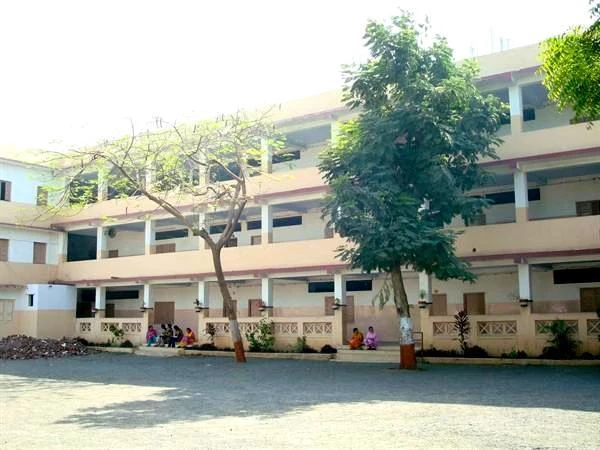
The campus is compact, with reported sizes varying between 1 and 2 acres. Infrastructure is basic but covers the essentials. Classrooms are projector-equipped, and there’s a computer lab with 17 systems and internet. The library is a solid resource with over 10,000 books and a reading room. Sports facilities include a ground and a gym, though some students call them average.
A major point: there is no college hostel. Students live in private PGs around Ved Road. The college provides a canteen, and transport is mentioned as a facility, though details are scarce.
The Wi-Fi situation is confusing. The college claims a Wi-Fi managed campus with free NAMO Wi-Fi (albeit with average speed). Yet, multiple student reviews explicitly state “no Wi-Fi-labs” or that the facility isn’t available. Believe the students on this one—campus internet is probably unreliable at best.
Social life is what you make it. The college celebrates festivals like Ganpati and Navratri, which students enjoy. However, a common complaint is the lack of major official events—no annual function or freshers’ party in recent years. NSS and NCC units provide some activity structure. It’s a commuter campus, so the vibe is quieter and more localized.
Synthesizing student feedback paints a picture of a college with clear trade-offs.
The Good: Many students praise the teachers, calling them “very good,” “well qualified,” and “committed.” The study environment is generally considered positive. The low fee is consistently highlighted as a major advantage. Campus life is described as “decent,” with student-led festival celebrations adding color.
The Not-So-Good: Criticisms are frequent and pointed. Infrastructure is called “average” or “poor,” with specific complaints about parking, canteen quality, and absent Wi-Fi. The management system is labeled “very poor” by some, citing irregular lectures and administrative hassles. The most significant disconnect is on placements, where student experiences starkly contradict official statistics. There’s also a sentiment that some peer students are not serious, attending “merely for formality,” which can impact the classroom atmosphere.
In short, students appreciate the low-cost education and often the teaching, but feel let down by administrative support, infrastructure promises, and career services.
It depends entirely on what you’re looking for. Akhand Anand College is a classic example of a local, affordable degree college. Its value proposition is simple: a recognized VNSGU degree at a very low cost, with decent teaching for those who want to learn.
Consider this college if: You are a student from Surat or nearby areas looking for the most economical way to earn a B.Com or BA degree. Your priority is minimizing education debt while getting a legitimate qualification. You are a self-motivated learner who doesn’t need a vibrant campus life or a proactive placement cell to succeed.
Look elsewhere if: You expect modern infrastructure, reliable high-speed internet, and a packed extracurricular calendar. You are counting on strong campus placements to launch your career. You want a residential campus experience or are seeking a college with a higher NAAC grade or national ranking. For those needs, larger government colleges or more invested private institutions in Gujarat would be better bets.
For its specific niche—ultra-affordable, local, no-frills higher education—Akhand Anand serves a purpose. Just go in with clear, realistic expectations.
The college offers two three-year undergraduate programs: Bachelor of Commerce (B.Com) and Bachelor of Arts (BA). The annual tuition fee is very affordable, at ₹14,765 for B.Com and ₹14,745 for BA. Additional costs include a nominal examination fee of ₹125. There are no college hostel facilities, so students must budget separately for private accommodation.
No, Akhand Anand Arts And Commerce College does not have its own hostel facilities. Students seeking accommodation need to arrange for private Paying Guest (PG) options or rental apartments in the Ved Road area of Surat near the campus.
Official 2023 data reports an average package of ₹3.5 LPA and a highest package of ₹6 LPA, with 60 students placed from 22 visiting companies. However, student reviews frequently question these figures, reporting limited placement cell activity and lower salary offers. Prospective students should view these official stats cautiously and be prepared for self-driven job searches.
Admission is primarily merit-based, relying on your 12th-standard (HSC) board exam marks. The college may also conduct an entrance exam or interview. The application process typically opens in May-June after board results; for the 2025 intake, the window is from May 8 to September 15. Applicants should apply directly to the college within this period.
The college was accredited by the National Assessment and Accreditation Council (NAAC) in its first cycle in 2009, where it received a 'C' Grade with a Cumulative Grade Point Average (CGPA) of 1.92 on a 4-point scale. This accreditation provides a benchmark of its institutional quality as of that assessment. You can verify accreditation details on the NAAC website.
Share what future students should know about Akhand Anand Arts And Commerce College.
Student voices are not rewritten by colleges. We remove spam and abuse.
Wider admission question? Community PulseWhat should future students know?
Tell us which course you're considering. We'll help you work out the next step.
Get instant Partner access after mobile verification. Your public edits are reviewed before they go live.
Claim this college Auditorium
 Cafeteria
 Computer Labs
 Gym
Gym Hostel
 Medical
 Science Labs
 Sports Complex
 Study Library