Loading Admission Guardian content
Loading Admission Guardian content
Selected ranking categories, with the recorded year beside each result. Open all records for the complete history.
3 published records · Lower numeric ranks are stronger
IIRF
Physiotherapy
#272022
Find a program, read its fee details and explore the admission requirements.
Summary of the programs shown below. Fee periods can differ by program. Check the note beside each amount before comparing costs.
| Course | Stream | Fees |
|---|---|---|
| Bachelor of Physiotherapy [BPT] | Medical | 52500 |
| Master of Physiotherapy [MPT] | Medical | 75000 |
Eligibility: 10+2
Eligibility: B.P.T.
Apollo College of Physiotherapy in Durg is a name you'll hear a lot if you're looking at paramedical options in Chhattisgarh. Established in 2003 under the Apollo Group umbrella, it’s built a reputation for solid clinical training, largely thanks to its hospital tie-ups. The fees are a major draw—they’re notably lower than many private colleges in other states. But you should know upfront: this is a strict, academically focused environment. The social scene is quiet, the schedule is packed, and the campus, while decent, isn't exactly buzzing with extracurriculars. If your priority is affordable, practical physiotherapy education with the Apollo brand on your degree, this is a serious contender. If you're looking for a vibrant campus life or expect a stipend during your internship, you might need to adjust your expectations.
The academic offering here is focused. The Bachelor of Physiotherapy (BPT) is the main draw, a 4.5-year program that includes a mandatory 6-month rotatory internship. The curriculum follows the affiliating university's (AHSU) guidelines, covering the standard physiotherapy subjects from Anatomy and Biomechanics to specialized Electrotherapy and Clinical Neurology. They also offer a Master of Physiotherapy (MPT) with specializations in Orthopaedics, Neurology, and Cardio-Respiratory. The intake for these postgraduate seats is small, often just 2-5 per specialization.
Where ACP really tries to set itself apart is clinical exposure. And that's not just marketing talk. The college has formal tie-ups with major hospitals like the J.L.N. Hospital and Research Centre in Bhilai (often called Sector 9 Hospital) and the Government District Hospital in Durg. Students get posted there, which means hands-on patient interaction from a relatively early stage. There's also an on-campus Physiotherapy OPD, so you're not just learning theory in a vacuum. The academic system is annual, not semester-based, which means one big university exam at the end of the year. Faculty are generally described as professional and helpful in reviews, though teaching methods lean heavily on PowerPoint presentations.
Let's be clear about "placements" in physiotherapy. Unlike engineering or MBA, you're rarely looking at a traditional campus recruitment drive with dozens of companies. For most graduates, the path is either joining a hospital as a junior physiotherapist, starting your own clinic, or pursuing higher studies.
The college's primary recruiting partner is, unsurprisingly, the Apollo Hospitals Group. They often absorb interns and fresh graduates into their network of hospitals in places like Hyderabad, Bilaspur, and Raipur. Other key recruiters include the Bhilai Steel Plant (BSP) Hospital and various local private clinics and multi-specialty hospitals in the Durg-Bhilai twin cities.
Now, about the numbers. You might see a flashy "12 LPA" figure on some portals. That's highly unverified and, frankly, an outlier not representative of a fresh BPT graduate's starting salary in this region. The working average, based on student reviews and typical clinical role offers, sits between ₹1.5 LPA to ₹3 LPA. That's a realistic starting point. The 6-month internship is guaranteed, but don't expect a stipend—student consensus is that it's generally not provided for private college interns in Chhattisgarh. The value here is in the experience and the potential foot-in-the-door with the Apollo network.
Affordability is arguably ACP's strongest suit. For the BPT program, annual tuition ranges from ₹65,000 to ₹77,000. Over the 4-year academic period, that totals roughly ₹2.6 to ₹3.1 lakhs. When you add the 6-month internship (usually no tuition fee, but living costs remain), the complete course cost is manageable.
Hostel fees are extra, running about ₹5,000 to ₹6,000 per month, which typically includes mess charges. There are also one-time admission fees (around ₹10,000) and annual university exam fees. All in, a student can expect the total 4.5-year expense to land between ₹5 to ₹6 lakhs, depending on lifestyle. That's a decent price point for a private institution in this field.
For financial aid, the primary route is state government scholarships for SC/ST/OBC candidates, accessible through the Chhattisgarh State Scholarship portal. It's worth checking the official college website for any updates or institutional aids, though these are not prominently highlighted.
Getting in requires navigating the state's medical entrance system. For the BPT program, you must appear for NEET UG. Your NEET score is then used in the CGDME (Chhattisgarh Directorate of Medical Education) counseling process for seat allotment. There's also a state-level CG BPT exam, but NEET is the standard gateway.
The basic eligibility is 10+2 with Physics, Chemistry, and Biology (PCB) and a minimum of 50% aggregate (45% for reserved categories). The selection is purely merit-based through the counseling rounds. Cutoffs vary each year based on applicant pool and seat matrix, but as a private college in the state, the required percentile is typically lower than for government medical colleges.
There is a management quota. If you don't make the merit list, direct admission is possible, but it involves a higher fee or a "seat booking" amount. The process for this is handled directly by the college administration.
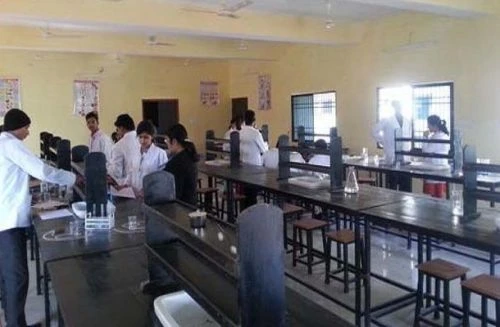
The campus is shared with other Apollo Group colleges (Nursing, Pharmacy) on a 7-9 acre plot. The infrastructure gets a mixed report card. The academic building and labs—especially the Anatomy, Physiology, and specialized Physiotherapy labs—are generally called "nice" and well-equipped. The library has a good collection of physical books, though digital resources are said to be just average.
Hostels are separate for boys and girls, with rooms available in 3 or 4-bed configurations. AC rooms cost more. The most consistent complaint across nearly every student review? The mess food. It's routinely described as below average. Another notable gap: there's no dedicated student canteen on campus. For a snack or coffee, you're heading outside.
Social life is quiet. There's no active student council or clubs to speak of. The main events are Physiofest (around World Physiotherapy Day) and an annual function. There's also a lack of proper sports facilities like a playground or courts. It’s a campus where the focus is very much on academics and clinical rotations, not extracurriculars. A college bus handles transport for hospital postings.
Synthesizing feedback from platforms like CollegeDunia and Shiksha gives you a clear, if somewhat stark, picture. The median consensus on teaching quality is strong, around 4/5. Students praise the faculty's professionalism and the quality of clinical training, especially the access to Sector 9 Hospital.
But the environment is strict. Attendance is enforced at a hard 75%, and getting leave is notoriously difficult. The schedule is hectic, juggling theory classes and clinical postings with little breathing room.
The positives are recurring: "Excellent clinical exposure," "Affordable fees," and "The Apollo brand name helps." The negatives are just as consistent: "No canteen," "Mess food is poor," "No internship stipend," and "Zero social life." It’s a trade-off that every prospective student needs to weigh.
Apollo College of Physiotherapy is a specific kind of institution for a specific kind of student. It's worth it if your primary goals are: 1) Obtaining a recognized BPT degree at one of the lowest private college price points in the country, 2) Gaining hands-on clinical experience through established hospital networks, and 3) Leveraging the Apollo brand name to start a career in private hospital systems, primarily within Central India.
You should probably look elsewhere if you prioritize a balanced college experience with active clubs, good campus food, sports facilities, or a more relaxed academic schedule. The lack of an internship stipend and the sparse social scene are real downsides. Think of it as a vocational training ground with a reputable tag, not a traditional university campus. For a student from Chhattisgarh or neighboring states focused squarely on becoming a practicing physiotherapist without taking on massive debt, ACP makes a lot of practical sense. Just go in with your eyes open about what the daily life entails.
Yes, for the 2024-25 admission cycle, appearing for the NEET exam is mandatory for candidates seeking admission to the Bachelor of Physiotherapy (BPT) program through the state counseling process at Apollo College of Physiotherapy.
The total estimated cost for the 4.5-year Bachelor of Physiotherapy (BPT) program, including tuition, hostel fees, and other miscellaneous expenses, is approximately ₹5 Lakhs to ₹6 Lakhs.
Yes, the BPT degree is valid for government jobs. The college is affiliated with a State University (AHSU) and is recognized by the Indian Association of Physiotherapists (IAP), ensuring the degree is recognized in both the public and private sectors.
No, students generally do not receive a stipend during the compulsory 6-month internship period as part of the BPT program at Apollo College of Physiotherapy.
Based on consistent student reviews, the quality of food provided in the college hostel mess is rated as average to poor.
Share what future students should know about Apollo College of Physiotherapy.
Student voices are not rewritten by colleges. We remove spam and abuse.
Wider admission question? Community PulseWhat should future students know?
Tell us which course you're considering. We'll help you work out the next step.
Get instant Partner access after mobile verification. Your public edits are reviewed before they go live.
Claim this college Auditorium
 Cafeteria
 Campus Shuttle
 Campus Wi-Fi
 Hostel
 Medical
 Science Labs
 Sports Complex
 Study Library