Loading Admission Guardian content
Loading Admission Guardian content

Find a program, read its fee details and explore the admission requirements.
Summary of the programs shown below. Fee periods can differ by program. Check the note beside each amount before comparing costs.
| Course | Stream | Fees |
|---|---|---|
| M.B.B.S. | Medical | 702979 |
All accepted exams
Eligibility: 10+2 with 50% + NEET
3 exams with cutoff data available
Azeezia Medical College (AIMS) in Kollam, Kerala, presents a classic trade-off. For students who secure a seat, it offers a solid academic foundation and genuine clinical experience through its busy 540-bed hospital. But that education comes wrapped in a package of famously strict discipline, particularly for women, and a location that feels isolated. It’s a private, minority institution where the quality of teaching often clashes with student complaints about hostel life and freedom. If your priority is becoming a competent doctor and you can handle a regimented environment, it’s a viable option. If campus culture and social life rank high, you might find it stifling.
The academic engine here is the MBBS program, running 4.5 years of study plus a mandatory one-year internship. It’s a standard, no-frills curriculum tightly governed by the Kerala University of Health Sciences schedule. The college also runs postgraduate MD and MS programs with around 15-19 seats across specialities like General Medicine, Pediatrics, Surgery, and Orthopedics. That’s a decent spread for a younger private college. Faculty qualifications are often highlighted as a strength, with a high percentage of PhD holders in pre and para-clinical departments. The academic culture is described as supportive by students, with professors generally being accessible. An MoU with the prestigious SCTIMST-TIMed institute offers a potential research gateway, though its impact seems more pronounced through the co-located dental college. For an MBBS student, the syllabus is what you’d expect anywhere in India. The real differentiator is how you learn it—and that’s where the attached hospital comes in.
Let’s be clear: medical colleges don’t have placements like engineering schools. Your career launchpad is the compulsory rotating internship (CRMI) and your performance in NEET-PG. The internship is done in-house at the Azeezia hospital, which is a double-edged sword. The positive is the patient load—with over 1,300 outpatients daily, you get hands-on experience that’s hard to fake. The negative is the stipend, which students consistently grumble about. It ranges from ₹5,000 to ₹13,000 per month, notably lower than government college stipends in the state.
After MBBS, the college claims about 85-90% of graduates find work quickly, mostly as Junior Residents in private hospital chains like Apollo, KIMS, or Aster Medcity, or through the Kerala Public Service Commission. The average starting salary for these roles is typically between ₹6 to ₹9 LPA. That’s the standard track. The aspirational track is cracking NEET-PG for a specialty seat, either here or elsewhere. The college’s ECFMG approval is a silent but significant asset for those eyeing the USMLE and a career abroad, a path a number of alumni pursue.
The fees are regulated by the state committee, which means they’re high but predictable. For the 2024-25 academic year, the MBBS tuition fee for the management quota is ₹8,16,038 annually. Add to that a special fee (₹47,480 in first year, ₹29,015 later), a refundable caution deposit, and hostel with mess charges of about ₹1,00,000 to ₹1,20,000 per year. Do the math, and you’re looking at nearly ₹10 lakhs out the door each year. Over 5.5 years, the total cost balloons to an estimated ₹45 to ₹50 lakhs for the management quota. The NRI quota is a different universe, with annual tuition alone at ₹21,65,720. Scholarships or substantial financial aid from the institution aren’t prominently highlighted in student discussions. You’re funding this primarily through family resources or education loans.
Admission is a straightforward, numbers-driven game. For MBBS, you need a qualifying score in NEET-UG. Period. All 100 seats are allotted through the Commissioner for Entrance Examinations (CEE) Kerala counseling based on state merit rank. There’s no direct management admission bypassing NEET. The 2024 first-round closing rank for the state merit quota was approximately 6,522. You’ll need a rank comfortably under 7,000 to have a serious shot. For the NRI quota, the 2024 cutoff was around an All India Rank of 404,662. The process is centralized and transparent, but competitive—that state rank puts Azeezia in the mix with other mid-tier private colleges in Kerala.
The 50-acre campus is consistently praised for being lush, green, and quiet. It’s a peaceful place to study, largely because it’s in a rural setting about 8 km from the nearest highway. That isolation is a core part of the student experience. The infrastructure is a mix of impressive and dated. The central library is well-stocked with over 10,000 texts and e-resources. Sports facilities for football, cricket, and basketball are available. The hospital is the crown jewel—a 540-bed (some say 750) multi-specialty facility that provides the clinical backbone for the college.
Then there are the hostels. Rooms are usually spacious, shared between 2-3 students. But maintenance is inconsistent. The bigger issue, repeated in every forum, is the food. The hostel mess is a major pain point, with complaints about repetitive menus and hygiene. Wi-Fi is available in the library and patchily in hostels, described as "average" at best. The campus has three canteens, but the social scene is limited. For entertainment, you’re looking at long trips to Kollam city, about 20 km away.
Student sentiment paints a picture of stark contrasts. On the positive side, they overwhelmingly agree the clinical exposure is excellent. The hospital’s high patient flow means you see and do a lot, which is the whole point of medical school. The faculty are generally regarded as qualified and supportive. The campus ambiance is peaceful.
But the negatives are loud and specific. The most frequent complaint is about strict discipline, especially for female students. Descriptions like "mini jail" and "rules from the 19th century" are common online. Curfews as early as 6:00 PM and requiring parental letters for simple off-campus trips are standard grievances. The hostel food quality is another universal complaint. The low internship stipend and the rural location rounding out the list of cons. As one synthesized review puts it: “The clinical training is excellent because of the patient load, but the management is very regressive regarding student freedom.” Another notes, “Infrastructure is top-notch from the outside, but inside the labs, some equipment is dated.”
Azeezia is a college of compromises. Its value depends entirely on what you’re willing to trade. If your sole, unwavering focus is to get a competent medical education with strong clinical hands-on experience, and you have a NEET rank in the 6,000-7,000 range for Kerala, it’s a perfectly reasonable choice. The academics are sound, the hospital provides real-world training, and the ECFMG approval is a valuable backdoor for global ambitions. However, if you envision a vibrant, independent college life with freedom, good food, and a bustling social scene, you will likely be miserable here. The strict discipline—particularly for women—and isolated location are significant lifestyle costs. It’s best for students who are academically focused, resilient, and have family support nearby. For those seeking a more balanced or liberal campus culture, other options might be a better fit, even if the cutoffs are tougher.
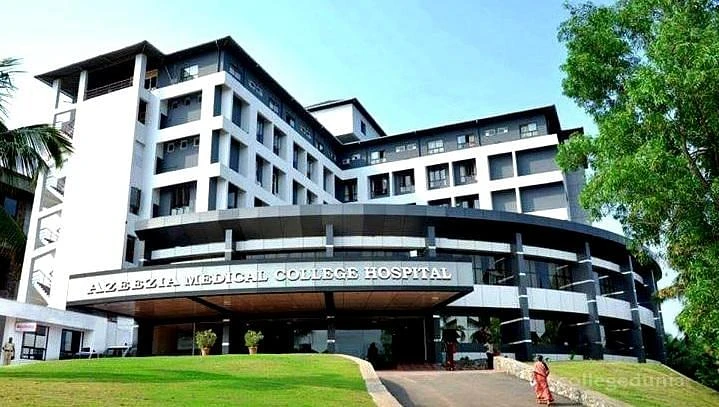
In this preview: 1 photo · 0 videos
Yes, Azeezia Medical College is considered good for MBBS, particularly for its academics and clinical exposure, and is well-regarded among private medical colleges in Kerala. Prospective students should be aware that the college maintains a strict disciplinary environment.
For the management quota in 2024, the annual tuition fee for the MBBS program at Azeezia Medical College is approximately ₹8.16 Lakhs. This figure does not include additional costs such as hostel fees and other special charges.
The hostel provides decent rooms for female students. However, the facilities are known for very strict rules, which include early curfews and limitations on outings.
For admission under the state merit quota at Azeezia Medical College, candidates typically need to secure a NEET rank under 7,000 in the state of Kerala.
Yes, the college's associated 540-bed hospital serves a large rural population in the Kollam district, which ensures a sufficient and consistent patient flow for students to gain practical clinical experience.
Share what future students should know about AIMS.
Student voices are not rewritten by colleges. We remove spam and abuse.
Wider admission question? Community PulseWhat should future students know?
Tell us which course you're considering. We'll help you work out the next step.
Get instant Partner access after mobile verification. Your public edits are reviewed before they go live.
Claim this college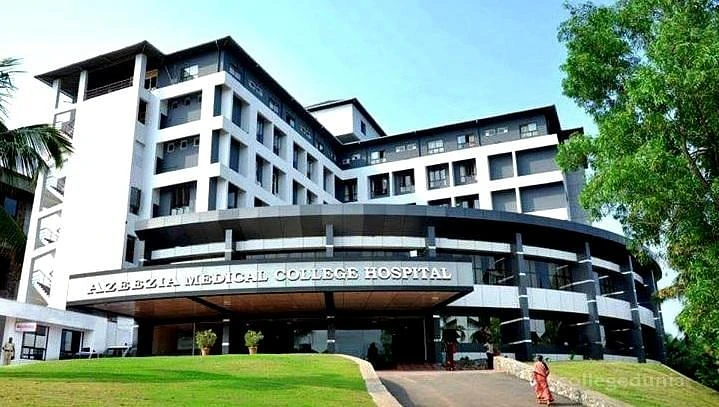
 Computer Labs
 Hostel
 Science Labs
 Study Library