Loading Admission Guardian content
Loading Admission Guardian content

Selected ranking categories, with the recorded year beside each result. Open all records for the complete history.
6 published records · Lower numeric ranks are stronger
NIRF
Medical
#502022
IIRF
Medical
#542022
Find a program, read its fee details and explore the admission requirements.
Summary of the programs shown below. Fee periods can differ by program. Check the note beside each amount before comparing costs.
| Course | Stream | Fees |
|---|---|---|
| M.B.B.S. | Medical | 25000 |
| Master of Chirurgiae [M.Ch] | Medical | 102350 |
| Doctorate of Medicine [MD] | Medical | 201000 |
| Master of Surgery [MS] | Medical | 201000 |
| Diploma | Paramedical |
All accepted exams
Eligibility: 10+2 with 50% + NEET
Specializations
All accepted exams
Eligibility: Post Graduation
Specializations
All accepted exams
Eligibility: Graduation
Specializations
2 exams with cutoff data available - showing recent entries
B. J. Medical College in Ahmedabad isn't just a college; it's a medical ecosystem. Founded in 1871 and now part of a sprawling 110-acre 'Medicity,' its defining feature is the attached Civil Hospital, a 7,400-bed behemoth that sees over 650,000 outpatients a year. That sheer volume of patients creates a clinical training ground few institutions in India can match. It’s the top-ranked government medical college in Gujarat, holding the 45th spot in the NIRF 2025 medical rankings, and its legacy is built on a foundation of rigorous, hands-on medicine. But it’s also a place of contrasts—highly subsidized fees meet grueling postgraduate workloads, and historic prestige meets the realities of an aging campus. For a student who wants to learn medicine by doing it, surrounded by every conceivable pathology, BJMC is a compelling, if demanding, choice.
BJMC’s academic structure is massive, especially at the postgraduate level. The undergraduate MBBS program takes in 250 students annually, following the NMC’s Competency-Based Medical Education (CBME) curriculum. The real scale, though, is in postgrad. The college offers over 400 PG seats across 24 MD and MS specializations, making it one of the largest PG training centers in the country. Standout departments include Anaesthesiology (65 seats), Radiodiagnosis (30), and General Surgery (36). For super-specialization, it runs sought-after DM and MCh programs in fields like Cardiology, Neurosurgery, and Urology.
The faculty, around 259 strong, is dominated by practicing clinicians from the attached hospital. That’s the core of the academic experience here—theory is taught, but it’s cemented by immediate, vast clinical application. The college has formal research collaborations with bodies like the ICMR, but the primary academic feature is the relentless patient flow. Exams are conducted by Gujarat University, and the schedule is demanding. Attendance is strictly enforced in the early years, but as students move into clinical postings, the hospital wards become the primary classroom.
"Placement" in a government medical college context means something different. It’s about the mandatory internship, the path to postgraduate seats, and eventual roles as Medical Officers or consultants.
The college reports a 90-95% employment rate within six months of graduation, which is believable given the demand for doctors. The NIRF 2025 report cites a median package of ₹13 Lakhs per annum for UG graduates, which aligns with starting government Medical Officer salaries or early private practice income. For postgraduates, that median jumps to ₹25 LPA.
Financial support during training is solid. The monthly internship stipend was recently hiked to ₹21,840. For PG residents, the stipend is among the highest in India, starting at around ₹1,00,800 per month and going up to ₹1,10,000 by the third year. That’s a significant financial cushion during training.
Top recruiters are a mix of public and private sector: the Gujarat State Health Services (GHS) is a major employer, followed by corporate hospital chains like Apollo, Zydus, and others. The real "placement" success, however, is measured by how many graduates crack NEET-PG and secure seats at BJMC itself or other top institutes, leveraging their formidable clinical experience.
This is where BJMC’s status as a pure government college shines. The affordability is stark. The annual tuition fee for the MBBS program under the government quota is just ₹25,000. Hostel fees are a mere ₹1,200 per year. The major recurring cost is the mess, run by students, which averages ₹4,000-₹4,500 per month.
When you add up the one-time charges like a refundable caution deposit (₹6,000) and library fees, the total estimated cost for the entire 5.5-year MBBS course (tuition + hostel) is between ₹1.5 to ₹2 lakhs. That’s exceptionally low for a medical education of this caliber. Excluding personal expenses and mess bills, of course.
For eligible students with Gujarat domicile, the state’s MYSY (Mukhyamantri Yuva Swavalamban Yojana) scholarship can provide a fee waiver of up to 50%. It’s a system that genuinely opens doors for meritorious students from all economic backgrounds.
Admission is 100% based on national entrance exams. For MBBS, it’s NEET-UG. For postgraduate courses, NEET-PG. For super-specialty DM/MCh, it’s NEET-SS.
The competition is fierce, reflecting the college’s reputation. For the 2024 admission cycle, the closing rank for the General category under the 15% All India Quota (counseled by the MCC) was 889. For the 85% State Quota (counseled by ACPUGMEC), the ranks are naturally higher. It’s clear: to have a serious shot at a General AIQ seat, you need a NEET-UG rank under 1000.
A critical point: There is no NRI or Management quota at BJMC. It’s a fully government-run institution. State quota students, however, must sign a bond agreeing to serve one year in a rural area post-internship or pay a penalty of ₹5 Lakhs.
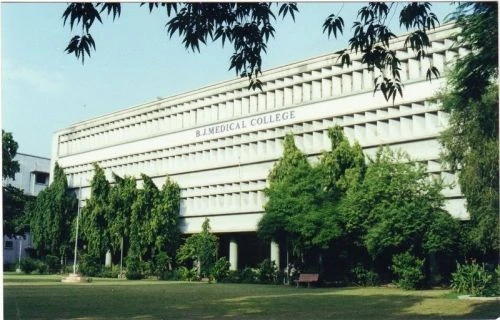
The campus is immense—about 110 acres integrated with the Civil Hospital. It’s less a picturesque college campus and more a functioning medical city. Infrastructure is a mix of old and new. The library is a major asset, one of Gujarat’s largest with 24/7 reading access.
Hostels are separate for genders. Reviews on quality are mixed, often rated around 3.5/5. Older blocks have cramped, shared rooms (often triple occupancy), while newer facilities are better. The student-run mess provides "average but hygienic" food. It’s functional living, not luxurious.
But the crown jewel is the hospital. The clinical exposure is simply unparalleled. A new 1,800-bed block and a 10-storey OPD building are part of ongoing Medicity expansion, promising even more modern facilities. Sports facilities exist—cricket, badminton, table tennis—but let’s be honest, the demanding schedule doesn’t leave vast amounts of free time.
The social highlight is the annual fest, "BJ Beats," which has a strong reputation across Gujarat. It’s a welcome release valve from the academic pressure.
Scour forums like Reddit’s r/indianmedschool and review sites, and a consistent picture emerges. The overwhelming positive is the clinical exposure. Students call it a "goldmine" and a "baptism by fire." The sentiment is clear: if you can manage here, you’re prepared for anything.
The academic culture is traditional and rigorous. For UG students, the environment is often described as "chill" with a supportive senior-junior dynamic in recent years. The college maintains a strict anti-ragging stance, and while some informal "intro sessions" in hostels are whispered about, severe ragging seems to have diminished.
The negativity surfaces most at the PG level. Specific departments—Orthopaedics, OBGYN, General Surgery—are frequently cited on student forums as being particularly tough, with toxic work culture, 36-48 hour shifts, and high pressure from seniors. It’s a classic case of brutal training in a high-volume setting. The workload is immense, but so is the learning.
For the right student, BJMC Ahmedabad is absolutely worth it. It’s a premier choice if your primary goal is to become a clinically superb doctor through total immersion in a high-volume public hospital setting. The cost-to-education value is arguably unbeatable in India—world-class training at a fraction of the price. If you have a NEET rank under 1000 (AIQ) or a strong state rank, and you’re driven by hands-on medicine over campus aesthetics, this should be a top contender.
But be clear-eyed. The infrastructure is functional, not fancy. The postgraduate journey in certain specialties can be notoriously grueling. If you prioritize a relaxed college life, modern amenities, or a less intense training environment, other colleges might be a better fit. BJMC is for those who want to work hard, learn from an ocean of patients, and build a career on a foundation of immense practical experience. It’s a demanding, legendary institution that continues to produce some of the country’s finest medical professionals.
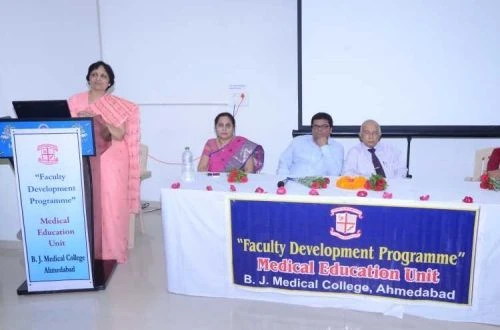
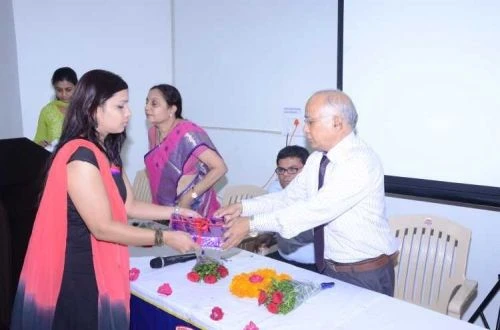
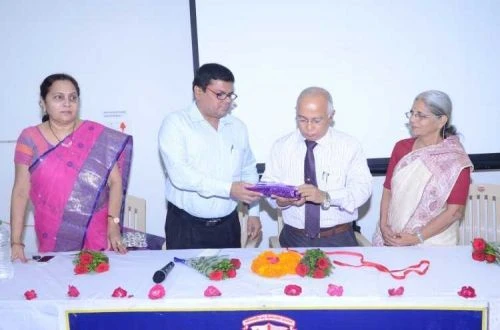
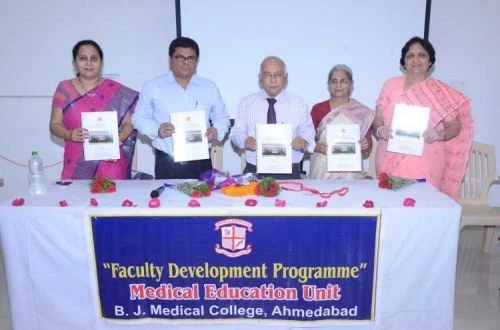
In this preview: 5 photos · 0 videos
Yes, B. J. Medical College Ahmedabad is generally considered the top choice in Gujarat when compared to GMC Surat, particularly in terms of superior clinical exposure and its higher national ranking.
For MBBS students admitted under the state quota at BJMC, there is a mandatory bond. They must either commit to serving one year in rural areas after graduation or pay a bond penalty of ₹5 Lakhs.
BJMC has strict anti-ragging measures in place, including active squads. While some informal "interaction" between seniors and juniors may occur, there have been no recent reports of severe ragging incidents at the college.
Admission to BJMC with a NEET rank around 5000 is typically possible only through the State Quota for students belonging to reserved categories. For admission under the General All India Quota (AIQ), a much higher rank, generally under 1000, is required.
The stipend for postgraduate residents at B. J. Medical College is among the highest in India. As of 2024, it exceeds ₹1 Lakh per month.
Share what future students should know about BJMC.
Student voices are not rewritten by colleges. We remove spam and abuse.
Wider admission question? Community PulseWhat should future students know?
Tell us which course you're considering. We'll help you work out the next step.
Get instant Partner access after mobile verification. Your public edits are reviewed before they go live.
Claim this college
 Auditorium
 Cafeteria
 Computer Labs
 Gym
Gym Hostel
 Medical
 Science Labs
 Sports Complex
 Study Library