Loading Admission Guardian content
Loading Admission Guardian content

Provisional score based on available data. It may change as more information is verified.
Selected ranking categories, with the recorded year beside each result. Open all records for the complete history.
2 published records · Lower numeric ranks are stronger
IIRF
Nursing
#232023
Find a program, read its fee details and explore the admission requirements.
Summary of the programs shown below. First-year fee. Check the note beside each amount for inclusions and exclusions.
| Course | Stream | Fees |
|---|---|---|
| General Nursing and Midwifery [GNM] | Paramedical | 45000 |
| Ph.D. (Nursing) | Paramedical | 50000 |
| Post Basic Bachelor of Science [P.B.B.Sc] (Nursing) | Paramedical | 70000 |
| Bachelor of Science [B.Sc] (Nursing) | Paramedical | 80000 |
| Master of Science [M.Sc] | Paramedical | 130000 |
Specializations
Eligibility: Post Graduation
Specializations
Eligibility: 10+2
Specializations
Eligibility: 10+2
Specializations
Eligibility: Graduation
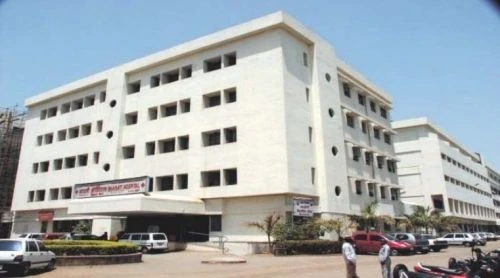
If you're looking at nursing colleges in Pune, Bharati Vidyapeeth College of Nursing (BVCN) is a name that comes up with a specific kind of weight. It's not just another private institute; it's a constituent unit of a deemed university that carries an A++ grade from NAAC. But the real draw, the one thing students consistently talk about, is the direct pipeline to a massive, 1000-bed teaching hospital on the same campus. That clinical exposure is the core of its reputation. The trade-off? A famously rigorous and structured environment where the workload is heavy and the rules are strict. It's a place that produces competent, job-ready nurses, but you have to be prepared for the grind.
BVCN runs the standard ladder of nursing education in India, from the diploma to the doctorate. The B.Sc. Nursing program is the mainstay, with an intake of 100 students per year. They also offer Post Basic B.Sc. Nursing for working diploma holders, a GNM diploma, and a M.Sc. Nursing program with five specializations: Medical-Surgical, OBG, Paediatric, Community Health, and Psychiatric Nursing. A Ph.D. program rounds out the academic offerings.
The academic calendar is tight, running from August to July with sessional exams in October and March. They follow a Choice Based Credit System (CBCS) with a 10-point scale. What you need to know is the assessment split: 40% of your grade comes from internal assessments (assignments, seminars, viva) and 60% from the final university exams. That's a significant weight on your end-of-term performance.
Faculty strength is around 46, led by Principal Dr. Mrs. Bhagyashree Jogdeo. A good number of senior faculty hold PhDs. The international MoU with the University of South-Eastern Norway (USN) is a notable feather in their cap, enabling student and faculty exchange programs.
Let's separate the official line from the on-ground reality. The college claims near 100% placement for eligible students. That figure is plausible, but context is everything. The massive demand for nurses nationwide and, more specifically, the internal absorption capacity of the sprawling Bharati Hospital network, makes this achievable. It doesn't necessarily mean 100% of graduates get their dream job in a metro city.
The money? The official median package as reported in the NIRF 2024 data is ₹3.70 Lakhs Per Annum (LPA) for their 4-year UG programs. Student reviews and other data points suggest the average starting range is between ₹3.2 to ₹4.0 LPA. You'll hear claims of packages reaching 6-8 LPA for international roles, but those are exceptional cases, often tied to the Norway exchange or individual efforts to clear exams like IELTS/OET. The college does have a cell to guide students for overseas opportunities.
Top recruiters are a mix of the parent hospital and other major healthcare chains: Bharati Hospital & Research Centre (the primary recruiter), Apollo Hospitals, Max Healthcare, Fortis, and local Pune giants like Ruby Hall and Jehangir Hospital. The mandatory 6-month internship in the 4th year often acts as a prolonged interview with Bharati Hospital itself.
For the 2024-25 academic year, the annual tuition fee for the B.Sc. Nursing program is ₹1,20,000 to ₹1,40,000 for the general quota. There's also an Institutional/Management quota where fees can jump to ₹1,80,000 - ₹2,20,000. The university has a standard policy of a 5% annual fee increase, so budget for that.
Hostel fees are a major additional cost. They range widely from ₹1.21 Lakhs to a steep ₹2.91 Lakhs per year, depending on whether you opt for AC or non-AC, and single, double, or triple occupancy. Mess charges are sometimes included in the higher-tier hostel fee or can be around ₹45,000 separately.
Add in a one-time admission fee (₹1,000) and a refundable caution deposit (₹5,000), and the total 4-year cost for a B.Sc. Nursing student, including mid-range hostel accommodation, can easily land between ₹6.5 to ₹12 Lakhs. It's a significant investment for a field where starting salaries are modest.
Admission is centralized and entrance-based. There is no direct admission based on 12th marks alone (except for the management quota, which still requires eligibility). The gateway is the BVP CET (Nursing), the university's own entrance exam.
Eligibility is straightforward: you must have passed 10+2 or equivalent with at least 45% aggregate in Physics, Chemistry, Biology (PCB) and English. You also need to be a minimum of 17 years old by December 31st of the admission year.
The selection process is purely merit-based. A rank list is prepared from the BVP CET scores, followed by centralized counseling where you lock in your seat. The application window typically opens in April and runs through June, with the exam usually held in June/July. The application fee is ₹1,000. Keep an eye on the official college website for exact dates.
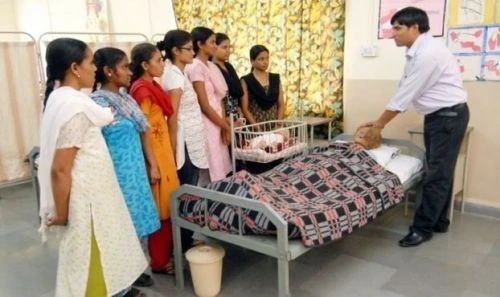
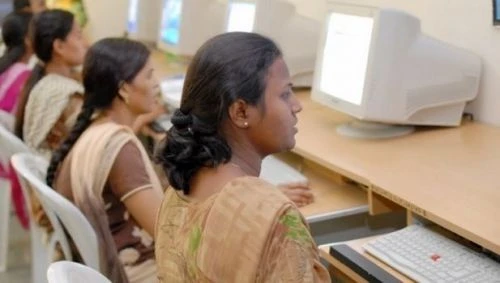
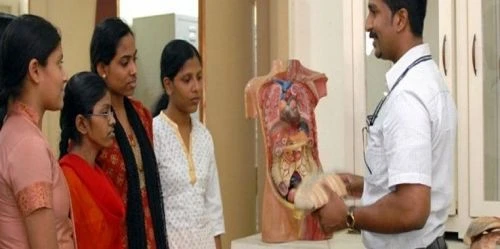
The college is part of the 85-acre Bharati Vidyapeeth Dhankawadi campus, which it shares with medical, engineering, and law schools. This creates a diverse, vibrant social atmosphere—you're not isolated in a nursing bubble. Infrastructure is solid for academics: well-equipped foundation, nutrition, community health, and computer labs, plus a library with over 10,000 titles and e-resources like KNIMBUS.
The hostel experience is a major point of discussion. There are separate buildings for boys and girls, with more facilities for girls located within the secure campus perimeter. Reviews describe the rooms as "compact but functional." The bigger talking point is the discipline. Girls' hostels, in particular, have strict curfews (often between 7:30 PM - 8:30 PM). It's a safety measure, but one that defines the social life for many.
Food in the university mess or canteens gets an average rating—around a 3 out of 5. Many students end up at the nearby khau-galli (food street) for better or more varied options. The undeniable perk is the on-campus access to Bharati Hospital for any medical needs.
Synthesizing opinions from platforms like Shiksha, Reddit, and Quora gives you a clear, consistent picture.
The praise is almost universally focused on clinical exposure. Students say things like, "The hospital is the best part. It's huge and busy, so you see everything." They feel the hands-on experience from early on makes them confident and job-ready. Faculty are generally described as knowledgeable and supportive, if academically strict.
The criticisms are just as consistent. The workload is intense. Juggling 8-hour clinical shifts in the hospital with theory classes in the evening is the norm, leading to high stress. Attendance is sacrosanct; falling below 80% can mean being barred from exams. Some also mention administrative processes for documents being slower than they'd like.
The hostel life verdict is mixed. The security and proximity are appreciated, but the strict timings and average mess food are common grievances. It's a controlled environment, which some find reassuring and others find restrictive.
BVCN is a very specific proposition. If your priority is deep, intensive clinical training from day one in a major hospital setting, and you're willing to adhere to a strict, demanding schedule, this college delivers effectively. The A++ NAAC grade and the university's overall NIRF ranking (78th in India) add academic credibility. The near-guaranteed placement, while starting salaries are modest, provides a clear career runway.
However, if you're looking for a relaxed campus life with lots of personal freedom, this isn't it. The hostel rules are stringent, the workload is heavy, and the overall atmosphere is one of professional discipline over collegiate leisure. The fees are also on the higher side for nursing education.
In short, BVCN is best for the student who views nursing as a serious, all-consuming profession from the get-go. It's a factory for competent clinicians. If that's your mindset, the investment and the grind might just pay off. If you're hesitant about that level of rigor, you might want to look at other options in Pune or elsewhere.

In this preview: 5 photos · 0 videos
Yes, admission to the B.Sc. Nursing program at Bharati Vidyapeeth College of Nursing is strictly through the university's own entrance test, the BVP CET.
Yes, a percentage of seats are reserved for an Institutional or Management quota. However, candidates must still meet the basic eligibility criteria set by the college.
Hostel accommodation is highly recommended for nursing students due to early morning clinical shifts, but it is not strictly mandatory for local residents of Pune.
Students typically have clinical postings from 8:00 AM to 1:00 PM or 2:00 PM. These are usually followed by theory classes in the schedule.
Yes, the college has a dedicated cell that provides guidance for international exams like IELTS/OET. It also has Memorandums of Understanding (MoUs) with international universities for student exchange programs.
Share what future students should know about BVCN.
Student voices are not rewritten by colleges. We remove spam and abuse.
Wider admission question? Community PulseWhat should future students know?
Tell us which course you're considering. We'll help you work out the next step.
Get instant Partner access after mobile verification. Your public edits are reviewed before they go live.
Claim this college
 Auditorium
 Cafeteria
 Hostel
 Medical
 Sports Complex
 Study Library