Loading Admission Guardian content
Loading Admission Guardian content

Find a program, read its fee details and explore the admission requirements.
Summary of the programs shown below. Fee periods can differ by program. Check the note beside each amount before comparing costs.
| Course | Stream | Fees |
|---|---|---|
| Doctorate of Medicine [MD] | Medical | 750000 |
| M.B.B.S. | Medical | 1998150 |
| Master of Surgery [MS] | Medical | 2000000 |
| Master of Surgery [MS] (Ophthalmology) | Medical | 2000000 |
| Diplomate National Board [DNB] | Medical |
Specializations
All accepted exams
Eligibility: MBBS + PGNEET
All accepted exams
Eligibility: 10+2 with 50% + NEET
Specializations
All accepted exams
Eligibility: MBBS + PGNEET
Specializations
All accepted exams
Eligibility: MBBS + PGNEET
Specializations
Eligibility: Graduation
2 exams with cutoff data available - showing recent entries
If you're looking for a medical college where clinical exposure isn't just a brochure promise, Bharati Vidyapeeth Deemed University Medical College and Hospital (BVDUMCH) in Sangli demands attention. Established in 2005, this constituent unit of a top-tier 'A+' grade university has built a reputation not on city glamour, but on the sheer volume and diversity of patients that flow through its 750-bed hospital. The location, on the Maharashtra-Karnataka border, is its secret weapon. It draws a massive, largely charitable patient load, giving students a hands-on experience that many argue rivals government colleges. The trade-off is clear: you get an intense, patient-centric training ground, but you'll be doing it in the quiet town of Sangli, not a metropolitan hub. For a student focused purely on becoming a competent clinician, that's often a trade worth making.
The academic offering is strictly medical, centered around the flagship MBBS program and a range of postgraduate MD/MS seats. The MBBS curriculum follows the NMC's Competency-Based Medical Education (CBME) pattern, which is now standard across the country. Where BVDUMCH Sangli tries to differentiate is in its teaching approach. They run a "Foster Parent System," where one faculty member is assigned to mentor a small group of 7–8 students throughout their course. Student reviews consistently highlight this as a major positive, noting that it makes faculty surprisingly approachable for a system with over 250 teaching staff.
The postgraduate offerings are robust, with 98 seats across 19 specialties. The split is what you'd expect: strong numbers in clinical fields like General Medicine (15 seats), General Surgery (6), and OBGY (8), alongside the necessary para-clinical departments. The academic calendar is semester-based with university exams typically held in January. It's a structured, no-nonsense system. As one Reddit reviewer put it, "The Anatomy department is legendary; they make sure you know your basics before you touch a patient." That sentiment captures the academic culture—rigorous on fundamentals, with the clinical training to back it up.
Let's be precise: medical colleges don't have "placements" like engineering schools. Career success is measured differently. For an MBBS graduate from BVDUMCH Sangli, the immediate path typically forks two ways. Most—and this is the norm nationally—aim for postgraduate seats (MD/MS) via the NEET-PG exam. The college's high clinical exposure is a tangible advantage here.
The other route is starting work as a Medical Officer (MO) in government or private hospitals. The NIRF 2024 report cites a median package of ₹9.12 LPA for graduates entering practice, which translates to a starting monthly salary in the ₹60,000–₹85,000 range. That's a realistic, if not spectacular, starting point for a fresh MBBS grad in today's market.
Where the college provides direct financial benefit is in its stipends. The MBBS internship stipend is officially ₹10,000–₹11,000 per month, which is fairly standard. The PG stipends, however, are a strong point. For the 2024-25 batch, first-year residents get ₹76,000 per month, scaling up to ₹78,000 by the third year. These are competitive figures that help offset the high tuition fees during the training period.
This is the single biggest consideration for most families. BVDUMCH Sangli is a private deemed university, and the fees reflect that. For the General (Management) quota, the total annual fee for MBBS is ₹24,31,000. This breaks down to ₹22,10,000 in tuition and a ₹2,21,000 "development fee." The NRI quota fee is $85,050 plus an additional ₹1,12,000.
On top of this, add hostel and mess charges of ₹1,18,500 per year. Factor in the annual 5% fee hike the university policy allows, and the total cost for the 5.5-year MBBS course easily crosses ₹1.25 crores. It's a staggering sum. The university does not advertise major scholarship schemes for the MBBS program under the management quota. The financial aid landscape is essentially limited to the standard government schemes for eligible students (like state-level scholarships). You must budget for the full amount. As a reviewer on CollegeDunia noted bluntly, "Fees are very high, but the hospital exposure justifies it if you can afford it."
Admission is 100% based on your NEET-UG rank and conducted through the Medical Counselling Committee (MCC) for the Deemed University quota. Don't look for a separate college application. Your NEET score and your choices in the MCC counseling are all that matter.
The cutoffs here are notably more accessible than at top-tier government colleges or deemed universities in metros. The 2024 Round 1 closing rank for the General All India category was around 4,40,671. But be careful—this fluctuates wildly year to year based on applicant patterns; it has closed near the 2.5 lakh rank in the past. It's a classic "safety net" option for students with mid-tier NEET ranks who have the financial means. The seat matrix is 85% Management/General and 15% NRI. The entire process is centralized and transparent, if a bit slow, mirroring the national MCC timeline typically from June to August.
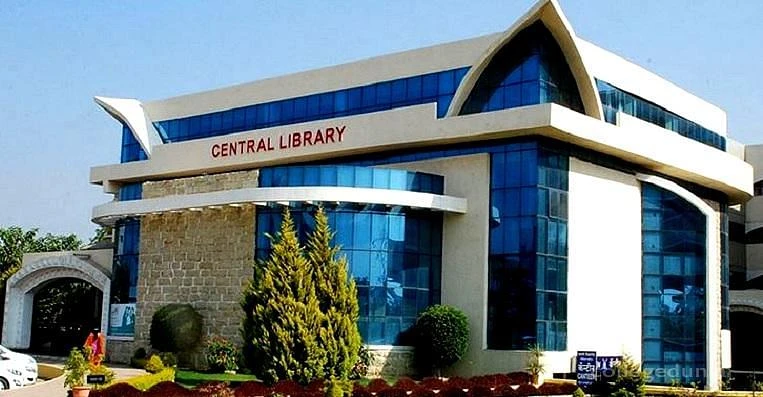
The campus is sprawling—nearly 43 acres—and the infrastructure is largely good. The 750-bed hospital is the undeniable heart of it all. It's a busy, functional tertiary care center, not a shiny corporate hospital. That's the point. The library is massive, labs are well-equipped with a simulation center, and sports facilities are adequate with a large playground and courts.
Hostels are in seven separate buildings. Rooms are twin-sharing with attached bathrooms, and students describe them as spacious and clean. The major, recurring pain point is the mess food. Reviews frequently cite poor quality and even occasional hygiene issues, with one mentioning "insects in mess food." It's a significant daily grievance for many.
Socially, adjust your expectations. Sangli is a quiet, traditional town. The campus life is described as "peaceful" and academically focused. There's an annual Youth Festival and Sports Week, but if you're dreaming of a vibrant metropolitan college experience, you'll be disappointed. The Wi-Fi is reported as just "average." It’s a setup designed for study, not social media scrolling. The administration is known to be strict about attendance and rules, with a functional but sometimes slow grievance system.
The consensus from platforms like Quora, Reddit, and CollegeDunia is remarkably consistent. The praise is laser-focused on academics and clinical exposure. Students feel they get to see and do a lot, preparing them well for real-world medicine and the NEET-PG. The Foster Parent system gets rave reviews for creating a supportive learning environment.
The criticisms are equally clear. The exorbitant fee is the elephant in the room. The location is seen as a downside for those seeking a more balanced college life. Mess food quality is a near-universal complaint. And the management, while transparent, is often described as bureaucratic and slow.
The most telling summary comes from a Quora user: "If you want to study and see patients, it's 10/10. If you want a party life, look elsewhere." That's the trade-off in a nutshell. Ragging, officially, is stated to be non-existent with active squads, though students mention formal "introductory sessions."
This college presents a very specific value proposition. It's not for everyone. If you have a NEET rank that gives you a shot at a good government college or a deemed university in a major city, those are almost always better financial and lifestyle choices. However, if your rank is in the mid-to-lower spectrum for deemed universities (think 2.5 lakh to 4.5 lakh range) and your family can shoulder the ₹1.25+ crore cost, BVDUMCH Sangli becomes a serious contender.
You are paying primarily for two things: the Bharati Vidyapeeth 'A+' grade deemed university degree and, more importantly, the exceptional clinical exposure its border-town hospital provides. You are sacrificing city life, paying a premium, and committing to a rigorous, study-heavy environment. For a student who is unequivocally focused on becoming a skilled doctor and sees the MBBS as a direct stepping stone to PG specialization, the clinical training here can justify the investment. For someone seeking a more holistic, explorative college experience, it's likely not the right fit. The choice is stark, but at least it's clear.
In this preview: 1 photo · 0 videos
The exact MBBS fee for 2024 is ₹24,31,000 per year, which includes development fees.
As a Deemed University, it typically does not have a state-service bond. However, prospective students must check the latest Medical Counselling Committee (MCC) bond manual for any specific university-level bonds that may apply.
The patient load for PG students is very high. The attached hospital serves a large rural and semi-urban population from Western Maharashtra and Northern Karnataka, ensuring substantial clinical exposure.
Each campus has distinct advantages. The Pune campus generally has higher admission cutoffs and offers better city life. The Sangli campus provides a more peaceful study environment and a higher patient-to-student ratio for clinical training.
Official reports describe it as a "ragging-free campus." While some student reviews mention informal "introductory sessions," severe ragging is strictly prohibited and actively monitored by an Anti-Ragging Squad.
Share what future students should know about Bharati Vidyapeeth Deemed University Medical College and Hospital.
Student voices are not rewritten by colleges. We remove spam and abuse.
Wider admission question? Community PulseWhat should future students know?
Tell us which course you're considering. We'll help you work out the next step.
Get instant Partner access after mobile verification. Your public edits are reviewed before they go live.
Claim this college
 Auditorium
 Cafeteria
 Computer Labs
 Gym
Gym Hostel
 Medical
 Science Labs
 Sports Complex
 Study Library