Loading Admission Guardian content
Loading Admission Guardian content

Find a program, read its fee details and explore the admission requirements.
Summary of the programs shown below. Fee periods can differ by program. Check the note beside each amount before comparing costs.
| Course | Stream | Fees |
|---|---|---|
| Bachelor of Science [B.Sc] (Nursing) | Paramedical | 65000 |
| General Nursing and Midwifery [GNM] | Paramedical | 65000 |
Specializations
Eligibility: 10+2
Eligibility: 10+2
If you're looking for a disciplined, no-frills path into nursing with a clear focus on government job preparation, Birender Singh College of Nursing (BSCN) in Uchana, Jind, is a name that comes up consistently. Established in 2009 and managed by the Bangar Education Trust, it’s a private institution that feels more like a professional training academy than a typical college campus. Affiliated with the government-run Pt. Bhagwat Dayal Sharma University of Health Sciences (UHSR) in Rohtak, its reputation in the Jind-Hisar belt is built on a straightforward promise: rigorous academics, extensive clinical exposure at government hospitals, and a track record of placing graduates in stable nursing roles, both in India and abroad. Don't expect a vibrant social scene here. You come for the career.
BSCN’s portfolio is tightly focused on nursing and paramedical streams. The B.Sc. Nursing program is the main draw, with an annual intake of 60 students. They also run the 3-year GNM (General Nursing and Midwifery) and 2-year ANM (Auxiliary Nursing Midwifery) diplomas, plus Post Basic B.Sc. and M.Sc. Nursing for advanced studies. M.Sc. specializations include Medical-Surgical, Child Health, Community Health, and Maternity Nursing.
The academic rhythm follows the affiliating university’s calendar, but the real differentiator is the clinical training. It’s extensive and leans heavily on government facilities. Students get rotated through Civil Hospitals in Jind and Narwana, which offer high patient inflow—crucial for practical learning. Other tie-ups include Jindal Hospital in Hisar and the Institute of Mental Health in Amritsar for psychiatric nursing rotations.
Faculty strength is around 28, which for the student body translates to a decent student-faculty ratio near 10:1. The leadership under Principal Prof. Dr. Baba Vajrala sets a tone that students consistently describe as strict but supportive. The teaching style isn’t about theoretical lectures alone; there’s a clear push towards hands-on skills and exam preparation, especially for the government Common Entrance Test (CET).
Nursing placements work differently. There’s no single “placement day” with corporate recruiters. Instead, outcomes split into two clear tracks, and understanding this is key.
The first track is the government job. This is where the college’s preparation focus pays off. After completing their degree, graduates sit for competitive exams like the CET conducted by Haryana or national-level tests for institutions like AIIMS. Success here leads to roles as Nursing Officers. The packages for these government positions are notably higher, with alumni citing a range of ₹8.4 to ₹12 LPA. But that’s post-exam, not a direct campus placement.
The second track is direct recruitment by private hospitals. This is where the college’s industry connections come in. Top recruiters for on-campus hiring include major chains like Medanta, Fortis Healthcare, Max Healthcare, and Apollo, along with local multispecialty hospitals in the region. The average package for these private-sector roles is more modest, typically between ₹2.4 and ₹3.5 LPA. The college claims a placement percentage between 75% and 90%, which aligns with student reviews that emphasize good opportunities for those who are proactive.
A significant number of alumni have also pursued international opportunities in the UK, Canada, and Australia, leveraging the OET/IELTS pathways. The mandatory 6-month clinical internship at affiliated hospitals is a 100% affair and often serves as a direct pipeline to first jobs.
For a private nursing college, BSCN’s fee structure is relatively accessible, partly regulated by the affiliating university. For the 2024-25 session, the annual tuition fee for B.Sc. Nursing is approximately ₹65,000. Over four years, that’s about ₹2.6 lakhs in tuition alone.
You have to factor in other costs, though. There’s an application fee (₹1,000), annual exam fees (around ₹5,000), and library or technology charges (about ₹3,000). The big add-on is hostel and mess. Hostel fees range from ₹50,000 to ₹70,000 per year, depending on room type (single, double, or triple sharing). So, the total annual cost for an out-of-town student can easily touch ₹1.3 to ₹1.4 lakhs.
Financial aid is available through government schemes. SC/BC students from Haryana can apply for the state’s Post-Matric Scholarship. There’s also the Prime Minister’s Special Scholarship Scheme (PMSSS) for students from Jammu & Kashmir. General merit-based scholarships can be explored through the National Scholarship Portal (NSP).
Admission is centralized and merit-based. For the flagship B.Sc. Nursing and Post Basic B.Sc. programs, the sole gateway is the Common Entrance Test (CET) conducted by Pt. B.D. Sharma University of Health Sciences (UHSR), Rohtak. There’s no separate college-level exam.
The process is straightforward: you register on the UHSR counseling portal when applications open (usually May-July), take the CET, and then participate in online counseling based on your rank in the merit list. Eligibility for B.Sc. Nursing requires 10+2 with Physics, Chemistry, and Biology and a minimum aggregate of 45-50%.
For GNM and ANM diplomas, admissions might have a separate window (often around November) and can be based on 10+2 marks, as the eligibility is any stream with 40-45%. A limited management quota exists as per state norms, but the majority of seats are filled through the central counseling process. Keep a close eye on the university website for official notifications—that’s your primary source.
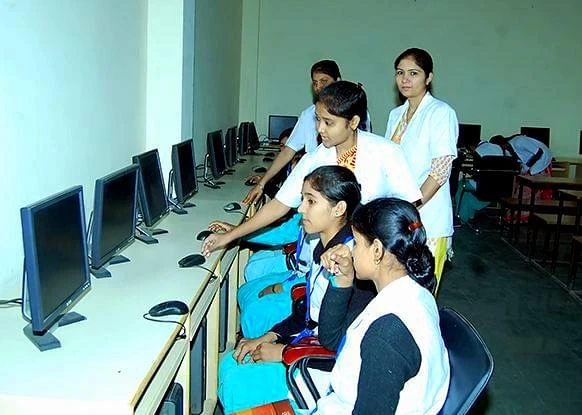
The campus spans about 3 acres right off the Jind-Patiala highway. It’s compact and functional. The infrastructure is built around practical training: you’ll find dedicated labs for Nursing Foundations (with manikins, CPR kits), Maternal & Child Health, Anatomy, Physiology, Nutrition, and a computer lab with internet for research.
The library holds over 3,000 medical books and 25+ journals, with digital access via the Helinet facility. Wi-Fi is available, but students note it’s primarily for academic use in labs and for staff; access in hostels is restricted or unreliable.
Now, the hostels are actually a strong point. They’re separate for boys and girls, and student reviews consistently rate them 4 out of 5 for quality. Rooms are airy, clean, and come with attached toilets. Amenities include a modern gym and 24/7 water and electricity. The mess and canteen serve hygienic vegetarian food, which gets rare positive mentions in reviews—a big deal in the world of college hostel food.
Student life? It’s quiet. The college provides its own buses for daily clinical postings, which is a major convenience. But socially, there’s not much. There are very few cultural fests or events. The atmosphere is disciplined and academic. The location in Uchana, while well-connected by rail (Uchana Station is 1 km away) and road, is a small town with limited outside recreation. This isn’t a place you choose for the “college experience.” You choose it for the routine and the focus.
Sifting through feedback on Shiksha and CollegeDunia paints a consistent picture. The median student here is career-oriented, often from a rural or semi-urban background in Haryana, and values stability over glamour.
The positives are repeated like a mantra: helpful, qualified faculty who emphasize practical skills; excellent clinical exposure at government hospitals; clean, secure hostels with good food; and a safe, disciplined environment especially for female students. One paraphrased review sums it up: “The teachers treat us like family, but they are very strict about clinical timings.”
The negatives are just as consistent. The rules are strict—mobile phones are prohibited during lectures and on campus, attendance is non-negotiable. Social life is virtually nonexistent. The location feels isolated if you crave city amenities. And the Wi-Fi policy frustrates many. As another student put it: “If you want a government job, this college is good because they prepare you for the CET exams from day one. But don’t come expecting fun.”
It’s a trade-off that students seem to understand and accept by the time they graduate.
Birender Singh College of Nursing is a specific tool for a specific job. It’s worth it if you are a student, particularly from Haryana or surrounding states, who views nursing as a stable profession and is targeting a government nursing officer post or a solid private hospital job. Its strengths—rigorous clinical training, disciplined preparation for competitive exams, and a safe, focused environment—align perfectly with that goal. The fees are reasonable for the sector, and the hostel facilities are better than average.
But you should probably look elsewhere if you want a balanced college life with extracurricular activities, a vibrant social scene, or a more autonomous, research-oriented academic environment. The strict rules and remote location are real compromises. Ultimately, BSCN is a pragmatic choice. It doesn’t promise to transform your worldview; it promises to train you for a reliable career in healthcare. For many students and their families, that’s exactly the deal they’re looking for.
In this preview: 1 photo · 0 videos
Birender Singh College of Nursing is a private institution managed by the Bangar Education Trust. It is officially affiliated with a government university, the University of Health Sciences, Rohtak (UHSR).
The total tuition fee for the 4-year B.Sc. Nursing program is approximately ₹2.6 Lakhs. This amount covers tuition costs and does not include additional expenses like hostel fees or university examination fees.
Yes, Birender Singh College of Nursing is a co-educational institution and admits male students into its B.Sc. Nursing program. It is noted, however, that the majority of the student population is female.
GNM students from the college have a high placement rate, securing positions in leading private hospital chains like Max and Fortis. Graduates are also eligible to apply for "Staff Nurse" posts in state government services.
Yes, the college provides transportation for clinical postings. It maintains its own fleet of buses to transport students daily to affiliated Civil Hospitals in Jind and Narwana for their clinical duties.
Share what future students should know about Birender Singh College of Nursing.
Student voices are not rewritten by colleges. We remove spam and abuse.
Wider admission question? Community PulseWhat should future students know?
Tell us which course you're considering. We'll help you work out the next step.
Get instant Partner access after mobile verification. Your public edits are reviewed before they go live.
Claim this college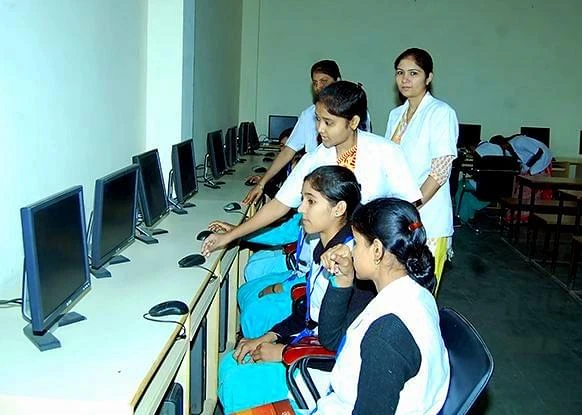
 Auditorium
 Cafeteria
 Computer Labs
 Hostel
 Science Labs
 Study Library