Loading Admission Guardian content
Loading Admission Guardian content

Find a program, read its fee details and explore the admission requirements.
Summary of the programs shown below. Fee amounts are not listed. Contact the college for its current fee schedule.
| Course | Stream | Fees |
|---|---|---|
| Bachelor of Technology [B.Tech] | Engineering |
Specializations
All accepted exams
Eligibility: 10+2 with 75% + JEE Main
Cambridge Engineering College in Fatehgarh Sahib is a study in practical compromise. Established in 2010, it's a private, AICTE-approved institution affiliated with I.K. Gujral Punjab Technical University (IKGPTU). For students with mid-tier JEE Main ranks or those seeking an affordable alternative to the massive private universities in the region, CEC offers a straightforward path to a B.Tech degree. The reality, pieced together from official claims and consistent student feedback, is one of modest expectations. You get a disciplined, academic-focused environment on a compact 12-acre campus right off the highway. The placement story is the most critical one: while the brochure mentions big tech names, the on-campus reality for most is defined by mass recruiters and packages that reflect the college's position in Punjab's engineering landscape. It's not a brand-name institute, but for a certain student, its lower financial barrier and no-nonsense approach can make sense.
The academic offering here is standard for a PTU-affiliated college. CEC runs four-year B.Tech programs with an intake of 60 students per branch. The popular choices are Computer Science & Engineering (CSE) and Electronics & Communication Engineering (ECE), followed by Mechanical, Civil, and Information Technology. The curriculum, exams, and grading (a 10-point CGPA system) are all dictated by IKGPTU. That means the academic calendar runs from August to May, split into two semesters.
Faculty strength is reported to be in the 21–30 range, with most holding M.Tech degrees. The number of PhDs is relatively low, which isn't unusual for a college of this tier. The teaching style is described as traditional—lecture-based and focused on covering the university syllabus. Attendance rules are enforced, with the typical 75% requirement. The college claims industry tie-ups through a "Talent Transformation Hub" for soft skills training. It's a structured, no-frills academic environment. You'll get the syllabus covered, but don't expect groundbreaking pedagogy or extensive research opportunities.
This is where you need to separate the brochure from the ground report. Officially, the college claims a placement rate of 80%+. Student reviews across platforms like CollegeDunia and Shiksha consistently paint a more modest picture, suggesting a realistic on-campus placement rate is closer to 40–50% for core branches (Mechanical, Civil), and somewhat higher for CSE and IT.
The package figures follow a similar pattern. The highest package touted is ₹12 LPA (unverified for the 2023-24 cycle). The average is reported between ₹4 to ₹6 LPA, with a median likely hovering around ₹3.5 to ₹4.5 LPA. Those numbers tell the real story.
Recruiter lists include big names like Amazon, IBM, and Microsoft. And here's a crucial clarification from the research: those top-tier companies often recruit from the group's flagship Cambridge Institute of Technology in Bangalore, or through off-campus drives that students must seek out themselves. The consistent on-campus recruitment at the Fatehgarh Sahib campus is driven by mass IT recruiters—TCS, Wipro, Infosys, Cognizant, and Capgemini. For core fields, companies like Mahindra & Mahindra and Sonalika Tractors visit. Banking roles from HDFC and ICICI are also part of the mix.
Every student completes a mandatory 6-month industrial training in their final year. The placement cell exists and functions, but its reach is limited. For CSE students with strong personal coding skills, the college's name won't be a barrier to off-campus opportunities in Mohali's QuarkCity or Noida. For Mechanical or Civil grads, the path is tougher and the starting salaries lower. That's the honest assessment.
The affordability is arguably CEC's strongest card. The annual tuition fee for a B.Tech program is estimated between ₹90,000 to ₹1,00,200 for the 2024-25 session. Over four years, that's a total tuition cost of roughly ₹3.66 lakhs.
Hostel and mess fees add another ₹60,000 to ₹75,000 per year, depending on whether you opt for AC or non-AC accommodation. Factor in semester exam fees (around ₹1,000 each), a one-time library security, and a development fund, and the total 4-year cost for a hostelite lands in the ballpark of ₹6.0 to ₹7.0 lakhs. That's a fraction of the cost at larger private universities in the state.
Financial aid is available primarily through government schemes. The Post-Matric Scholarship for SC/ST/OBC students (a Punjab Government scheme) is the most accessible. The college also mentions merit-based scholarships for students with high JEE Main scores or 10+2 marks, though the specifics and amounts aren't widely advertised.
Admission to the B.Tech programs is primarily through the centralized counseling conducted by the affiliating university, IKGPTU. They use JEE Main ranks as the primary criteria. The state-level PTU CET is also accepted, though JEE Main is more common.
The basic eligibility is 10+2 with Physics, Mathematics, and Chemistry/Biotechnology, with a minimum of 50% aggregate (45% for reserved categories).
The selection process is straightforward: you register for JEE Main, then participate in the IKGPTU counseling rounds when they open (typically May to August). You'll choose CEC based on your rank and seat availability. It's worth noting that 33.3% of seats are reserved for the management quota. These are filled via direct admission based on 10+2 merit, completely bypassing the entrance exam ranking system. If your JEE Main rank isn't competitive, this is an alternative route, though you'll pay the same fee.
Cutoffs aren't officially published in a detailed manner, but for a college of this tier, they are not excessively high. CSE typically requires the highest rank within the college, followed by ECE. Mechanical and Civil branches often have seats available in later counseling rounds. It's a realistic target for many students.
The campus is compact—12 acres—and located directly on the Sirhind-Chandigarh Highway. That makes it easily accessible by road but also means it's away from the hustle of a city center. The atmosphere is quiet, even isolated, which some students appreciate for focus and others find limiting.
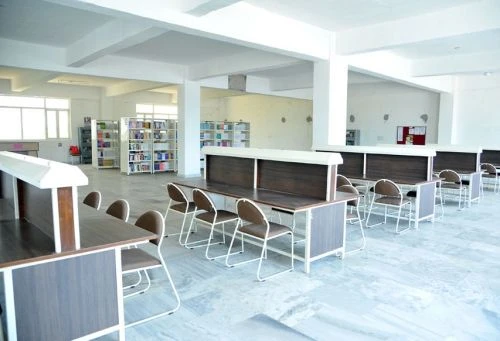
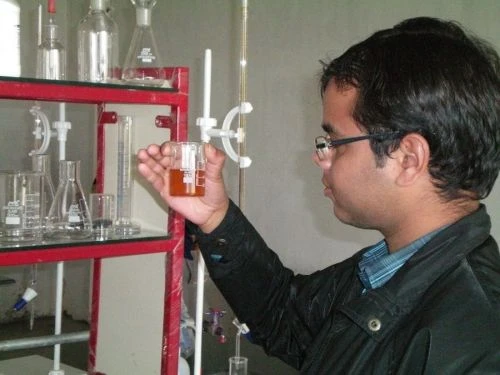
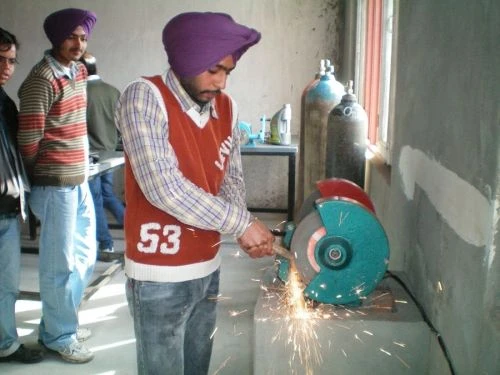
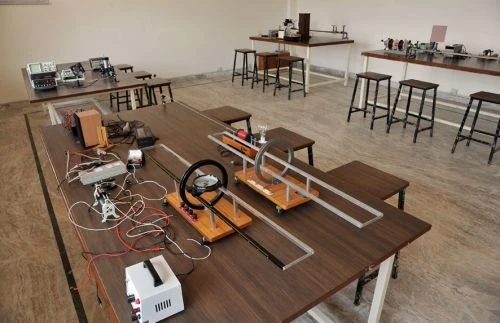
Infrastructure meets basic curriculum needs. Labs for physics, chemistry, and engineering workshops are equipped for syllabus requirements. Computer labs have high-speed internet, though students note Wi-Fi in hostels can be inconsistent. The library houses around 5,000 books and a few dozen journals.
Hostels are separate for boys and girls, with a total capacity for a few hundred students. Reviews rate them a 3 out of 5. Rooms are basic, clean, and functional. The food in the mess is repeatedly described as "average but edible." There's no major ragging problem reported, which is a significant plus for parents.
For extracurriculars, there are facilities for cricket, football, basketball, and volleyball. Indoor games like chess and table tennis are available. Don't expect massive cultural fests on the scale of LPU or Chandigarh University. The social scene is low-key. The college does provide a bus transport service for day scholars from Chandigarh, Mohali, and Patiala, which is a vital amenity given the location.
Synthesizing feedback from review sites and forums, a clear consensus emerges.
The positives are consistent: affordable fees, a disciplined and ragging-free environment, and a decent location on the highway for commuters. For a student who just wants to put their head down and study without financial pressure, these are valid points.
The negatives are just as consistent. The small campus size feels restrictive. Extracurricular and cultural life is minimal. The biggest gripe is with placements. There's a palpable sense that the placement data advertised often blends results from the more successful Bangalore campus, creating unmet expectations. The actual on-campus process is seen as okay for CSE/IT students targeting service-based IT jobs, but poor for core engineering branches. Administrative responsiveness is sometimes described as slow.
It's not a college students are passionately loyal to, but many view it as a pragmatic stepping stone—a place to get a degree without crippling debt, while relying on self-study and off-campus efforts for a career launch.
Cambridge Engineering College, Fatehgarh Sahib, serves a specific niche. It's worth serious consideration if you are a cost-conscious student with a mid-tier JEE Main rank, primarily targeting a B.Tech in CSE or ECE, and are prepared to be proactive about your own skill development and job search. The low fee structure is its biggest advantage, making it a financially sensible choice. The disciplined, quiet campus can work in your favor if you're self-motivated.
You should probably look elsewhere if you prioritize a vibrant campus life, extensive industry exposure, strong placement support for core engineering roles, or the brand value of a highly-ranked institute. The gap between the group's Bangalore flagship and this Punjab campus is significant, something the marketing doesn't always make clear.
In short, CEC is a functional, affordable engineering college. It won't open doors for you, but it also won't saddle you with debt. Your career trajectory here will depend far more on your individual effort than on the college's brand or placement cell. For the right student, that's an acceptable trade-off.
In this preview: 5 photos · 0 videos
Cambridge Engineering College (CEC) is considered an average choice for CSE. It offers decent laboratory facilities and basic placement opportunities, but it does not provide the high-end industry exposure found at top-tier engineering institutions.
The key difference lies in their scale and performance. While both campuses are under the same parent trust, the Cambridge Institute of Technology (CIT) in Bangalore is much larger, higher-ranked, and has a significantly better placement record compared to the Cambridge Engineering College in Punjab.
Yes, the college operates bus services for students from Chandigarh, as well as from Mohali and Patiala.
The total estimated cost for the complete 4-year B.Tech program, including hostel expenses, ranges between ₹6.0 Lakhs to ₹7.0 Lakhs.
Recent reviews indicate a safe hostel environment, with the college enforcing strict anti-ragging policies.
Share what future students should know about CEC.
Student voices are not rewritten by colleges. We remove spam and abuse.
Wider admission question? Community PulseWhat should future students know?
Tell us which course you're considering. We'll help you work out the next step.
Get instant Partner access after mobile verification. Your public edits are reviewed before they go live.
Claim this college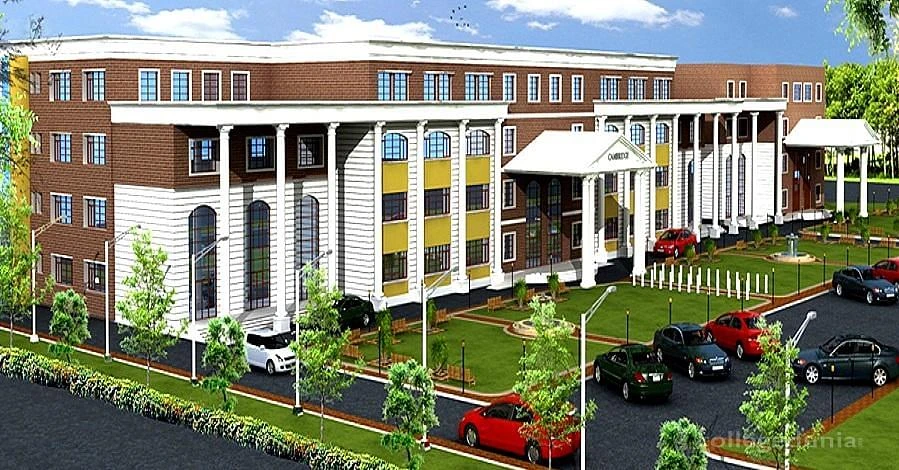
 Cafeteria
 Computer Labs
 Gym
Gym Hostel
 Medical
 Science Labs
 Sports Complex
 Study Library