Loading Admission Guardian content
Loading Admission Guardian content

Provisional score based on available data. It may change as more information is verified.
Find a program, read its fee details and explore the admission requirements.
Summary of the programs shown below. First-year fee. Check the note beside each amount for inclusions and exclusions.
| Course | Stream | Fees |
|---|---|---|
| Bachelor of Technology [B.Tech] | Engineering | 50000 |
Specializations
Eligibility: 10+2 with 75% + JEE Main
 Arcgate
 Bigbox Containers
 Centre for Development of Advanced Computing (C-DAC)
 Loganix
 Mayur Wovens
 Mind Inventory
 Raman Roadways
 Software Suggest
 X-Byte Enterprise Solutions
If you're looking at engineering colleges in Rajasthan and your JEE Main score isn't sky-high, the Chartered Institute of Technology in Abu Road is a name that comes up. It's not a brand that echoes across the country, but in the Sirohi region, it's considered a solid, no-frills option. Think of it as a practical choice for students who want a disciplined environment, approachable faculty, and a degree without a massive financial burden. The campus sits at the foothills of Mount Abu, which means it's peaceful—sometimes too peaceful, given its remote location. The placement numbers won't blow you away, but they're honest for a Tier-3 private college. You get what you pay for, and at CIT, that's a basic but functional engineering education with a focus on getting you across the finish line.
CIT sticks to the fundamentals, offering standard B.Tech programs across five core engineering branches. There's no fancy nomenclature or niche specializations like AI or Data Science as standalone degrees—though elements are integrated into the CSE curriculum. The annual intake is modest, with CSE being the most popular (60-90 seats) and other branches like Mechanical, Civil, Electrical, and Electronics & Communication taking in 30-60 students each. They also run a lateral entry program.
The academic rhythm follows the BTU semester system. A key detail students should know: the grading uses a 10-point CGPA, and passing isn't just about the final exam. Thirty marks come from internal assessments—mid-terms, assignments, and crucially, attendance. You need 75% attendance to even sit for exams, a rule they apparently enforce.
Faculty quality is a consistent bright spot in reviews. With around 45-55 members, the team isn't packed with PhDs (maybe 10-15%), but is led by M.Tech holders with experience. Names like Mr. Shivram Meena and Mr. Shailendra Singh (CSE) are mentioned as being particularly supportive. The vibe is less about cutting-edge research and more about foundational teaching and exam preparation. They have MoUs with local industries for internships and promote NPTEL certifications, which is a decent effort for a college in this location.
This is where you need to separate the brochure from the ground report. The college officially claims a 75% placement rate for eligible students. And that's probably technically true if you count every offer. But across student reviews on platforms like Shiksha and CollegeDunia, the working number for genuine engineering roles is closer to 40-50% for core branches (Mechanical, Civil) and maybe 60% for CSE.
The package figures tell a clearer story. The verified highest package for the 2024-25 cycle was 6.0 LPA. You might see wild claims of 12-20 LPA floating around—treat those as exceptional off-campus successes, not the norm. The average package sits firmly in the ₹2.84 to 3.2 LPA range, with a median around ₹2.5 LPA.
Recruiters are a mix of IT service firms and local Rajasthan-based industries. For IT, you're looking at TCS iON, Mindtree, Tech Mahindra, Genpact, and HCL. Pool campus drives with Infosys and IBM also happen. For core engineering, companies like L&T, BKT Tyres, Modern Insulators, and Sonalika Tractors visit. A lot of roles, especially for non-CSE students, lean towards BPO, sales, or logistics (e.g., Raman Roadways).
The takeaway? You'll likely get a job if you're in the top half of your class, particularly in CSE. But it's often a stepping stone. As one 2023 grad put it, "Core companies are rare." The mandatory 45-day internship after the 6th semester helps, with most students finding opportunities in Udaipur, Ahmedabad, or Jaipur.
Affordability is one of CIT's main draws. The fees are regulated by BTU and the state government, which keeps them relatively low compared to private universities in metro cities.
For the 2024-25 cycle, the annual tuition fee for B.Tech CSE is ₹65,000. For other branches (ME, CE, EE, ECE), it's between ₹55,000 and ₹60,000. On top of that, add an exam fee of ₹2,000 per semester and a one-time, refundable caution deposit of ₹5,000.
If you need accommodation, the hostel and mess fees range from ₹75,000 to ₹85,000 annually. Reviews rate the hostels a 3.1/5—basic but clean. The mess food gets a slightly better 3.5/5, with mentions of occasional "free lunch" events.
Crunching the numbers, the total estimated cost for a 4-year B.Tech degree, including hostel, lands between ₹5.5 and ₹6.5 lakhs. That's a manageable sum for many middle-class families.
Financial aid is available. The Tuition Fee Waiver Scheme (TFWS) covers full tuition for top merit students whose family income is below ₹8 LPA. There are also standard Rajasthan state post-matric scholarships for SC/ST/OBC/Minority students, applied for through the Social Justice & Empowerment Department.
Getting into CIT is straightforward if you meet the basic criteria. Admission is primarily through two channels: your JEE Main score or the Rajasthan Engineering Admission Process (REAP). REAP is the state's centralized counseling system, and it's how most seats are filled.
The cutoffs aren't intimidating. For the 2024 session, having any positive JEE Main score or a Class 12 (PCM) percentage above 60% was generally sufficient to secure a seat in core branches. For CSE, the cutoff is a bit higher, but it remains accessible compared to colleges in Jaipur or Delhi-NCR.
The seat matrix follows the state pattern: 70% of seats are reserved for Rajasthan domicile students, 15% for students from outside Rajasthan, and 15% are under the Management Quota. The application window for REAP typically runs from May to August, with a registration fee of ₹700–1,000. Once you're through counseling, you're in. The official CIT website has contact details for any admission queries, but the process itself is handled by the state portal.
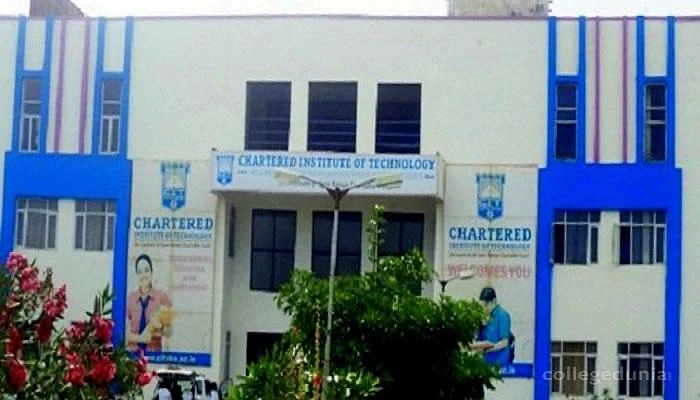
Life at CIT is defined by its location. The approximately 11-15 acre campus is spacious and scenic, nestled near Mount Abu. It's peaceful. Some would say isolated. The nearest major town is Abu Road, about 6-7 km away, with a railway station on the Delhi-Ahmedabad line. College buses cover a 30km radius, but if you crave city life, you're out of luck. Udaipur's airport is 158 km away.
Infrastructure is functional. CSE labs are air-conditioned and decently equipped. Labs for mechanical and civil have the necessary machinery (lathes, UTM), though some students note the equipment is aging. The library has a digital setup and a physical collection of around 15,000 books, but reviews complain about a lack of latest editions.
The hostel is not mandatory, but it's recommended given the remote location. The separate boys' and girls' blocks are basic—clean but no luxury. The biggest gripe? The Wi-Fi. It's available but described as painfully slow in hostels (1-2 Mbps), though better in the computer labs.
On the plus side, there's a large playground for cricket and football, plus courts for basketball and volleyball. The social scene is low-key. Fests happen, but as one student said, "don't expect anything like IITs." Your friend circle becomes your campus life. The strict 75% attendance rule and a reported lack of ragging culture enforce a disciplined, study-focused atmosphere.
Synthesizing dozens of reviews from Shiksha, CollegeDunia, and Quora paints a consistent picture. CIT is not a place students rave about, but many respect it for what it is.
The positives are remarkably uniform. Faculty support is the number one compliment. Teachers are repeatedly called "friendly," "supportive," and "approachable." They're known to go the extra mile for students preparing for GATE or government exams. The peaceful environment is a big plus for those who want to focus. The affordability offers a good ROI, and the discipline (strict attendance, no ragging) is appreciated by parents.
But the negatives are just as consistent. Placement quality is the biggest concern—many jobs are in BPOs or sales, not core engineering. The remote location limits exposure to hackathons, meetups, and even simple weekend options. Students feel the BTU curriculum is outdated, lacking focus on modern tech like Cloud or DevOps. And there are grumbles about slow infrastructure updates—things like broken windows or that sluggish Wi-Fi.
A 2024 B.Tech Mechanical student summed up the trade-off perfectly: "If you want to study for GATE or Govt exams, the teachers will back you 100%. But don't expect a 10 LPA job from the campus." Another from CSE (2025) noted, "The campus life is basically just your friend circle."
CIT Abu Road is a very specific kind of college. It's not for everyone, and it makes no pretensions otherwise. If you're a student from the Sirohi, Jalore, or Pali region—or anywhere in Rajasthan—with a modest academic profile and a budget-conscious family, CIT represents a sensible, low-risk path to a B.Tech degree. The faculty support is genuine, the discipline keeps you on track, and the fees won't cripple you financially. It's a good base for preparing for GATE or other competitive exams where self-study is key.
However, if your primary goal is a high-paying, core engineering job straight out of campus, or you thrive in a vibrant, metropolitan college environment, you should probably look elsewhere. The placement outcomes are modest, and the remote location is a significant social and professional limitation. You'll need to be proactive, supplement the basic syllabus with online courses, and likely view the campus placement as a starting point, not a destination. For the right student—one seeking a affordable, supportive, and quiet place to earn a degree—CIT is a worthwhile option. For others, the limitations might feel too constraining.
In this preview: 1 photo · 0 videos
Yes, the CSE branch is considered the best at CIT Abu Road in terms of placement records and faculty quality. However, students are advised to supplement their university syllabus, which is considered basic, with additional online courses for a more comprehensive learning experience.
The overall placement claim of 75% includes BPO and non-technical roles. For core engineering roles, the placement rate is approximately 30–40%. The average salary packages for placed students typically hover around ₹3 Lakhs Per Annum (LPA).
No, staying in the college hostel is not mandatory. However, it is highly recommended for students coming from outside Abu Road due to the institute's remote location, which makes commuting difficult.
Yes, the college supports GATE preparation. Faculty members are known to provide extra guidance and study materials specifically for students aspiring to take competitive exams like GATE and IES.
The college is well-connected by road via National Highway 14 (NH-14). Abu Road itself is a major railway station on the Delhi-Ahmedabad line, making it easily accessible for students traveling from regions like Gujarat and North Rajasthan.
Share what future students should know about CIT.
Student voices are not rewritten by colleges. We remove spam and abuse.
Wider admission question? Community PulseWhat should future students know?
Tell us which course you're considering. We'll help you work out the next step.
Get instant Partner access after mobile verification. Your public edits are reviewed before they go live.
Claim this college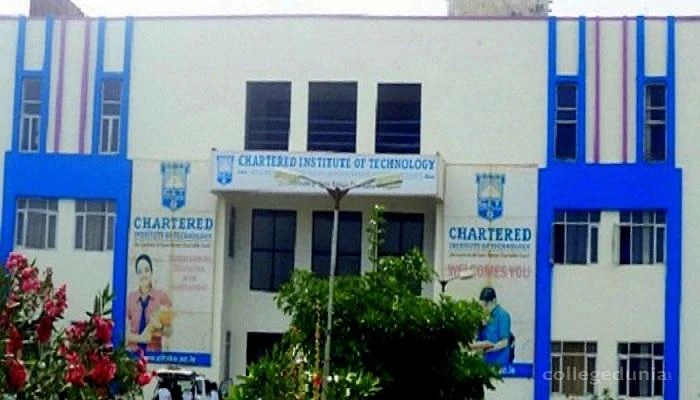
 Auditorium
 Cafeteria
 Computer Labs
 Gym
Gym Hostel
 Medical
 Science Labs
 Sports Complex
 Study Library