Loading Admission Guardian content
Loading Admission Guardian content

Provisional score based on available data. It may change as more information is verified.
Find a program, read its fee details and explore the admission requirements.
Summary of the programs shown below. First-year fee. Check the note beside each amount for inclusions and exclusions.
| Course | Stream | Fees |
|---|---|---|
| Bachelor of Engineering [BE] | Engineering | 50000 |
Specializations
All accepted exams
Eligibility: 10+2 with 50% + TNEA
Cheran College of Engineering in Karur is a study in contrasts. Established in 2012, it’s a relatively young, private institution that’s carved out a specific niche: offering affordable, disciplined, and no-frills engineering education under Anna University. For students with mid-range TNEA ranks, particularly from the surrounding districts, it’s a practical option. But you have to know what you’re signing up for. The campus life is quiet, the rules are strict, and while placements happen, the roles and packages are often modest. It’s a college that prioritizes function over flair, and for a certain segment of students, that’s exactly the point.
The college sticks to core engineering disciplines with a clear focus on undergraduate education. All programs are four-year B.E. degrees following the Anna University curriculum and its Choice Based Credit System. The intake numbers tell a story about demand and focus. Computer Science and Engineering (CSE) and Electronics and Communication Engineering (ECE) lead with 60 seats each, reflecting the job market's pull. Electrical, Mechanical, and Civil Engineering have 30 seats apiece.
Faculty accessibility is a consistent positive in student reviews. With around 68 members, the student-teacher ratio allows for interaction. That said, the proportion of PhD holders is estimated to be on the lower side, around 10-15%. The academic approach is described as traditional and exam-focused, which aligns with the overall disciplined environment. They’ve signed MoUs with local industries, particularly in Karur’s strong textile and bus body manufacturing sectors, which can open doors for project work or internships in those fields.
This is where a dose of realism is essential. The college’s official literature might tout a 90%+ placement rate. And sure, many students do get job offers. But the devil’s in the details. Across platforms like CollegeDunia and Shiksha, alumni suggest the effective on-campus placement rate for the entire cohort is closer to 50-60%, with CSE naturally faring better. For core branches like Mechanical or Civil, the roles are often with small to mid-scale local manufacturing units, with titles like “Trainee” or “Line Leader” and take-home salaries starting around ₹12,000 to ₹15,000 per month.
The reported highest package for the 2023-24 batch was between ₹4.5 and ₹6 LPA, almost exclusively for CSE/ECE students landing IT service roles. The average package sits in the ₹2.5 to ₹3.2 LPA range, with a possible median around ₹2.8 LPA. Recruiters are a mix of IT mass recruiters and local industry. You’ll see names like TCS, Cognizant, Wipro, and Infosys for software roles. For core engineering, companies like SL Lumax, TVS Motors, and various local component manufacturers visit. It’s a placement cell that provides opportunities, but don’t confuse it with the high-flying recruitment drives of top-tier colleges.
Affordability is one of CCE’s strongest selling points, especially for students coming through the Tamil Nadu Engineering Admissions (TNEA) government quota. For them, the annual tuition is remarkably low, hovering between ₹50,000 and ₹55,000. Management quota fees are higher, ranging from ₹85,000 to ₹1.1 lakhs depending on the branch.
The other major cost is accommodation. Hostel and mess fees combined run from ₹75,000 to ₹90,000 annually. Add in a one-time admission fee (₹1,000), a refundable caution deposit (₹5,000), and optional transport (₹12,000-₹25,000), and you can map out the total cost. A day scholar on government quota might spend about ₹2.2 lakhs for the entire degree. A hosteller on management quota is looking at an investment of roughly ₹6.5 to ₹7.5 lakhs over four years.
Financial aid is available through state schemes. First Graduate scholarships and fee waivers for SC/ST/SCC candidates are applicable. The college also mentions merit-based waivers for students who secured a cutoff mark above 180 in their 12th standard.
Admission is straightforward and centralized. There is no separate entrance exam. Your ticket in is your performance in the 12th-grade board exams (Physics, Chemistry, and Mathematics). Admission is conducted entirely through the TNEA counseling process based on the calculated cutoff marks.
The college’s TNEA code is 2355. Expected cutoff ranks for the 2024 session give you a sense of the competition—or lack thereof—for different branches. For the General Category, CSE typically fills within ranks 80,000 to 1,10,000. ECE follows in the 1,00,000 to 1,30,000 range. Branches like Mechanical and Civil Engineering often have seats available through the final rounds of counseling, with cutoffs extending past 1,50,000. The application window for TNEA counseling usually opens in May and runs through June. You’ll need to register on the official TNEA portal.
The 20-acre campus on the Coimbatore highway is functional. It’s not a sprawling, vibrant university town. Infrastructure is adequate. Labs for specific engineering disciplines exist—CAD/CAM, Thermal, VLSI—but student feedback often describes the equipment as functional yet somewhat aging, especially in core branches. The library spans 450 sq. meters with a collection of around 10,000 books and digital access via DELNET. Wi-Fi is available in specific zones, but don’t expect blazing speeds; reports mention average connectivity.
Hostels are separate for boys and girls. Reviews rate them around 3.5 out of 5: basic, spacious enough, but not luxurious. The mess provides both vegetarian and non-vegetarian food, with the common student gripe being that the menu gets repetitive, though it’s considered hygienic. A fleet of college buses connects the campus to Karur, Erode, and Dindigul districts, which is a crucial amenity given the location.
Life here is academically focused. And that’s a polite way of putting it. Social and cultural events are few and far between. The college enforces a strict dress code (uniforms) and heavily restricts mobile phone usage on campus. For some students—and often their parents—this disciplined, “school-like” atmosphere is a positive, minimizing distractions. For others, it feels overly restrictive and dull.
Synthesizing the chatter from review sites and forums paints a clear, consistent picture. The positives are usually about the basics done right: a disciplined environment, low fees, and approachable faculty who help with academics. It’s seen as a good option for students who want to keep their heads down and study.
But the negatives are just as consistent. The strict rules are a major pain point for many. The placement quality, as discussed, doesn’t always match the brochure claims. One recurring theme in reviews is the nature of the companies; as one paraphrased comment from CollegeDunia put it, “Placements are 100% on paper, but many companies are small-scale industries from nearby areas.” There’s also mention of administrative hiccups, possibly tied to management transitions or renovations. The consensus is best summed up by a sentiment echoed on Shiksha: “The college is good for those who want a quiet place to study without distractions, but don’t expect a high-profile campus life.”
It depends entirely on your priorities and your rank. If you have a TNEA rank between 80,000 and 1,50,000, are budget-conscious, and value a strict, no-nonsense academic environment over campus vibrancy, then Cheran College of Engineering is a pragmatic choice. It’s a solid, if unspectacular, platform to earn an Anna University degree without a huge financial burden. For students targeting CSE and willing to hustle for better IT placements, it can be a stepping stone.
However, if you’re looking for a vibrant college experience with active clubs, frequent fests, and a high probability of landing a premium job directly from campus, you’ll likely be disappointed. Students with ranks that could secure seats in older, NAAC-accredited colleges or those in more metropolitan areas should probably look there first. Cheran Karur is a workmanlike institution. It serves a specific purpose for a specific student profile—know if you fit it.
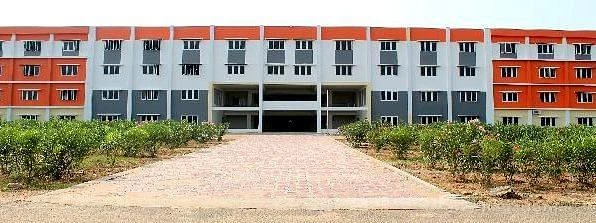
In this preview: 1 photo · 0 videos
Yes, the Computer Science and Engineering (CSE) branch is considered the best at Cheran College of Engineering, Karur, and receives the highest placement priority from the institution. However, the placement packages for this branch are generally reported to be in the range of 3 to 4 LPA.
The official TNEA (Tamil Nadu Engineering Admission) counseling code for Cheran College of Engineering in Karur is 2355. This code is essential for students applying through the state's single-window counseling process.
Yes, the college provides bus facilities for students commuting from Erode. The institution operates buses specifically on the Karur-Erode route to facilitate transportation for its students.
Mobile phone usage is strictly restricted during class hours at Cheran College of Engineering. Furthermore, the use of mobile phones is generally discouraged across the campus premises to maintain an academic environment.
Cheran College of Engineering in Karur and the Cheran institutions in Coimbatore belong to the same educational trust but are separate campuses. The Karur campus is specifically an engineering college, while the Coimbatore campus houses colleges for Arts, Science, and Pharmacy.
Share what future students should know about Cheran College of Engineering.
Student voices are not rewritten by colleges. We remove spam and abuse.
Wider admission question? Community PulseWhat should future students know?
Tell us which course you're considering. We'll help you work out the next step.
Get instant Partner access after mobile verification. Your public edits are reviewed before they go live.
Claim this college
 Auditorium
 Cafeteria
 Computer Labs
 Hostel
 Medical
 Science Labs
 Sports Complex
 Study Library