Loading Admission Guardian content
Loading Admission Guardian content
Provisional score based on available data. It may change as more information is verified.
Selected ranking categories, with the recorded year beside each result. Open all records for the complete history.
5 published records · Lower numeric ranks are stronger
Outlook
B.Tech · private
#502020
Outlook
Engineering · private
#472020
Find a program, read its fee details and explore the admission requirements.
Summary of the programs shown below. Total course fee. Check the note beside each amount for inclusions and exclusions.
| Course | Stream | Fees |
|---|---|---|
| Master of Business Administration [MBA] | Management | 41000 |
| Master of Engineering [ME] (VLSI Design) | Engineering | 60000 |
| Bachelor of Engineering [BE] | Engineering | 220000 |
| Bachelor of Technology [B.Tech] (Artificial Intelligence & Data Science) | Engineering | 220000 |
Specializations
All accepted exams
Eligibility: Pass in Graduation + CAT
Specializations
Eligibility: Graduation with 50% + TANCET
Specializations
All accepted exams
Eligibility: 10+2 with 50% + TNEA
Specializations
All accepted exams
Eligibility: 10+2 with 50% + TNEA
2 exams with cutoff data available - showing recent entries
 Aagna
Aagna Aarbee Structures
 Apollo Munich
 Asahi India Glass Ltd.
 ATOS SYNTEL
 Augusta Hitech Soft Solutions
 Avighna Aluminium Company
 Axis Bank
 Canara HSBC OBC Life Insurance
 Ceasefire Industries
 City Union Bank
 Cleantek
 Cognizant
 CRI
CRI CSS Corp
 Digital Nirvana Information Systems (I) Pvt Ltd
 DNMC International
 Entercon Training Services
 Enterprise IT Solution
 Face
Face Focus Edumatics
 Future Generali
 HCL Technologies
 ICICI Bank
 IDBI Federal
 Indoshell Cast Private Limited
 Infonet Solutions
 Infosys Technologies
 Mallow Technologies
 Oasys
Oasys Popular Systems
 Ridsys
 Sabari Woods & Plywoods
 Sakthi Auto Component Limited
 Savvy Soft
 Shriram Transport Finance Company Ltd.
 Sprout Objects
 Squintech
 SS Group of Companies
 Tata Consultancy Services
 TCS
TCS Teemage Precast In
 TVS Iyengar and Sons Limited
 TVS Motors
 UNIQ Technologies
 Vcare Medspa
 Wipro
WiproChettinad College of Engineering and Technology (CCET) in Karur presents a clear trade-off. You get a sprawling, modern campus, NBA-accredited programs, and a disciplined academic environment—all for a tuition fee that’s a fraction of what you’d pay in Chennai. But you’ll also trade away a typical ‘college life’ for a rulebook that bans mobile phones on campus and enforces strict attendance. It’s a choice between a focused, value-for-money education and the freedom many students expect. The placements? They’re decent, especially in IT, but don’t expect the high-flying packages of top-tier institutes. For a student from a Tamil Nadu town looking for a solid, affordable engineering degree without big-city distractions, CCET makes a compelling case.
CCET runs a standard set of engineering programs under the Anna University curriculum. The intake is typically 60 seats per branch. At the undergraduate level, the popular choices are the B.E. in Computer Science and Engineering and Electronics and Communication Engineering—both hold NBA accreditation, which is a solid quality marker. They’ve also added newer programs like B.Tech in Artificial Intelligence and Data Science and Information Technology to keep pace with industry trends. For postgraduates, there’s an MBA program with a sizable 90-seat intake and an M.E. in VLSI Design.
The academic culture is where CCET defines itself. It’s structured and disciplined, following the Anna University semester schedule to the letter. The faculty strength is around 161, and a notable 65% in core departments hold or are pursuing PhDs. That’s a strong ratio for a private college in a tier-3 location. You’ll find professors like Dr. R. Punithavathi (CSE) and Dr. M. Kumar (ECE) frequently mentioned by students as being particularly supportive. The college has inked MoUs with over 20 industries, including Mallow Technologies and Chettinad Cement, which sometimes feed into project work and internships. It’s a no-frills, study-focused setup.
This is where a dose of realism is essential. The college’s official placement claim hovers around 90%, but student reviews consistently peg the effective on-campus placement rate closer to 75-80% for IT and core branches, with Civil and Mechanical seeing lower numbers. The highest package for the 2024-25 cycle was reported at 7 LPA, a noticeable step down from a historical high of 12 LPA in 2022-23. The average package typically falls in the 3.5 to 4.5 LPA band. The official NIRF 2025 report lists the median package for four-year UG programs at ₹2,31,335—a figure that aligns more with the ground-level stories than the brochure averages.
Recruiters are a mix of mass IT hirers and regional companies. You’ll see names like TCS, Wipro, Infosys, and Cognizant regularly visiting campus. Zoho and Amazon are also listed, often for internships or picking up top performers. For core roles, placements are thinner, with companies like Tata Motors, Bosch, and Chettinad Cement showing up. A significant chunk of offers also comes from banking and finance firms like ICICI Bank, Axis Bank, and Karur Vysya Bank. The training starts early, from the first year, which is a plus. But there’s a strict caveat: students with any backlog (arrear) are usually barred from sitting for interviews. That policy puts real pressure on academic performance.
The affordability of CCET is arguably its biggest draw. For a B.Tech under the Tamil Nadu Engineering Admissions (TNEA) government quota, you’re looking at an annual tuition fee of just ₹50,000 to ₹65,000. Over four years, that totals roughly ₹3.5 to ₹4.5 lakhs. Management quota seats are higher, ranging from ₹85,000 to ₹1.1 lakh per year. The MBA program is surprisingly affordable at about ₹41,000 for the entire two-year course under the government quota.
Living on campus adds to the cost. Hostel fees, including room rent, a mandatory mess, and establishment charges, run between ₹60,000 and ₹85,000 per year, depending on whether you opt for an AC room. College transport for day scholars can cost an additional ₹8,000 to ₹17,000 annually.
To offset costs, the college and state government offer several scholarships. The Chettinad Merit Scholarship rewards high marks in 12th grade. The Tamil Nadu government’s First Graduate Scholarship can provide a fee reduction of about ₹25,000-₹27,500. There are also sports scholarships for athletes competing at state or national levels.
Admission to the B.E./B.Tech programs is straightforward and based entirely on your Class 12 marks. There’s no separate entrance exam for most seats—it all goes through the Tamil Nadu Engineering Admissions (TNEA) counseling process. Your PCM (Physics, Chemistry, Mathematics) percentage determines your cutoff score, which then generates a state rank.
The TNEA cutoff ranks for the 2024/2025 cycle give you a clear picture of demand. For the General Category, Computer Science and Engineering had the highest demand, with closing ranks between 37,053 and 75,753. The new AI & Data Science program wasn’t far behind, closing between 40,199 and 70,503. Electronics and Communication Engineering (ECE) cutoffs were in the 78,279 to 94,048 range. Branches like Mechanical and Civil had closing ranks well above 1 lakh, indicating they are easier to get into. The application window for TNEA is typically May through June.
For the MBA and M.E. programs, you need to take the TANCET (Tamil Nadu Common Entrance Test). Selection is then based on your TANCET score and subsequent counseling.
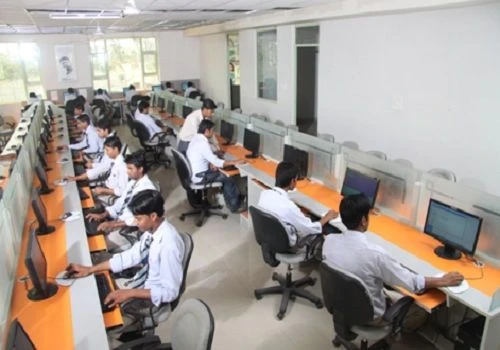
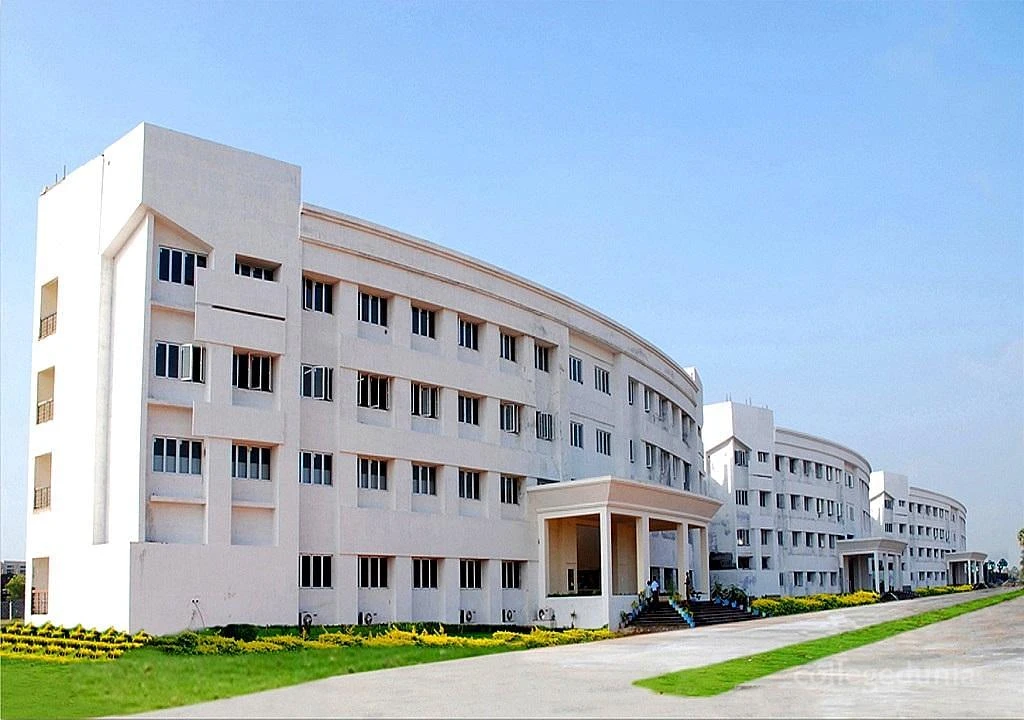
CCET’s 120-acre campus (though some filings note 47-48 acres) is consistently praised as the best in Karur. It’s green, well-maintained, and the infrastructure feels modern. Labs for CSE and ECE are well-equipped, and the mechanical and civil workshops are noted as being functional and clean. Classrooms come with 3D projectors and audio systems. The central library stocks over 30,000 volumes and provides digital access to journals. Campus-wide Wi-Fi is available, though speeds are unverified.
Hostels are separate for boys and girls, with rooms typically on a triple-sharing basis. Reviews rate them around 3.5 out of 5—clean and adequate, but not luxurious. The mess provides both vegetarian and non-vegetarian food, and it’s mandatory for all hostellers.
Now, the defining aspect of student life: discipline. CCET is known for it. The most talked-about rule is the complete ban on mobile phones within the academic block. Students must deposit their phones at a counter upon entry. Hostel timings are strict, and attendance rules are tightly enforced, with internal marks often linked to it. This creates a “school-like” atmosphere that parents love but some students find stifling. Social life is quiet. There are few major fests or cultural events compared to autonomous colleges in bigger cities. If you’re looking for a vibrant, event-filled campus life, you’ll be disappointed.
Scouring platforms like Shiksha, CollegeDunia, and Quora reveals a consistent narrative. The positives are clear: “The infrastructure is brilliant,” is a near-universal comment. Parents and students seeking a safe, focused environment appreciate the discipline. Many call out faculty in the CSE and ECE departments as being genuinely knowledgeable and approachable. The value-for-money proposition is a huge plus, especially for students from middle-class families.
But the negatives are just as consistent and stark. The strictness is the biggest gripe. “You can’t use your phone, and the warden is very strict about timings,” sums it up. The placement quality receives mixed reviews. While many acknowledge getting a job, there’s frustration that most offers cluster at the lower end of the salary spectrum (2.5–3.5 LPA), especially for core engineering branches. The social scene is described as dull or “strictly academic.” A common piece of advice from alumni encapsulates the trade-off: “If you want a peaceful environment to study and a decent job in TCS/Wipro, this is good. If you want ‘college life’ with fests and freedom, look elsewhere.”
CCET Karur is a specific solution for a specific type of student. It’s absolutely worth it if you’re a cost-conscious student from Tamil Nadu, primarily focused on securing a respected engineering degree and a stable entry-level IT job. The NBA accreditations, low fees, and disciplined environment provide a solid, no-nonsense foundation for your career. It’s a sensible, low-risk choice.
However, you should probably look elsewhere if you highly value personal freedom, a vibrant campus social life, or are aiming for top-tier core engineering placements or ultra-high software packages. The strict rules and modest placement ceilings are real constraints. Think of CCET as a reliable workhorse, not a showhorse. It will get the job done without fanfare or fuss, but it won’t provide the glamorous or liberating ‘college experience’ some students seek. For the right candidate—one who aligns with its disciplined, value-driven ethos—it’s a very good option.
In this preview: 2 photos · 0 videos
Yes, Chettinad College of Engineering and Technology (CCET) is considered a good choice for CSE. Its Computer Science and Engineering program is accredited by the NBA, and it reportedly has the highest placement record within the college for IT roles.
The annual hostel fee at CCET Karur, which includes mess charges, ranges from approximately ₹60,000 to ₹85,000. The total cost varies depending on the type of room accommodation chosen by the student.
Placements for Mechanical Engineering at CCET Karur are described as average. Most students secure positions in IT companies or small-scale manufacturing units, with typical annual salary packages ranging around 2.5 to 3 LPA.
No, Chettinad College of Engineering and Technology is not an autonomous institution. It is currently affiliated with Anna University.
No, mobile phones are not allowed during college hours. CCET Karur enforces a strict ban, requiring students to deposit their phones at the entrance upon arrival.
Share what future students should know about CCET.
Student voices are not rewritten by colleges. We remove spam and abuse.
Wider admission question? Community PulseWhat should future students know?
Tell us which course you're considering. We'll help you work out the next step.
Get instant Partner access after mobile verification. Your public edits are reviewed before they go live.
Claim this college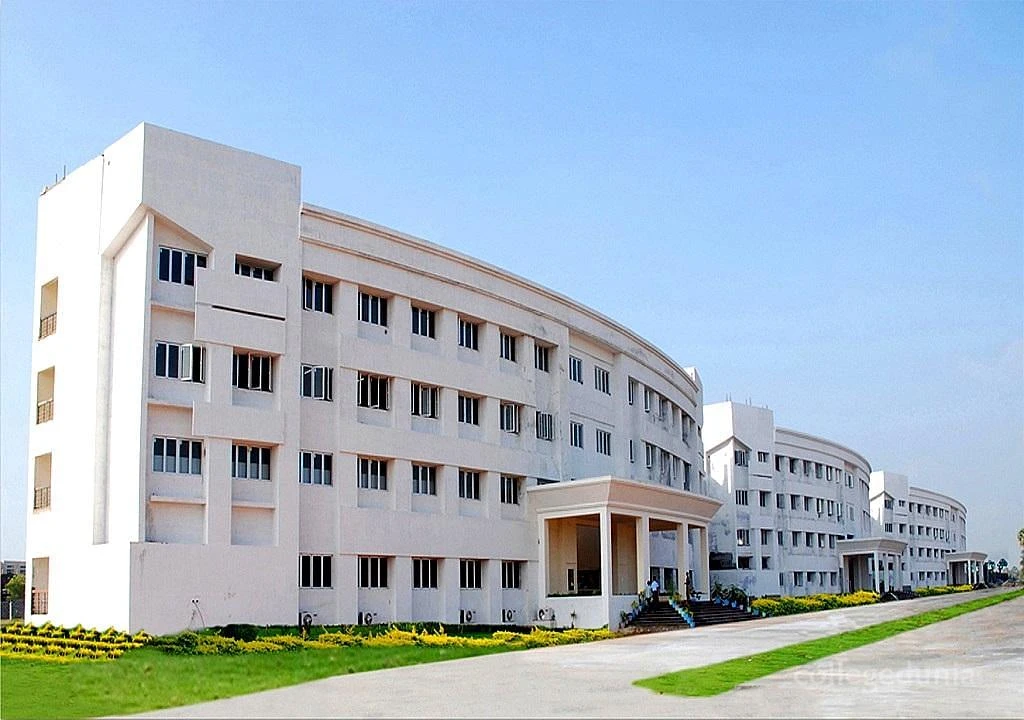
 Auditorium
 Cafeteria
 Computer Labs
 Hostel
 Medical
 Science Labs
 Sports Complex
 Study Library